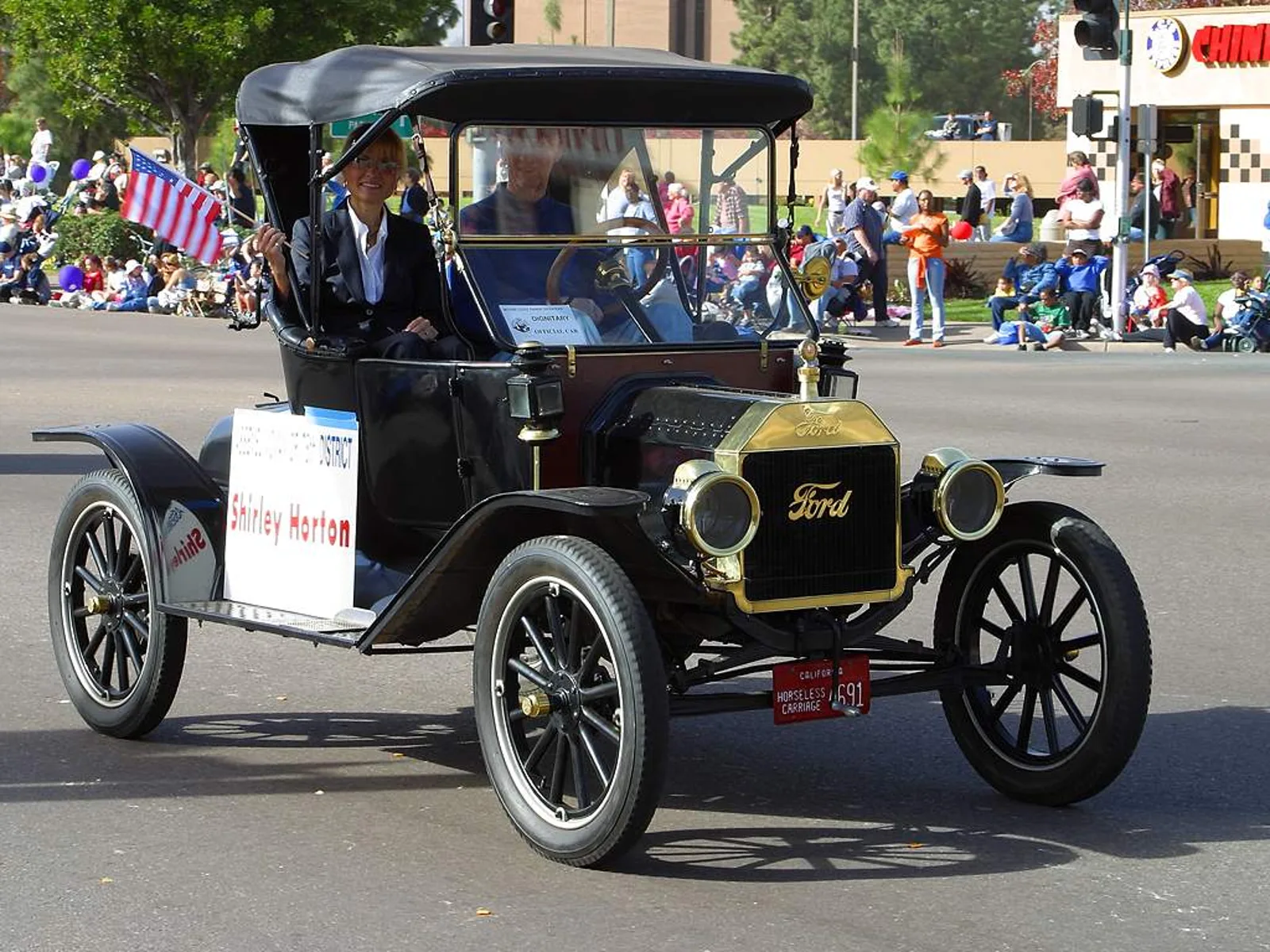
How a stubborn engineer, a Hungarian-led design team and a moving assembly line turned the Model T into the machine that motorised America.
The Ford Model T was the first mass-affordable automobile, built from 1908 to 1927. It brought car travel within reach of the American middle class, put the world on motorised wheels and remained the best-selling car in history until the Volkswagen Beetle overtook it in 1972.
Produced between 1908 and 1927, the Ford Model T is regarded as the earliest car that ordinary buyers could afford, and it was the vehicle that set America motoring. Its sales exceeded 15 million units, a record no other model matched until 1972, when the Volkswagen Beetle moved ahead of it.
What was the Ford Model T?
The Model T was a simple, rugged, inexpensive car designed by Ford Motor Company to give ordinary families dependable motorised transport. It was produced from October 1, 1908 to May 26, 1927, and became the first car mass-produced on moving assembly lines with interchangeable parts.
Henry Ford had been circling the idea of a car for the masses since 1903, when he began conceiving a series of models. He named his first car Model A and then worked through the alphabet. Twenty models were planned in all, though not every letter reached production. The Model T followed the Model S, itself an upgraded Model N. When the time came to replace it, Ford did not move on to a Model U; he started over with another Model A, because, as he put it, he wanted to begin again at the beginning of the alphabet.
Ford aimed this vehicle directly at the middle class. The company set out to produce a car that the masses could afford: roomy enough for a household, compact enough for one person, made from top-grade materials using the most straightforward blueprints, and cheap enough that anyone with a decent wage could buy one. That goal went on to define the twentieth century.
The Model T did not just sell in vast numbers; it changed what a car was for.
Who designed the Model T?
Chief engineer Joseph A. Galamb led the design, assisted by Eugene Farkas and Childe Harold Wills. Peter E. Martin, Gus Degner, C. J. Smith and Henry Love made up the rest of the team. Ford himself monitored the designers closely.
Two further men with ties to Galamb's native Hungary, Gyula Hartenberger and Karoly Balogh, also played a part. The finished machine owed its triumph to a painstaking stripping away of complication every bit as much as to novel thinking. The public knew it as the Tin Lizzie, and although revised versions appeared over the following years, not one of them had a separate name; the Model T was the only designation any of them carried.
How did the Model T change over its production run?
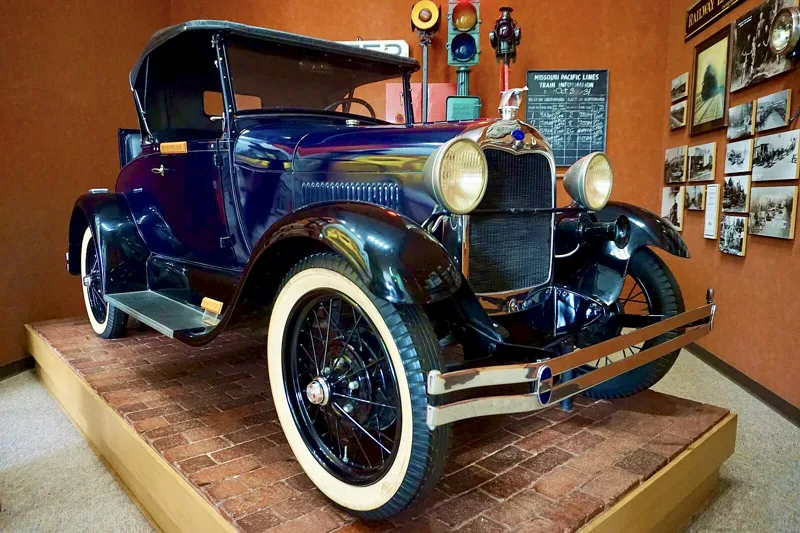
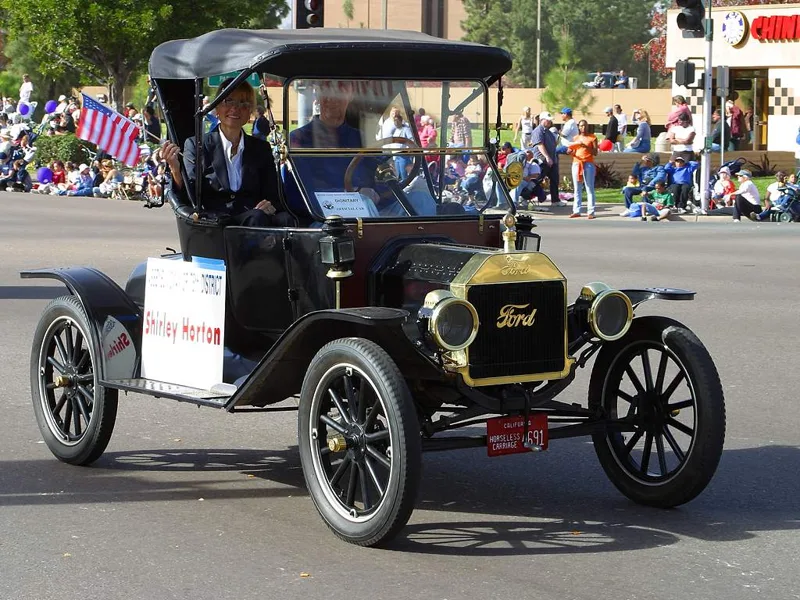
The Model T was continually revised, but the changes were evolutionary rather than named. The 1909-1914 cars had a five-sided hood with a flat top and centre hinge, acetylene gas flame headlights and a fuel tank under the front seat. From 1915 to 1916 the hood was similar but louvers were added to the vertical sides.
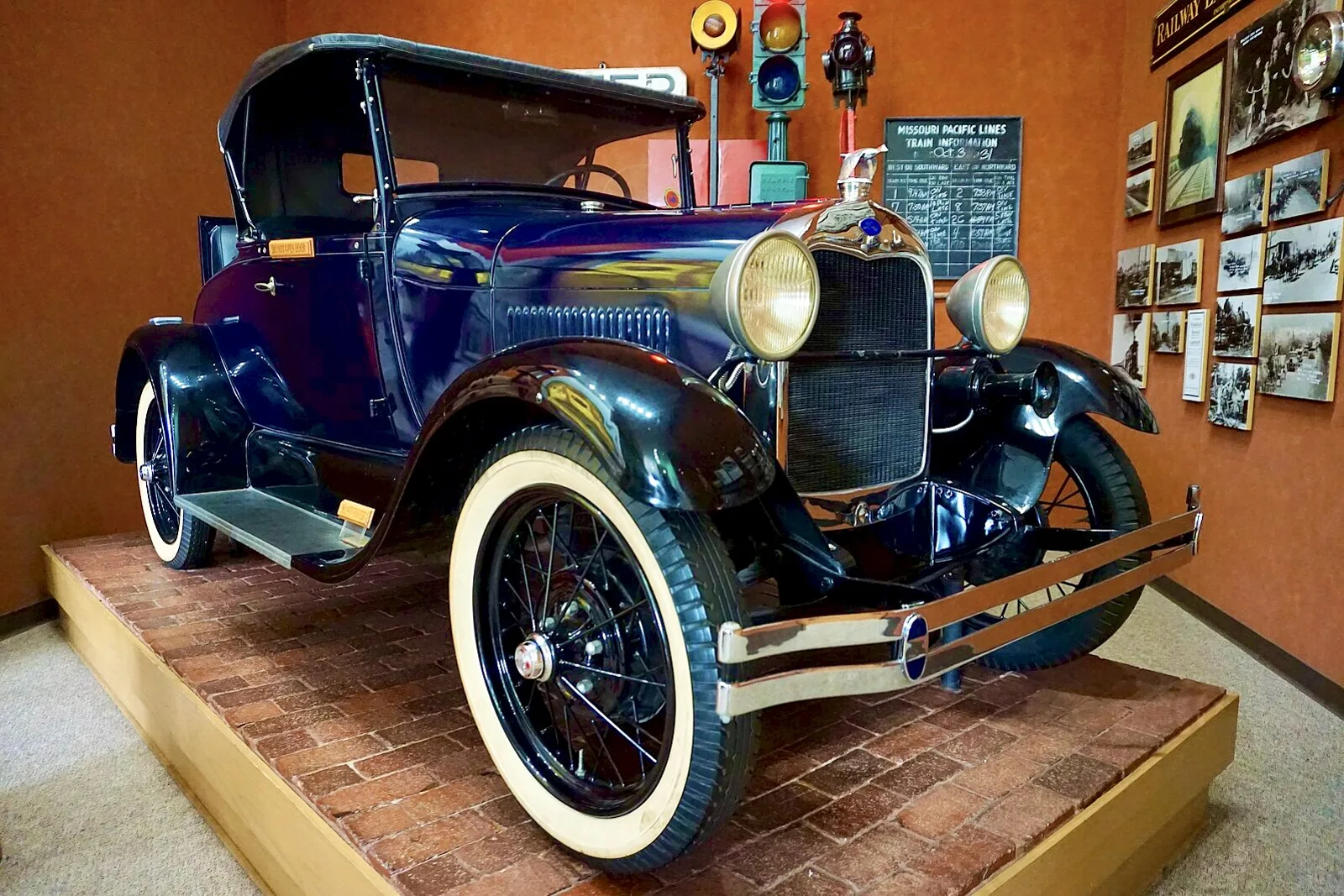
Design decisions, rather than chance, dictated which paints the Model T carried. Purchasers between 1908 and 1913 could select from gray, green, blue and red; black was absent from that list. Green went onto touring cars, town cars, coupes and Landaulets, while gray was reserved for the town car alone and red appeared only on touring cars. Every car built for 1912 came with midnight blue bodywork and black fenders. The well-known arrangement followed two years later: a buyer could pick any shade, provided it was black.
What was the Model T like to drive?
Operating a Model T is nothing like driving a vehicle built today. Its engine would run on gasoline, kerosene or ethanol, and transmission duties fell to a planetary gear set referred to as a three speed. Two gears provided forward motion, while the third was used for reverse. A lever and three floor pedals handled control, and the throttle was worked by a lever mounted on the steering wheel.
Gear engagement came from the pedal on the left, whereas the lever mounted on the floor chose which gear was in use. For the initial 800 examples, the driver picked reverse with that lever; subsequently a pedal positioned centrally handled this task. Braking of the transmission was performed by the right-hand pedal, since wheel brakes were absent. The parking brake, which also served as an emergency brake, was worked by the floor lever. The car employed a wet clutch, and when the weather turned cold, oil that had thickened might make the vehicle creep.
Power reached the differential through a single universal joint and a torque tube. An optional two-speed Ruckstell rear axle helped with hill climbing. The Model TT truck chassis used a worm gear rear differential with lower gearing. All gears were vanadium steel running in an oil bath, and the front axle was a drop-forged single piece of vanadium steel. Ford was so confident in the material that he twisted axles through eight full rotations for display.
What were the Model T's specifications?
| Specification | Value |
|---|---|
| Production years | 1908-1927 |
| Production total | Over 15 million |
| Launch price | $780 in 1910; $290 in 1924 |
| Engine | Four-cylinder, gasoline, kerosene or ethanol |
| Transmission | Planetary gear, two forward speeds and reverse |
| Track width | 56 in (142 cm) standard; 60 in (152 cm) special order |
| Fuel economy | 13-21 mpg-US (16-25 mpg-imp; 18-11 L/100 km) |
Why did the Model T use a magneto and hand-cranking?
The ignition system was closer to a stationary gas engine than to the high-voltage magnetos used in later cars. A low-voltage magneto in the flywheel fed trembler coils and spark plugs, and no starting battery was needed because hand-cranking generated the current. Electric lighting by magneto arrived in 1915, replacing acetylene and oil. Electric starting was not offered until 1919.
Cooling was equally pragmatic. The first 2,447 units were water-pump cooled; from unit 2,448 onward the Model T used a thermosiphon system. Suspension was by transverse semi-elliptical springs front and rear on beam axles, a layout that traded sophistication for durability and cheap repair.
How did the Model T become so affordable?
The crucial factor was the moving assembly line combined with interchangeable components, which allowed mass production. Efficiency improved dramatically thanks to innovations from Ford and his team, and the cost dropped in step: $780 in 1910, then $290 by 1924. 15,000 orders came in within two days of the launch. Half of all cars in the United States were Model Ts by 1918.
At Detroit's Piquette Avenue Plant, the earliest Model T for sale came together on 12 August 1908 and departed the works on 27 September 1908. Henry Ford was present at Highland Park on 26 May 1927 as the 15 millionth example came off the line. Until 1941 the engine continued to be made for replacement, stationary and marine applications, while the Fordson Model F tractor employed a comparable unit of greater size that had been laid out ten years afterwards.
What variants and aftermarket parts existed?
Among the factory-built versions, the Model TT truck chassis stood out as the most important, featuring a worm gear rear differential of a special design, reduced gear ratios and a more robust frame. A cylindrical casing enclosing the worm-drive above the axle differential serves as its identifying mark. Away from the factory, from 1916 onwards over 30 makers supplied aftermarket transmissions, among them the Ruckstell two-speed rear axle along with Muncie, Warford and Jumbo units. These were grouped as replacement, front-mounted auxiliary, rear-mounted auxiliary and multi-speed axle types.
Murray Fahnestock recommended auxiliary transmissions for closed models including the Sedan and Coupelet, citing their heavier build, the body's effect as a sounding board, and the fact that their owners had greater funds available. In the case of Ton-Trucks, fitting an auxiliary transmission might cut return drive time by as much as 50 per cent. Band linings for transmissions were offered in cotton, which was the original material and gentler on the drum, and in wood, an accessory with a longer service life. Rivets scoring the drum could ruin cotton lining, while a band that dragged brought about overheating; the wood, steam-bent and bound with metal wire, delivered a stronger sense of bite.
How fast and economical was the Model T?
Fuel economy was quoted at 13-21 mpg-US (16-25 mpg-imp; 18-11 L/100 km), a broad range that reflected road conditions and driving style. The standard track width was 56 in (142 cm), with 60 in (152 cm) available to special order. The 60-inch track suited Southern roads and matched the pre-Civil War railroad gauge, while the 56-inch track was near standard railroad gauge and allowed flanged wheels. Model Ts were used as motorised railway speeders and could run on track as narrow as 2 ft gauge with complex alteration.
Why was the Model T only available in black?
People frequently sum up the colour tale in one sentence, yet in practice the approach was driven by cost and utility. Various components received over 30 distinct black paint formulations, and two closely related Japan black paints saw service: one as a base layer and one as the finishing coat. The least expensive option available was carbon black pigment, while gilsonite capped the palette that could be made affordably. Come the middle of the 1920s, nitrocellulose lacquers dried more quickly and resisted scratches better, though black had by then left a lasting impression.
What is the Model T's legacy?
The Car of the Century awards, held in 1999, placed the Model T at the top of its list of the twentieth century's most influential cars, with the BMC Mini, Citroen DS and Volkswagen Beetle finishing behind it. Its success came from providing affordable transport and real novelty for the middle class, and it grew into an emblem of modernisation in the United States.
No earlier mass-produced vehicle had been so reliable or so straightforward to maintain. Back in 1901, Ransom E. Olds had created an assembly line for the Oldsmobile Curved Dash, yet Ford and his engineers pushed that approach beyond what anyone had imagined achievable. The Model T was not merely a huge sales success; it redefined the very purpose of an automobile.
The Model T's influence went beyond strong sales figures; it redefined the motor car's purpose.
Frequently asked questions
How much did a Ford Model T cost when new?
The price fell from $780 in 1910 to $290 in 1924, a decline made possible by mass production on moving assembly lines. That steady reduction was central to Ford's goal of putting the car within reach of ordinary working families.
Was the Ford Model T really only available in black?
No. Early cars came in gray, green, blue and red, with colours assigned to specific body styles. By 1912 all were midnight blue with black fenders, and from 1914 the famous any-colour-so-long-as-it-is-black policy took hold, driven by the cost and drying properties of paint.
How many Ford Model Ts were built?
Between 1908 and 1927, output exceeded 15 million units. On May 26, 1927, the 15 millionth example left the Highland Park line as Henry Ford looked on, and no other car outsold it across the years until the Volkswagen Beetle claimed that position in 1972.
Could the Ford Model T run on ethanol?
Correct. Gasoline, kerosene and ethanol could all power this engine, so drivers could use whichever fuel they could get hold of. Such versatility reflected the Model T's down-to-earth, agricultural outlook, and it contributed to the model's popularity in the countryside, where fuel availability was not consistent.
What is a Model TT?
As the Model T's truck chassis version, the Model TT came with a reinforced frame, reduced gear ratios, and a rear differential of the worm-drive type built to a unique design. A giveaway feature is the tubular casing that encloses the worm-drive axle differential, and the vehicle earned its place as an indispensable tool among farmers and tradespeople.