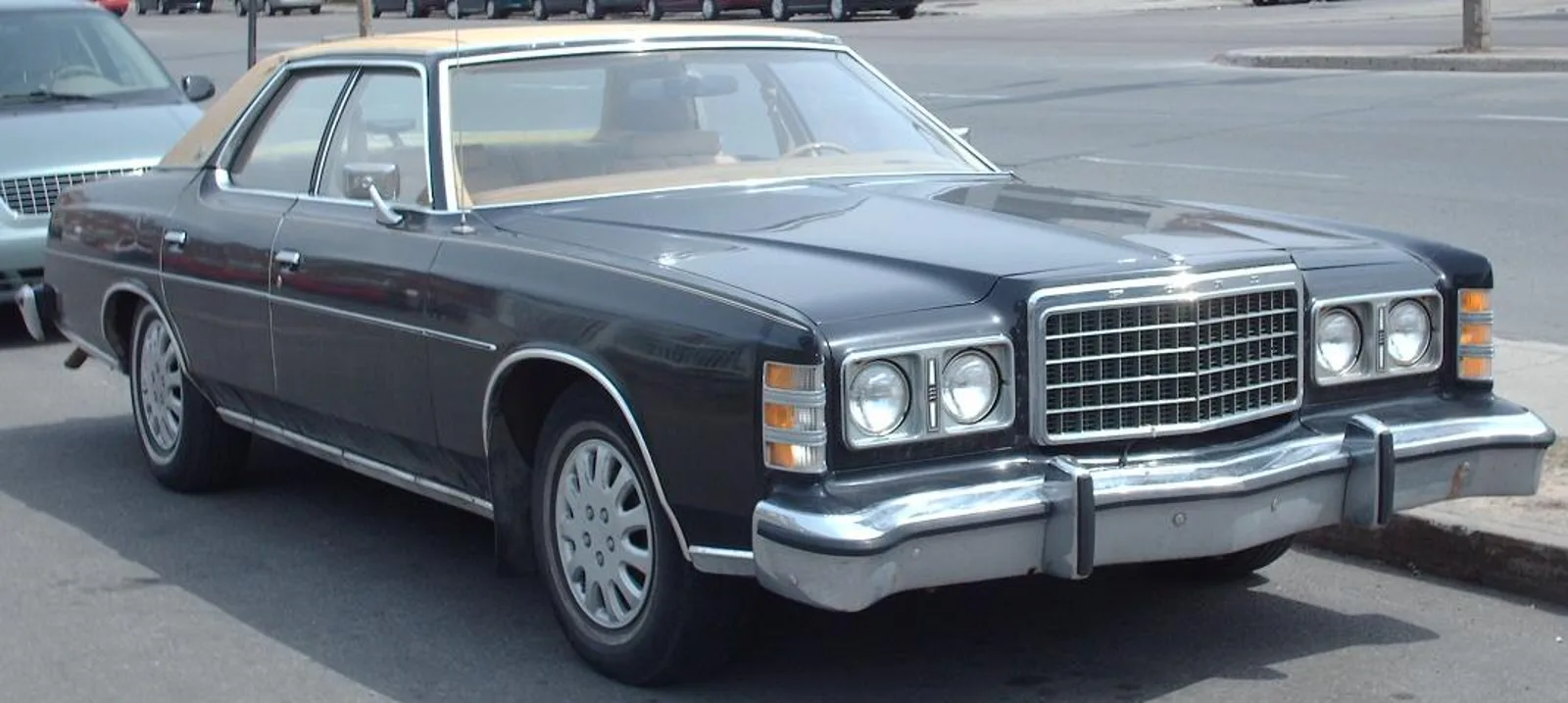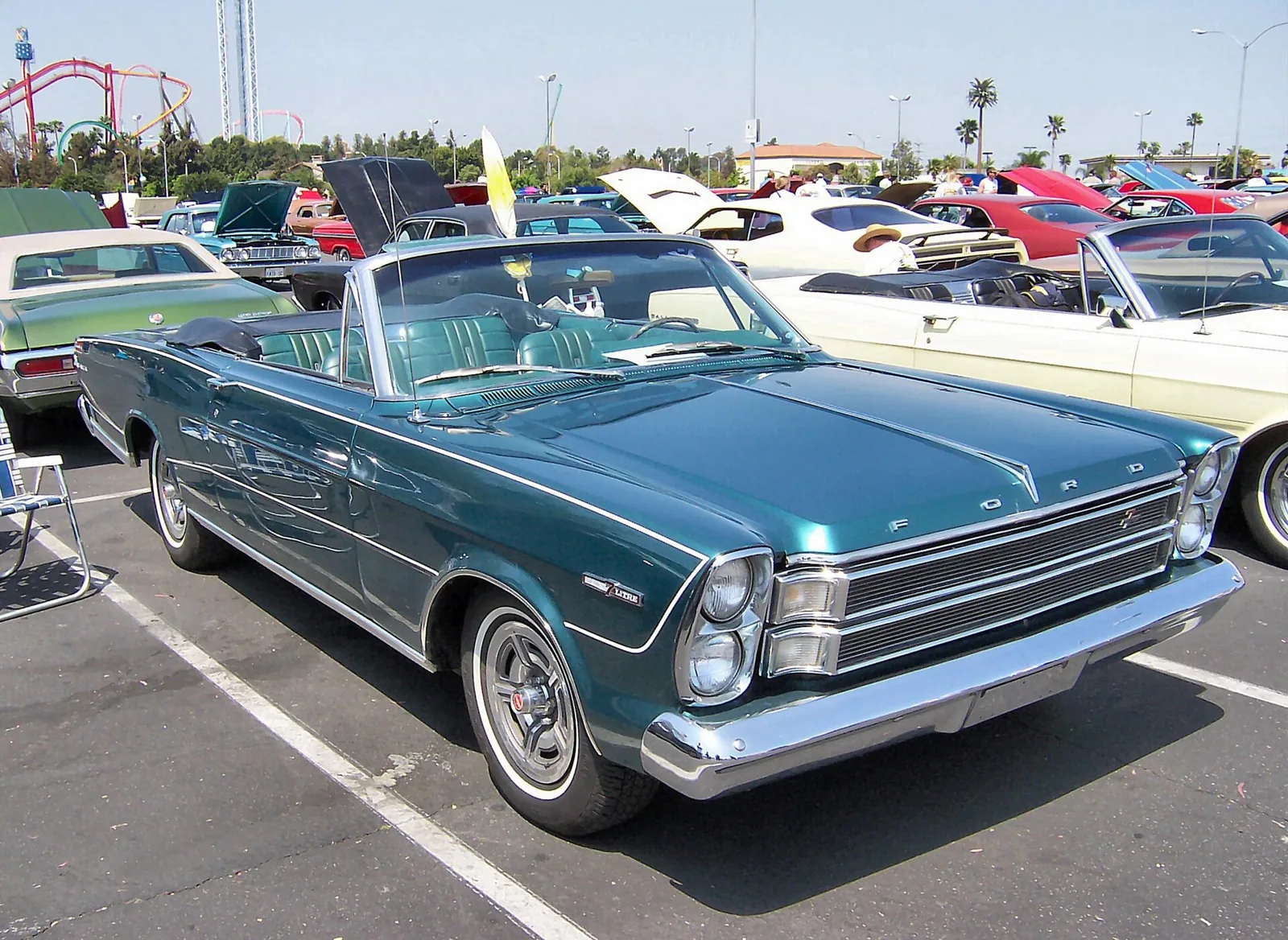
A chrome-era full-size Ford that spent fifteen model years as a mid-range flagship, raced as a lightweight drag car and lived on in Australia and Brazil.
The Ford Galaxie was a full-size Ford sold in North America from 1959 to 1974, with four generations built across several US plants. It later spread to Australia and Brazil, and it was replaced by the LTD after the 1974 model year.
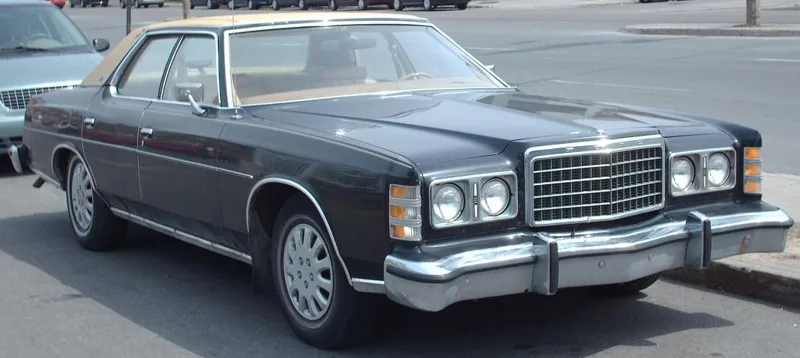
The Ford Galaxie was a full-size car that Ford sold in North America from the 1959 to the 1974 model years. It was offered as a sedan throughout that run and was built at several US sites. It competed with the Chevrolet Impala and the Plymouth Fury, and it was produced in Australia and Brazil as well.
This guide follows the car through its nameplate history, the 1959 car and the Skyliner, the body changes of the early 1960s, the lightweight drag racing cars, the 1965 redesign, the late-1960s platform, the 1971 restyle and the Galaxie's fade into the LTD. It also covers the Australian and Brazilian builds, the sales record and the specification figures.
Where did the Ford Galaxie come from?
The Galaxie was a full-size Ford whose name came from a marketing tie-in with the excitement around the Space Race. It was offered as a sedan in the full-size range for its whole production run, and it sat against the Chevrolet Impala and Plymouth Fury in the full-size segment.
Ford produced the model line in several places across the United States, and four generations were built during the run. Ford Australia and Ford Brasil also made versions, with Australian cars sharing commonality with the third-generation 1965 design.
A chrome-era full-size Ford that became a mid-range flagship, raced as a lightweight and lived on in Australia and Brazil.
How did the Galaxie name spread through Ford's range?
A concept car called la Galaxie appeared in 1958 with headlights set into pods in line with the grille and a lower front profile. The name then moved through the range over the following years, as Ford tied it to its top models.
For 1962 every full-size Ford wore the Galaxie badge, replacing the Fairlane name in that segment. The higher trims took on the Galaxie 500 and Galaxie 500XL names. In 1965 the Galaxie 500 LTD was introduced as a flagship, and for 1966 it became the Ford LTD while the Galaxie moved to the mid-level position.
Through the 1970s the Galaxie stayed between the Custom and the LTD. After the 1974 model year Ford dropped both the Galaxie and the Custom, and it consolidated its full-size sedans under the LTD name, keeping the Custom 500 for fleet sales.
What did the 1959 Galaxie look like?
The 1959 Ford range was introduced in late 1958 with the Fairlane 500 at the top. During the 1959 model year the Galaxie was added as a trim level above it, and it took the top position. It came in the same sedan and hardtop bodies as the Fairlane 500, and the Sunliner and Skyliner convertibles moved across from the Fairlane range.
The 1959 car was a chrome and stainless steel model with optional two-tone paint. It was more restrained than some Chevrolet and Plymouth rivals, but it still looked like the ostentatious American cars of the late 1950s. Seat belts, a padded dashboard and child-proof rear door locks were optional.
The Skyliner had a retractable hardtop that folded into the trunk. That was complicated and costly, and it left very little trunk space when folded. Power retractable hardtops later appeared on luxury cars from Mercedes-Benz, Lexus and Cadillac, but those had no rear seats, so their mechanisms were much smaller. A retractable hardtop with a rear seat did not arrive until the Peugeot 206cc in 2000.
What changed in the Galaxie from 1960 to 1964?
The 1960 Galaxie had an all-new design with less ornamentation. The Starliner was a pillarless hardtop with a large curved rear window, and its thin sloping rear roof pillar carried three star emblems that became the signature badge for the 1960 to 1962 models. The 1960 taillights were half-moon lenses turned downward, a break from Ford's pie-plate tradition.
For 1961 the tailfins were almost gone, and the car gained a new 390 cubic-inch FE V8. It came with either a four-barrel carburetor or three two-barrels, and the triple-carburetor version was rated at 401 hp (299 kW) gross. The square-roof hardtop coupe, the Galaxie Club Victoria, took most sales when the Starliner was dropped.
The 1962 cars brought the Galaxie 500 and 500XL, which had plusher interiors and a bucket-seat and console layout. Ford said XL stood for Xtra Lively. The 1962 Galaxie also had a 406 cubic-inch engine in single four-barrel or triple-carburetor form, and the rear end had a rounder, softer look without tailfins.
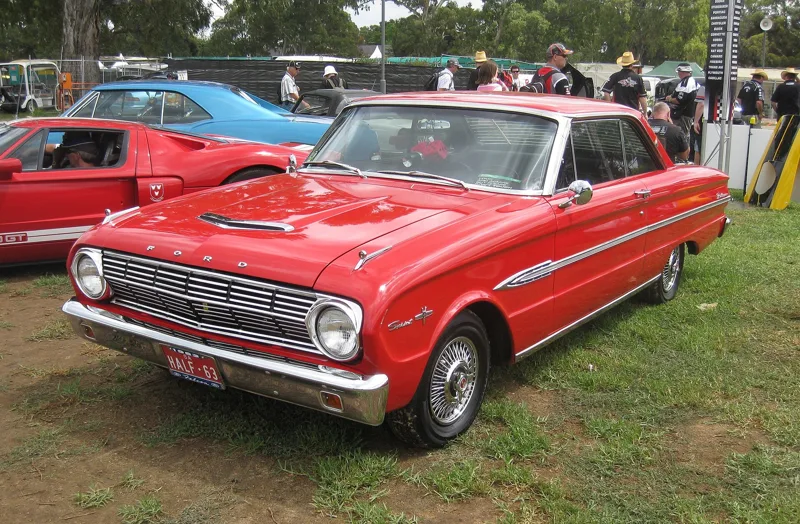
The 1963 model was largely unchanged, but a fastback sports hardtop was added midyear as the 1963 half-year model, and it outsold the boxtop square-roof cars. The 1964 car was the last year of the body style. Its interior was revised, and it used the fastback roof on all non-wagon models, while the 289 V8 became standard in the XL.
How did the lightweight Galaxies race?
The 1962 Galaxies were heavy next to the Pontiac Super Duty cars with their aluminium bodies. Ford's Experimental Garage was ordered to cut weight, and it built 11 lightweight Galaxies with fiberglass panels and aluminium bumpers, bringing them under 3,400 lb (1,542 kg). The base Club Sedan weighed 3,499 lb (1,587 kg).
In the 1963 season Ford built the 427 cubic-inch engine for racing, rated at 425 hp (317 kW) gross with two four-barrel Holley carburetors. It was made to meet NHRA and NASCAR rules for the 7-litre maximum engine size. A further 212 lightweight Galaxie 500 Sport Special fastbacks were built for drag racing, with a list price of about US$4,200 when a base Ford 300 cost US$2,324.
Those cars came in Corinthian White with red vinyl, with a four-speed Borg-Warner transmission, a 4.11:1 rear axle and fiberglass hood, trunk and fenders. Sound deadening, the spare wheel and the rear seats were removed. They were 375 lb (170 kg) lighter than before, and the first 20 cars had fiberglass doors that were later deleted for safety reasons.
The first two lightweight Galaxies were tested at the 1963 Winternationals, and Bill Lawton's Tasca Galaxie posted the best time at 12.50 seconds at 116.60 mph (187.65 km/h). That time was not quick enough to beat the Chevrolet Impala Z-11s in the Limited Production class. Ford found the cars still too heavy, and the project was abandoned.
Some Galaxies raced in England, Australia and South Africa after Holman and Moody fitted disc brakes and circuit racing parts. Jack Sears won the 1963 British Saloon Car Championship in Galaxies and Cortinas, and the 12-inch disc brakes from the Ford GT40 program were added in late 1963. The Lotus Cortina then made the big Galaxie uncompetitive.
Why was the 1965 Galaxie an all-new design?
The 1965 Galaxie had vertically stacked dual headlights, and the cars were taller and bulkier than before. The Galaxie 500 LTD and Galaxie 500 XL became the top designations, while the LTD and XL packages were accessory upgrades from the base car. A new 240 cubic-inch six replaced the old 223 Mileage Maker, and the 352 V8 gained dual exhausts and a four-barrel carburetor.
The rear suspension changed from leaf springs to a three-link system with coil springs. A two-key system was introduced for valet parking, where one key opened only the trunk and glovebox, while the other opened the doors and ignition.
For 1966 the Galaxie 500 7 Litre arrived with a 345 hp 428 cubic-inch Thunderbird V8. Police cars received a 360 hp version called the Police Interceptor. The Galaxie 500 sold 27,454 units as a convertible that year, while the Mustang sold 72,119 and the Impala about 38,000.
The 1966 body style was introduced in Brazil in 1967 and used the same platform until Brazilian production ended in 1983. For 1967 the 7 Litre lost the Galaxie name, which was the last year it was separately identified.
What engines did the later Galaxies use?
The 1969 Galaxie was built on a new platform with a 121-inch (3,100 mm) wheelbase. Its 429 cubic-inch ThunderJet replaced the 427 and 428 engines, and it produced 360 hp (270 kW) in dual-exhaust four-barrel form. A single-exhaust two-barrel version made 320 hp (240 kW). The police versions kept the 428 Police Interceptor for 1969 and 1970.
The 1971 redesign brought a horizontal wrap-around bumper and squared-off rooflines. The XL was dropped, and the 351 2v V8 became standard on full-size Fords except the lowest-line Custom models. The 429 remained the top engine, and police versions received a 370 hp Police Interceptor.
The 1973 model had three optional towing packages and several police packages, with engines ranging up to the 460 Police Interceptor. Four-door sedans gained a Pillared Hardtop model with a thin B post and frameless door glass.
How did the Galaxie sell over its run?
Ford sold roughly 7,850,000 full-size Fords and Mercurys between 1968 and 1978, which made it the second best-selling Ford platform after the Model T. The LTD gradually took over as the posher flagship during the same years.
Of all the XL models built in any year, the 1964 two-door hardtop sold the most. The Galaxie was slowly phased out in favour of the LTD, which Ford pushed as a mainstream full-size car. The 1974 model year was the last for the Galaxie 500 name.
How was the Galaxie built in Australia?
Ford Australia built the Galaxie from late 1964 to 1968. The 1965 model, called the Galaxie GE series, was assembled at Homebush West in Sydney as a four-door sedan with a choice of 289 or 390 cubic-inch V8s. The plant built the 1966 to 1968 models as well, before full imports began in 1969.
Australian assembly of the 1965 to 1968 cars from CKD kits totalled 3,124 vehicles. Conversion to right-hand drive for 1,766 of the 1969 to 1972 models was done at Broadmeadows in Melbourne. The 1969 model was marketed as the Galaxie LTD, and the name continued until the local Ford LTD arrived in 1973.
How did the Galaxie sell in Brazil?
The four-door sedan was the only body style built in Brazil, from 1967 to 1983, under the names Galaxie, Galaxie 500, LTD and Landau. Early Brazilian cars used a 272 cubic-inch Y-block V8 with a two-barrel carburetor.
A major facelift in 1976 gave the car horizontal headlights. From that year the 302 cubic-inch Windsor V8 replaced the Y-block and became the only engine until production ended. Two Brazilian units were used as presidential cars until 1990.
How did the Galaxie end?
The Galaxie was phased out after 1974, when Ford folded the line into the LTD. The Custom 500 remained for fleet buyers and private customers who wanted the cheapest full-size model.
What are the Ford Galaxie specifications?
The table covers the key figures across the run. Power figures are shown metric first, with the hp rating in brackets, and each row names the year or model it describes.
| Specification | Detail |
|---|---|
| Production | 1959 to 1974 model years, North America |
| 1959 base V8 | 352, 300 hp (220 kW; 300 PS) |
| 1961 V8 | 390 cu in FE, triple two-barrel 401 hp (299 kW) gross |
| 1962 lightweight cars | Under 3,400 lb (1,542 kg); base Club Sedan 3,499 lb (1,587 kg) |
| 1963 racing 427 | 425 hp (317 kW) gross, two four-barrel Holley carburetors |
| 1965 suspension | Three-link rear with coil springs |
| 1966 Galaxie 500 7 Litre | 428 cu in, 345 hp Thunderbird V8 |
| 1969 platform | 121-inch (3,100 mm) wheelbase |
| 1969 engine | 429 cu in ThunderJet, 360 hp (270 kW) dual exhaust; 320 hp (240 kW) two-barrel |
| 1971 engine range | 351 2v V8 standard; 429 top engine; 370 hp Police Interceptor |
| Australian assembly | 3,124 vehicles from CKD kits, 1965 to 1968 |
| Brazil production | 1967 to 1983; 302 cu in Windsor V8 from 1976 |
| Full-size sales, 1968-1978 | Approximately 7,850,000 Fords and Mercurys |
Frequently asked questions
When did the Galaxie name first appear?
A concept called la Galaxie was shown in 1958, and the name arrived on the production car in 1959 as a trim above the Fairlane 500. The name spread to all full-size Fords for 1962.
Did the Galaxie have a retractable hardtop?
The 1959 Skyliner had one, folding into the trunk. It was complicated and left little trunk room, and it was not until the Peugeot 206cc in 2000 that a retractable hardtop with a rear seat appeared.
How much did a lightweight Galaxie cost?
Buyers paid roughly US$4,200 for the 1963 lightweight Galaxie 500 Sport Special, against US$2,324 for a base Ford 300. Only 212 of the drag-racing cars were built.
Was the Galaxie built outside North America?
Yes. Ford Australia assembled the car in Sydney from late 1964 to 1968, and Ford Brasil built a four-door version from 1967 to 1983.