The layers behind a premium, the compulsory cover in Australia, Europe and Asia, how excess works and how black boxes price driving.
A car insurance premium pays for stacked layers: compulsory cover for injuries to others, optional cover for property and your own vehicle, and sometimes a discount earned through a telematics box. Pricing criteria vary by country, with Germany citing region, car type and driving style.
For years after the First World War, cars were fast and dangerous, and nobody anywhere in the world was required to insure one. A person hurt in a crash could expect little or nothing in compensation, while the driver at fault often faced a heavy bill of their own.
That gap explains how car insurance is built and sold today: a policy that covers some risks, a law that forces the most important layer on every owner, minimum amounts that differ by country, and tracking units that let driving habits move a premium.
What does a car insurance policy actually cover?
Vehicle insurance protects against the money lost when a road vehicle is damaged, injures someone or harms someone else's property. Its core job is financial protection after a collision, covering physical damage, bodily injury and the liability that follows an incident. Exactly what a policy promises depends on the law of the region.
The same product is sold for cars, trucks, motorbikes and other vehicles that use the road, and it can reach well beyond crashes. Depending on the policy it may also cover theft of the vehicle, vandalism, weather and natural disasters, or damage from running into something that is not moving, such as a wall or a post.
The easiest way to picture it is as a set of separate promises rather than one blanket. One promise is to the people you might hurt. Another is to the property and vehicles you might damage. A third is to your own car. In many places each of those can be bought on its own, and in some places the first is simply forced on you.
Think of a policy as a set of separate promises rather than one blanket: one to the people you might hurt, one to the property you might break, one to your own car.
Why did governments make car insurance compulsory?
Because the alternative left victims empty-handed. Widespread motoring arrived in towns and cities after the First World War, yet no country required drivers to carry cover, so injured people rarely received compensation and drivers frequently had to find the cost of damage themselves.
Finland made cover mandatory in 1925, earlier than the other countries here. Its early law was partial: all property damage was paid, but only permanent personal injury and death. Third-party personal injuries were fully brought in during 1938, the passengers of the driver at fault followed in 1951, and the at-fault driver's own injuries in 1968. In 1980 the system switched to strict liability, so a vehicle's insurance now answers for every accident connected with its operation, whoever was to blame.
Britain followed with the Road Traffic Act 1930, which obliged owners and drivers to be insured against their responsibility for any death or injury suffered by third parties on a public road. Ireland copied the idea in the Road Traffic Act, 1933, and Germany passed its own act on compulsory cover in 1939. The European Economic Community, as it then was, required every member state to make cover mandatory from 1973, building on a directive numbered 1972/166/EEC. Its minimum amounts are revised every five years, most recently through Directive (EU) 2021/2118.
Today most jurisdictions compel owners to hold cover before a motor vehicle is used or kept on a public road. Most jurisdictions tie the policy to the car and to the driver, in proportions that differ widely.
Comprehensive vs third party car insurance: what separates the layers?
Australia sells the clearest ladder. Third-party property damage pays for harm to other people's vehicles and property, but not your own car. Adding fire and theft protects your car against those two risks. Comprehensive covers third parties and the insured vehicle itself. Compulsory injury cover sits underneath all three and is bought separately.
That last point catches people out. The optional third-party property policy repairs what you damaged belonging to others, while the compulsory scheme exists for death and injury. They are different products with different jobs, and having one does not substitute for the other.
The vocabulary shifts abroad but the shape holds. In several European languages the non-mandatory comprehensive policy is known as casco, short for Casualty and Collision. German owners are free to add comprehensive cover on top of the compulsory personal liability policy, and Hong Kong and Macau both sell comprehensive motor insurance alongside their mandatory third-party rules.
How does compulsory third-party insurance work in Australia?
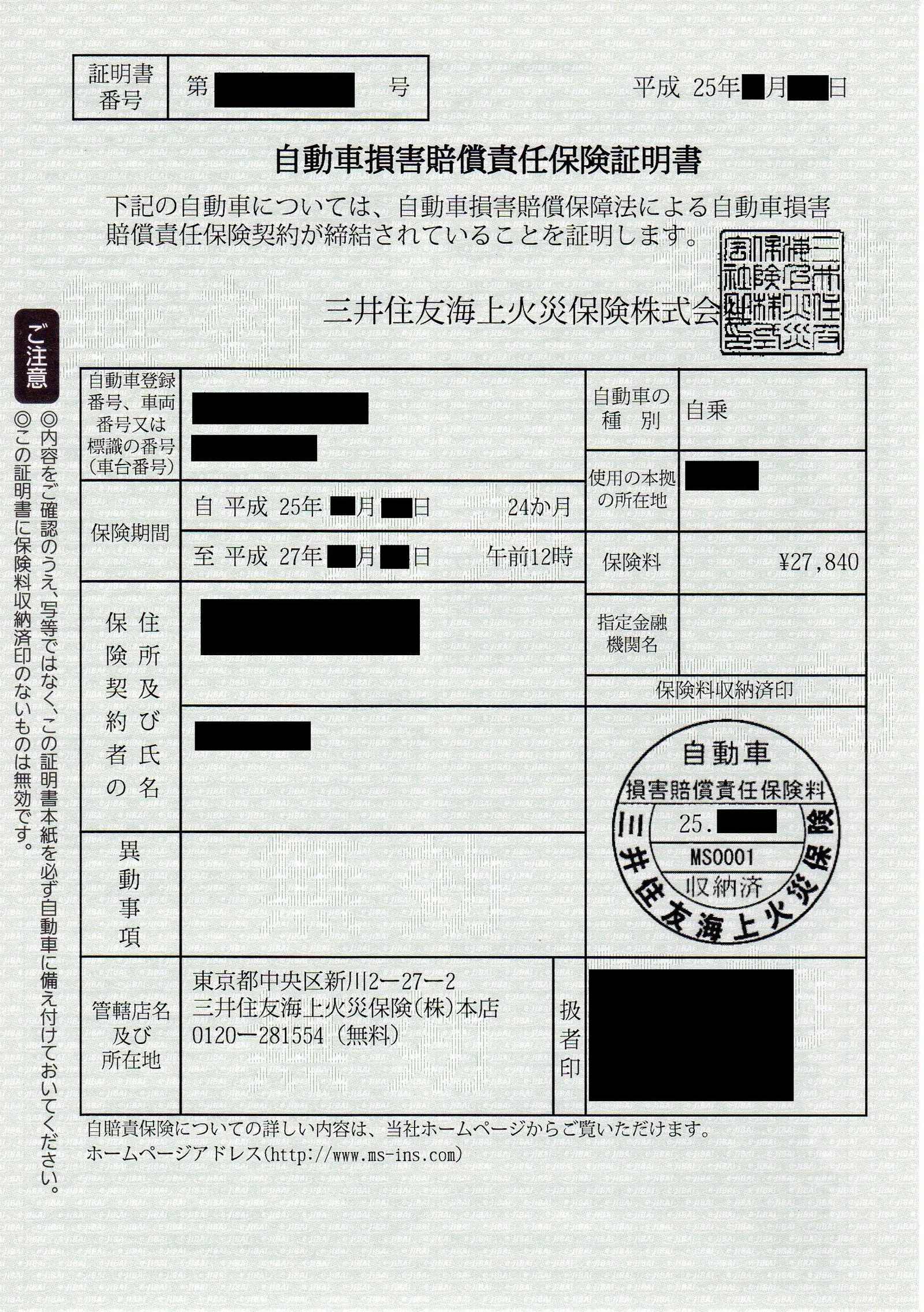
Every Australian state runs its own compulsory third-party scheme, usually shortened to CTP, and the price is normally folded into vehicle registration. It protects the owner and anyone driving the car against claims for death or injury caused by the fault of the owner or driver. Rules differ by state.
What a CTP claim can include is broad. It can pay for reasonable medical treatment, lost wages and care services, and, in certain cases, damages for pain and suffering. The cover follows the vehicle and the people at its controls rather than a particular named policyholder.
New South Wales shows the private-insurer model. A car has to be insured before registration is possible, and the document is often called a greenslip because of its colour. Five insurers hold licences: Suncorp for GIO and AAMI, Allianz, QBE and NRMA Insurance. APIA, Shannons and InsureMyRide also supply cover licensed by GIO. The Australian Capital Territory runs a private scheme through AAMI, APIA, GIO and NRMA, again paid with registration.
Queensland builds CTP into the registration fee. Drivers pick between Allianz, QBE and Suncorp, yet the price is government controlled, so choosing an insurer does not mean shopping on cost. South Australia went the other way. Since July 2016 the Motor Accident Commission no longer provides the cover and four licensed private insurers (AAMI, Allianz, QBE and SGIC) offer it. From July 2019 owners have been free to choose their own insurer, and new companies may enter the market.
Three states and one territory have no private scheme at all, and each handles cover through a public body:
- Victoria: the Transport Accident Commission, funded by a levy in the registration fee known as the TAC charge.
- Tasmania: the Motor Accidents Insurance Board.
- Western Australia: the Insurance Commission of Western Australia.
- Northern Territory: Territory Insurance Office.
What is the least cover the law demands elsewhere?
| Place | Compulsory cover |
|---|---|
| European Union | Injury: EUR 1,300,000 per injured party or EUR 6,450,000 per claim. Property: EUR 1,300,000 per accident. |
| Germany | EUR 7,500,000 for bodily injury, EUR 500,000 for property damage, EUR 50,000 for financial loss. |
| Hungary | Up to HUF 500m per crash without a deductible, extended to HUF 1,250m for personal injuries. |
| Finland | 5 million euros for property damage; no cap on personal injury. |
| China | RMB180,000 (US$27,907) per crash for deaths and injuries, RMB18,000 (US$2,791) medical, RMB2,000 (US$310) physical loss. |
| Hong Kong | Up to HK$100 million (US$12.87 million) for injury and HK$2 million for property damage. |
| Macau | MOP1,500,000 per crash and MOP30,000,000 per year. |
Those figures are legal floors. German insurers usually sell combined single limits of EUR 50,000,000 or EUR 100,000,000, far above the statutory minimum, and China sits an additional third-party liability layer on top of its compulsory cover, reaching up to RMB10,000,000 (US$1,550,388).
Finland's scheme is unusually blunt. It applies to any vehicle with a structural speed above 15 km/h or registered for road traffic, and commercially rented electric scooters need it too. A person who neglects to insure can be made to pay up to three times the premium they avoided. When the vehicle responsible cannot be identified, comes from abroad or carries no cover, the Motor Insurers' Centre pays the victim, funded by contributions from every company writing vehicle cover there.
Canada splits down the middle. British Columbia, Saskatchewan, Manitoba and Quebec run public auto insurance, and the other provinces rely on private insurers. Basic cover is mandatory across the country, with each provincial government deciding which benefits make up the minimum. Accident benefits are compulsory everywhere except Newfoundland and Labrador. Visitors may drive on an international licence for three months, during which an International Insurance Bond applies, and it renews each time they re-enter the country. Drivers whom private insurers will not take can fall back on the facility association's last-resort policies, known as FARM.
What is an insurance excess?
An excess, also called a deductible, is the slice of a claim that the policyholder carries before the insurer pays. It turns up in several forms around the world.
Chinese policies offer Excess Waiver Insurance as an additional option, which removes any deductibles. Hungary's compulsory policy pays up to HUF 500m per crash without any deductible at all. In Saskatchewan, the provincial insurer SGI includes collision cover in its basic package with a deductible below $1000, and the arrangement resembles a collision damage waiver.
Which factors do insurers weigh when they price a policy?
In Germany the amount of the insurance contribution is set by several criteria, among them the region, the type of car and the driver's personal way of driving. Three levers, then: where the car lives, what it is, and how it is handled.
How much weight each lever carries depends on the system. Finland attaches cover to the vehicle, since a car's insurance answers for all accidents linked to its operation regardless of who is at fault. Some Australian prices are not set by the market at all: in Queensland, the CTP price is controlled by the government.
Pay-as-you-drive plans have been tried in several jurisdictions as another way to price risk. They rely on either a tracking device fitted to the vehicle or on the vehicle's own diagnostics, and they charge according to the distance driven. The theory is that this could cut the problem of uninsured motorists by offering more options, and could make the system more efficient through streamlined collection.
How does black box car insurance work?
A telematics unit in the car records how it is driven, and the insurer prices the policy on that behaviour instead of on guesses about it. This is usage-based insurance: premiums track real-time driving, with the device logging how far you drive, how fast, and how hard you brake. Careful drivers are frequently rewarded with cheaper premiums.
Think of the unit as a driving diary that the insurer reads in place of asking you to describe your habits. The word telematics comes from a French term, telematique, which Simon Nora and Alain Minc introduced in 1978 in a paper for the French government about computerising society. In commerce it now mostly means vehicle telematics: a telematic control unit that sends, receives and stores information, often combined with satellite positioning and mobile communications.
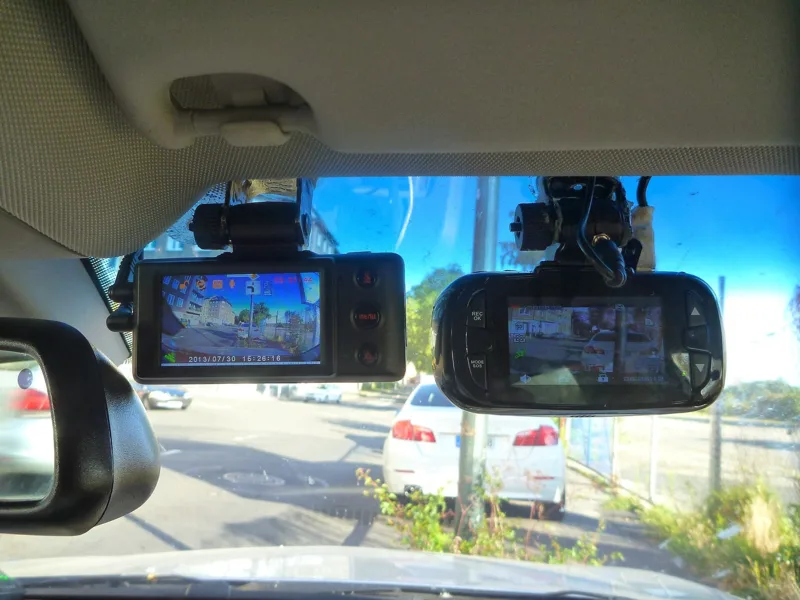
Insurance is one use among many. Fleet operators use the same data on speed, braking, acceleration and idling to score drivers and coach them out of habits that waste fuel. Units connected to the car's CAN bus or OBD port can also report on vehicle health, and the same family of devices drives stolen-vehicle recovery systems such as LoJack.
Video telematics adds a dashcam to the data stream. The footage gives context to events and is used for driver coaching with artificial intelligence, accident reconstruction and insurance claim validation. In the European Union, a separate mandated system called eCall automatically contacts emergency services after a serious accident and sends the car's location.