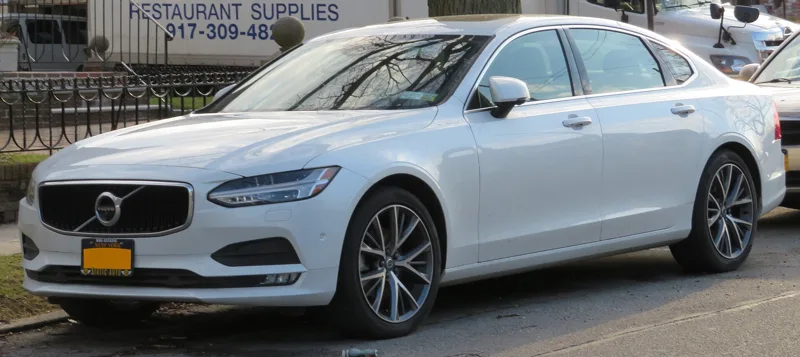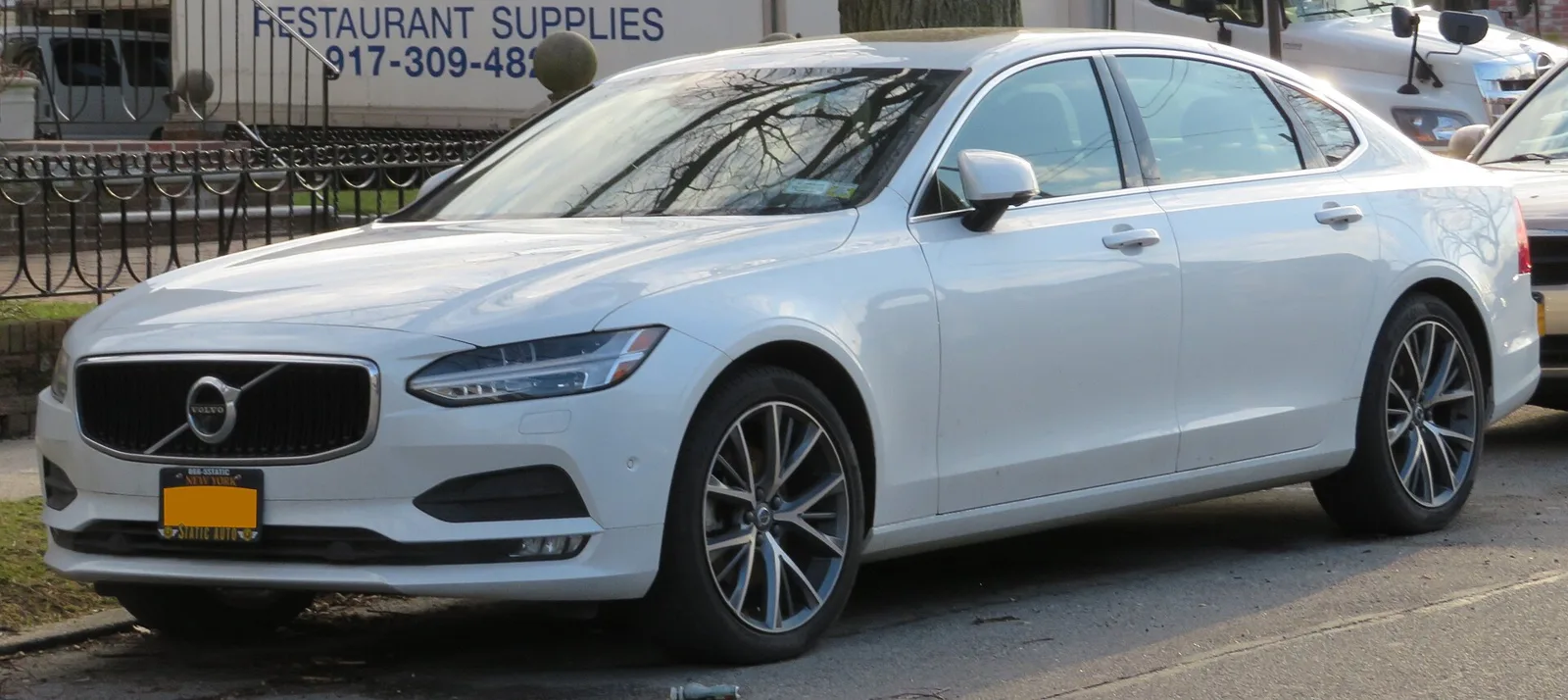
Seatbelts, crumple zones, Volvo's side-impact system and the bonnet designs meant to cushion a pedestrian, set against the active systems that try to prevent the crash.
Passive safety is the structure and equipment that protects people during a crash, from seatbelts and airbags to crumple zones, while active safety tries to prevent the crash. Volvo's SIPS (1991) shaped side-impact protection, and pedestrian designs add bonnet clearance and airbags. A 2024 study linked taller bonnets to more pedestrian deaths.
An extra 10 cm (3.9 in) of bonnet height corresponded to a 22 percent rise in pedestrian deaths, according to a 2024 study of American crash statistics. A study by the US Insurance Institute for Highway Safety found a 45 percent increase once the bonnet passed 1 m (39 in). The shape of a car's nose, in other words, decides who survives a collision as surely as its airbags do.
Car makers split safety into two camps. Active systems try to stop a crash from happening, and passive safety is everything built into the car to soften the blow once it has. Passive safety covers the seatbelt, the airbag and the structure around the occupants. It also covers newer ideas aimed at the people outside the car, and the side-impact designs that Volvo pioneered.
Active and passive safety, and where the line falls
The two terms are simple but they matter. Active safety is technology that helps to prevent a crash, and passive safety refers to parts of the vehicle, chiefly airbags, seatbelts and the physical structure, that protect occupants during one.
The active side begins with basics: headlamps, reflectors, mirrors, brakes, steering and suspension. Driver assistance sits inside it. That group includes alertness detection, advanced emergency braking, infrared night vision, adaptive headlamps, reversing sensors and cameras, adaptive cruise control, lane departure warning, tyre pressure monitoring, traction control, electronic stability control, anti-lock braking and automated parking.
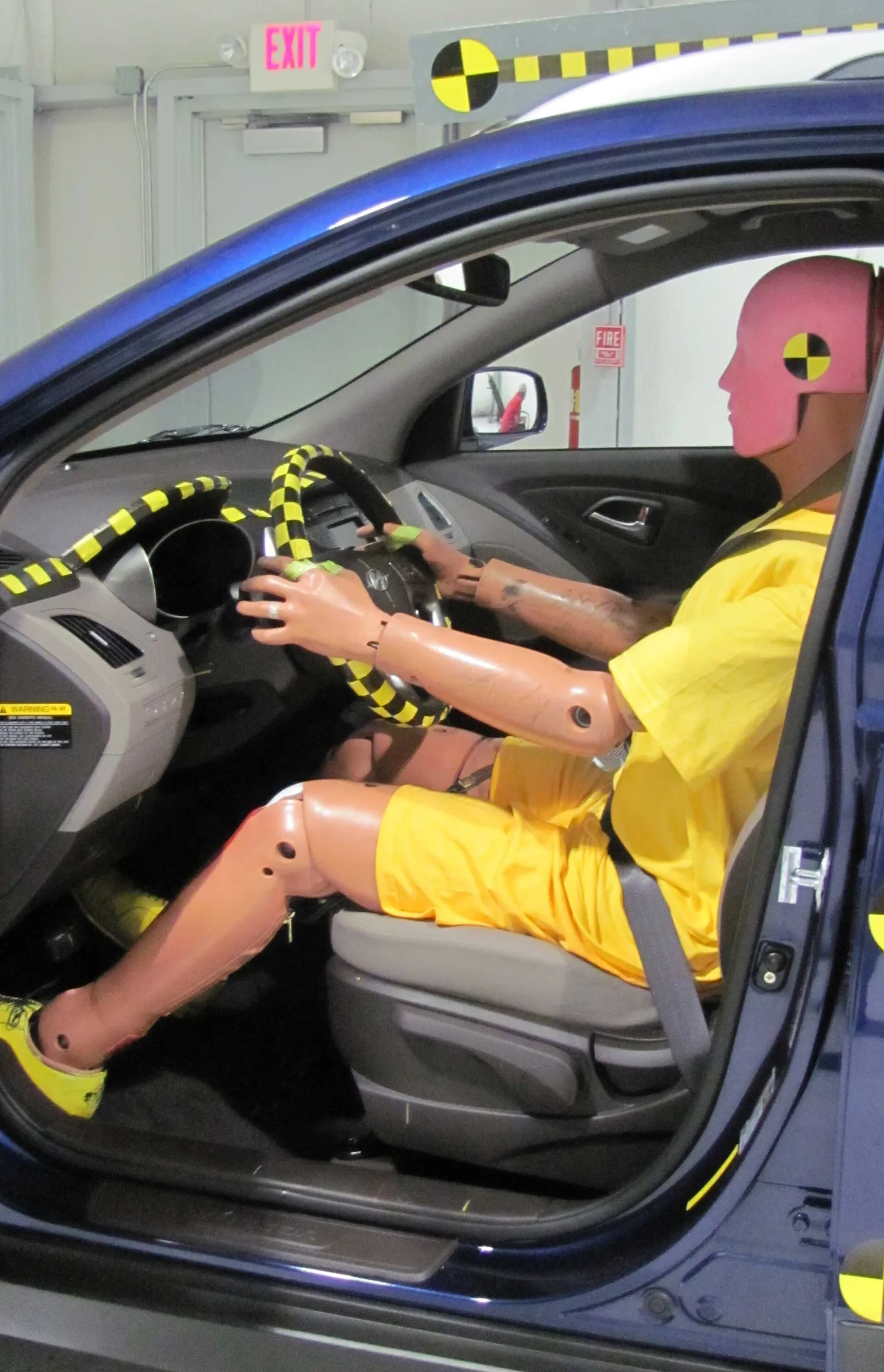
Passive safety, usually called crashworthiness, is about preventing or reducing injuries when a crash is imminent or under way. Much of the research uses anthropomorphic crash test dummies. A third stage follows: post-crash survivability, where technology such as Advanced Automatic Collision Notification can place a call to the emergency services and send details of the collision by itself.
Active safety tries to prevent the crash; passive safety is everything built to soften it.
What passive safety is made of
- Seatbelts limit an occupant's forward motion and stretch to absorb energy, lengthening the time over which the body decelerates. They also stop people being thrown out of the vehicle and keep them in the correct position for the airbags.
- Airbags cushion the occupant against the interior. The most important job is to keep the driver's head off the steering wheel and the door pillar.
- Laminated windshields stay in one piece, keeping unbelted heads from going through and leaving enough transparency to control the car straight after an impact. Tempered side and rear glass breaks into granules rather than jagged fragments.
- Crumple zones absorb and dissipate the force of a collision, diverting it away from the passenger compartment. A car has them at the front and rear and sometimes at the sides.
- The safety cell is the passenger compartment, reinforced with high-strength materials where loads are greatest to keep a survival space. Footwell intrusion is a recognised way it can fail, and anti-intrusion bars help in side impacts.
- Collapsible steering columns with jointed sections, mounted behind the front axle and so protected by the front crumple zone, lower the risk of the driver being struck or impaled by the column.
- Padding and cargo barriers soften the dashboard and keep loose luggage away from passengers. A cargo barrier may also help prevent the roof from collapsing in a rollover.
How side impact protection works
Protection in a side collision has to come from structure, because the door, sill and pillar are all that stand between the occupant and the other vehicle. Volvo's Side Impact Protection System (SIPS) was introduced in 1991 on the 700, 900 and 850 series for the 1992 model year, and every new Volvo has carried it since.
The idea is to spread the energy across the whole side of the car rather than letting the B pillar absorb everything. The system uses a reinforced lower sill panel, a reinforced B pillar and honeycomb energy-absorbing material in the doors. The front seats sit on transverse steel rails instead of being bolted to the floor, so in a side impact they can crush a reinforced centre console designed to absorb extra energy.
| Introduced | Step | What it added |
|---|---|---|
| 1991 (1992 model year) | SIPS | Reinforced sill and B pillar, honeycomb door material, seats on transverse rails |
| 1994 (1995 model year) | SIPS-Bag | Mechanically activated side airbag protecting the front occupants' torsos |
| 1998 (1999 model year) | IC airbag with the S80 | Curtain airbag from the headlining protecting the head |
| 2006 (2007 model year) | Fourth generation | More high-strength steel, more bracing, dual-chamber airbags |
The SIPS-Bag began as an option on the 850 and became standard on every new Volvo from the 1996 model year. The curtain airbag from the S80 has been standard on every newly released Volvo since; the S70, V70 and C70 carried a different version, SIPS-BAG II, for technical reasons.
The idea spread. While Volvo sat inside Ford's Premier Automotive Group, between 1999 and 2006, Ford adapted SIPS for models including the Five Hundred and its Mercury twin the Montego, the Freestyle, Taurus X, Flex and fifth-generation Explorer, plus the Lincoln MKS and MKT. Ford called its version SPACE, for Side Protection and Cabin Enhancement. A bolt-in steel cross beam at floor level between the B pillars sat below a matching beam in the roof, channelling forces around the cabin instead of through it.
Pedestrian protection: designing the front of the car
Cars are much more dangerous to pedestrians than to the people inside. In the United States a motor vehicle injures a pedestrian every 8 minutes, and on any single outing a pedestrian is 1.5 times likelier than a car occupant to die. Worldwide, a quarter of a million pedestrians lost their lives on the world's roads in 2021.
For most of motoring history, pedestrian safety meant education and traffic rules. Since the 1970s crash engineers have borrowed the principles that protect occupants and applied them to the car's front end. In practice that means making the bumper, bonnet, windscreen and pillar softer and better at absorbing energy, without weakening the structure of the car.
The sequence in a typical crash with a forward-moving car is well understood. The bumper hits the lower legs, the leading edge of the bonnet strikes the upper thigh or pelvis, and the head and upper body hit the top of the bonnet or the windscreen. The pedestrian is struck twice, first by the car and then by the ground, though most fatal injuries come from the car.
Protecting the head and the legs
Most pedestrian deaths result from brain injury when the head hits the stiff bonnet or windscreen. The bonnet itself is usually thin sheet metal, which gives way readily. The danger is the hard engine hardware beneath it. A gap of approximately 10 cm is usually enough to let the head slow in a controlled way, with a much lower risk of death.
Engineers have tried deformable mounts and more ambitious fixes. The Citroen C6 and Jaguar XK have a pop-up bonnet that adds 6.5 cm (2.5 in) of clearance over the engine if the bumper senses a hit. The Volvo V40 in 2012 and the Land Rover Discovery Sport in 2015 added an airbag under the bonnet that also covers the windscreen pillars. Pedestrian airbags, though, have not been taken up widely.
Limb injuries are usually not fatal but they are the most common cause of disability, mainly the knee joint and long bones. Contact with the bumper and the bonnet's leading edge breaks the femur, tibia and fibula and bends the knee until ligaments tear. The fixes are a softer bumper with more contact area and front-end geometry that limits knee bending. Computer simulations and tests with cadavers show that with a lower bumper the thigh and leg rotate together, so the knee bends less. Deeper bumper profiles and structures such as an air dam help to limit leg rotation too.
A frontal protection system, fitted to the front of a vehicle, is meant to protect both pedestrians and cyclists. "Bull bars", once a fashion on 4x4s and SUVs, were banned on all new cars in Europe in 2002 and became illegal in the European Union from 2006.
Active protection for people outside the car
Advanced driver assistance systems have offered a different route since 2005, with pedestrian detection and systems that avoid or soften a collision, which work through active rather than passive protection. Omniview technology lets a driver see around the vehicle before moving, and a growing number of regions now insist that heavy vehicles give the driver a direct view of pedestrians, not just mirrors. Volvo has built a pedestrian and cycle recognition system with automatic braking, and some models have technology that stops doors opening onto oncoming cyclists.
Why bonnet height matters
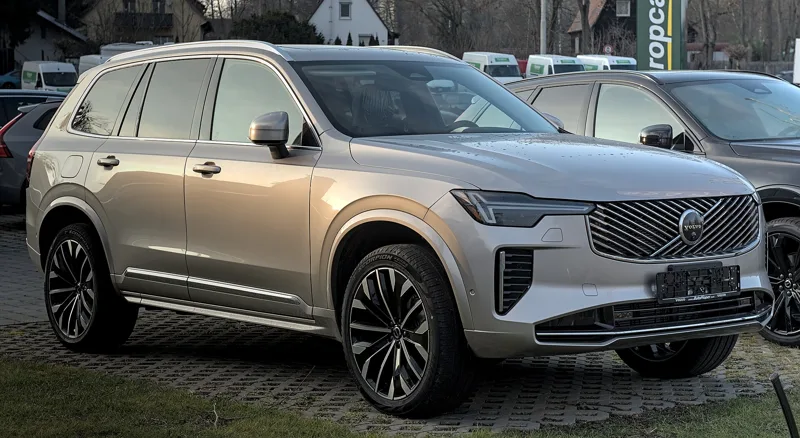
Not every trend has helped. Heavier vehicles and taller bonnets have raised pedestrian deaths. A taller bonnet blocks the driver's view, which makes a crash more likely, and it also makes the injuries worse. The 21st century has seen designs lean toward larger, taller front grilles that tend to kill more pedestrians. High-bonnet vehicles also have bigger blind spots.
Whether any of this shows up in a safety rating depends on where the car is sold. The US New Car Assessment Program has historically left pedestrians out of its scoring, so manufacturers had no penalty for increasingly blocky grilles. Euro NCAP, Japan NCAP and the Australasian programme include vulnerable road users in their ratings and mark down cars that perform poorly.
Being seen is safety too
Lights and reflectors mark a vehicle's presence, position and direction of travel. School buses and semi-trailer trucks in North America must have retroreflective strips along their sides and rear. Daytime running lamps became compulsory first in the Nordic countries in the mid-1970s. Canada followed in 1990, and the whole European Union has had them since 7 February 2011.
Colour has been studied, too. A Swedish study found pink cars involved in the fewest crashes and black the most, and an Auckland study found a lower rate of serious injury in silver cars. The Vehicle Colour Study, by Monash University Accident Research Centre in 2007, looked at 855,258 crashes between 1987 and 2004 in Victoria and Western Australia.
| Colour | Daylight, versus white | Dawn or dusk | Darkness |
|---|---|---|---|
| Black | 12% more likely | 47% more likely | No significant difference |
| Grey | 11% more likely | Not singled out | No significant difference |
| Silver | 10% more likely | 15% more likely | 8% more likely |
| Red and blue | 7% more likely | Not singled out | Red 10% more likely |
How did car safety research and design begin?
One of the first formal academic studies of motor vehicle safety came from Cornell Aeronautical Laboratory of Buffalo, New York, and its chief finding was the importance of seat belts and padded dashboards. The harm itself comes from the mismatch between a car's mass and speed and those of its main victim, the pedestrian.
Nicolas-Joseph Cugnot's steam Fardier of 1771 is reported by some to have hit a wall during its demonstration, though the earliest mention dates from 1801 and contemporary accounts do not include it. One of the earliest recorded car-related deaths was Mary Ward, on 31 August 1869 in Parsonstown, Ireland.
In 1922 the Duesenburg Model A became the first car with four-wheel hydraulic brakes. Safety glass became standard on all Ford cars in 1930, and in that decade the plastic surgeon Claire L. Straith and the physician C. J. Strickland pushed for seat belts and padded dashboards. GM carried out the first barrier crash test in 1934. The 1936 Hudson Terraplane had the first back-up brake system, and in 1937 Chrysler, Plymouth, DeSoto and Dodge added a flat, smooth dash with recessed controls, rounded door handles and heavily padded seat backs.
What this means for someone buying a car
The World Health Organization says 80 percent of cars sold in the world do not comply with the main safety standards. Just 40 countries have taken on every one of the seven most important car safety regulations. That makes the rating system and the equipment list worth reading. A buyer comparing cars can look at how the front end performs in pedestrian tests, how the car protects in a side impact, and whether the ratings body in the market takes vulnerable road users into account.
What is still to come in car safety?
Pedestrian-focused additions to the US assessment programme, including pedestrian automatic emergency braking, were delayed in 2025 at the industry's request. Self-driving cars are expected to prove safer than current vehicles because they remove the driver. The Center for Internet and Society at Stanford Law School links human error, at least in part, to some ninety percent of motor vehicle crashes. Standards such as ISO 26262 specify the required safety, though the burden remains on the industry to demonstrate it. Coalitions such as Together for Safer Roads, which works across five road safety areas, bring companies together to improve road safety.