How Holden Special Vehicles rebuilt a work ute and a Berlina-based sedan into the Maloo and the Senator, from 5.0-litre V8s to supercharged LSA power.
The HSV Maloo was a performance ute built by Holden Special Vehicles from 1990 to 2017, and the Senator was its luxury sedan counterpart from 1992. A Z Series Maloo R8 set the Guinness record for the fastest production utility at 271.44 km/h in 2006. Both models ended production in 2017.
In May 2006 a Holden-based ute ran through the Woomera Prohibited Area at an average of 271.44 km/h (168.66 mph) and became the fastest production utility ever recorded. Nobody has beaten it as of March 2025. The ute was an HSV Maloo R8, and it came from the same factory-backed performance division that built the Senator, a luxury saloon that moved to the same LS1 V8 family.
Holden Special Vehicles took Holden's workhorse ute and its upmarket sedans and rebuilt them into the Maloo and the Senator. One went for speed and the other for comfort at speed, and both stayed in production until 2017.
What is the HSV Maloo?
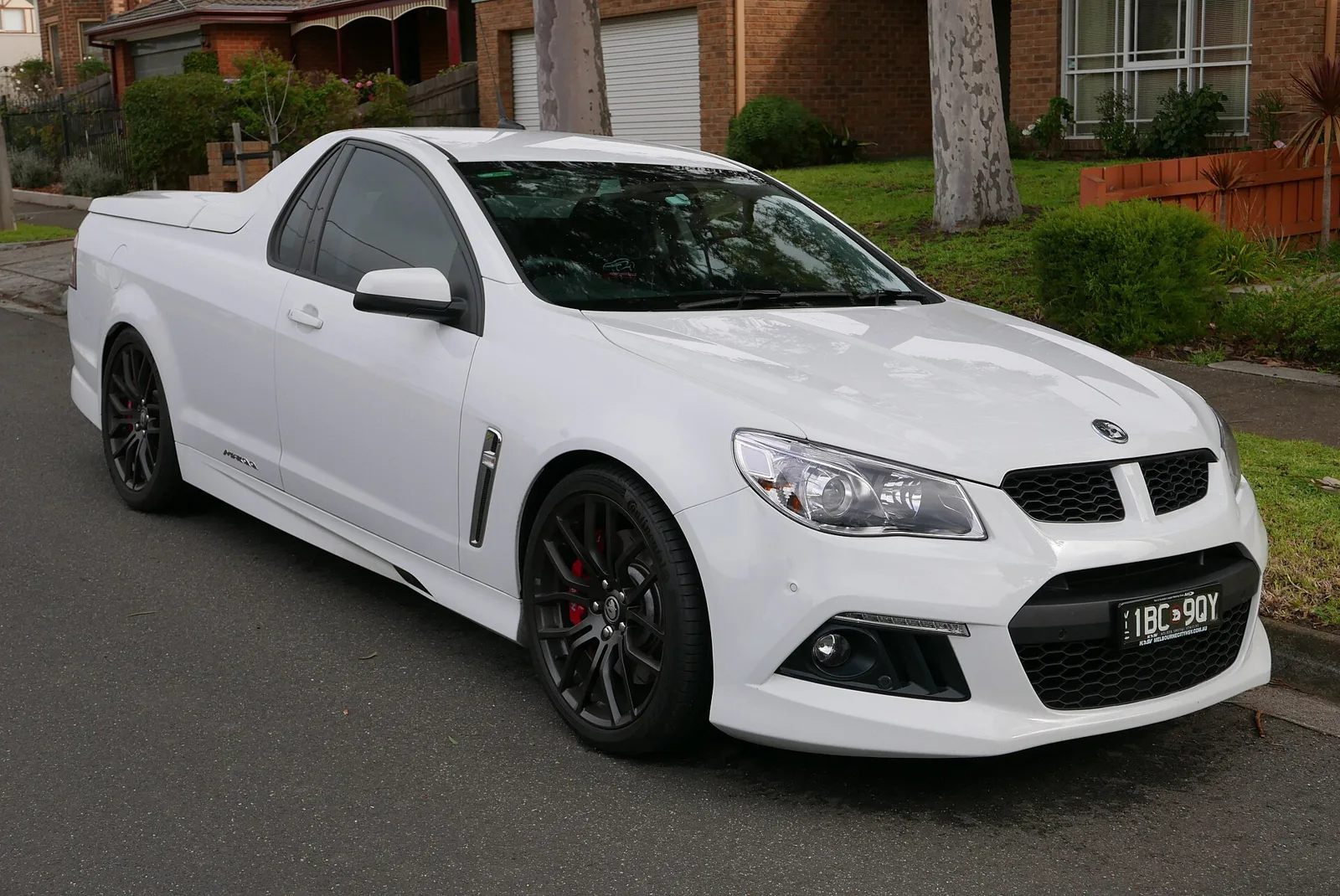
The HSV Maloo is a performance coupe utility built by Holden Special Vehicles from 1990 to 2017. HSV, Holden's designated performance division, based the first Maloo on the Holden Utility (VG) and gave it a 5.0-litre Holden V8. The VU Series later became the first Maloo with the LS1 engine and the first to offer the R8 specification. The name comes from an Aboriginal word for storm or thunder.
The record is an average of two runs in opposite directions, which cancels the effect of the wind.
How the Maloo grew, series by series
The first Maloo went on sale in October 1990 with the 5.0-litre V8 making 180 kW (241 hp). Only 135 were built. The VP of 1992 kept the same power, and the VR of 1993 reworked the interior and lifted output to 185 kW (248 hp), a figure that held through the VS range from April 1995 and its later updates. In 1999 the VS III took the 5.0-litre V8 to 195 kW (261 hp) and became the last HSV to use that Holden engine.
| Series | Launched | Engine | Output |
|---|---|---|---|
| VG | October 1990 | 5.0-litre Holden V8 | 180 kW (241 hp) |
| VR | 1993 | 5.0-litre Holden V8 | 185 kW (248 hp) |
| VS III | 1999 | 5.0-litre Holden V8 | 195 kW (261 hp) |
| VU | March 2001 | 5.7-litre LS1 | 255 kW (342 hp) |
| Y Series 2 | October 2003 | LS1 | 285 kW (382 hp) |
| Z Series | October 2004 | 6.0-litre LS2 | 297 kW (398 hp) |
| E Series | October 2007 | 6.0-litre LS2, then 6.2-litre LS3 | 307 kW (412 hp), then 317 kW (425 hp) |
| Gen-F R8 | August 2013 | LS3 | 325 kW (436 hp) |
The big step came with the VU in March 2001. It brought the 5.7-litre LS1 at 255 kW (342 hp) and the first Maloo R8, which wore a hard tonneau cover with a spoiler and 18-inch wheels where the regular Maloo had a soft tonneau. The Y Series of October 2002 raised output to 260 kW (349 hp) and added a Performance Brake system as standard, with the Premium Brake System on the R8. A year later the Y Series 2 climbed to 285 kW (382 hp), and in October 2004 the Z Series moved to a 6.0-litre LS2 V8 making 297 kW (398 hp).
From the E Series of October 2007 the Maloo came only as an R8. It started with an LS2 at 307 kW (412 hp), then switched in 2008 to a 6.2-litre LS3 at 317 kW (425 hp). The E Series 2 of August 2009 added daytime running lights and two bonnet vents of the kind seen on the Pontiac G8, and the E Series 3 of 2011 offered a bi-fuel option using liquid propane injection, so the engine could run on LPG and petrol. The Gen-F Maloo arrived in August 2013 with the LS3 at 317 kW (425 hp), and the Gen-F R8 made 325 kW (436 hp), the same as the MY15 car. Production ended in 2017.
Which ute holds the Guinness speed record?
A Z Series Maloo R8 holds the Guinness World Record for the fastest production utility or pickup truck, set in May 2006. Mark Skaife drove it in the Woomera Prohibited Area, averaging 271.44 km/h (168.66 mph) over two runs. It beat the previous record holder, the Dodge Ram SRT-10, by more than 20 km/h (12 mph).
The record is an average of two runs in opposite directions, which cancels the effect of the wind. Skaife managed 265.72 km/h (165.11 mph) into a headwind and 277.16 km/h (172.22 mph) with a tailwind. The Z Series Maloo still held the record as of March 2025.
Special editions, concepts and a UK badge
Holden Special Vehicles built limited Maloos to mark milestones. The VS series had a 10th Anniversary edition in anniversary bronze. In 2010 the 20 Years of Maloo R8 added bonnet scoops, Vector E vents on the front guards, a bi-modal exhaust, a blind spot warning system, a backup camera and parking sensors, and the same year the limited Maloo GXP took Pontiac styling in its front bumper and bonnet.
Supercharging came late. The 2014 Maloo GTS used a supercharged 6.2-litre LSA making 430 kW (577 hp). The Maloo R8 SV Black of 2016 kept the LS3, at 340 kW (456 hp). In 2017 the Maloo GTSR arrived with a supercharged LSA at 435 kW (583 hp), alongside the Maloo R8 LSA with 400 kW (536 hp) and the Maloo R8 LSA 30th Anniversary with 410 kW (550 hp).
Four utes that were never for sale
The rarest Maloo was a ute version of the limited HSV GTSR W1, launched in 2017. Only four were built, and none were offered to the public; they went to select people instead. Each used a 6.2-litre supercharged LS9 making 474 kW (636 hp). The four cars, numbered 000 to 004 in build order, were finished in matte metallic grey (Son of a Gun Grey), pale yellow (XU3 Yellah, which nodded to the original HSV VS GTSR of 1996), gold (Light My Fire) and red (Sting Red). The gold car sold for $1.05 million in 2021, and the yellow car made $1.2 million at auction in 2025.
Two earlier concepts showed what HSV considered. In 2001 the HSV HRT Maloo used a Callaway-tuned 6.2-litre LS6 at 350 kW (469 hp), 20-inch wheels and a wider body. The Maloo Cab Chassis, shown at the 2003 Australian International Motor Show, was based on the Holden One Tonner and used an LS1 making 260 kW (349 hp).
The Maloo also went abroad. From 2011 the E Series was exported to the United Kingdom through Vauxhall's performance division VXR as the Vauxhall Maloo, with the LS3 at 317 kW (425 hp). In 2017 it was replaced by the Vauxhall VXR8 Maloo LSA, which had a 6.2-litre supercharged LSA engine producing 400 kW (536 hp) and 671 N m (495 lb ft).
What was the HSV Senator?
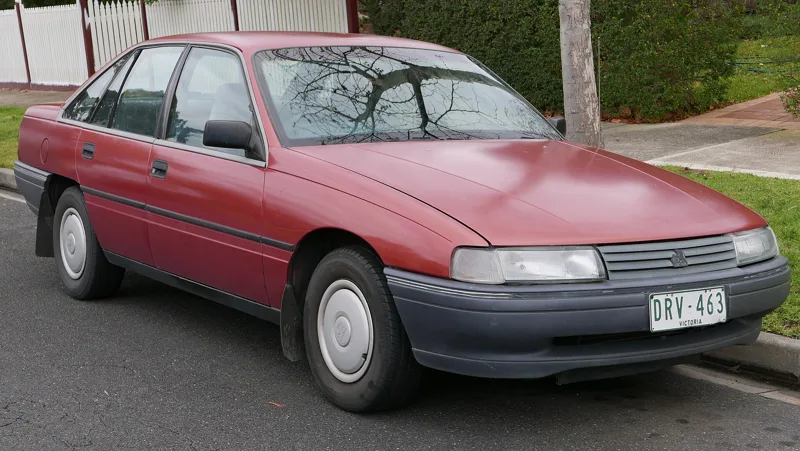
The HSV Senator was a performance-luxury sedan made from 1992 to 2017, based on the Holden Berlina and later the Holden Calais. When it arrived in 1992 it became the most luxurious car in the HSV range, replacing the SV91. It was the fourth model in the SV series, which began in 1988 with the SV88, the first vehicle badged under the HSV marque. For the 20th anniversary of that car, HSV built the Senator SV08 in 2008.
Against the standard Holdens, the early Senator added independent rear suspension, anti-lock brakes, new wheels, a revised interior and a body kit. It competed with the BMW 5 Series and other European luxury cars, as well as Ford Performance Vehicles' Force and its replacement, the GT-E.
The Senator through the years
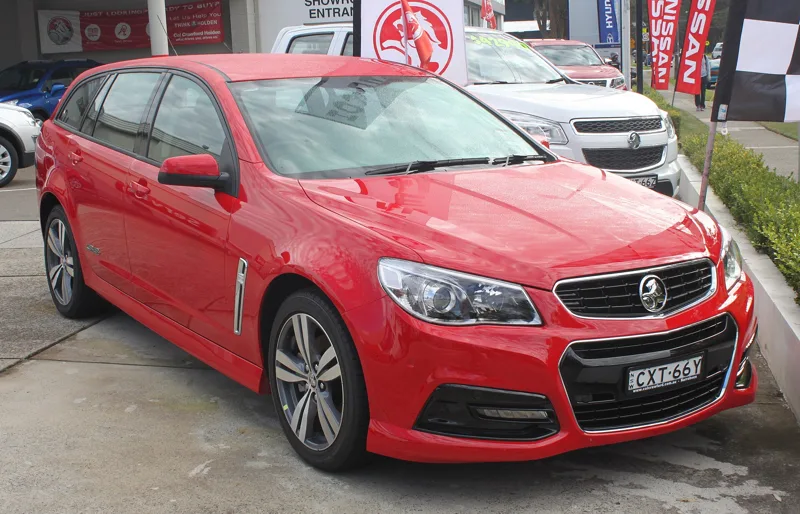
The VP Series Senator and Senator 500i of 1992 sat on the Berlina. The VR Series of 1993 brought the 185i and 215i, with an optional spoiler, and the 1995 VS Series kept those names while adding 10-spoke wheels and a choice of Sport or Touring suspension. The VT Signature of 1997 came in 195i and 220i forms, and a Senator Signature wagon followed that year, with 27 sold.
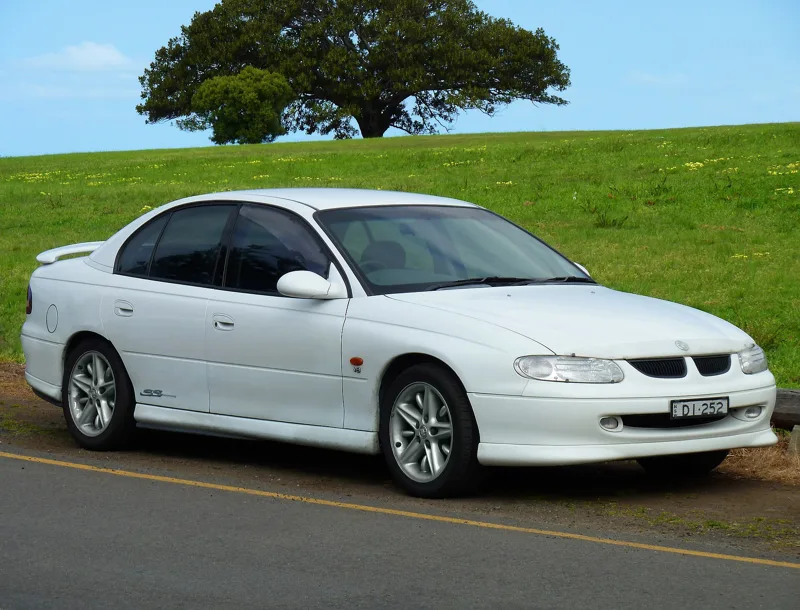
The VTII of 1999 swapped the Holden V8s for the LS1. A performance pack added new suspension, brakes and seats, 18-inch alloys from the WH Grange, and optional satellite navigation, a sunroof and a better sound system. The VX Series Senator Signature 255i came in 2000, the Senator 300i in 2001, and that year's SV300 was made only with a six-speed T-56 manual gearbox, 134 in all. The Y Series of 2002 gave the Signature 19-inch wheels, the Premium Brake System, cross-drilled and ventilated discs with four-piston calipers and a calibrated suspension called Luxury 3.
The E Series Signature of 2006 fitted Magnetic Ride Control, which stayed in luxury mode unless the driver pressed a button for Performance, and 19-inch wheels. The E Series 2 of 2009 added daytime running lights, and the E Series 3 of 2010 added the petrol and LPG bi-fuel option, a blind spot monitor and an optional bi-modal exhaust. In 2010 the Senator began export to Singapore along with the rest of the HSV range.
The SV08
HSV unveiled the limited Senator SV08 at the 2008 Australian International Motor Show. It used a six-speed Tremec TR-6060 manual gearbox, wore 20-inch Pentagon wheels and was built in a run of 50, of which 20 were manual and 30 automatic. The Gen-F Senator Signature followed in 2013 and the Gen-F2 in 2016. The Senator was discontinued in 2017, the same year as the Maloo.