What a hubcap does, how Rudge-Whitworth wire wheels won over car makers, why steel gave way to alloy, and what a rim actually is.
A hubcap is a small cover over a wheel's centre, while a wheel cover hides the whole face. Wire wheels spread after Rudge-Whitworth's detachable design, then pressed steel and, from the 1960s, cast alloy took over. The rim is the outer part of the wheel that holds the tyre, though many people call the whole wheel a rim.
The first hubcap appeared on the Newton Reaction Carriage in 1680, long before the first car, and the small cap on the hub of a modern alloy wheel is close in size to it. In the three centuries between, the wheel has been dressed in brass, chrome, stainless steel and plastic, and has been held together with wire.
A hubcap, a wheel cover, a wire wheel and a rim are four different things, and the confusion between them is common enough that one engineering text complains about it. A hubcap covers the centre. A wire wheel is built of tensioned spokes. The rim is the part that holds the tyre.
What is a hubcap, and how is it different from a wheel cover?
A hubcap is a decorative disk on a wheel that covers at least the central portion, the hub. Fitted over the hub and the lug nuts, it keeps dirt and moisture away from them, and it dresses the car too. In strict terms a hubcap is a small cover over the centre of the wheel. A wheel cover is a decorative metal or plastic disk, snapped or bolted on, that hides the whole face.
The wheel underneath decides which of the two a car wears. Stamped steel wheels often get a full-wheel cover that hides everything. Alloy wheels and styled steel wheels need no cover and leave the lug nuts exposed, so they close the central access hole with a small centre cap, which people also call a hubcap. Metal hubcaps have one practical bonus: they give an audible warning if a wheel nut works loose.
A hubcap covers the centre, a wire wheel is built from tensioned spokes, and the rim is the part that holds the tyre.
Where hubcaps came from
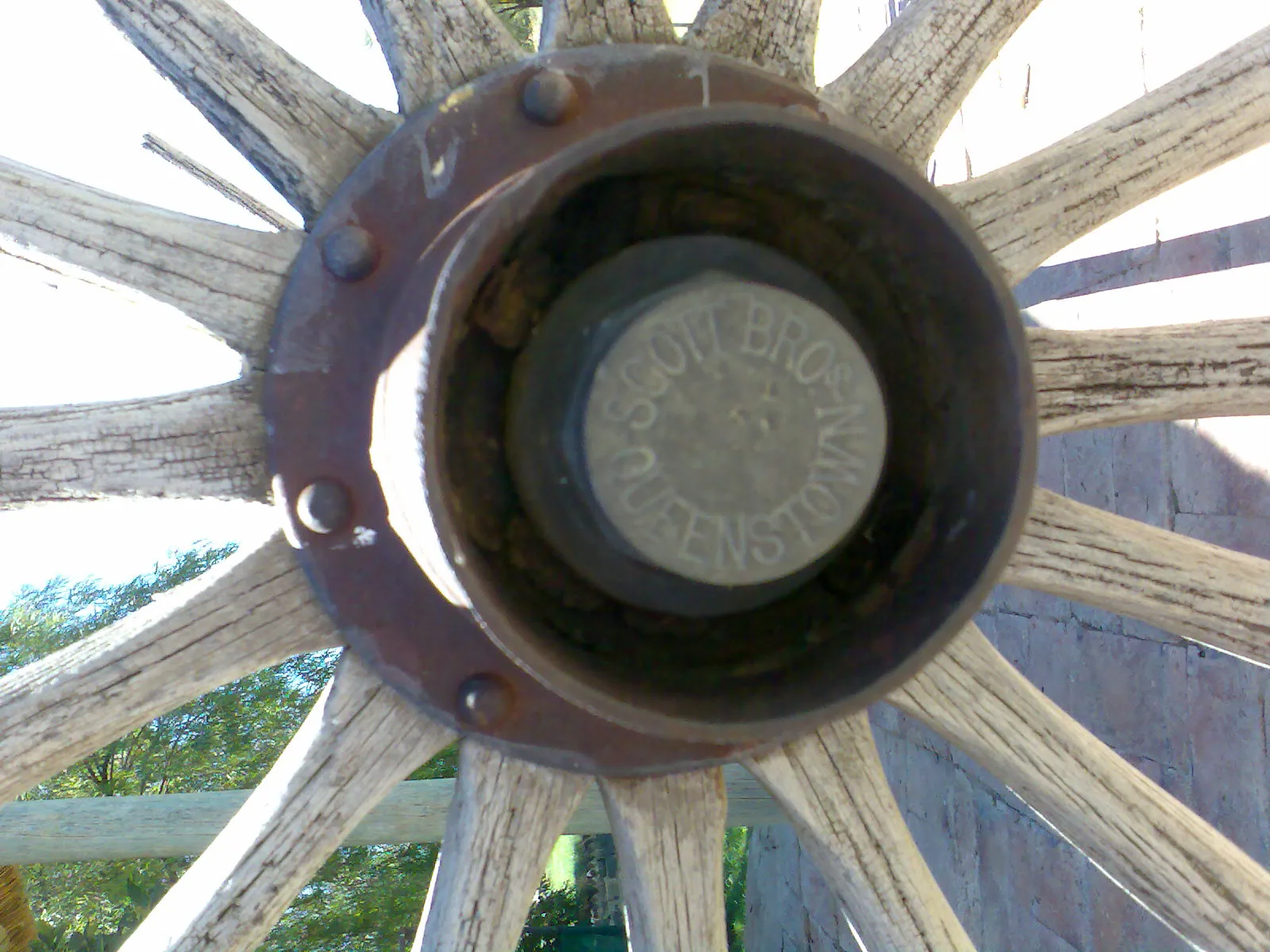
The earliest versions were known as dust or grease caps, threaded onto the centre hub of a wood, steel or wire wheel, and they were made from the beginning of car manufacturing until 1932. Before 1915 they were mostly nickel-plated brass, and in the 1920s mostly aluminium. Caps from wire wheel brands such as Houk, Dayton, Rudge Whitworth and Budd are some of the hardest to find, since the car maker's name was stamped in the middle when a customer bought the wheels.
The first snap-on centre caps were made in 1927 and 1928, and after 1932 almost every car had one. Their spring-loaded retention clip system has been used ever since. In the mid-1930s the first full wheel covers appeared, fitting over the entire wheel except a small part of the rim nearest the tyre. Cord and Hudson were early adopters. Cord made a plain chrome cover with holes in the side, and the Hudson cover was flat with a lip halfway in and the name Hudson, Hudson Eight or Terraplane at the centre.
When pressed steel wheels became common by the 1940s, they were often painted the colour of the body. Hubcaps grew to cover the lug nuts, shielding them from the rust that could make a wheel change difficult. Chrome-plated trim rings were an option, and the full wheel cover became popular, increasingly decorative and typically chrome-plated or stainless steel. Basic cars had plain, inexpensive caps nicknamed poverty caps or dog dish caps for their size and shape. In the 1960s and 1970s makers offered stainless steel covers with spokes that simulated the look of costly wire wheels.
Plastic wheel covers, called wheel trims in the UK, appeared in the 1970s and went mainstream in the 1980s. The first domestic car to use a full plastic cover was the Chevy Monza, with a design called wind blade that came in several colours. Plastic has since largely replaced steel for hubcaps and trims, and where steel wheels survive they are generally painted black so they hide behind the cutouts in the trim. Full-wheel hubcaps are now mostly seen on budget models and base trims, while upscale and performance models use alloy wheels. Variety has grown: a 2003 BMW Z3 had 23 different wheel options.
Why hubcaps fall off, and how people stop them
Hubcap lore says they fall off on bad roads when a wheel hits a bump. Centre caps drop off less often than the older, heavy full covers did, but the problem persists with every retention system engineers have tried. Clip-on caps, held by a spring steel or plastic clip in a groove in the wheel, tend to pop off suddenly after a pothole or kerb strike. Bolt-on caps, held by a threaded fastener or a plastic washer on the lug nut, are more likely to work loose over time and to rattle and squeak. Some garages in the United States and Mexico have decorated their walls with hubcaps that dropped off nearby, and sold them.
Owners fit electrical zip ties, sold in silver for the purpose, to keep plastic trims on. A kit with spare ties, cutters and latex gloves lets a trim secured this way be removed easily after a puncture.
In the United States, the custom car age of the 1950s and early 1960s made swapping wheel covers common. Two were especially wanted: the 1950 Cadillac Sombrero and the 1953 to 1955 Oldsmobile, which resembled a huge three-tined spinner. Mooneyes, named after founder Dean Moon, was among the first independent suppliers for hot rods and custom cars.
Wheel covers that work: motorsport and non-rotating caps
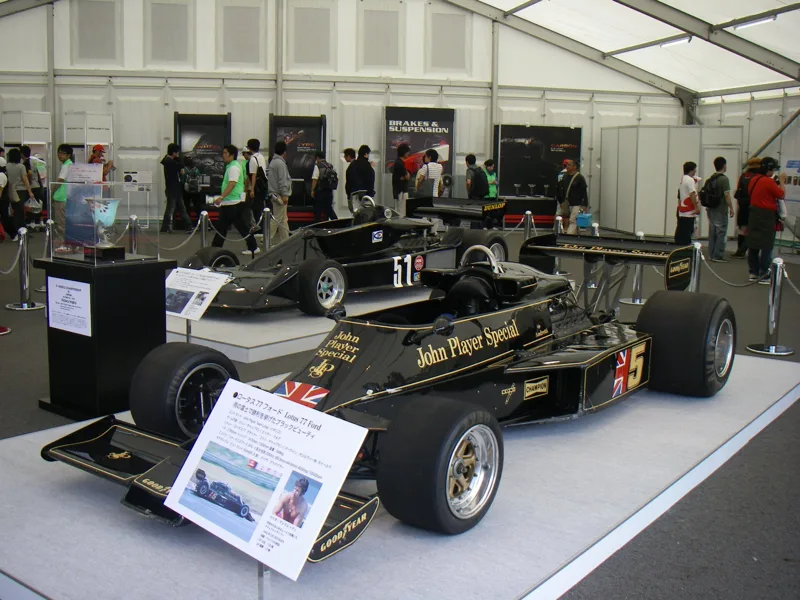
Some wheel covers earn their keep. Wheel shrouds, also called rim blanking or turbofans, have been associated with BBS since the 1970s. They are usually aluminium and mount like a wheel, and by shaping the flow of air towards the brakes they can produce downforce, so they are functional rather than decorative. A carbon fibre version arrived in Formula One in 2006 with Ferrari, which BBS supplies, to sidestep the FIA rule that wheels must be made of a homogeneous metallic material. After the Turkish Grand Prix the rear shrouds were adopted by Toyota and Toro Rosso and soon by every team. In America, shrouds were popular on superspeedways until Team Penske showed they could cut drag by 2.5 percent, and they were banned from the 1994 PPG Indy Car World Series.
BBS also introduced a static wheel fairing for Ferrari, shown at the British Grand Prix, as a brake cooling aid for the front wheels. One part was cut out at a 27 degree angle to let hot air escape, and every team followed. The covers were banned from F1 from 2010 after some broke loose in races. Ferrari then used a detachable aerodynamic device made of the same magnesium as the wheel, with double concentric rings, until the FIA's 2011 regulations prohibited wheel materials in certain exclusion zones.
A non-rotating hubcap keeps its orientation while the car moves. Rolls-Royce weights the cap centres and mounts them to turn independently of the wheel, so the RR logo stays readable. The same trick lets advertising be read on the move on race cars, taxis, commercial vehicles, buses and golf carts.
In Britain a hubcap is also called a nave plate. These chromed disks decorated cars such as Triumphs, and in the 1920s and 1930s they covered wire wheels, which are lighter and run truer than pressed steel, to make them look modern and streamlined and to be easier to clean.
What is a wire wheel, and why did it catch on?
A wire wheel, also called a wire-spoked, tension-spoked or suspension wheel, connects its rim to the hub with wire spokes. The wires are stiffer than a wire rope of similar diameter, but they behave like tensioned flexible wires: they keep the rim true while carrying the load.
The idea began with water wheels. The earliest known example is a 40 ft wheel that Thomas Hewes put in at Overton Mill, near Bandon, in 1802. A 60 ft suspension wheel built at the Burden Iron Works in Troy, New York in 1851 is widely believed to have inspired the original 250 ft Ferris Wheel. George Cayley proposed the idea for aeroplanes in 1808 but filed no patent, while the first patent for iron suspension wheels went to Theodore Jones of London on 11 October 1826, for heavy carts and wagons. Eugene Meyer of Paris patented wire wheels for bicycles in 1869.
James Starley patented tangent spokes in 1874, better than radial spokes at transmitting torque and braking forces, and they first appeared on the Coventry lever tricycle of 1876. The first motorbikes and light cars, among them the Benz Velo of 1894, used wire wheels. The Benz had tangent spokes at the front and radial ones at the back, where chain drive ran to large sprockets fixed to the inner spokes. Wooden artillery wheels were the general rule on full-size cars until around 1907.
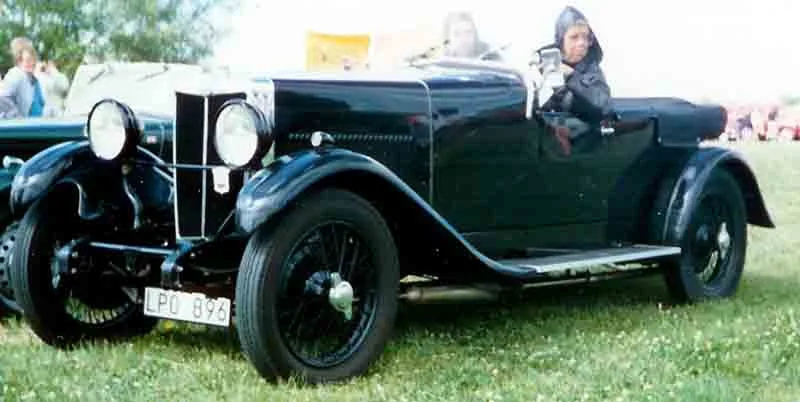
What made wire wheels widespread was the detachable, interchangeable wheel patented by Rudge-Whitworth, designed by John Pugh. Two inner rows of tangential spokes resisted braking and acceleration stresses, and an outer row of radial spokes gave strength against cornering loads. The wheels were deeply dished so the steering pivot pins could sit close to the centre line of the tyres, and they were easy to remove on splined false hubs. Quick-detachable hubs, from Rudge-Whitworth or Riley, also led to the fitting of spare wheels. After wooden artillery wheels proved inadequate, many American manufacturers paid Pugh royalties to make wire wheels under his patents.
| Wheel type | When it led | Main point |
|---|---|---|
| Wooden artillery | Full-size cars until around 1907; out of favour in the late 1920s | Proved inadequate |
| Wire | Spread with Rudge-Whitworth detachable wheels | Lighter and truer running than pressed steel, at a premium price |
| Pressed steel | Joseph Sankey's cheaper wheel replaced wire where weight saving did not justify the price | Common by the 1940s, often painted body colour |
| Cast alloy | Usual from the 1960s and now predominant | Lighter still; magnesium or aluminium |
The end of the wire wheel era, and the knock-off
Before 1960, sports and racing cars usually had Rudge-Whitworth centre-lock wire wheels on splined hubs, with a quick-release central wing nut called a knock-off, loosened by striking one wing of the nut with a special alloy mallet. In the late 1960s some jurisdictions, including the United States and West Germany, banned eared hubcaps for safety. Maserati, for one, held the wheel on with a single conventional hex nut and a special large spanner.
Cast alloy wheels, lighter again, took over in the 1960s. They started out on splined hubs with knock-off caps, and they are now the norm. New wire wheels are still made, often with standard hub bolt patterns covered by a centre cap so they fit without adapters. On motorcycles they are now mainly used for retro looks, apart from adventure, enduro and dirt bikes.
Wheel rim vs wheel: what is a rim?
The rim is the outer edge of a wheel, the part that holds the tyre. In cross-section it is deep in the middle and shallow at the edges, a U shape that supports the bead of the tyre casing. Iron rims were first fitted around the wooden wheels of chariots in the 1st millennium BC to help them last on rough ground.
Bicycle maker Thomas B. Jeffery, in an 1882 patent, embedded a wire in the tyre that could be tightened onto the rim. It became the ancestor of all clincher tyres, the design on modern bikes and cars, in which wires in both beads sit inside the rim edges to hold the tyre when inflated.
Two dimensions matter. The effective diameter is the distance between the bead seats. The effective width is the gap between opposite flanges, which should be at least three-quarters of the tyre section width, and the maximum rim width should equal the width of the tread.
- One-piece rims with a safety profile are typical of modern passenger vehicles and tubeless tyres. A pair of safety humps helps hold the bead on the rim in adverse conditions.
- Multi-piece rims on heavy vehicles and some trucks consist of a base with a side ring or side and lock ring, removable from one side for tyre fitting.
- Beadlocks clamp the tyre bead to the rim for low-pressure uses such as off-roading and drag racing, which reduces the chance of a sudden deflation.
Rim materials include alloy (magnesium and aluminium), magnesium, aluminium and chrome, and sometimes a Teflon coating adds protection. Rim size affects handling. A rim that is too wide for the tyre can cause vibration and a harsher ride, because the sidewalls lack the curvature to flex over rough surfaces, and an oversized rim can make the tyre rub on bodywork or suspension while turning. A rim that is too narrow may cause poor handling, with the tyre distorting sideways in fast cornering.
How is a steel wheel made, and why do rim and wheel get confused?
A standard steel wheel rim starts as rectangular sheet metal, bent into a cylinder and welded along the free edges. At least one flow spinning operation sets the thickness profile, and the sleeve is shaped into the rim seats and calibrated. A stamped disc with holes for the hub and the lug nuts is welded inside it so that the centre of the wheel is the centre of the hub. The distance from the rim's centreline to the mounting plane is the offset, which can be positive, negative or zero. A one-piece rim and wheel can also be cast or forged.
That is why people mix up the words. In car talk, wheel and rim are often used as if they meant the same thing, as in decorative wheels called rims, and one engineering text points out that alloy wheels are often incorrectly called aluminium rims. Some writers keep rim for the outer portion where the tyre sits. Others use it for the whole metal part, because rim and wheel are often cast or stamped from one piece of metal, unlike a wire wheel where they are separate parts.
The history of the rim follows the history of the wheel. Early motor vehicle wheels began as bicycle wheels, with rims fixed to the axle by spokes. Heavier vehicles used wood-spoked wagon wheels with steel rims, and later solid rubber tyres were mounted on them. Some wooden wheels had a demountable steel rim bolted onto the outside. All-metal wheels gradually became widespread around the 1930s.
What this means when you buy or fit wheels
A budget or base-trim car is the likeliest to wear a full hubcap over a steel wheel, and an alloy wheel will have only a small removable centre cap. If a rim is wider than the tyre suits, ride comfort can suffer, and one that is too narrow can let the tyre distort under hard cornering. Owners tired of losing hubcaps to potholes fit zip ties, and a metal cap warns by sound when a nut starts to loosen.
Where this goes next
The range of wheel trims on any given car keeps expanding, and plastic has largely taken over from steel as the main material. Alloy wheels continue to use small centre caps similar in size to the earliest hubcaps, and new wire wheels are still being made, with centre caps to hide standard hub bolt patterns.