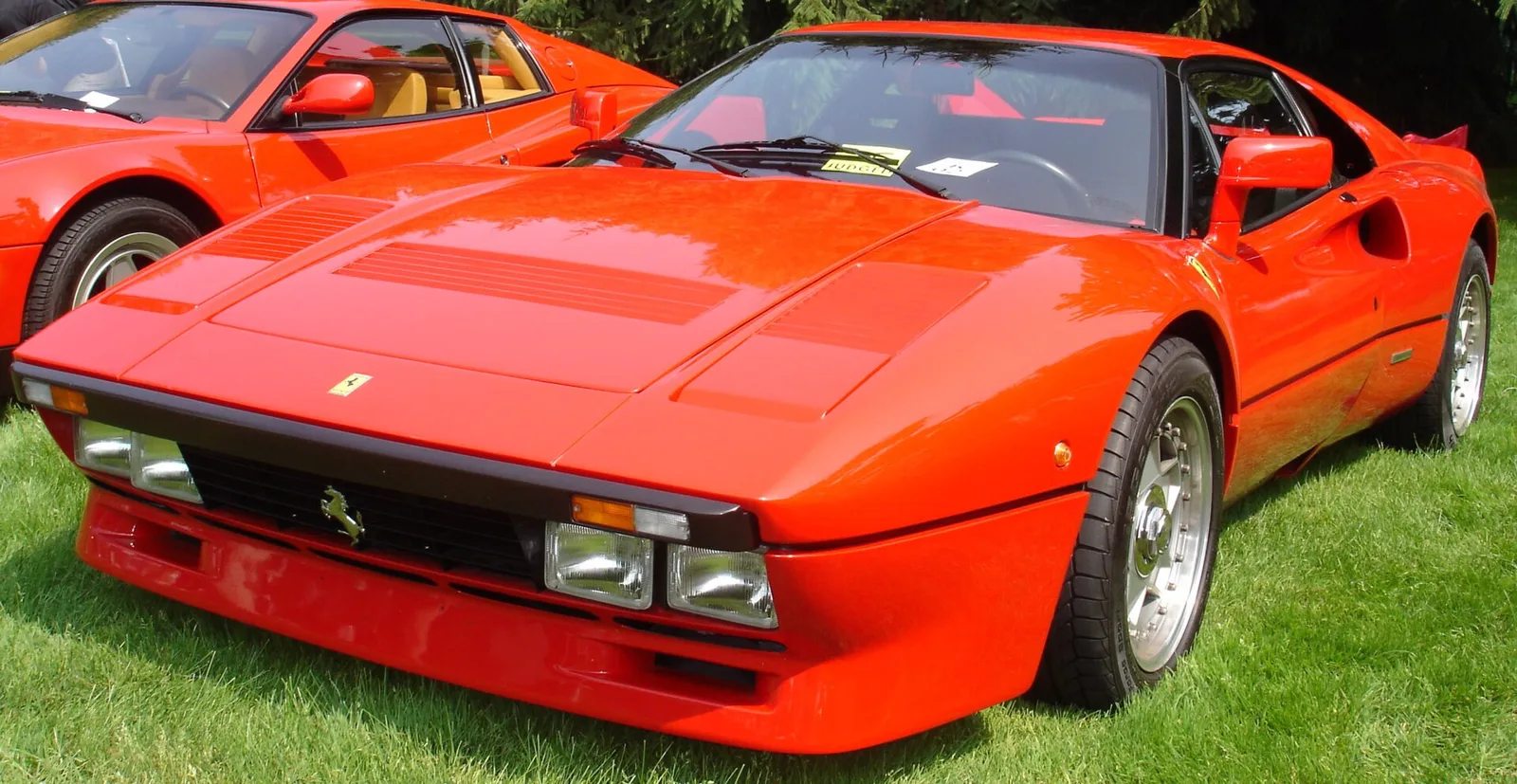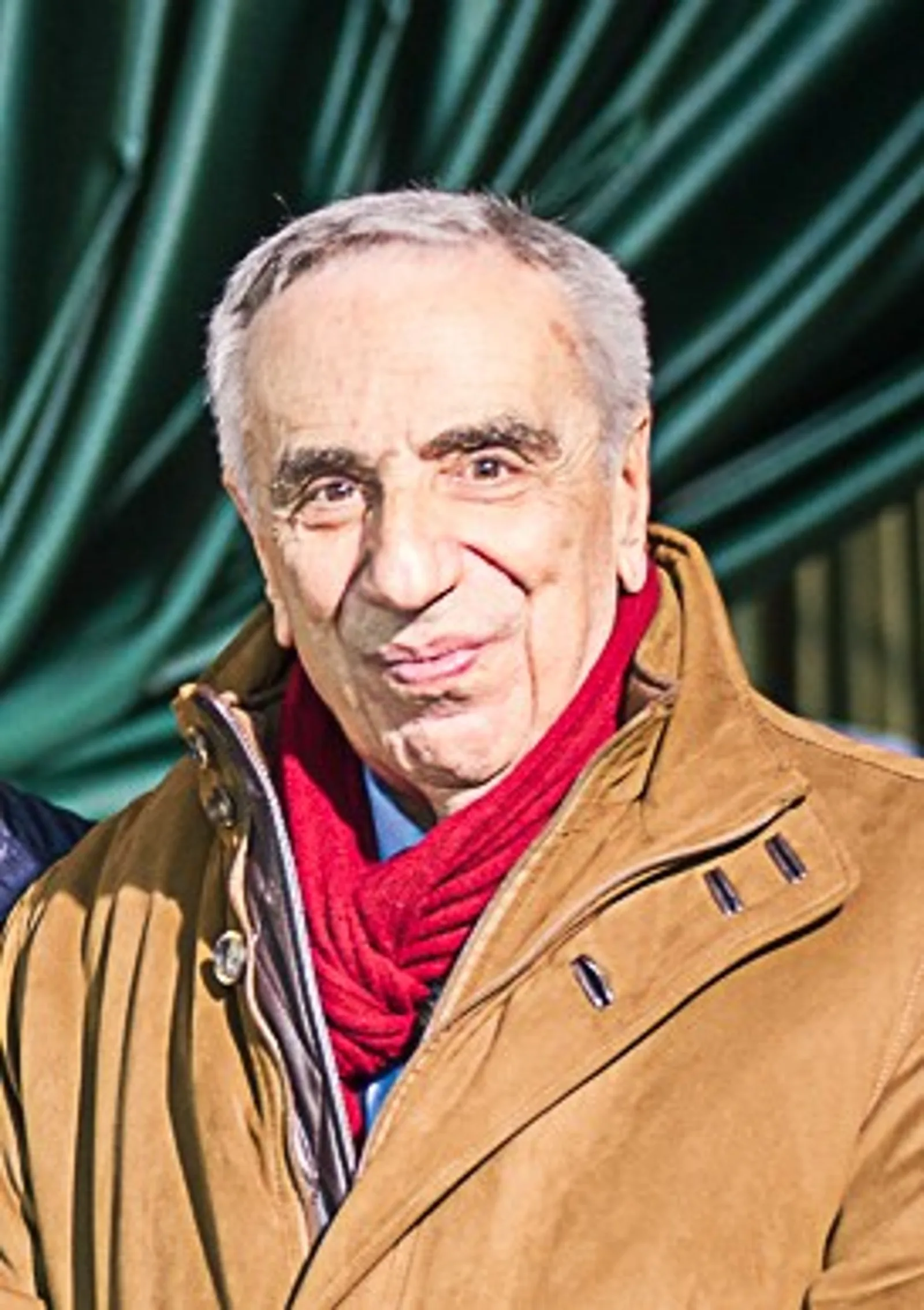
A racing designer, a Lamborghini general manager and a turbo specialist who built the F40 each left fingerprints on the EB110 and on Italy's best-known performance cars.
Mauro Forghieri designed Ferrari racing cars from 1960 to 1987, including the 312 series and the first Ferrari turbo engine. Paolo Stanzani helped create the Lamborghini Miura and started the Bugatti EB110. Nicola Materazzi led development of the Ferrari 288 GTO engine and the F40.
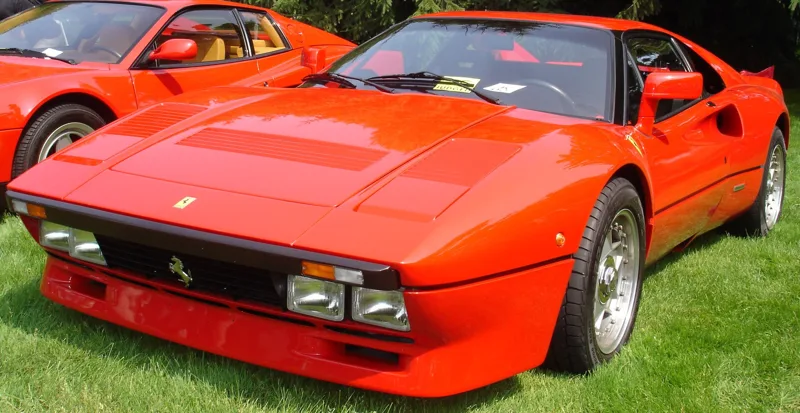
Ferrari's F40 project began on 10 June 1986, and the car sat in front of the press at Maranello on 21 July 1987. That left roughly 12 months, and the engineer responsible, Nicola Materazzi, got there by working weekends and bank holidays. He was one of three Italian engineers whose careers keep crossing in the history of the great Modenese and Bolognese supercars. The other two are Mauro Forghieri, who spent most of his working life on Ferrari's racing cars, and Paolo Stanzani, who helped give Lamborghini its first road cars.
All three worked on the Bugatti EB110, each at a different moment. Here is who they were and what they engineered.
Who were Mauro Forghieri, Paolo Stanzani and Nicola Materazzi?
| Engineer | Lived | Main employers | Best-known work |
|---|---|---|---|
| Mauro Forghieri | 13 January 1935 to 2 November 2022 | Ferrari, Lamborghini Engineering, Bugatti | 250 GTO development, 312 series, first Ferrari turbo F1 engine |
| Paolo Stanzani | 20 July 1936 to 18 January 2017 | Lamborghini, Bugatti Automobili, BMS Scuderia Italia | Miura, Espada, Urraco and Countach; the start of the EB110 |
| Nicola Materazzi | 28 January 1939 to 24 August 2022 | Lancia, Osella, Ferrari, Bugatti | 288 GTO engine, F40, EB110 carbon-fibre chassis, Edonis |
Materazzi had about 12 months to take the F40 from first sketch to press table.
What did Mauro Forghieri engineer at Ferrari?
Mauro Forghieri was born in Modena on 13 January 1935, the only child of a turner whose work later took him into the Ferrari workshop at Maranello. Forghieri studied mechanical engineering at the University of Bologna and graduated in 1959. Aviation design attracted him first, but his father introduced him to Ferrari, and in spring 1960 he began an apprenticeship in the engine department. His colleagues there included Vittorio Jano, Carlo Chiti, Luigi Bazzi and Giampaolo Dallara.
Everything changed in 1961, when chief designer Chiti and others left to join the breakaway ATS team in what became known as the great walkout. Forghieri was left as the only credentialed engineer on the staff. Enzo Ferrari personally asked him to begin studying the factory's whole technical picture. He was 27, and more experienced hands such as Franco Rocchi, Walter Salvarani and Angelo Bellei guided him. He was soon technical director for racing cars, a post he held until 1984.
The cars Forghieri designed
He had a hand in every racing car the factory built between his hiring and his departure in 1987. On the sports car side, he carried on the development of the 250 GTO after Chiti and Giotto Bizzarrini's original team walked out, worked on competition versions of the 275 GTB and 330 LMB, and led the team behind the P series and later Dino prototypes, starting with the 1965 Dino 166 P. Of all his designs he named the 1967 330 P4 as his favourite.
In Formula One he designed the V8 Ferrari 158, in which John Surtees won the 1964 World Championship. The 158 and the 1512 shared an aluminium monocoque chassis of his design, the first of its kind in a Ferrari F1 car. From 1966 he produced the 312 family, covering the 312, 312B and 312T grand prix cars and the 312P and 312PB sports cars. He is also credited with the first purpose-designed rear wings in Formula One, at the 1968 Belgian Grand Prix, and with the Ferrari flat-12 engine series.
Two of his ideas arrived years before their time. In 1979 he designed a semi-automatic gearbox for the 312T, which Gilles Villeneuve tested but which never raced. A similar system appeared in the 1989 Ferrari 640, and the first roadgoing automated manual, the F1 gearbox, came in the 1997 F355. The same year he began Ferrari's first turbocharged engine, which made its debut in the 1981 126 C.
While he led the technical side Ferrari took four drivers' titles, with Surtees in 1964, Niki Lauda in 1975 and 1977, and Jody Scheckter in 1979, along with seven constructors' titles.
Forghieri at Lamborghini, Bugatti and Oral Engineering
Forghieri worked on the 408 4RM concept from January 1985, and when it was finished in spring 1987 he left Ferrari for good. In September of that year he joined Lamborghini Engineering, a department set up by Lee Iacocca, then the chief executive of Chrysler, which had bought the Emilian firm. There he designed the naturally aspirated 3512 V12, which made its Formula One debut at the 1989 Brazilian Grand Prix with the Larrousse/Lola team and was used again in the 1990 Lotus 102.
The encouraging results led to a full car for a new team called GLAS F1, backed by a Mexican businessman, Fernando Gonzalez Luna. The day before the planned presentation of the GLAS 001 ahead of the 1990 Mexican Grand Prix, Gonzalez Luna disappeared with a large amount of sponsors' money. Carlo Patrucco bought the team in July 1990, and the car Forghieri and Tolentino had designed finally raced as the Lambo 291 in the 1991 US Grand Prix. Forghieri drew the suspension and gearbox, and Tolentino the bodywork.
Chrysler reorganised Lamborghini Engineering in 1991 and replaced him with Mike Royce. In 1992 he became technical director of the reborn Bugatti, where he stayed until 1994, working on both the EB 110 and the EB 112. In 1994 he also gave expert evidence in the trial over Ayrton Senna's fatal crash at San Marino. On 1 January 1995 he co-founded the Oral Engineering Group with Franco Antoniazzi and Sergio Lugli, a design company whose clients include BMW, Bugatti and Aprilia and which turned the Ferrari Pinin concept into a driveable car. Around 2005 he joined Project 1221 as chief engineer on its MF1 sports car.
What did Paolo Stanzani build at Lamborghini?
Paolo Stanzani was born in Bologna on 20 July 1936. His father worked for a transport company and the boy often went along, which gave him an early familiarity with trucks and engines. At 16 he patented a device that kept milk from boiling over, sold the patent and bought a small Laverda motorcycle that his mother had to register because he was too young. He also thought up headlights that swivelled with the steering, an idea FIAT ignored and Citroen later used. He graduated in mechanical engineering at Bologna in summer 1962.
Automobili Ferruccio Lamborghini hired him on 30 September 1963 as assistant to technical director Gianpaolo Dallara. His first big job was to rework the engine of the 350 GT, Lamborghini's first road car. Giotto Bizzarrini had delivered what Ferruccio Lamborghini asked for by using racing parts, including high-lift camshafts and connecting rods machined from billet. Stanzani had to cut the cost and make the engine pleasant to use every day, so he went back to cast connecting rods, changed the cam profiles to deliver torque at lower revs and found carburettors that met the cost and drivability targets.
Until 1967 he handled structural calculations, the testing department, covering engine test rooms, road tests and homologation, and relations with the coachbuilders Touring, Bertone, Marazzi, Zagato and Silat. That period took in the 350 GT, 400 GT and Islero and, above all, the Miura, with its transverse V12 and integral transmission, a layout that came from the collaboration of Dallara, Stanzani and Bizzarrini. His stated aim was to do today what others would only attempt tomorrow.
He became general manager in 1967 and technical director in 1968. By seniority the job should have gone to Dallara, but Ferruccio Lamborghini either preferred Stanzani's dedication or felt Dallara was more interested in racing. Dallara left soon after, though the two stayed friendly for the rest of their careers. The Espada, Jarama, Miura S, Miura SV, Urraco and Countach all entered production in this period, and he is credited as the father of several of them. While still at Lamborghini he also led the BMW Turbo concept, styled by Paul Bracq, for the 1972 Munich Olympics. It used an Urraco chassis and a 2.0-litre four-cylinder from the 2002tii, and its shape was developed six years later into the BMW M1.
The 1973 oil crisis hurt cars with big engines. After Ferruccio Lamborghini sold 51 percent of the company to Georges-Henri Rossetti and the remaining 49 percent to Rene Leimer, Stanzani found it hard to win decisions and funding from the new owners and left in February 1975. The company went bankrupt in 1978. He then took contract design work for Renault, Alfa Romeo and Suzuki, and his Bologna studio grew into the software business PRO Group.
Stanzani and the birth of the EB110
Stanzani stayed friendly with Ferruccio Lamborghini, who talked of building another sports car. Franco Baraldini introduced Lamborghini to Romano Artioli, who had the money and a childhood dream of reviving Bugatti. Lamborghini lost interest but suggested Stanzani carry on. The project kept the working name FL12, short for Ferruccio Lamborghini 12 Cylinders, while Tecnostile, a team of approximately 15 people, designed the V12 engine, the aluminium honeycomb chassis and the suspension. Its founders, Achille Bevini and Oliviero Pedrazzi, had drawn the Bizzarrini engine for the first Lamborghini.
In 1987 Stanzani chose the site at Campogalliano, 10 km north-west of Modena, beside the A22 motorway. He was named Sole Director of Bugatti Automobili with a 35 percent share, and he was managing and technical director until July 1990, when Artioli increased the capital and diluted his stake. Press material did not mention him afterwards until web articles of the 2000s retraced the story. Bugatti Automobili went bankrupt in 1995.
Stanzani in Formula One
In 1991 Giuseppe Lucchini hired him to run BMS Scuderia Italia, with Dallara's company supplying the composite chassis. He found it hard to bring knowledge in-house because the engine suppliers, first Judd and then Ferrari, leased or sold units with little data. A switch to a free Lola chassis for 1993 reduced downforce. Honda talks went nowhere, since Honda chose to supply Team Lotus. Stanzani then brokered the merger of Scuderia Italia and Minardi, with Giancarlo Minardi as president and himself as vice president, running the F194 with an ATR chassis and a Ford Cosworth HB engine under technical director Aldo Costa. After Senna's accident at the 1994 San Marino Grand Prix he urged that the race be halted, but it went on. He left in 1995 to found a renewable energy company, and he died on 18 January 2017.
Why is Nicola Materazzi called Mr. F40?
Nicola Materazzi was born on 28 January 1939 into a family of doctors, and he was asking his parents to read him car articles at the age of 4. He built his first go-kart in 1961. He studied engineering at the University of Naples, spent a year as an assistant professor and left during the student protests of 1968. At Lancia in Turin he did the calculations for chassis, suspension and steering structures, including the Flavia and Fulvia, and then on the Stratos. The Group 5 Stratos Silhouette introduced him to turbocharging, which became his specialty.
After the Lancia and FIAT racing departments merged in 1978, he moved to Abarth to design the Formula Abarth car, then to Osella, where he designed the FA2 for Formula 2 and later the FA1 for Formula 1. By January 1980 he was at Ferrari, hired in 1979 as head of the design and engineering office because of his skill with forced induction. He was the main engineer behind Ferrari's turbo engines, while Forghieri remained technical director. In 1981 Enzo Ferrari set the racing staff as Forghieri, Angiolino Marchetti, Gianfranco Poncini and Materazzi, who ran the technical office for all chassis and engine development.
Turbos in the early 1980s were powerful but not always robust. Enzo Ferrari wanted the turbo on the 126 sooner, while Materazzi argued the engine needed more dynamometer time to prove it could last a race distance.
The 288 GTO and the F40
Enzo Ferrari complained that emissions rules and cost-cutting had left the road cars sleepy, and he wanted racing know-how in his customers' hands. On a late evening in his office Materazzi said a three-litre road engine ought to make at least 400 horsepower rather than the 300 in the initial specification. Ferrari took it as a chance to hand him the job, and Materazzi accepted reluctantly. The resulting F114B engine was a 2.857L V8, and he placed it longitudinally in the 288 GTO to give more room and equal exhaust lengths for the turbos. He also worked on the engines for the 328 Turbo, Testarossa and 412.
The GTO Evoluzione was ready for production in the numbers Group B required, but the championship was cancelled after the deaths of Toivonen and Cresto. Ferrari asked why such a car should be killed and whether it could become a road car. Materazzi said it was possible only without interference from people and politics. Ferrari let him choose his collaborators, and the agreement went into a diary entry, in Italian, with a note that nobody was to interfere.
A launch at Frankfurt in October would have clashed with the Alfa Romeo 164, so Ferrari insisted on a presentation before the August holidays, which gave Materazzi the 12 months. At the press event in the Civic Centre in Maranello, he sat at the table with Fioravanti, Ferrari and Razelli.
Some articles called the F40 Ferrari's answer to the Porsche 959. Materazzi disagreed: Porsche's Group B project began in 1981 and the car was built from 1986, and he maintained that only the 288 GTO, developed from 1983 to 1984, was the 959's rival. The F40 grew from the GTO Evoluzione with no brief to match the Porsche's four-wheel drive or adaptive damping.
Materazzi after Ferrari
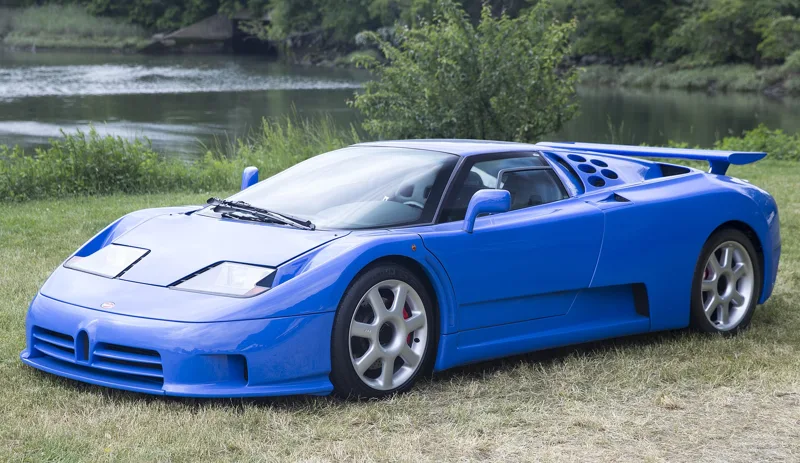
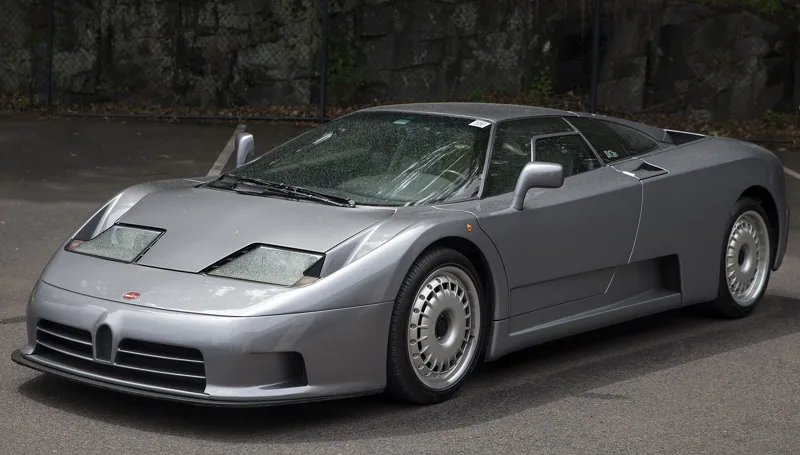
In August 1987 Enzo Ferrari decided to make him technical director of the road car division. FIAT, which controlled that division, chose a manager from Carraro Tractors instead, and Materazzi left for the motorcycle maker Cagiva at the invitation of Claudio Castiglioni. At the end of 1991 Romano Artioli asked him to take over the Bugatti EB110, which was in serious trouble. He replaced the aluminium honeycomb chassis with carbon fibre, cured engine reliability problems, changed the front-to-rear torque split and specified the lightweight SS for 340 km/h. After a group test, Michael Schumacher is said to have ordered an EB110 in yellow with a blue interior.
His last car was the B Engineering Edonis, styled by Marc Deschamps. Work began in 2000 so the car could be shown by 1 January 2001, and it was presented in Modena in 2001. Over 42 years he worked on 38 projects. He died on 24 August 2022.
How did the three engineers meet at the Bugatti EB110?
- Stanzani: started the project as the FL12, chose the Campogalliano site in 1987 and led Bugatti Automobili until July 1990.
- Materazzi: took over at the end of 1991, after Stanzani had gone, and changed the chassis, torque distribution and engine reliability.
- Forghieri: technical director from 1992 to 1994, involved in the EB 110 and the EB 112.
How are the three engineers remembered?
Modena made Forghieri an honorary citizen in 2021, and he died on 2 November 2022 aged 87. Scuderia Ferrari marked his death with decals reading ciao Furia, goodbye Fury, his nickname at the team, on its F1-75 cars at the 2022 Sao Paulo Grand Prix and on its 488 GTE cars at the 2022 8 Hours of Bahrain. Materazzi is sometimes known as Mr. F40.