Karting teaches racecraft on the cheap, and Formula Ford took that learner into proper single-seaters. Here is how each ladder works and how they link up.
Karting is small open-wheel racing, widely used as the first step into car racing; Senna, Schumacher, Hamilton, Vettel, Verstappen and Norris all began there. Formula Ford is an entry-level single-seater class launched in 1967, long regarded as the first major step after karting.
Emerson Fittipaldi spent only a short time in Formula Ford, then won a Formula One Grand Prix in 1970 and the world championship in 1972, becoming the first Formula Ford graduate to do either. Many of today's Formula One names, from Senna to Norris, began even lower down, in a small four-wheeled kart.
What is kart racing?
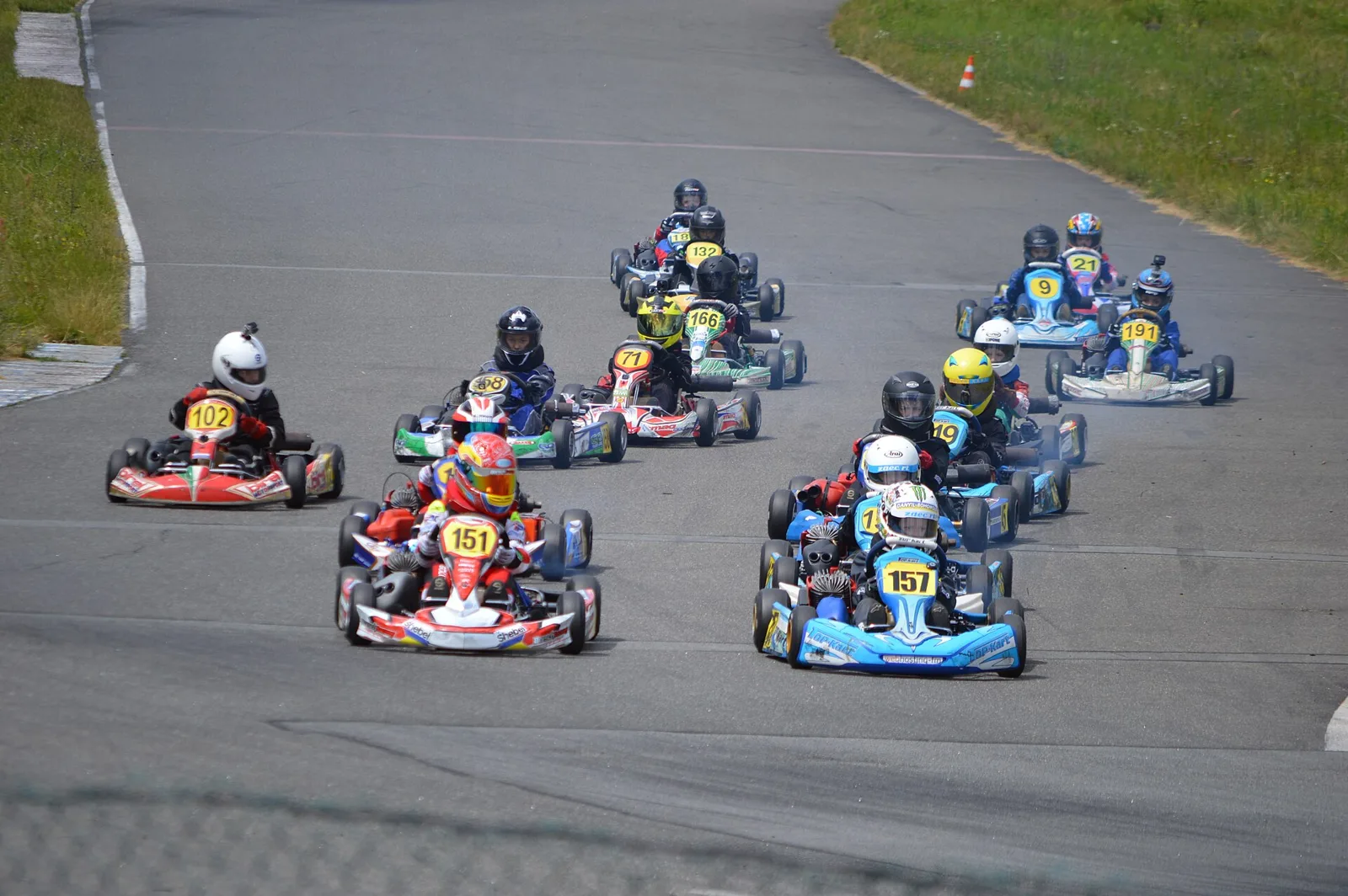
Kart racing, or karting, is motorsport in small open-wheel four-wheeled vehicles called go-karts or racing karts. Races usually take place on dedicated kart circuits, though superkarts also use full-size motor racing circuits. Karts range from recreational rental machines to high-performance racers.
It is done for fun and in competition. Competitive formats include sprint, endurance, speedway, street and international championships, with classes set by the age of the driver and by the engine, chassis and weight. The sport doubles as a development category for drivers heading into car racing, and Lando Norris, Max Verstappen, Sebastian Vettel, Lewis Hamilton, Michael Schumacher and Ayrton Senna all started there.
Karting teaches a driver to race, and Formula Ford teaches a driver to race a car with a gearbox, a chassis to set up and nothing to hide behind.
Where did karting begin?
Modern karting began in Southern California in the 1950s. Many give credit for the first kart to Art Ingels, an American race-car builder who worked at Kurtis Kraft. FIA Karting's records name the Caretta-West Bend, finished in Glendale in August 1956 by Ingels and Lou Borelli, as the first. It had a plain tubular frame and a little two-stroke engine from West Bend.
Early karts were home-built and driven in car parks, among them the one at the Rose Bowl Stadium in Pasadena, ahead of any organised racing. The sport spread quickly across the United States and into Europe in the late 1950s and early 1960s. Engines came from lawnmowers, chainsaws and motorcycles until specialist kart engines arrived, and by the 1960s dedicated chassis and engine makers existed in the United States and Europe. Italian makers became especially prominent later.
International competition grew in the 1960s: the European Nations' Cup began in 1962, and the Karting World Championship staged its first event in 1964. Indoor karting developed later as a commercial leisure activity. The New York Times reported in 1995 that it had grown in London from the mid-1980s and become popular in the 1990s.
How to start karting
The door is wide open. Karting below the national level lives in regional series, club championships and local tracks, and in rental leagues and commercial arrive-and-drive days. Some of it runs under permits from the national motorsport authority; the rest is organised privately. Casual karting tends to use rental karts, for recreation, company days, local leagues or simply to develop a driver. It sits outside the recognised national pathways, but it is frequently where new drivers first experience kart racing.
Endurance formats help too. In rental-kart and arrive-and-drive team events, new or amateur drivers can take part without owning a kart.
The next steps are structured by age and engine. In the United Kingdom, Motorsport UK describes categories as Cadet, Inter, Junior, Senior and Gearbox, with events built from practice, qualifying, heats and finals. South Africa's national championships use age-based Rotax categories, from Bambino and Micro MAX up through Mini MAX, Junior MAX and Senior MAX to DD2 and DD2 Masters, and the Australian Kart Championship recognises classes such as KZ2, KA2, X30, TaG 125, the KA3 Senior and Junior divisions, and Cadet.
How is kart racing organised?
FIA Karting, which used to be called the Commission Internationale de Karting, governs the international game, including the Karting World Championship across direct-drive, gearbox and superkart categories. National bodies run the rest. In the UK that is Motorsport UK, which says most karting is short-circuit racing; the faster superkarts, known as long-circuit karts, also run on full-size tracks.
The United States has no single national karting authority. Domestic racing is organised through sanctioning bodies, national and regional series and local clubs, including the United States Pro Kart Series, SuperKarts! USA and the World Karting Association. In Australia, Karting Australia says it alone has recognition from the FIA and Motorsport Australia to run and regulate karting in the country.
Rotax MAX Challenge is a worldwide single-brand series built on Rotax engines, with drivers in more than 60 countries working towards the Grand Finals on equalised equipment. The ROK Cup Superfinal gathers drivers from ROK Cup national series, while the Champions of the Future Academy Program is an arrive-and-drive international series, also on equalised equipment.
What formats does karting use?
Sprint racing is the most common. It takes place on dedicated circuits that look like miniature road courses, mixing left and right turns, hairpins, chicanes and brief straights. Results from qualifying or heats set the starting positions for later heats or finals, so the format puts a premium on qualifying pace, overtaking, racecraft and consistency.
Endurance karting runs for longer than sprints, from around 30 minutes to 24 hours or more, by individuals or teams, and adds pit stops, driver changes, fuel strategy and reliability. In the United States some endurance races, called enduros or road races, use full-size car circuits and specialised karts of the laydown or sprint-enduro type. The World Karting Association's Road Racing Series, once called the Enduro Series, runs 30-minute sprint-enduro races and 45-minute laydown-enduro races on road courses usually built for cars. At Le Mans, the Karting des 24 Heures complex is a notable endurance venue, home to Circuit Alain Prost among other tracks.
Street karting is the rarest form, held on temporary circuits on closed public roads, in parks or urban areas, with layouts that can change from year to year.
What is Formula Ford?
Formula Ford goes by F1600 and Formula F as well, and is an entry-level single-seater open-wheel class. Championships around the world have long been a step for prospective Formula One drivers, and it has long been seen as the first big step into formula racing once karting is behind a driver. Career-minded drivers race alongside amateurs and enthusiasts. Success can lead straight to Formula Renault 2.0 or Formula Three, and women drivers can move on to F1 Academy.
Unlike nearly every other open-wheeler series, it is not a one-make championship. Chassis design, engine build and numerous technical details are open, so many makers, large and small, can take part.
The ladder has shifted. Many drivers aiming at a professional career now begin in Formula 4, whose cars have aerodynamic downforce and a semi-automatic gearbox like Formula One and other professional series. Even so, Formula Ford remains popular.
Formula Ford history, from racing school to global class
The idea grew out of the early 1960s, when schools such as Jim Russell's and Motor Racing Stables ran Formula Junior and Formula Three-style cars from constructors like Cooper and Lotus. Plenty of drivers wanted to learn there, yet the schools struggled to stay solvent. A 1-litre Formula Three engine, a 1.1-litre Coventry Climax FJ unit or the later Kent engine out of the Ford Anglia 105E each cost around 3,000 pounds at the time, a set of Dunlop racing tyres was 80 pounds, and the engines were fragile.
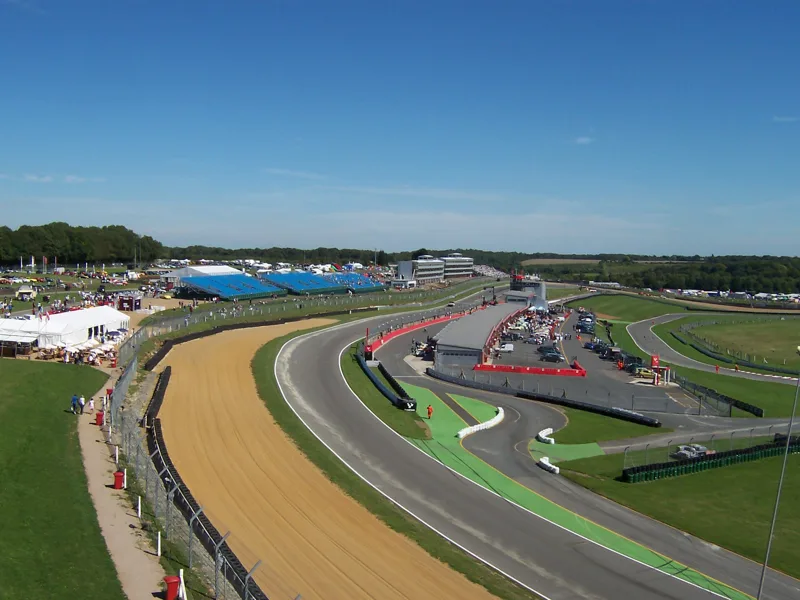
In 1963 Geoff Clarke, owner of Motor Racing Stables, moved to Brands Hatch and met John Webb, the managing director of developments there. Two of the school's Lotus Formula Junior cars received an ordinary 1498cc Ford Kent pushrod engine, the one in the newly launched Cortina GT. Its reliability and output, close to Formula Three proper, made it a resounding success, and early radial-tyre experiments worked as well. Students did not mind that these were not racing engines or tyres, only that the cars were equal.
At the December 1966 racing car show at Olympia, Webb and Clarke discussed building a fleet of identical cars from the same recipe, ideal for schools and as a new entry-level formula. The name Formula Ford might win backing from Ford. Webb phoned Ford competition manager Henry Taylor the next day, and Taylor agreed to supply 54 Cortina GT engines at 50 pounds each, 15 pounds below retail. Webb also went to the Royal Automobile Club's competition director to settle the rules. Ford announced the class in 1967.
Finding someone to build the cars was harder. Bruce McLaren and Jack Brabham turned the idea down. Colin Chapman revived the obsolete Lotus 31 chassis as the Lotus 51 and agreed to supply the first of two 25-car batches at 850 pounds each, on condition that it used a Renault gearbox. The gearbox proved the weak point, and the second batch was not built for the school.
Jim Russell wanted ten cars where Chapman asked for 50, so he turned to Taylor, who built the Alexis. The jointly produced Russell-Alexis used a Hewland racing gearbox, cost more at 999 pounds, was more reliable and let teams swap gear ratios.
Formula Ford's first race on its own card was at Brands Hatch on 2 July 1967, with 20 starters, ten of them MRS Lotus 51s, including the winner, Ray Allen. The Russell-Alexis won its debut in August 1967 and 54 had been sold by 1968, after which Russell opened two more schools in Britain, one in Canada and one in the United States. Chapman fixed the Lotus 51 with the Hewland unit, even winning Russell as a customer in 1968. That year Merlyn debuted as a constructor and dominated sales, and Crossle, Dulon, Elden, Hawke and Royale joined in, with Brabham among the established names to build one.
When the Cortina engine became a 1600 cc crossflow, the rules followed. Rising costs forced the 1,000 pound price ceiling to be relaxed, and engine blueprinting was allowed.
How fast did Formula Ford send drivers to F1?
Quickly. The first race outside England was held in Belgium in 1967, and the class spread across Europe and North America. The first official US race was held on 23 March 1969, and Formula Ford joined the SCCA Runoffs that year. By the end of the 1960s and into the 1970s it had become a direct route to a Formula One seat. Australian Tim Schenken won more than two dozen Formula Ford races in 1968 and two years later was in a Formula One car for Frank Williams. Fittipaldi followed after a short stint, won a Grand Prix in 1970 and the title in 1972.
What is a Formula Ford car like?
It is one of the more distinctive open-wheelers because it has no wings and so no aerodynamic downforce. To cut costs and let small makers build their own designs without huge tooling bills, chassis are steel space frames rather than the monocoques of other single-seater classes.
Top speeds in the National Class match the BMW and Renault junior formulae, but cornering speeds are lower without the downforce, so handling is entirely mechanical grip. Because there are no wings, a car following another loses nothing aerodynamically, which allows close racing with plenty of overtaking. Engine modifications are limited, which keeps cars relatively equal. Suspension, damping, gearing and brake bias can be adjusted, but not aero. Tyres are slick or treaded depending on the series, generally from Dunlop or Avon.
Spectrum, built in Australia, joined Van Diemen and Mygale as the most popular makes in 2012, with smaller makers such as Ray Race Cars and Vector also having success.
Which engines has Formula Ford used?
| Era | Engine | Notes |
|---|---|---|
| 1967 launch | 1498cc Ford Kent pushrod | From the Cortina GT; later a 1600 cc crossflow |
| Mid-1960s to mid-1990s | 1600 Kent | Production restarted by Ford in 2009 for motorsport |
| Until 2006 | Zetec | Heavier but not significantly more powerful than its successor |
| From 2006 | 1600 Duratec | Used by national series for career drivers |
| From 2012 | 1600 EcoBoost turbo | 121 kW (165 PS; 162 hp), sequential gearbox, identical calibration for all |
| US, from 2010 | Honda L15A7 | From the Honda Fit, an alternative to the Kent; class renamed Formula F |
The 2012 car met Formula Three safety standards, with required crash structures, side-impact panels covering the cockpit's full height and length, a headrest specified by the FIA and a seat that can be lifted out. Mandatory shapes for the sidepod intakes and roll-hoop cover equalise frontal areas, so the driver and the engineers' set-up decide results.
What happened to Formula Ford in the United States?
The Swift DB-1 dominated North American racing from 1983, winning ten championships between 1983 and 1996, and the DB-6 evolution won six more through 2008. Over that period the class declined, for several reasons: rising costs, the SCCA's introduction of the spec Sports Renault and the Swift's dominance. American racing still uses the earlier Kent engines, and the Honda engine, developed with Quicksilver RacEngines to give similar power, arrived in 2010.
What related formulae grew from Formula Ford?
Formula Ford 2000 emerged in the 1970s with a Pinto engine, slicks and wings, as a natural step up to categories such as Formula Three. Its engines and transmissions went into sports-racing chassis to make Sports 2000. Older cars with outboard dampers run in US club racing as Club Formula Fords. Formula F100 in the late 1960s was an unsuccessful attempt at a related sportscar category, and the mid-1980s Formula Turbo Ford never got beyond a single Reynard running demonstration laps. Formula Continental, popular in the US and Canada, gives a home to Formula Ford 2000, Formula C and Formula Super Vee cars, and uses wings.
Who runs Formula Ford today?
Ford Motorsport administers some national championships and controls the technical regulations for every car worldwide. Older Kent-engined cars are popular with club racers, and many racing schools train drivers in them. Formula BMW and Formula Renault Campus took over from Formula Ford as the main entry class in many countries in the mid-2000s, but Formula BMW folded in Europe after only a few years, which revived support for Ford grids. The UK has many club-level regional series for amateur enthusiasts as well as championships for older Fords.
What does this mean for someone starting out?
The route is a ladder with many ways on. Rental and arrive-and-drive karting needs no kart of your own, age-based classes lead through club and national racing, and the senior end of karting feeds international finals. From there, Formula Ford, or increasingly Formula 4, offers the first car with a chassis to set up. In Formula Ford the lack of wings puts the emphasis on mechanical grip and driver skill, which is why the class has been valued as a place to learn.