A rally born at a lunch during a currency crisis, won by a driver who asked for a car to come last, and the Belgian road rallies that had pushed touring cars to the limit for decades before.
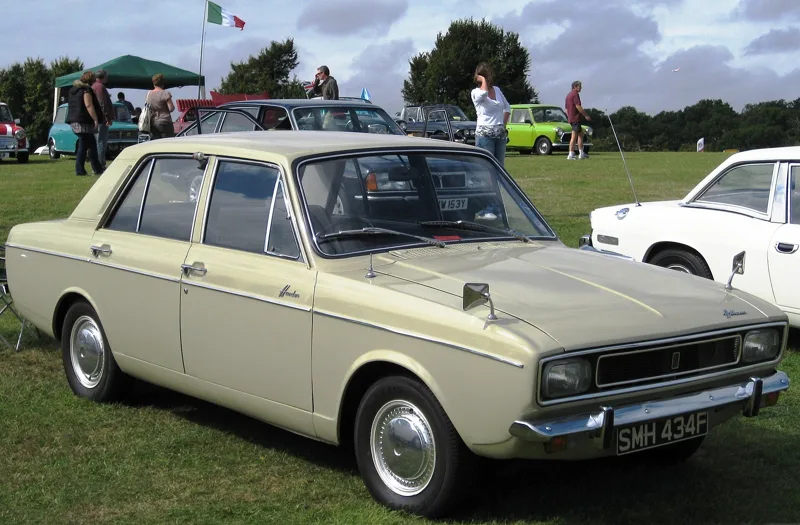
The London to Sydney Marathon was a car rally first run in 1968 over about 7,000 miles, won by Andrew Cowan's Hillman Hunter. Five more followed, to 2014. Earlier, the Marathon de la Route staged Liege-Rome-Liege and Liege-Sofia-Liege road rallies between 1931 and 1971.
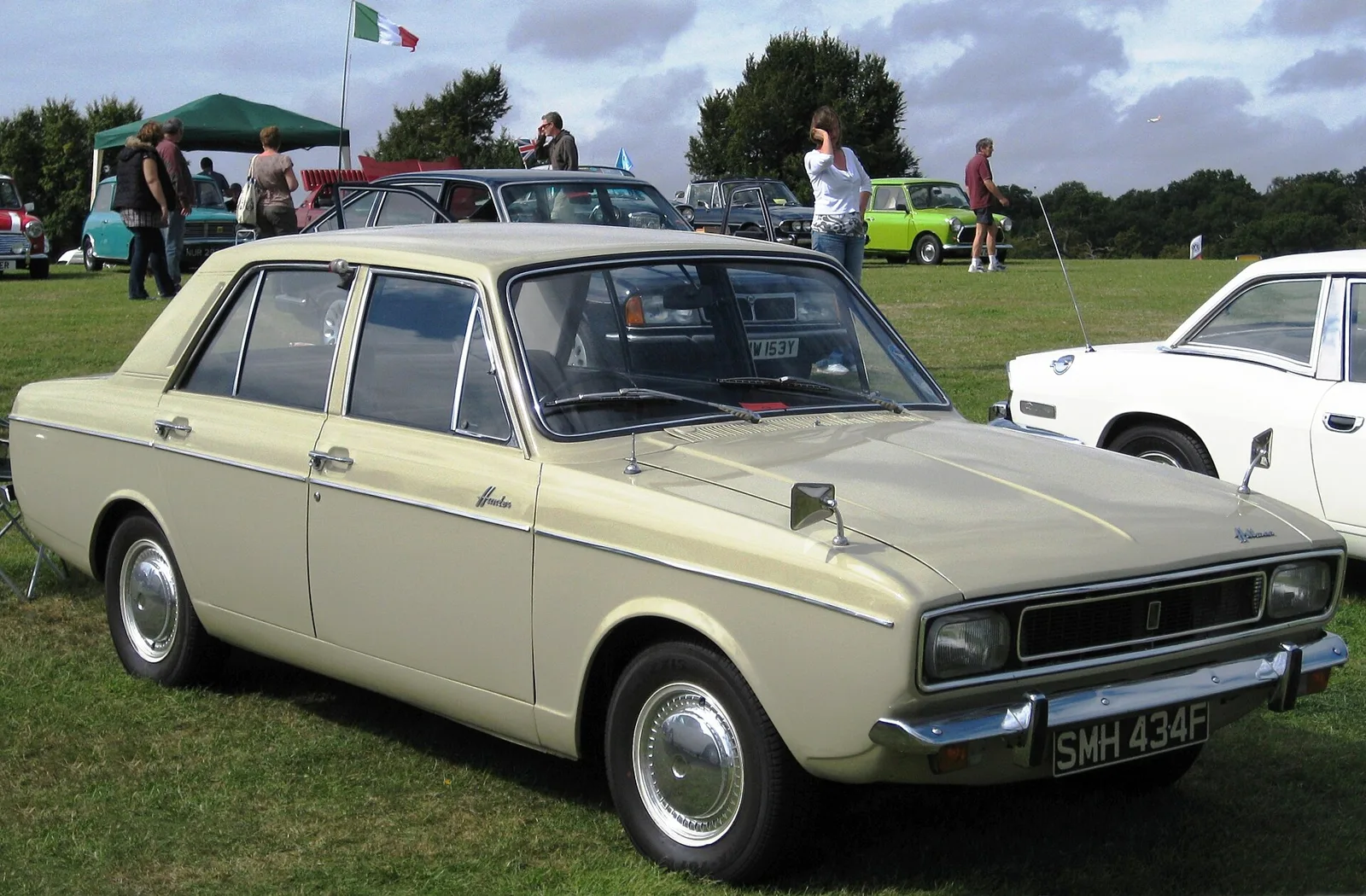
Andrew Cowan asked the Chrysler factory for "a car to come last". He assumed that only half a dozen drivers would even reach Sydney. In 1968 he reached it first, in a Hillman Hunter, and collected the 10,000 pound prize. The London-Sydney Marathon that made him famous covered roughly 7,000 miles (11,000 km), eleven countries and a sea voyage across the Indian Ocean, and it later inspired the World Cup rallies and the Dakar Rally.
The 1968 rally had forebears. For decades before it, the Marathon de la Route had sent touring cars across European roads, and its hardest events took crews from Spa to Rome or Sofia and back again to an impossible time schedule.
Why was the London to Sydney Marathon created?
The idea came over lunch in late 1967, when sterling's devaluation had left Britain gloomy. Daily Express owner Sir Max Aitken and two of his senior editors, Jocelyn Stevens and Tommy Sopwith, wanted an event the paper could sponsor. In their view it would lift the country's mood, put British engineering on display and help exports in the countries along the way.
The prize list was generous. The Daily Express offered 10,000 pounds to the winner. A 3,000 pound runners-up award and two 2,000 pound prizes for third place and for the highest-placed Australians were added, all underwritten by the Daily Telegraph and its proprietor Frank Packer, who wanted to promote the Australian leg.
He asked for a car to come last, and became the first to reach Sydney.
The route and the ship
An eight-man committee drew up a challenging but navigable route. Jack Sears, the organising secretary and a former racing driver, plotted about 7,000 miles (11,000 km) across eleven countries. The first 72 cars and crews were to be carried by the P&O liner SS Chusan on a nine-day voyage from India, leaving a final 2,600 miles (4,200 km) to drive across Australia. The remaining crews left Bombay at 3 am on 5 December and reached Fremantle at 10 am on 13 December, restarting from Perth the following evening.
The sea crossing worked like a sealed pit lane. Crews could not touch their cars, because any repair attempted on the voyage meant exclusion. Whatever was wrong with a car at Bombay stayed wrong until it reached Fremantle.
How the 1968 Marathon was won
Roger Clark took an early lead in a Lotus Cortina, helped by the first genuinely treacherous leg, from Sivas to Erzincan in Turkey, where he averaged almost 60 mph (100 km/h) over 170 miles (270 km). He lost time in Pakistan and India but still led at Bombay, with Simo Lampinen's Ford Taunus second and Lucien Bianchi's Citroen DS third.
Australia undid him. A piston failure dropped Clark to third and would have ended his rally had he not been able to strip parts from fellow Ford driver Eric Jackson's car. After repairs came what should have been a terminal rear differential failure. Clark met a Cortina by the roadside, talked its reluctant owner into selling the rear axle, and carried on, at a cost of 80 minutes.
That left Bianchi and co-driver Jean-Claude Ogier ahead of Gilbert Staepelaere and Lampinen in the Taunus, with Cowan third. Then the Taunus hit a gate post and broke a track rod, which promoted Cowan to second and Paddy Hopkirk's Austin 1800 to third. Near Nowra, at the end of the penultimate stage and 98 miles (158 km) from Sydney, the Frenchmen collided head-on with a motorist who had mistakenly driven onto a closed course. Their Citroen was wrecked and both men went to hospital.
Hopkirk was first on the scene. He stopped to look after the injured and to put out flames in the burning cars. Cowan arrived next, slowed, and was waved through with word that everything was under control. Hopkirk rejoined, and neither man lost penalties on that stage. Cowan, with Colin Malkin and Brian Coyle alongside him, won the rally, with Hopkirk second and Australian Ian Vaughan third in a factory-entered Ford XT Falcon GT. Ford Australia took the Teams' Prize with three Falcon GTs, finishing 3rd, 6th and 8th. Fifty-six cars finished.
The rallies it inspired
The 1968 Marathon became a model for other organisers. It inspired the 1970 London to Mexico World Cup Rally and the 1974 London-Sahara-Munich World Cup Rally, and it also stands behind the Dakar Rally. The 1974 event was controversial, and no World Cup rally was held after it. The original organisers, meanwhile, came back for a second Marathon in 1977 and the idea of re-running the route returned in 1993, 2000, 2004 and 2014.
Six Marathons, six different shapes
| Year | What marked it |
|---|---|
| 1968 | Daily Express sponsorship, a ship across the Indian Ocean, Cowan wins in a Hillman Hunter |
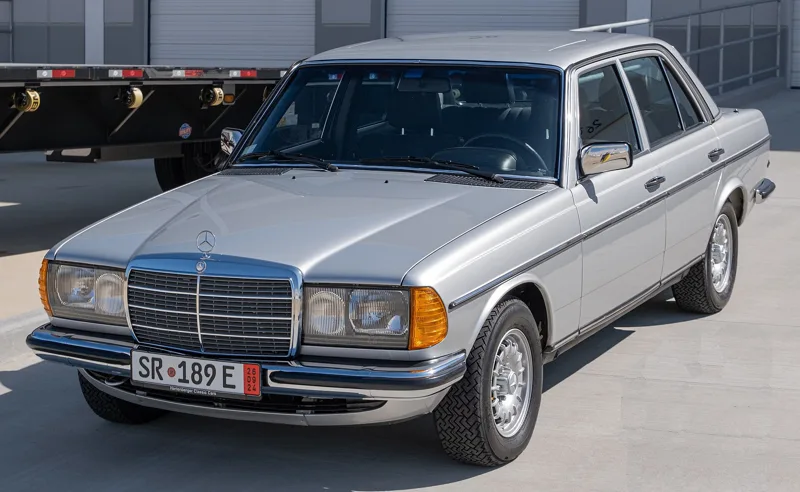
| 1977 | Singapore Airlines sponsorship, Mercedes-Benz 1-2 with Cowan in a 280E |
| 1993 | 25th anniversary re-run of 16,000 km, 106 teams from 17 countries, two Antonov cargo planes |
| 2000 | Millennium rerun, 100 starters and 78 finishers, Stig Blomqvist and Ben Rainsford win |
| 2004 | Group N cars and pre-1977 classics, Honda Integras take the first three places |
| 2014 | Run in reverse from Sydney to London, with an airlift from west Australia to Turkey |
1977, when Mercedes took over
Where 1968 was a triumph for the Rootes Group, the 1977 edition, sponsored by Singapore Airlines, belonged to Mercedes-Benz. The German marque finished first and second and placed two more cars in the top eight. Cowan repeated his victory of nine years earlier, now in a 280E, with teammate Tony Fowkes in a similar car behind him. Paddy Hopkirk, driving a Citroen CX this time, took the last podium place.
The 1993 anniversary run
Nick Brittan, who had entered a Lotus Cortina in 1968, used a 25th anniversary re-run in 1993 to establish his firm as a specialist in modern endurance rallies. He talked 21 drivers from the original into coming back, among them Cowan and Clark, and 106 teams from 17 countries signed up. Cowan drove the Hillman Hunter he had used before, loaned by the Scottish Automobile Club museum, while others drove pre-1970 era cars. The entry fee was 12,900 pounds, and the estimated cost of taking part was 45,000 pounds.
The 16,000 km event differed from the original in three ways. Changes in the Middle East put countries such as Iran and Afghanistan out of bounds, though much of the route through Europe, Turkey and Australia was retraced. The old open road sections gave way to timed special stages, for safety. And with the great passenger liners gone, there was no voyage across the Indian Ocean. Brittan arranged for two Antonov An-124 cargo planes to carry the cars to Australia.
Francis Tuthill won in a Porsche 911, ahead of Ian Vaughan's Ford Falcon GT, the car that had finished third in 1968. Third place went to Mike Kirkland of Kenya, a Safari Rally regular, in a Peugeot 504.
2000, 2004 and 2014
A second re-run in 2000 was billed as a millennium celebration. Much of Asia was again inaccessible for political reasons, so there were two airlifts. After fourteen days crossing Europe and Turkey, competitors were loaded onto the Antonovs for a flight to northern Thailand, then drove south through that country into Malaysia for twelve days before flying on to Australia for the last eight. Of 100 starters leaving London, 78 reached Sydney. Stig Blomqvist and Ben Rainsford won, ahead of Michele Mouton in a Porsche 911 whose co-driver was Tuthill, the 1993 winner. Rick Bates and Jenny Brittan took third.
In 2004 the third re-run mixed modern Group N showroom cars with pre-1977 classics, all two-wheel drive and under two litres. New Zealanders, working with the Lincolnshire preparation specialists Langworth Motorsport, swept the podium with three Honda Integras: Joe McAndrew and Murray Cole won, Mike Montgomery and Roy Wilson were second, and Shane Murland and John Benton third. Anthony Ward and Mark Solloway were best of the classics, sixth overall in a Ford Escort RS1600.
A sixth Marathon followed ten years later. It was run in the opposite direction, starting in Sydney and finishing in London, with an airlift joining Australia's west coast to Turkey.
The Marathon de la Route
The Marathon de la Route grouped road rallies across Europe between 1931 and 1971. It included the Liege-Rome-Liege and Liege-Sofia-Liege rallies on public roads, and closed-circuit races at the Nurburgring from 1965 to 1971. The events were reserved for touring cars and drew renowned drivers including Olivier Gendebien, Willy Mairesse, Lucien Bianchi and Jacky Ickx.
Liege-Rome-Liege
This was a non-stop open road race with an average distance of 3,500 km, and in 1959 more than 5,000 km. It left Spa at 11 pm on a Wednesday and returned about 4 pm on Sunday. Class winners over three years could receive a Golden Cup, and Bill Bengry was one. The August 1939 rally was the final big one before the Second World War. Belgium's Ginet Trasenster, in a Bugatti, tied for first with France's Jean Trevoux in a Hotchkiss, which kept the German works teams off the top step. It was one of five Liege wins for Trasenster, a record.
The event stayed uncompromisingly an open road affair run to an impossible time schedule, and was regarded as Europe's toughest rally until it moved to Yugoslavia and Bulgaria.
Liege-Sofia-Liege
From 1961 to 1964 the course changed to Liege-Sofia-Liege. The organiser, the Royal Motor Union of Liege, wanted to diversify the route and find traffic-free roads. Endurance and reliability were still the test. The 1961 event meant 90 hours behind the wheel, with a four-hour rest at Sofia, and only 8 of 85 starters finished. Lucien Bianchi and Georges Harris won in a Citroen DS 19.
The same Bianchi, in a Citroen DS, was leading the London-Sydney Marathon when his car was wrecked near Nowra seven years later.
The Nurburgring years
By the middle of the 1960s some countries refused to have rallies cross their territory. So from 1965 to 1971 the race was held on the full Nurburgring, combining both loops. It lasted 82 hours and reached 96 hours in the last edition. A revival was planned for 2011 but cancelled.
What these events cost and demand
Long-distance rallying asks for money and for stamina. The 1993 re-run priced both a place on the entry list and the true cost of competing, and in 1961 the Liege-Sofia-Liege wore down all but a handful of its field. Cars have ranged from a Hillman Hunter and Lotus Cortina in 1968 to showroom Group N Honda Integras in 2004, and in 1993 and 2004 the organisers restricted entries to older or lower-powered machinery.
Where this goes next
The most recent Marathon was the reverse-direction run of 2014, ten years after the 2004 edition. The Marathon de la Route ended in 1971, and a planned revival for 2011 was cancelled.