A winter rally that began as a contest partly decided on elegance, made Paddy Hopkirk a household name in 1964 and still hinges on one tyre choice per stage.
The Monte Carlo Rally began in 1911 under Prince Albert I of Monaco and became the opener of the World Rally Championship in 1973. Paddy Hopkirk won in a Mini in 1964, while 1966 saw the first four finishers disqualified over headlamp bulbs.
In 1966 the first four cars across the finish line of the Monte Carlo Rally, three Minis and a Ford Cortina, were all thrown out over their headlamp bulbs. A Citroen driver inherited victory and refused to accept the award.
How did the Monte Carlo Rally begin?
Prince Albert I of Monaco started the rally in 1911. He wanted to show off improvements and innovations in motor cars and promote Monaco as a tourist resort on the Mediterranean shore. Competitors set off from points around Europe and converged on Monte Carlo. The rally is organised by the Automobile Club de Monaco.
Planning began in 1909, when an association called Sport Automobile et Velocipedique de Monaco, which became the Automobile Club de Monaco in 1925, took up the prince's idea. In January 1911, 23 cars left from 11 different locations. Nine started in Paris, among them Henri Rougier, who faced a 1,020 km (634 mi) route. He won in a Turcat-Mery 25 Hp, though the result was not simple.
Part of the 1911 result depended on judges, whose marks for a car's elegance, the comfort of its passengers and its condition on arrival in the principality looked somewhat arbitrary. Publication of the results caused a scandal, yet nothing was altered and Rougier was declared the first winner. For decades afterwards the Monte stayed a concentration rally, with crews starting from different cities, meeting in Monaco and then tackling special stages. That changed in 1997.
Any tyre choice suits one stretch of the Monte and punishes another.
What changed after the Second World War?
Works and works-supported teams grew more important. From 1949 there was a special team prize, and the first winners were three Allards driven by Potter, Godsall and Imhof. Simca, Delahaye, Sunbeam-Talbot and Jaguar won it later. By 1953 eight factory-backed Sunbeam-Talbots started, and Gatsonides drove a factory-prepared Ford Zephyr.
Sydney Allard was the first and only winner at the wheel of his own car, but even he drove a works car in 1952. The rally joined the European Rally Championship in 1953 and stayed in it until 1972, except in 1968 and 1969. Then in 1973 it opened the new World Rally Championship, and it did so every January until 2008.
How did the Mini win the Monte Carlo Rally?
Paddy Hopkirk and co-driver Henry Liddon won the 1964 Monte Carlo Rally in a Mini Cooper S, car number 37, registered 33 EJB. Hopkirk, from Belfast, also led BMC to the team prize, with fellow Mini drivers Timo Makinen and Rauno Aaltonen fourth and seventh.
Hopkirk had learned his craft the hard way. He began rallying in an Austin 7 while studying engineering, then bought a string of used Volkswagen Beetles to enter in competitions, and went on to drive for Standard, Rootes and BMC. He finished third in the 1962 Monte in a Sunbeam Rapier, grew frustrated with the Rapier's reliability, and moved to BMC. In 1963 he came sixth on his first Monte in a Mini.
The 1964 win made him a household name. He received telegrams from the Prime Minister of the day, Alec Douglas-Home, and from the Beatles, was given the Freedom of the City of Belfast, and appeared with his Mini on Sunday Night at the London Palladium. A year later Makinen won the 1965 Monte in a Mini Cooper.
Thirty years after his win, Hopkirk entered the rally again with co-driver Ron Crellin, in a modern Mini Cooper built by Rover Group with a registration number almost identical to the winner's, L33 EJB. Its 1275cc engine was tuned to 104 bhp, and they finished 60th against much more powerful machinery. He was one of four rally figures to enter the Rally Hall of Fame when it opened in 2010, with Makinen, Aaltonen and Erik Carlsson. Hopkirk died on 21 July 2022.
His reputation rested on more than results. In the 1968 London-Sydney Marathon he gave up any chance of victory on the penultimate stage to help the leading Bianchi and Ogier team, whose Citroen DS had collided head-on with another car on a road that was supposed to be closed. He and his team-mate Tony Nash pulled people from both burning cars, probably saving the life of the badly hurt Lucien Bianchi. Hopkirk then drove back to warn spectators and the police, and his crew still finished second.
What happened at the 1966 Monte Carlo Rally?
The 1966 event is the most controversial in the history of the Monte Carlo Rally. The first four finishers were disqualified for fitting non-dipping single-filament quartz iodine bulbs in their headlamps, in place of the double-filament dipping glass bulbs that came on the production cars sold to the public.
That wiped out Makinen, Aaltonen and Hopkirk in their Mini-Coopers, plus Roger Clark's fourth-placed Ford Cortina. Pauli Toivonen's Citroen ID moved up to first overall. Toivonen found the situation so embarrassing that he refused to accept his award. Rosemary Smith, who had won the Coupe des Dames in a Hillman Imp, lost her sixth place as well. In total ten cars were disqualified, teams threatened to boycott the event, and the headline in Motor Sport read "The Monte Carlo Fiasco".
Why do tyres decide the Monte Carlo Rally?
Crews can meet dry tarmac, wet tarmac, snow and ice, sometimes all within a single stage. A driver must balance grip on ice and snow against grip on dry tarmac, and that is hard because tyres that work well on snow and ice usually perform badly on dry road.
Imagine walking a hill trail wearing one pair of shoes, where the path alternates between ice, wet rock and bare pavement. Any choice suits one stretch and punishes another. Rally drivers face the same problem at speed, which is why the Monte puts such weight on tyre choice.
What is the Col de Turini?
The Col de Turini is one of the most famous special stages in the world. The stage runs from La Bollene-Vesubie to Sospel, or the other way, along a steep, tight mountain road of many hairpin bends. It covers 31 km and passes over the Col de Turini, a mountain pass that normally has ice or snow on some sections at that time of year.
Sospel sits at 479 m, and the D70 reaches a maximum height of 1603 m, an average gradient of 6.7 per cent. Spectators sometimes throw snow on the road. In 2005 Marcus Gronholm and Petter Solberg each tore a wheel from their cars after skidding on snow that was probably put there by spectators, and both hit a wall. Gronholm finished fifth, but Solberg retired with extensive damage. In the same event Sebastien Loeb set one of the fastest times of the modern era, 21 minutes 40 seconds.
The stage is also run at night, when thousands of fans watch what is known as the "Night of Turini", or the "Night of the Long Knives", because of the powerful high-beam lights slicing through the dark. The Turini was left out in 2007, returned for 2008, and ran at night and live on Eurosport in both 2009 and 2010.
How long is the Monte Carlo Rally?
A World Rally Championship event typically lasts three to four days, with 15 to 25 special stages run against the clock on up to 350 km (220 mi) of closed roads. The first Monte in 1911 was different: the Paris starters faced a 1,020 km (634 mi) road route to Monaco before any competition took place.
Before the format changed in 1997, the rally was a concentration rally, with crews starting from points all over Europe and driving to Monaco before the stages began. As recently as 1991, competitors could choose their start from about five venues roughly equidistant from Monte Carlo. Today the rally runs through the hills of the French Riviera and south-east France. For the centenary, the organisers picked Glasgow, Barcelona, Warsaw and Marrakesh as start points.
Which championships has the Monte Carlo Rally belonged to?
| Period | Championship |
|---|---|
| 1953 to 1972 | European Rally Championship, except 1968 and 1969 |
| 1973 to 2008 | FIA World Rally Championship, January opener |
| 2009 to 2011 | Intercontinental Rally Challenge, opening round |
| 2012 onwards | FIA World Rally Championship |
Where does the Monte fit in the World Rally Championship?
The World Rally Championship began in 1973 with the Monte Carlo Rally on 19 January, built from established international rallies. Alpine-Renault won the first manufacturers' title with the Alpine A110, and Lancia took the next three with the Stratos, the first car designed specifically for rallying. The first drivers' title was awarded in 1979, to Bjorn Waldegard.
The 1980s were the Group B years. Audi's four-wheel-drive Quattro showed rivals what was possible, and Group B rules from 1982 allowed almost unlimited power. Audi's Michele Mouton, with co-driver Fabrizia Pons, came close to the 1982 drivers' title and finished second behind Walter Rohrl. Following accidents in 1986, the FISA froze development of Group B cars and banned them from 1987. Group A became the standard to 1997, and Lancia's Delta HF won the manufacturers' title six years in a row from 1987.
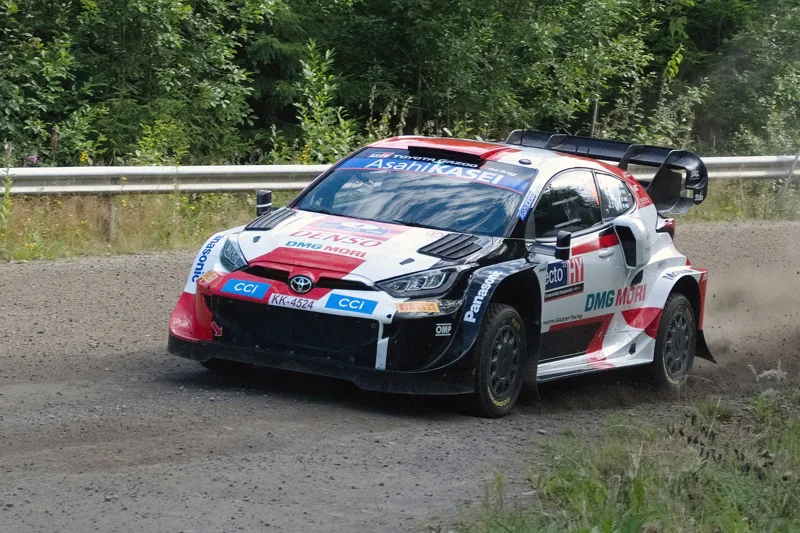
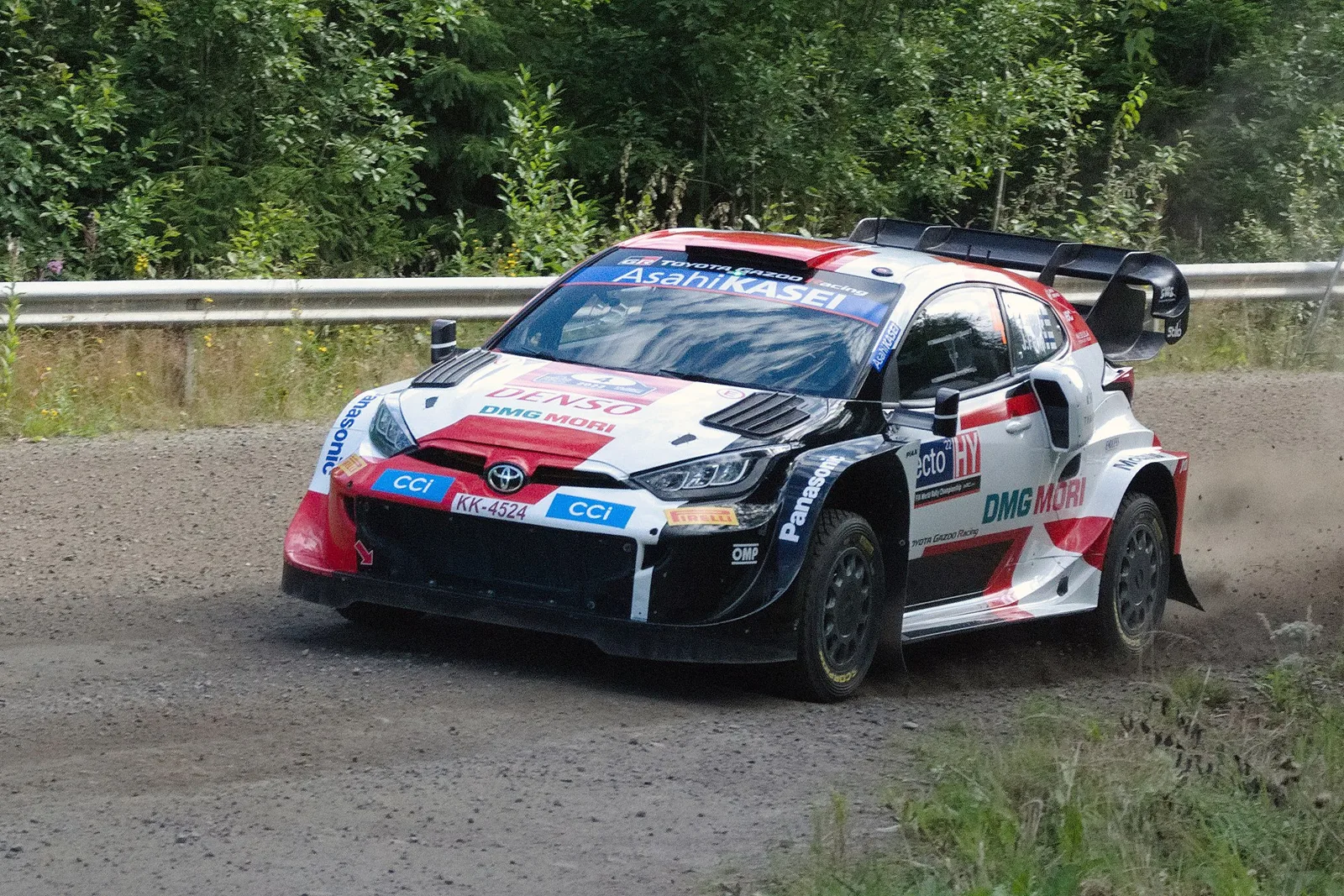
The 1990s favoured Toyota, Subaru and Mitsubishi. The Ford Escort RS Cosworth, designed specifically for rallying, was the first production car to make downforce at both front and rear. World Rally Car rules arrived in 1997 as a replacement for Group A, and the top class now uses Rally1 cars. A season typically has 13 events on surfaces from gravel and tarmac to snow and ice.
How does a modern World Rally Championship event sort its cars?
Manufacturers must register to score in the Manufacturers' championship and must enter every rally with Rally1 cars, which were called World Rally Cars from 1997 to 2021. Because they use the fastest cars and usually the best drivers, those crews take most of the drivers' and co-drivers' points, and they are given Priority 1 status, which means they run the stages before anybody else.
Support championships follow the same logic. WRC2 uses Rally2 cars and its crews get Priority 2, running directly after the leaders, while WRC3 is for privateers in Rally3 cars with lower entry costs and Priority 3. Any crew in any car can score in the overall drivers' and co-drivers' championships, and co-drivers may only take the wheel under force majeure. The FIA also runs a Junior WRC over five events using Ford Fiesta Rally3 cars provided by M-Sport, for drivers under 29.
Where this goes next
In 2026 the rally returned to Monaco itself for a Super Special Stage, the first time within the principality's borders since 2008. The traditional concentration rally lives on in related events too. The Monte Carlo Historic Rally has run since 1998, one week after the modern event. It is open to models of the 1960s up to the early 1980s that contested earlier editions, and it still uses multiple departures around Europe.
Two other events sit alongside it. The Classic Rally ran from 2017 to 2022 for much older machinery, from the 1910s up to the early 1960s, and the Monte Carlo E-Rally, a regularity rally for alternative-fuel vehicles, runs in late October as part of the FIA ecoRally Cup.