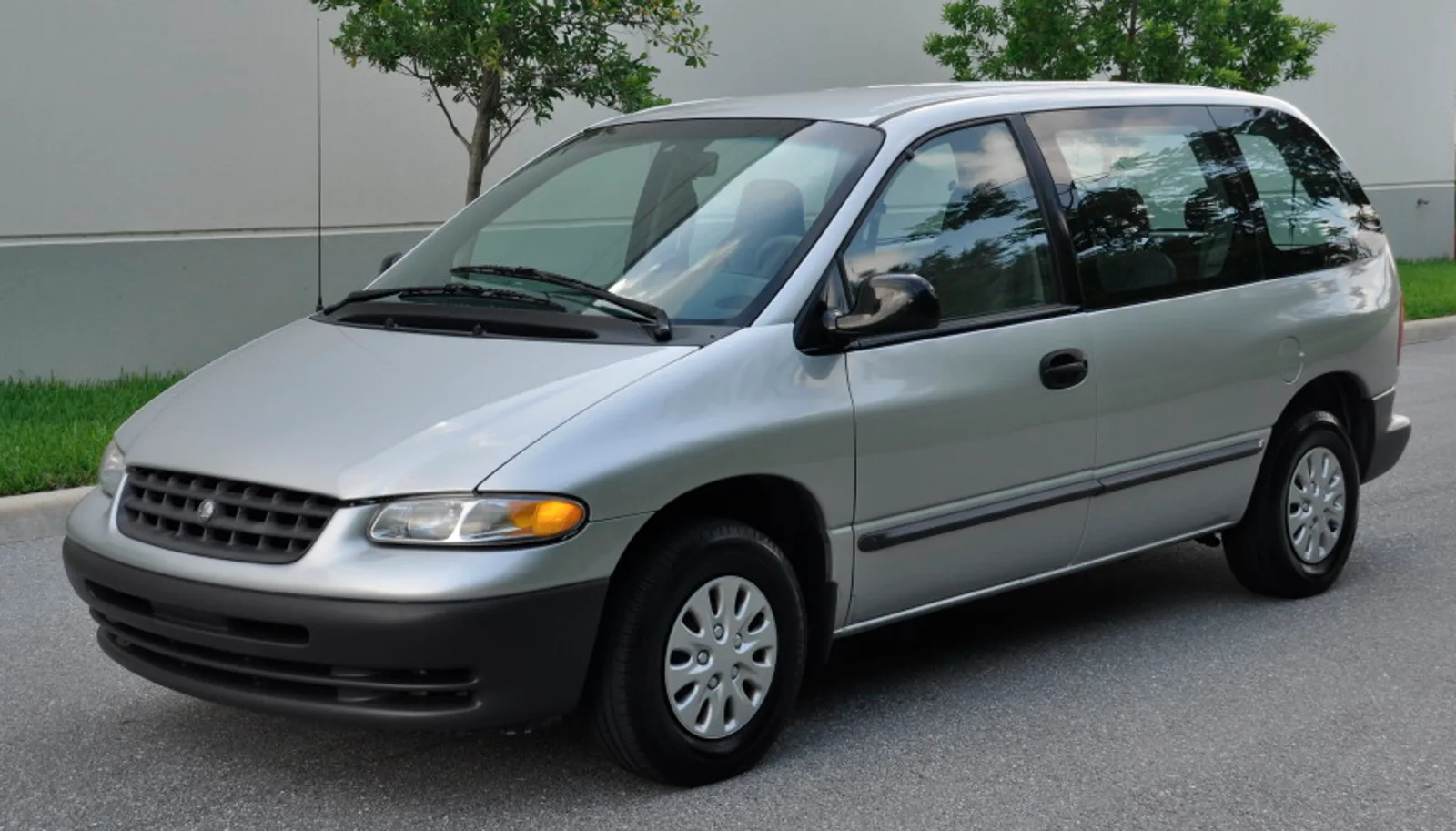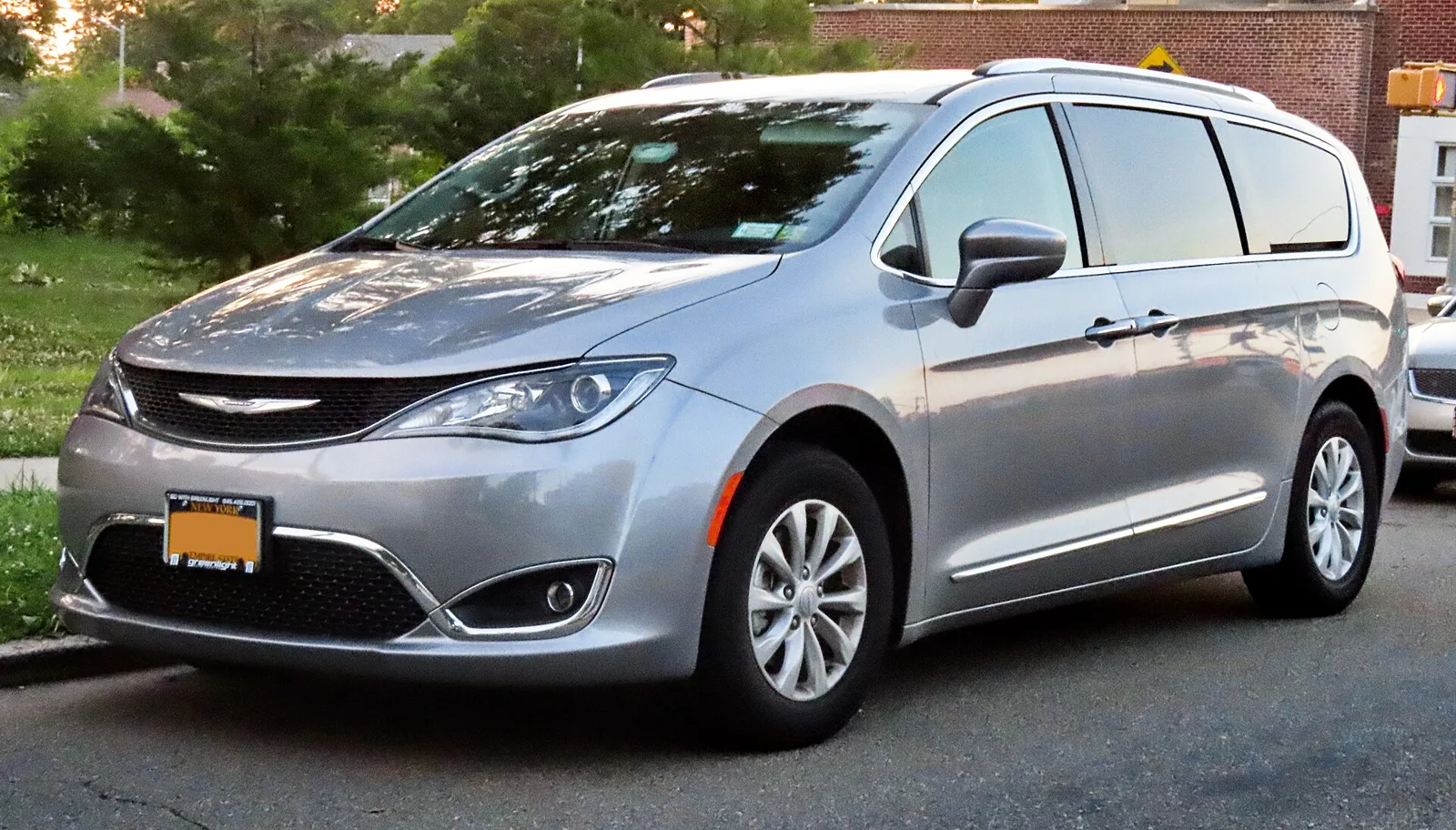
Sliding doors, cargo space and sales figures from the minivan peak of 1.4 million to a crossover share near 40%, set against shrinking full-size cars.
Minivans give the most passenger and cargo room, with sliding doors and 2+3+2 or 2+3+3 seating; crossovers share a car platform and now take almost 40% of US sales, returning 10% less fuel economy than mid-size sedans but offering almost 1.5 times the cargo space. Full-size and compact cars have lost share.
In 1960 about two of every three new American cars were full-size. By 1994 the share was 8.3 percent. In the meantime the family car passed through the station wagon, the minivan and the crossover, and each handover came with a new idea of what a household needed. A person shopping for a family car today is choosing between the survivors of three decades of that churn.
Minivans, crossovers, full-size cars and compacts overlap, and the names do not always line up from one country to another. Each body style is built differently, sells differently and gives something up, which helps explain why families keep moving between them.
What is a minivan?
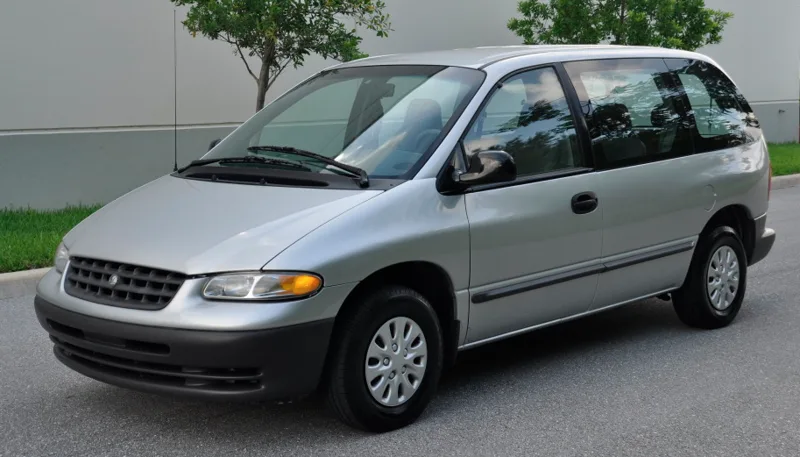
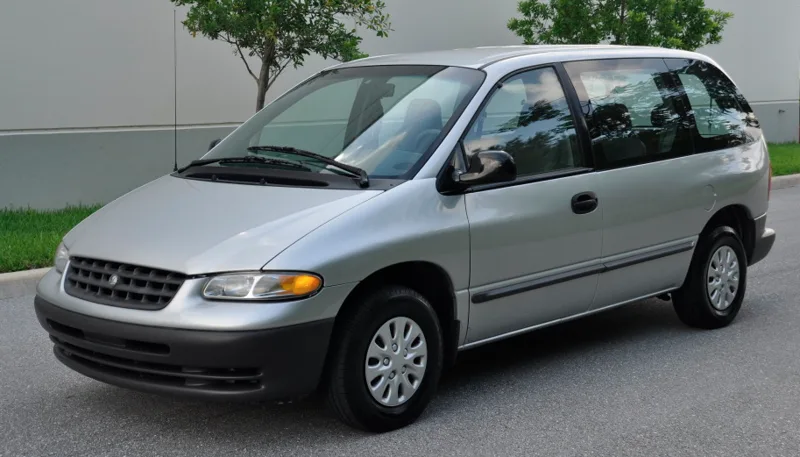
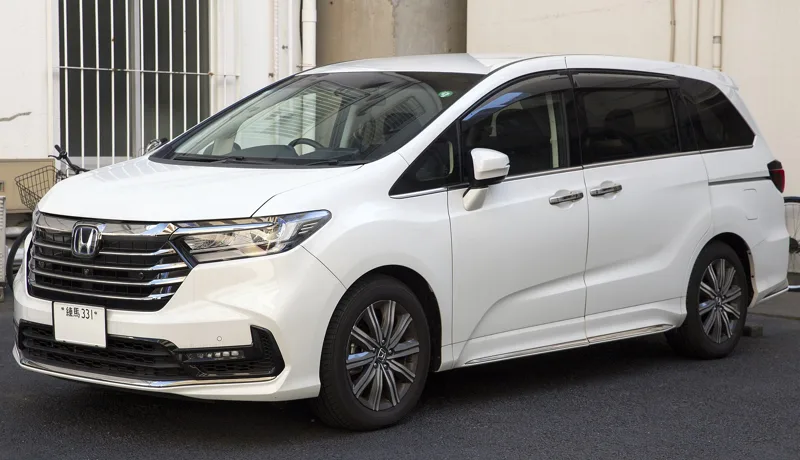
A minivan is a car built to carry passengers in rear rows of reconfigurable seats, usually in two or three rows. In Europe the same idea goes by MPV, people carrier or M-segment. Most sit on a passenger car platform with a lower body than a full-size van, and they typically have a high roof, a level floor, rear sliding doors and a high seating position.
The name dates from 1959, when the Austin Motor Company sold a small van called the Mini Van in the UK, and in the US the word set smaller passenger vehicles apart from big vans like the Ford E-Series and Chevrolet Van. It was not common until the 1980s.
Crossovers returned 10% less fuel economy than mid-size sedans but offered almost 1.5 times the cargo space.
How does a minivan differ from an SUV?
Most modern minivans use a front engine and front-wheel drive, and a few lines offer all-wheel drive, including the Toyota Sienna and Chrysler Pacifica. Unibody construction is the norm. The layout keeps engine intrusion low and the floor down.
That shape buys space and costs ability. Minivans give more room for passengers and cargo than sedans and SUVs, but they have less ground clearance, towing capacity and off-road ability than SUVs. Inside, seats come in two, three or four rows, and the most common layouts are 2+3+2 and 2+3+3. The body is built to maximise interior space with a longer wheelbase, a flatter floor, a taller roof, more upright sides, and a larger rear opening and windows.
Where did the minivan come from?
Ancestors stretch back to the 1936 Stout Scarab, often cited as the first minivan, with moveable seats that could be arranged around a table. Later came the DKW Schnellaster, built from 1949 to 1962 with front-wheel drive, a flat floor and flexible seating, and the Volkswagen Type 2 of 1950, which gained a sliding side door in 1968 and so had most of the formula. The Fiat Multipla of 1956 to 1969 shared many features too.
The modern version arrived for the 1984 model year. In the late 1970s Chrysler began a programme to build a small affordable van that handled like a car, and the result was the Plymouth Voyager and Dodge Caravan, which combined front-wheel drive, a level floor and a rear-passenger sliding door. Renault launched the Espace in the same year. Early minivans stayed at six feet tall or lower so they would clear an ordinary garage door. That year the New York Times described them as the hot cars out of Detroit, and noted that analysts expected them to overshadow the station wagon. By the end of the 1980s minivans had largely replaced full-size station wagons as family vehicles in the United States.
When did minivan sales peak?
The best year was 2000, with 1.4 million sold. At that point domestic minivans were built in huge volumes and often cost less than midsize cars, while Japanese ones, which were larger, cost more than either. Sales then slipped. In 2013 the segment sold about 500,000, one-third of the peak. Share fell from above 6% in 2004 to around 2% in 2019.
Suggested reasons include the rise of SUVs and crossovers and a minivan image tied to older drivers or the "soccer mom". Makers responded by marketing minivans as premium vehicles and cutting production, which produced a long waiting list for the Toyota Sienna. Ford left the segment in 2006 with the Freestar, Chrysler dropped its short-wheelbase minivans in 2007 and General Motors withdrew in 2009 with the Chevrolet Uplander. In 2021 the segment sold 310,630 units in the US, 2.1% of the market, and 33,544 in Canada, or 2.0%. By 2022 the passenger-oriented segment came down to five names: Sienna, Pacifica, Voyager, Odyssey and Carnival.
What is a crossover?
A crossover is a car with extra ride height, built on a unibody chassis shared with passenger cars, unlike traditional SUVs, which sit on a body-on-frame chassis like a pickup. In practice SUV is often used for both. Compared with a traditional SUV, a crossover is less capable off-road and at hauling heavy loads, but it brings better fuel economy and handling. Compared with a sedan or hatchback it gives a larger cabin and a higher seating position.
The AMC Eagle of 1979 is regarded as the first dedicated crossover, and the Toyota RAV4 of 1994 as the car that set the modern pattern. In North America the type gained ground in the 2000s, once the fuel efficiency standard for light trucks, unchanged at 11.4 L/100 km (20.7 miles per US gallon; 8.8 km/L) since 1996, began to tighten by 2005. With fuel prices rising, traditional SUVs began losing share to crossovers. The crossover share of the US market grew from under 4% in 2000 to nearly 40% in 2018.
Minivan vs SUV: which is more practical?
Consumer Reports compared the three best-selling crossovers in the US in 2018, the Toyota RAV4, Honda CR-V and Nissan Rogue, with the three best-selling mid-size sedans, the Toyota Camry, Honda Accord and Nissan Altima. The crossovers returned an average of 10% less fuel economy but offered almost 1.5 times the cargo space, and the average mid-size crossover cost less than 5% more than the average mid-size car.
The minivan still holds some cards. When the Chrysler Pacifica crossover appeared in 2004, its third row was considered too small compared with that of the Town & Country minivan, which was also cheaper and used less fuel. A later comparison put the Toyota Sienna against the Toyota Grand Highlander crossover. The Highlander cost considerably more when equipped to match. The Sienna was easier to load because of its sliding doors and lower ground clearance, held more luggage behind the third row, and rode better for the people sitting in it.
How do crossover sizes differ?
| Type | Defining feature | Share or size figure |
|---|---|---|
| Minivan | Sliding doors, flat floor, 2+3+2 or 2+3+3 seating | 310,630 US sales in 2021, 2.1% |
| Compact crossover | C-segment platform, mostly two rows | 24.2% of US sales in 2019 |
| Mid-size crossover | D-segment platform, two or three rows | 15.8% of the US car market |
| Full-size crossover | Exclusively three rows | Largest crossover class |
| Full-size car | Interior volume over 3.4 m3 (120 cu ft) for sedans | 3.6% of US new vehicle sales in 2021 |
| Compact car | Interior volume of 2.8 to 3.1 m3 (100 to 109 cu ft) | Corolla and Civic led 2019 sales |
The compact crossover grew fastest. It rose from 6% to more than 11% of the US market between 2005 and 2010, and in 2014 it outsold mid-size sedans for the first time. By 2019 almost one in four cars sold in the US, 24.2%, was a compact crossover, against 5.6% of the European market, and the RAV4 sold 961,918 worldwide. Most compacts have two rows, though some have three. Mid-size crossovers are larger, and some brands sell both three-row and two-row versions, such as the Honda Pilot and Honda Passport. Full-size crossovers, among them the Ford Freestyle, GMC Acadia, Saturn Outlook and Buick Enclave, offer only three rows.
What happened to the full-size car?
The full-size car took its name in 1960 after compacts arrived, and the label came into wider use. Into the 1970s the same cars could carry six occupants comfortably, eight in a wagon, but burned a lot of fuel. Sales fell after the early-1970s fuel crisis, and the 1978 start of CAFE rules pushed makers to shrink their models. General Motors and Ford cut their full-size lines to the size of their intermediates. Chrysler pulled out of the segment, finishing with the 1982 model year.
The EPA defines a large car as one with an interior volume index of more than 3.4 m3 (120 cu ft) for sedans or 4.5 m3 (160 cu ft) for wagons. Between 1960 and 1994, the full-size share of the market fell from 65 to 8.3 percent as mid-size cars, vans and SUVs became the family choice. The decline continued: large cars were 3.6% of new vehicle sales in 2021, down from 6.6% in 2016. In 2018 Ford said it would end sales of all passenger cars in North America except the Mustang by 2022, and the Chevrolet Impala and Buick LaCrosse stopped in 2020. The Chrysler 300, Dodge Charger, Nissan Maxima and Toyota Avalon were discontinued after the 2023 or 2024 model years.
Where does the compact car fit?
The word "compact" was coined by a Nash executive for cars with a wheelbase of 110 inches (2,794 mm) or less, and the 1950 Nash Rambler was the first US-built postwar compact. During the 1958 recession, the only maker whose sales did not slump was American Motors, with its Ramblers. By 1959 small imports had 14% of the American passenger car market, appealing to college-educated, higher-income families who owned more than one car and expected economy together with decent headroom, legroom and trunk space. The 1973 energy crisis sent more drivers to smaller cars.
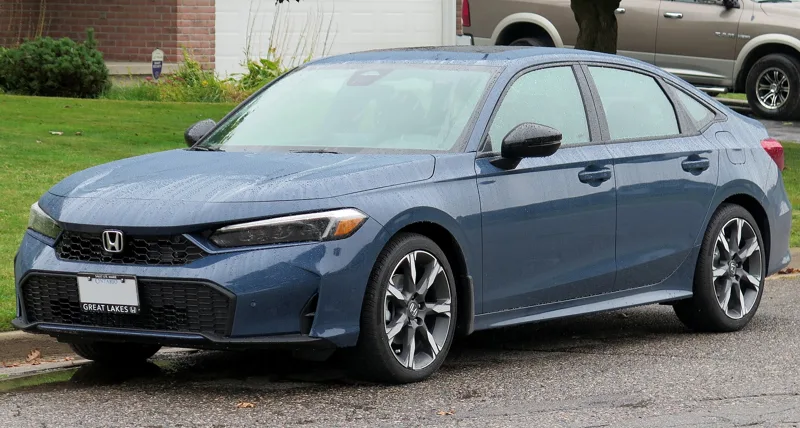
Under the EPA, a compact has an interior volume index of 2.8 to 3.1 m3 (100 to 109 cu ft). Compacts have also grown. The Toyota Corolla and Honda Civic were the best sellers for the 2019 model year, but in 2024 the Civic and Hyundai Elantra were classified as midsize. Compact SUVs are replacing compact cars, and the share of sedans and wagons halved from 2000 to 2025.
How many rows of seats does each body offer?
Row count tells the story. Minivans offer two, three or four rows, with 2+3+2 and 2+3+3 the usual arrangements. Compact crossovers are mostly two-row, mid-size ones come in two or three, and full-size crossovers are three-row only. The 1970s full-size car carried six occupants comfortably. Fold-flat third-row seats, introduced by the Honda Odyssey in 1995 and followed by Chrysler's second and third-row versions in 2005, helped solve the problem of heavy removable seats that early buyers disliked.
Where this goes next
Crossovers continue to widen their range. Late in 2020 two battery electric compact crossovers debuted, the Volkswagen ID.4 and the Ford Mustang Mach-E, and in the first quarter of 2023 the Tesla Model Y became the best-selling vehicle in the world. Minivans are a smaller market, with automakers lowering production volumes and marketing them as premium vehicles, and in Asia they are often sold as luxury cars. For full-size sedans the trend in the United States points toward the SUV.