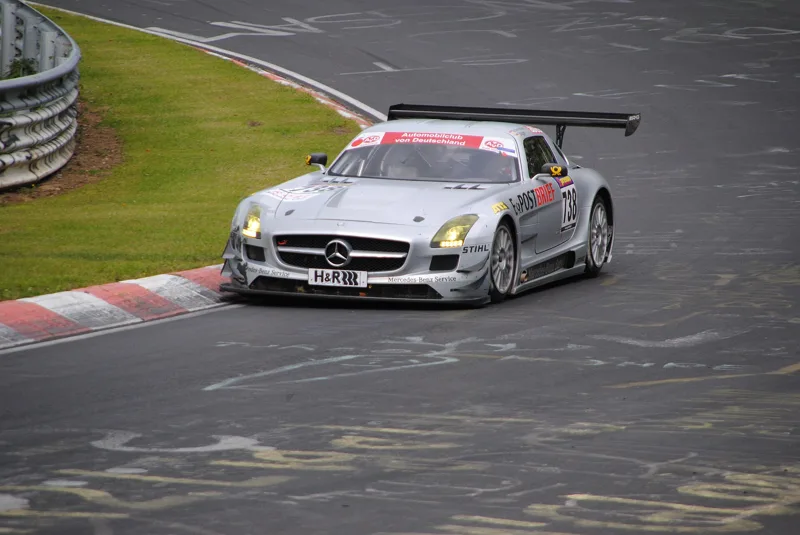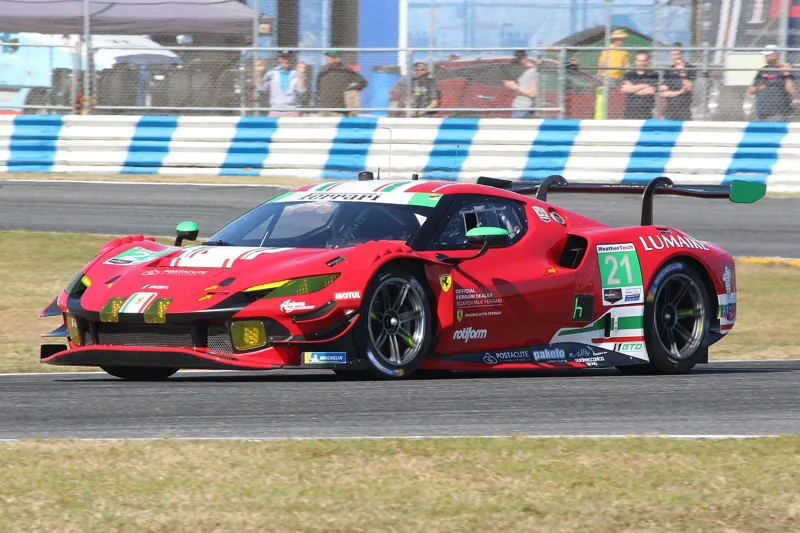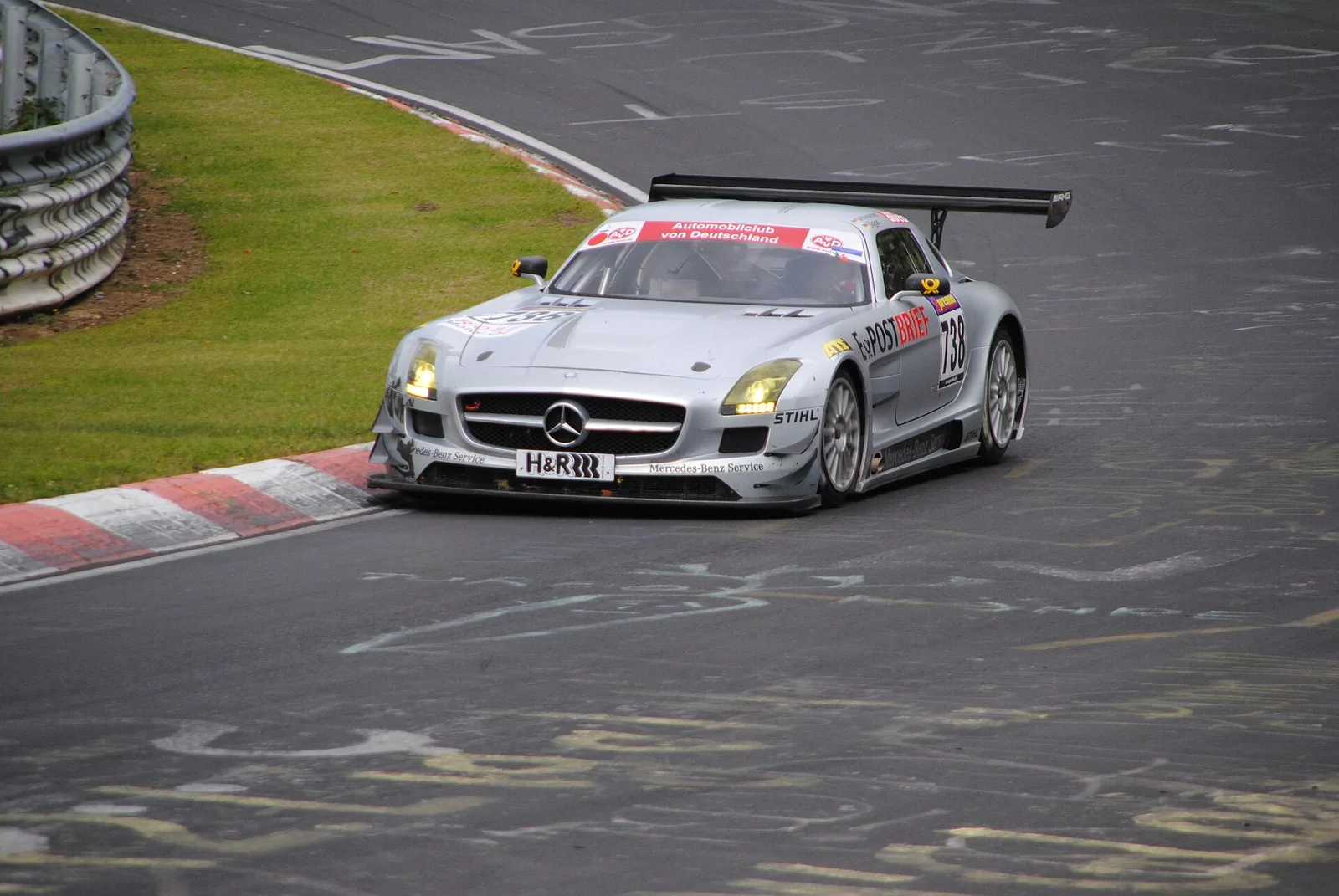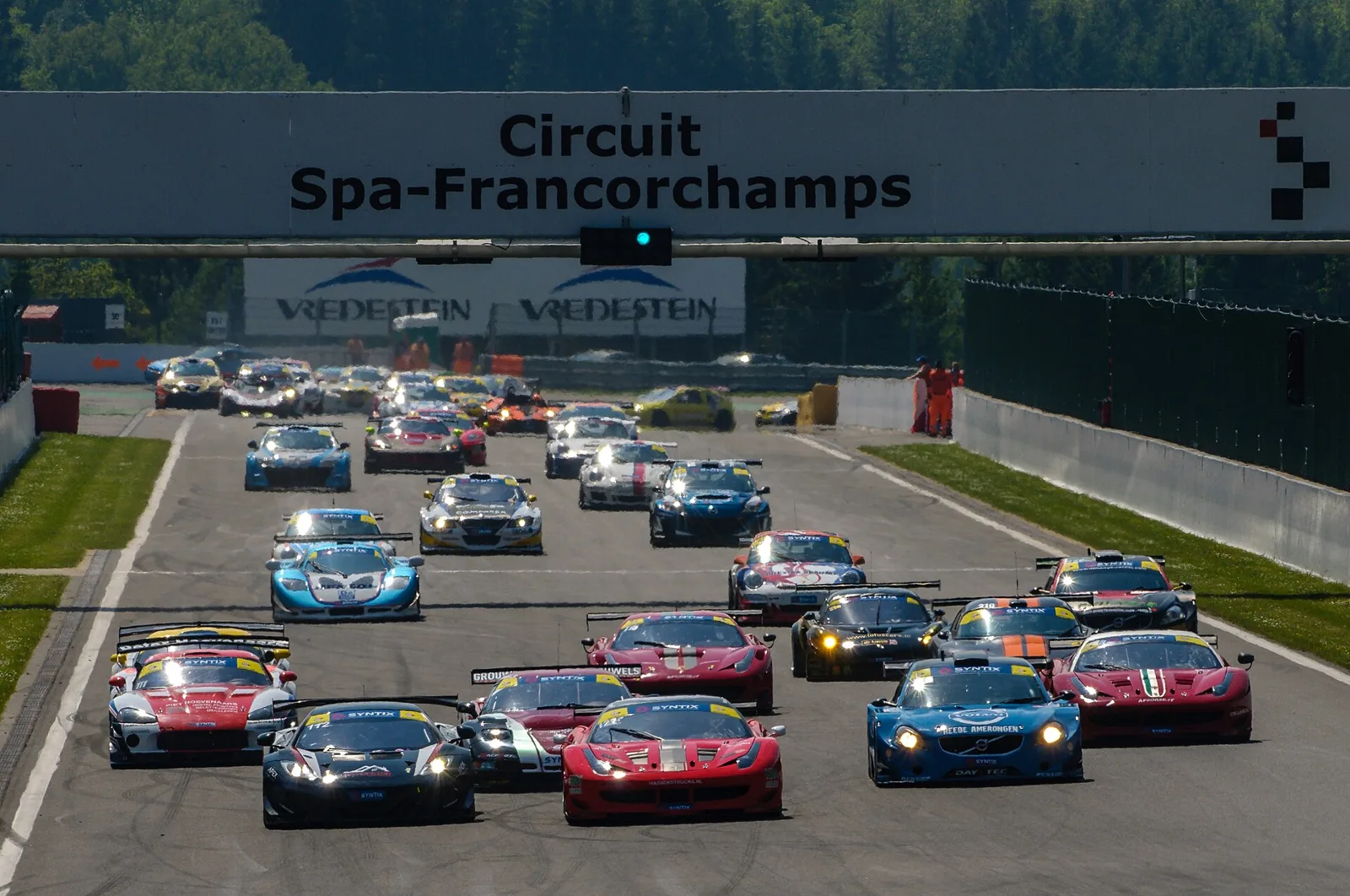
An idea hatched in a Nurburgring bar, a Belgian 24 Hours and a Dutch-founded series that swaps ballast for time: how four national championships handle very different cars.
British GT, Britcar, Belcar and the Supercar Challenge are national racing series in the UK, Belgium and the Benelux. British GT runs GT3 and GT4 under balance of performance, Britcar and Belcar focus on endurance races, and the Supercar Challenge lets mixed cars share classes.
Four national championships run four different ideas about how to let unlike cars race together. British GT trusts balance of performance and weights. Belcar leans on class lists and long races. Britcar built itself from a barroom conversation. The Supercar Challenge swaps ballast for time penalties.
What is the British GT Championship?
British GT is a sports car racing series based mainly in the United Kingdom. The British Racing Drivers' Club created it in 1993, and for its first two seasons it was called the National Sports GT Challenge. Today the SRO Motorsports Group runs it, and Pirelli became sole official tyre supplier in 2016.
It currently has two classes, GT3 and GT4. The series first brought in a GT3 class in 2005, helped by a consolidation of GT regulations and strong manufacturer backing, and from 2006 it followed FIA Group GT3, with rules close to those of the FIA GT3 European Championship. Those rules lean heavily on balance of performance and handicap weights, which exist to make unlike cars artificially more equal.
The old top class, GT2, was dropped at the end of 2006 to save money. GT4 arrived in 2008 as a development class leading towards GT3. Its rules keep the cars nearer to their road-going siblings than GT3 machines are, again to hold costs down, and it took over from a category used only in British GT, called GTC. Other classes have come and gone, among them Group GT1, and an overall title for all classes together was awarded until 1998.
In the Supercar Challenge, touring cars, GTs and sportscars race on an equal basis within the same class.
How did Britcar begin?
Britcar is an endurance sports car and touring car series in the United Kingdom, formed in 1997 after a discussion in a bar at the Nurburgring between Willie Moore and James Tucker. Folklore says Tucker and John Veness founded the organising body, the European Endurance & Racing Club, with a 10 pound note they found on the ground. The main aim was to bring back a 24-hour race in Britain.
Competition took off in 2002, grew a great deal in 2003, and was picked up by Sky Sports in 2004. The first Britcar 24-Hour followed in 2005 and was won by Martin Short in the Rollcentre Mosler. Grids were packed in 2006, with a capacity field for the 24 Hours. In 2007 the club became a Motor Sports Association approved championship, acting as a support act at the British A1 Grand Prix, and it was known as the MSA British Endurance championship from 2011. Some seasons were so popular that reserves waited for places.
The Silverstone 24 Hours had its moments. Top Gear's presenters Jeremy Clarkson, Richard Hammond and James May, joined by The Stig, entered in 2007 in a BMW 330d. They were third among five diesels and 39th overall when the 24 Hours ended. At the end of 2015 the rights to the race went to Creventic as the UK round of its touring car Endurance Series, which was dropped in 2019.
What kinds of cars run in Britcar?
Britcar has two separate championships for two kinds of car, although some cars can enter both. Drivers normally bring their own cars, and most are accepted provided they are safe to race. Entries are placed in classes according to the model, its equipment and its fittings.
The GT side takes in Ferraris, Porsche Cup cars, Marcos, Moslers and Ginettas over races of two to four hours with a compulsory pit stop. Cars usually have two or three drivers, though a single driver can enter in exchange for a longer pit stop. The production side covers cars such as the Renault Clio Cup, Seat Leon Supercopa, VW Golf, Porsche Boxster, BMW M3, Lotus Elise and Mini Cooper S, in races of about 90 minutes with a mandatory stop and up to two drivers.
Diversity is part of the pitch. Team BRIT's drivers are all disabled and use hand controls developed specially for them.
How has Britcar's format kept changing?
Under Hedley Cowell Events, which bought the rights at the end of 2015, Claire Hedley relaunched the series for 2016 as two Dunlop-branded championships, one for Endurance and one for Trophy. A night race that year proved so popular that organisers added a second, at Silverstone, earlier that month. For 2017 every race counted towards the Dunlop Endurance Championship. Drivers chose between two 50-minute races in the Sprint category and a 50-minute plus a two-hour race in Endurance. Grids were merged and most meetings squeezed into a single day to cut costs.
In 2019 the Endurance and Sprint categories merged into one grid for two 60-minute races a weekend, and the finale at Brands Hatch was one 60-minute and one 120-minute race, run at night. A Trophy category arrived in 2020, for cars below Class 4 in performance plus TCR and GT4 cars in classes 5 to 7. Many were production cars, among them the Honda Civic Type R (FK2), the Smart Forfour and the Mini JCW R56. Also in 2020 the Endurance grid took on Praga R1 and R1T prototypes, balanced into the class system, and in 2021 they received a class of their own. That year the title sponsor changed from Dunlop to its parent company, Goodyear, in line with the BTCC.
That same 2020 season brought a first: the WEC asked Britcar to support its 6 Hours of Spa-Francorchamps. It ran two non-championship races, with Endurance and Trophy cars plus one-off entries from classes 1 to 7. Britcar had raced outside the UK in many earlier years, so this was not its first trip abroad, but it was the start of the link with the WEC. A further invitation to Silverstone ended when the whole event was cancelled. The organisers said they were "immensely proud" that their efforts had been recognised.
From 2022 Motorsport UK let the Endurance Championship carry the title British and stretch races from one hour to two and three hours, with longer ones in mind. Praga cars split off onto their own grids under the Britcar and BARC banner. By 2025 the organisation had merged the Trophy and British Endurance championships onto a single grid, with eight rounds of either two 45-minute races or one 90-minute race. Two further classes are listed for 2027: one for all Ginetta G55s, balanced by weight, bhp and pit stop length, and one for Cayman 718 GT4s leaving the Porsche Sprint Challenge.
What is Belcar, and why does Zolder matter?
Belcar is the top-tier national endurance championship in Belgium. The Royal Automobile Club of Belgium sanctions it and Circuit Zolder runs it. Its roots lie in early 1990s Flemish series, the Carglass Cup and the BBL Endurance Cup, which the Flemish federation VAS sanctioned.
In 1997 the successful Carglass Cup was promoted to an RACB series and became the Carglass Cup Belcar, and from 1998 it was simply Belcar. Castrol was title sponsor from 1998 to 2001, followed by Mediagroep Van Dyck. A dispute between promoter Speedworld and the RACB killed the series in 2012. The Belgian Racing Car Championship took its place, promoted by Kronos Events. In 2015 Circuit Zolder relaunched Belcar as the Belcar Trophy, running alongside the new championship. When Kronos ended its series after 2015, Belcar became the top-tier Belgian endurance championship again, under the name Belcar Endurance Championship, which it still uses.
The calendar is steady. A race at Zolder normally opens and closes the season: the NASCAR Euro Series meeting has closed things since 2016, while the New Race Festival opened the year from 1990 to 2006 and again from 2015. The year's highlight is the Zolder 24 Hours, normally in August. There are also one or two meetings at Spa-Francorchamps and usually one in a neighbouring country, with Assen, Dijon-Prenois and the Nurburgring most often visited. Apart from the 24 Hours, races usually last 180 minutes, though some weekends have been divided into two or three shorter sprints.
As of 2025, Belcar sorts cars into five groupings. The Grand Touring Cup takes Porsche 911 GT3 Cup cars, GT Cup cars above 3300 cc, FIA GT3 cars whose homologation has expired or will do so that year, and Silhouette Pro and Pro Evo cars. Grand Touring Sport is for Porsche Cayman Cup cars, FIA GT4 cars and Silhouette Light. Super Sport covers touring cars above 4000cc, those between 2800cc and 4000cc, and TCR. Club Sport takes touring cars between 2500cc and 2800cc plus NLS VT2 class cars, and Club Challenge is for touring and GT cars below 2500cc.
How does the Supercar Challenge let different cars race together?
The Supercar Challenge is a racing series centred on the Benelux, with very open regulations that let touring cars, GTs and sportscars take part on an equal basis in the same class. It started in 2001, replacing the Supercar Cup, and was called the Dutch Supercar Challenge until 11 February 2012, when organisers dropped "Dutch" because drivers, teams and tracks outside the Netherlands were interested.
A normal weekend means Friday and Saturday practice, Saturday qualifying, then one race on each of Saturday and Sunday, lasting 45 to 60 minutes and each needing a pit stop of at least 60 seconds. The four classes usually run two at a time, the two fastest in one race and the two slowest in another, apart from Spa-Francorchamps, where all four run together. Rolling starts are the norm, although standing starts have been used.
Instead of success ballast, the series hands out success time after each race. The winner gets 15 seconds, second place 10 and third 5, while fourth place loses 5 seconds, fifth loses ten and everyone lower down loses 15. These adjustments are added to the minimum pit stop. Ballast is unsuitable, the series says, because the variety of cars is so wide: 50 kg changes a Lotus Elise far more than it does a Dodge Viper Competition Coupe, even when both are in the same class.
The classes are set by power-to-weight. Sport I is for cars above 5.2 kg per bhp, with engines up to 3000cc and six cylinders. Supersport II covers cars above 4.7 and below 5.2 kg/bhp, with engines up to 5000 cc and eight cylinders. Supersport I runs between 3.7 and 4.7 kg/bhp with a minimum mass of 1080 kg, and the GT class takes cars above 2.7 and below 3.6 kg/bhp, with a minimum mass of 1180 kg.
Single-make series have been part of the story. The Marcos Mantis Cup ran inside the GT class for two years and was fully integrated in 2003. Since 2008 the Mosler Challenge has been part of GT. In 2010 BRL V6 and the Saker Challenge were added within Supersport I and BRL Light within Supersport II. The BRL series have a slightly different calendar, and their Silverstone races award no points.
How do the four series compare?
| Series | Home base | Origin | How it handles mixed cars |
|---|---|---|---|
| British GT | United Kingdom | Created 1993 | GT3 and GT4 classes with balance of performance and handicap weights |
| Britcar | United Kingdom | Formed 1997, first successful year 2002 | Classes by car and equipment; 2025 merged grid of eight rounds |
| Belcar | Belgium | Name first used 1997 | Five groupings from Grand Touring Cup to Club Challenge |
| Supercar Challenge | Benelux | First held 2001 | Four power-to-weight classes and success time instead of ballast |