A Sebring-winning Maserati spin-off, a Golf-based convertible crossover and a Tuscan supercar built five at a time.
The OSCA MT4 was an Italian sports racer built from 1948 by the Maserati brothers' own firm, famous for winning Sebring in 1954. The Biagini Passo was a Golf-based convertible crossover from 1990 to 1993, and the Mazzanti Evantra is a Tuscan supercar built to order, five a year at most.
An Italian two-seater with an engine smaller than 1.5 litres once beat a field of far bigger cars at the 12 Hours of Sebring, and no other sports car of that size has done it since. That car was the OSCA MT4, and it came from two brothers who had to wait ten years after selling Maserati before they could build cars of their own.
Where the OSCA MT4 came from
Ettore and Ernesto Maserati sold their family firm in 1937 after financial trouble. The contract with the new owner, Adolfo Orsi, kept them tied to the company for ten years. In 1947 they were finally free and founded Officine Specializzata Costruzioni Automobili Fratelli Maserati, known simply as OSCA.
The first product was the MT4, short for Maserati Tipo 4 cilindri. Its chassis and engine grew out of the Maserati Tipo 4CL single-seater of 1939, and the brothers started development at once with the old plans and parts. Cars were built from 1948 to 1956 and raced in earnest until 1966. OSCA made 77 chassis between 1949 and 1956.
Healthy sales and a menu of engine sizes gave the MT4 an unusually long working life. One tally credits it with 449 entries, 939 starts, 81 overall wins and 98 class victories between 1948 and 1966, all from a small firm with no budget for a full factory team.
Very few surviving MT4s look much alike.
OSCA MT4 1500 and the engines behind it
The earliest cars used a Fiat 1100 block giving 55 hp (40 kW). OSCA soon built its own 1,092 cc engine with an aluminium block and alloy head, good for 72 PS (53 kW; 71 hp) at 6,000 rpm. The four-speed gearbox, a quick-shift design, was OSCA's own as well.
From one camshaft to two
The first engines had a single camshaft. In 1950 OSCA went to twin cams and renamed the car the MT4-2AD, the letters standing for the Italian words for two camshafts. It came as an 1100 or a 1350, and the bore and stroke kept changing so the car could enter different classes. Capacity rose from 1,092 cc to 1,342 cc, then 1,453 cc, and finally 1,492 cc.
The 1500 aimed at the Porsche 550
Power climbed in steps. The enlarged 1949 engine gave 80 to 90 hp (59 to 66 kW) depending on the tune, and the twin-cam 1350 of 1950 reached 100 hp (74 kW). A 1,453 cc version in 1953 targeted the 1500 cc class with 110 hp (81 kW).
The proper OSCA MT4 1500 followed in 1954. Bored out to a square 78 mm by 78 mm (3.07 in by 3.07 in), it displaced 1,491 cc, carried twin spark plugs and made 120 hp (88 kW) at 6,300 rpm. Porsche's 550 was the rival it was built to beat. The dimensions were the same as the Maserati 4CL engine the brothers had designed earlier.
The final development was the 1500 TN, for Tipo Nuovo, tuned to 125 hp (92 kW). It first appeared in the Simpson Special, a streamliner on an MT4 chassis that set a string of land speed records on the Bonneville Salt Flats in 1955. On circuits it was a different matter. The engine was too strong for the frame, so the Maserati brothers designed a stiffer chassis that also carried the 1500 TN name. It was quick but fragile and seldom finished a race. Three were built in 1955, and three S 1500 TN cars with five horsepower more followed for 1957.
Bodies, price and what the MT4 was like to drive
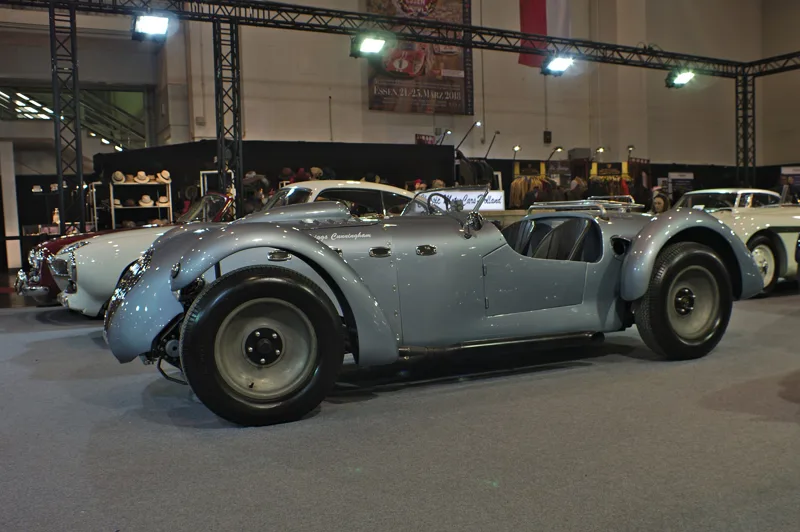
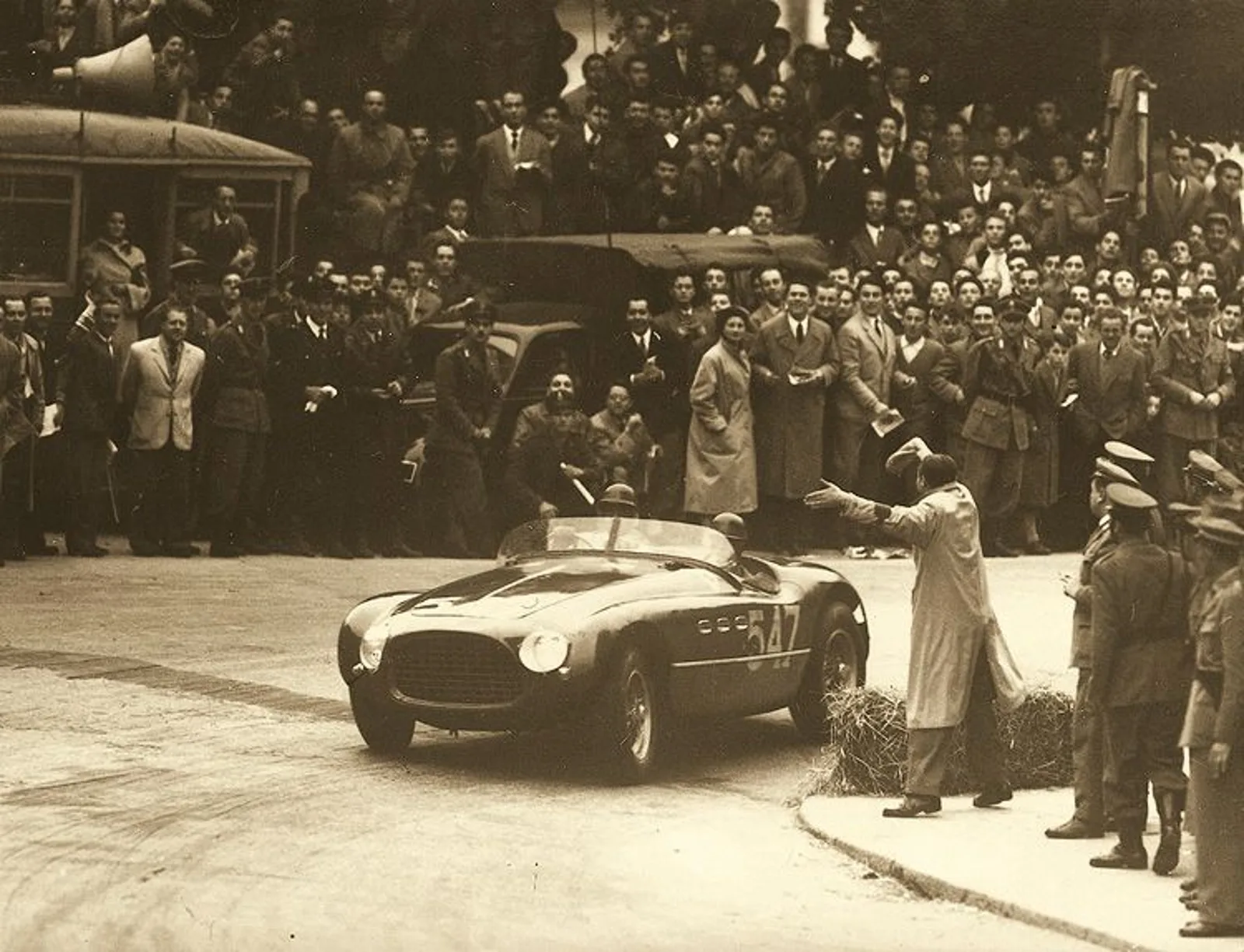
OSCA sold only the chassis. Italian coachbuilders, or the buyers themselves, supplied the bodies. The first cars were two-seater roadsters, with or without cycle wings and the lights needed to be road legal. Morelli, Moho, Vignale and Pietro Frua soon displaced the factory barchetta, and Frua and Vignale built a few berlinettas. One Vignale berlinetta won the 1,100 cc class at the 1953 24 Hours of Le Mans. Because owners kept modifying their cars, few surviving MT4s resemble each other.
Road & Track tested an MT4-2AD 1500, chassis 1148, and saw 120 mph (193 km/h) despite the lowest gearing, with 0-60 mph (0-97 km/h) in 7.0 seconds. The $10,000 list price would have bought three V8 Ford Thunderbirds with money left over, yet the magazine said the OSCA had outperformed every cheaper car it had tested. It also remarked that an Italian maker had, for once, delivered the speed, acceleration and weight it promised. The boot passed competition rules but mostly held a spare wheel and a 20-US-gallon (76 L) tank. About half of production was headed to the United States, and a further ten percent went to other export markets.
The OSCA MT4 racing record
The first outing came in 1948 at the Coppa Acerbo in Pescara, where Franco Cornacchia drove chassis 1101 and retired. Luigi Villoresi won the Grand Prix of Naples later that year. In 1949 Giulio Cabianca took races at Ferrara and Tigullio, and Dorino Serafini and Alberico Cacciari won the Giro delle Calabria ahead of Luigi Fagioli, also in an MT4.
From 1950 the car was known as quick, tough and difficult to beat in classes below two litres. At the 1951 Mille Miglia, Fagioli won the up-to-1.1-litre class and came eighth overall, just under an hour behind Villoresi's Ferrari 340 America Berlinetta Vignale. Cabianca did the same in 1952, the year an MT4 first ran at Le Mans: a 1.3-litre with Vignale bodywork, driven by Mario Damonte and a Frenchman using the name Martial. A damaged clutch ended their race after 19 hours.
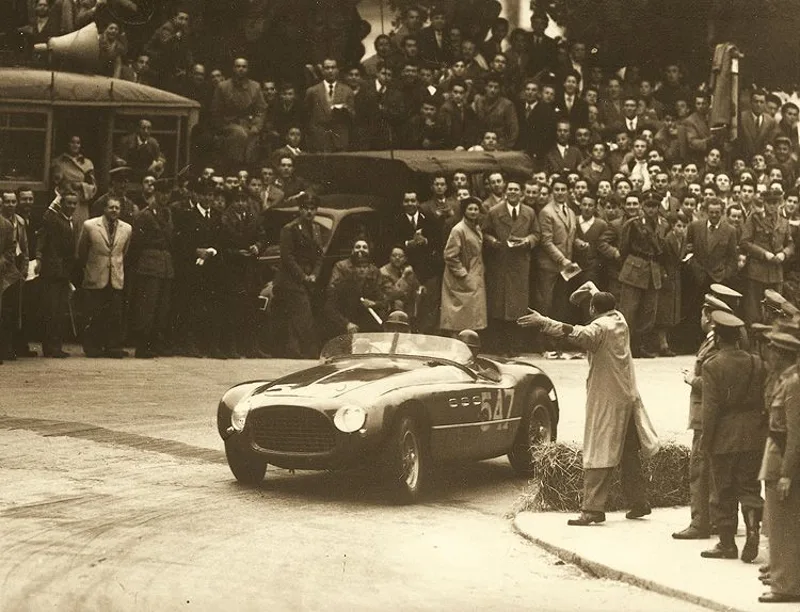
MT4s also took part in the world sports car championship from its start in 1953. The peak came in 1954 at Sebring, where Stirling Moss and Bill Lloyd won outright for Briggs Cunningham's team. It is still the only overall win in that race for a sports car under 1.5 litres. Cunningham told AutoWeek in April 1992 that the OSCA was his favourite of all the cars he built, owned and raced.
On narrow, twisting roads the light, nimble MT4 could stay with much larger machines. At the 1956 Mille Miglia, Cabianca and Umberto Maglioli were among the early leaders against the Ferrari and Maserati works drivers. Gianfranco Stanga scored the final win for an MT4 at Vallelunga in 1961, and the last known use outside historic events came at the 1966 Mugello 500 km, where Giuseppe Rossi took the prototype class up to 2 litres and was 38th overall.
After the MT4, the FS 372
OSCA's next engine, the tipo 372 DS, used desmodromic valves, which a cam closes instead of a spring, hence the DS. It was developed for Formula 2 in 1957. The race cars were OSCA F2/S, and the sports model that replaced the MT4/TN was the FS 372. Five were built from 1957 to 1959, all bodied by Morelli, with 135 hp (99 kW) and an exhaust on the right-hand side. Stirling Moss owned one and raced it in historic events until he retired in 2011. Derivatives of the engine also went into coupe and convertible Fiats from 1959 to 1966.
The Biagini Passo, a convertible crossover built from a Golf
By 1990 Italy was producing something quite different: the Biagini Passo, a compact all-wheel-drive convertible made until 1993 from many Volkswagen parts. It recalls older beach cars and buggies, and it has been called the first convertible crossover.
The company behind it
The corporate story is a tangle. Advertising of the day named Automobili Biagini, part of ACM SpA, as the maker. ACM had started as Ali Ciemme SpA, a name derived from earlier firms called Carrozzeria Mediterranea and Centro Multiindustriale, and it made its name assembling the Romanian ARO 10 for Italy. Renault-engined versions were the Aro Ischia, Volkswagen diesels were the Aro Super Ischia, and a later restyle was the ACM Enduro x4.
Livio Biagini was a driving force at ACM and behind the Passo. He began working for his uncle Bruno Cavani, a motorcycle maker using DKW engines. In 1957 Cavani handed DKW-Cavani to Livio, who closed it and set up Motauto. He later became a principal of IAP-Honda, which assembled Honda motorcycles in Italy, and then Italy's importer of Chrysler products, before the ARO connection. The Passo itself was built at the ACM plant in Atessa, in the province of Chieti, employing 220 people.
How the Passo was put together
Underneath was the body and unibody of the first-generation Volkswagen Golf Cabriolet. Biagini added its own subframe so the car could take the Syncro four-wheel-drive layout of the Mk2 Golf Country, and ground clearance grew to 10.2 in (259 mm). From the same donor came the 1.8-litre EA827 single-overhead-cam four-cylinder petrol engine and a five-speed manual gearbox.
The drive system came from Steyr-Daimler-Puch and was part-time. A viscous coupler, which behaves like a sealed drum of thick fluid, passes drive to the rear wheels once the fronts begin to slip, so the Passo steers as a front-driver until it needs help.
The lights were borrowed freely. Headlamps and front indicators came from the 1980-1985 Fiat Panda, side indicators from the 1983 Fiat Ritmo, and tail lamps from the 1983 Opel Kadett D saloon and the first Vauxhall Astra. The Golf's top-hinged tailgate became a wider bottom-hinged dropgate, which meant losing the glass rear window for a zip-out Perspex panel. A modified Golf Cabriolet roof frame carried the original soft top. Biagini made the front wings and bonnet itself and added a bullbar, plastic wheel-arch flares and an external spare wheel.
The cabin kept the Golf dashboard but added a full-width grab handle, a Nardi steering wheel and Recaro front seats, trimmed in cloth and leather or Alcantara.
Models and how many were built
The Passo 1.8i L, rated at 88 hp (66 kW), and the 1.8i LX were sold from December 1990 to November 1991. The 1.8i L Plus and a 1.8i LX with a catalytic converter ran from November 1991 to December 1993. Some markets, including Italy, also got a 2.0-litre version. ACM planned eventually to offer three petrol engines and one diesel and was reportedly working on a hardtop.
Production figures are disputed. Estimates range from around 300 to under 100, and possibly as few as 65, for cars sold in Italy and Germany.
Poor corrosion protection led to many being scrapped for rust, so roadworthy examples are scarcer still. Volkswagen has described the Passo as a conceptual predecessor of its 2020 T-Roc Cabriolet, and one was on show at the Volkswagen AutoMuseum in February 2019.
Mazzanti Evantra, a supercar made to order
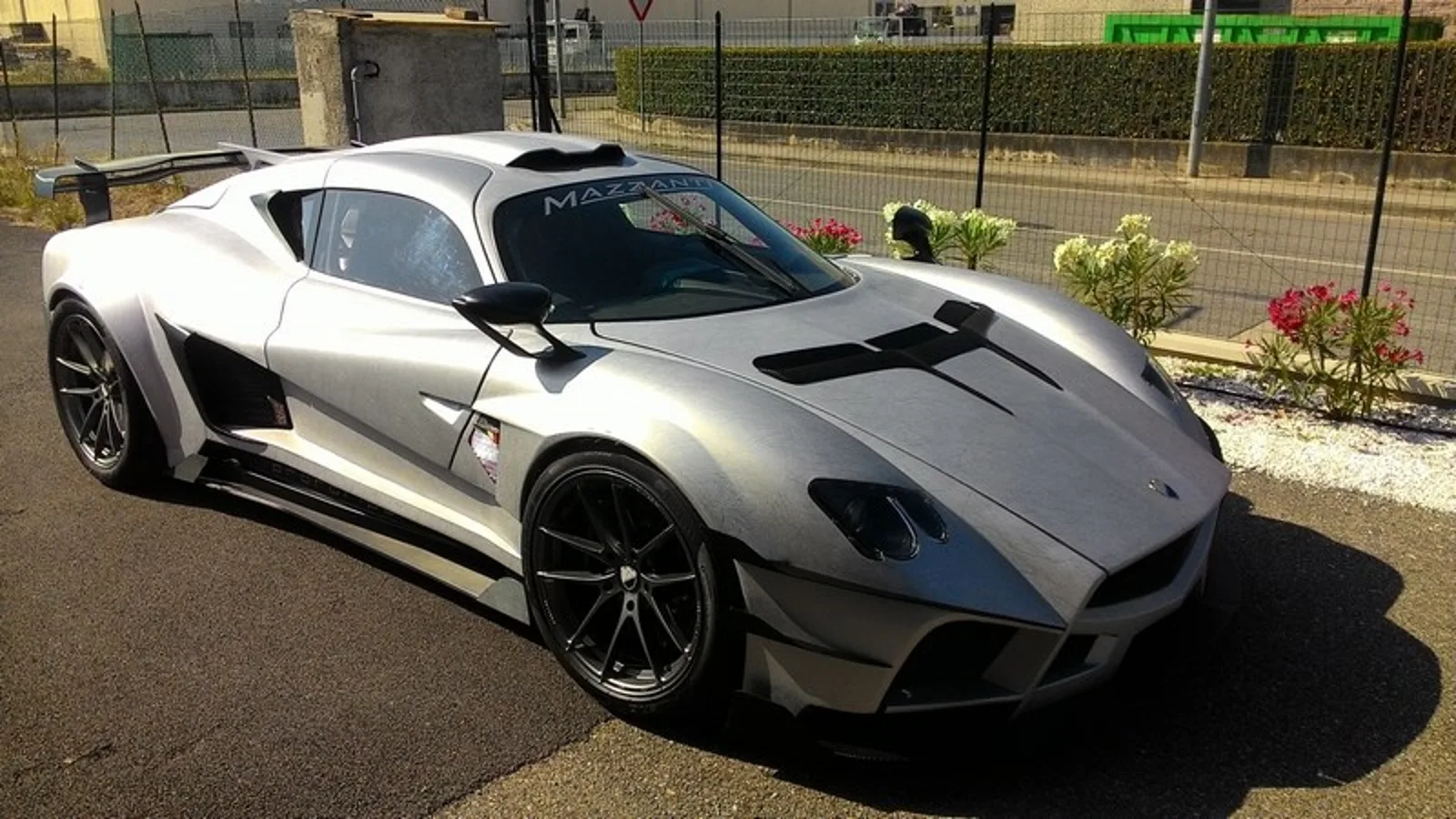
The third car comes from Tuscany. The Mazzanti Evantra is a high-performance coupe from Mazzanti Automobili, first shown at Top Marques Monaco in 2013. It is built on commission in Pontedera, at most five a year.
Luca Mazzanti presented the project in 2011 after three years of design work with Zsolt Tarnok. The plan was a mid-engined coupe in tiny numbers, tailored to each customer. In 2012 the company made full-size models and began the first car, and final testing took place at the Autodromo di Modena. The name comes from Etruscan, where Evantra was a goddess of immortality, and joins the ideas of unity and eternity.
Structure, body and cabin
A boxed steel chassis is bonded to a cage of chrome-molybdenum tubes, and a second cage links the engine and gearbox bay to the rear shock mounts, adding rigidity and occupant protection. The two-seater body comes as a pro-body, entirely carbon fibre, or a one-body, mostly carbon with some hand-wrought aluminium panels.
The interior is built to the customer's order. Standard features include a central console, a multimedia display with data logging, and a start button on a bridge to the roof, as on the Antas. There are Race and Road driving modes.
Engine and performance
Power comes from a naturally aspirated 7.0-litre aluminium Chevrolet LS7 V8. In its first form it made 701 PS (691 hp; 516 kW), but testing found another 50 HP, and the production engine gives 751 PS (741 hp; 552 kW) at 7,500 rpm with 860 Nm (634 lb ft) at 5,000 rpm. Compression is 11:1, lubrication is dry sump, and the valves and connecting rods are titanium.
A 6-speed sequential gearbox transmits it. The maker quotes more than 350 km/h (217 mph) and about 3.2 seconds from 0 to 100 km/h. Partners with Formula One and Le Mans backgrounds helped develop the aerodynamics. The car sits on OZ Racing 20-inch wheels with 255/30 R20 tyres at the front and 325/25 R20 behind, and Brembo carbon-ceramic brakes with 380 mm front discs and 360 mm rear discs.
Every Mazzanti Evantra variant
| Variant | Engine | Output | Torque |
|---|---|---|---|
| Evantra | 7.0-litre LS7 V8 | 751 PS | 860 Nm |
| Evantra 771 | Modified 7.0-litre LS7 V8 | 771 PS | 870 Nm |
| Evantra 781 | 6.2L LT2 V8 | 781 PS | 969 Nm |
| Millecavalli | 7.2L twin-turbo V8 | 1,000 PS | 1,200 Nm |
| Millecavalli R | 7.4-litre V8 | 1,121 PS | 1,210 Nm |
| Pura | Supercharged 6.2L LT2 V8 | 761 PS | 910 Nm |
771 and 781
The Evantra 771 appeared at the 2016 Bologna Motor Show, and its name is its output after a 20 hp boost to the LS7. The claims are 336 km/h (209 mph) and 0-97 km/h (0-60 mph) in about 3 seconds, with a 7-speed sequential gearbox driving the rear wheels. Sales began in spring 2017, with the usual limit of five a year.
The 781 replaces the LS7 with the 6.2L LT2, and its MacPherson struts give way to fully adjustable double wishbones at both ends. Weight rises from 1,300 kg (2,866 lb) to 1,350 kg (2,976 lb), while the interior stays as it was.
Millecavalli and Millecavalli R
The Millecavalli, shown at the Salone Auto Torino in 2016, takes its name from Italian for a thousand horses. The LS7 is enlarged to 7.2L and given two turbochargers to reach that figure, with a bespoke 6-speed sequential gearbox. The claimed 0-97 km/h (0-60 mph) time is 2.7 seconds, the estimated top speed is 402 km/h (250 mph), and the company says the standard carbon-ceramic brakes can stop the car from 300 km/h (186 mph) in 7 seconds.
The Millecavalli R enlarges the engine again to 7.4 litres. Extra aerodynamic work for track use and 80 kg (176 lb) of added weight take it from 1,300 kg to 1,380 kg (3,042 lb), and Michelin tyres replace Pirelli.
Evantra Pura, the entry model
The Pura was unveiled at the 2021 Florence Biennale with a supercharged 6.2L LT2. Mazzanti puts the 0-100 km/h (0-62 mph) sprint at 2.9 seconds and a top speed above 360 km/h (224 mph). It is the entry model, with more emphasis on lightness and driving pleasure, and weighs only 1,290 kg (2,844 lb). The steel chassis is built to flex a little in corners, and fully adjustable suspension is an option. A 7-speed sequential paddle-shift gearbox drives the rear wheels.
Owning an OSCA, a Passo or an Evantra
Mazzanti builds the Evantra to commission, so the customer's specification shapes the cabin and the choice of body construction. The three cars make very different ownership stories. An OSCA MT4 is a competition car whose looks depend on the coachbuilder or owner who shaped it. A Biagini Passo is scarce partly because rust claimed so many.