From the first working meter in Oklahoma City to London's 1901 car park, how parking is priced, policed and built.
Parking meters collect payment for limited-time spaces; the first was installed in Oklahoma City on 16 July 1935. The earliest known multistorey car park opened in London in May 1901. Cars stand idle around 95 percent of the time, so cities fight over pricing, fines and space.
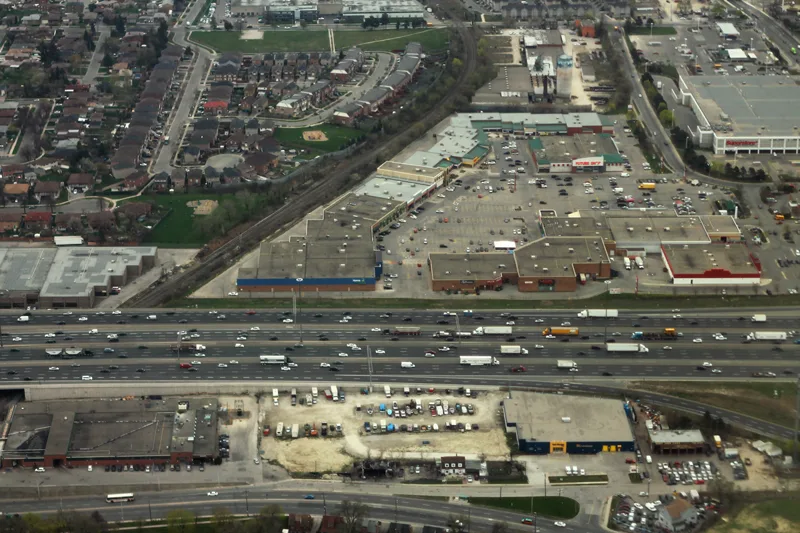
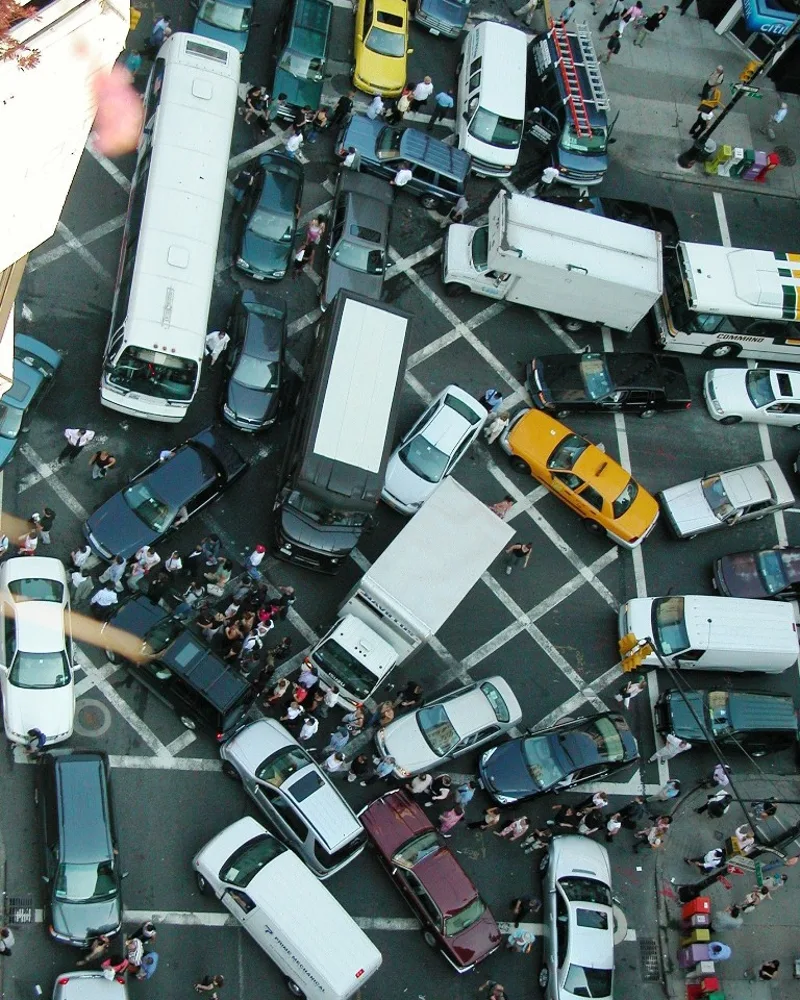
Cars sit still for around 95 percent of their lives. That single figure explains why parking, the least glamorous part of motoring, shapes the look of cities, the price of a home and the temper of a driver who has just found a ticket under the wiper. In many North American city centres, half or more of all land is given over to it, and across the United States the total area is at least the size of Massachusetts.
The parking meter and the multistorey car park are both more than a century old, and almost every city still argues about who should pay for the space a car occupies.
Parking regulations: on the street and off it
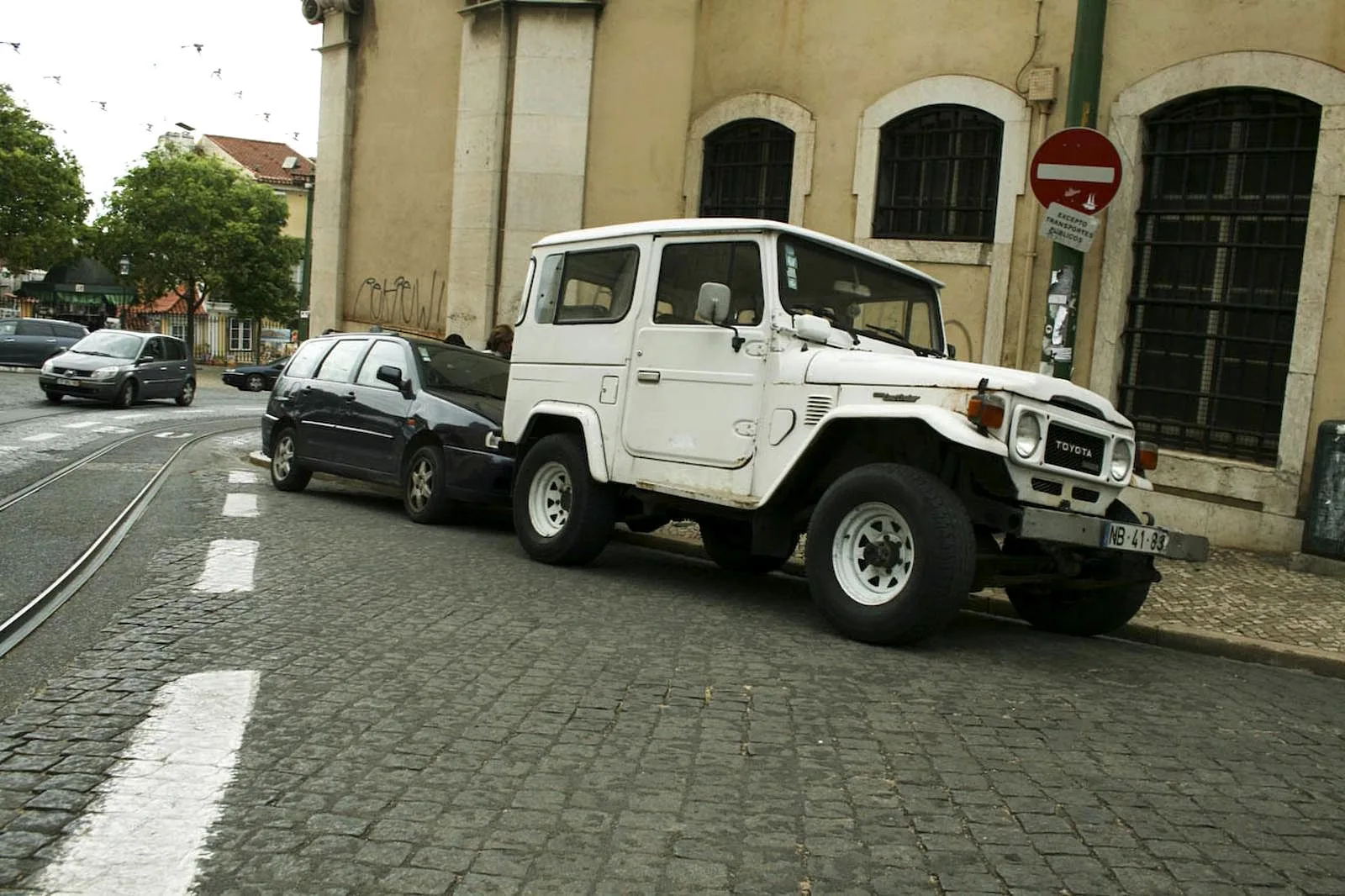
Parking facilities split into public and private. Public parking is run by local government and open to anyone who can drive to it. Private parking belongs to a private owner and may be open to everyone or reserved for customers, employees or residents. Either kind can be on-street, at the kerb, or off-street, in a lot or a garage.
At the kerb, cars may park parallel, angled or perpendicular. Parallel parking has a reputation as a tricky manoeuvre, yet it takes up the least road width. Because parked cars narrow the street, on-street parking also works as cheap traffic calming.
The rules layered on top of it are where drivers get caught out. Authorities can ban waiting outright, set time limits, require payment at a meter or through a pay-by-phone service, or reserve the space for permit holders, usually residents. A whole district can be covered by a controlled parking zone. In the UK and Europe, signs also distinguish between "no parking", "no waiting" and "no stopping". No waiting still allows you to drop off or pick up passengers, and loading and unloading is usually allowed at times shown on a plate beneath the sign, while no stopping rules out any pause at all.
Critics call free kerbside parking a poor use of high-value public space, and some cities have swapped bays for small public parks known as parklets. Park and ride schemes go the other way, inviting commuters to leave the car at the edge of town and finish the trip by public transport, which cuts congestion and the demand for centre-city spaces.
Cars sit still for around 95 percent of their lives, and the fight over where they do it never stops.
How do parking meters work?
A parking meter takes money in exchange for the right to stay in one place for a limited time. Cities use it to enforce their on-street policy, and also to raise revenue. The idea is older than most people assume. Roger W. Babson filed an early patent on 30 August 1928 for a meter powered by the battery of the parked car, which would have needed a connection from the vehicle.
The first working meter came from two engineering professors at Oklahoma State University, Holger Thuesen and Gerald Hale. They began work in 1933 at the request of Carl C. Magee, an Oklahoma City lawyer and newspaper publisher, and called their design the Black Maria. The world's first installed meter went in on 16 July 1935 in Oklahoma City, and Magee received his patent on 24 May 1938. Industrial production started in 1936 and kept growing until the mid-1980s.
Those first meters were mechanical: a coin acceptor, a dial to start the mechanism, and a visible pointer and flag to show when paid time had run out. The layout lasted more than 40 years with only cosmetic changes, such as a double-headed version covering two adjacent bays. A competitor appeared in 1936, when M.H. Rhodes of Hartford began making meters for the Mark-Time Parking Meter Company of Miami. The driver turned a handle to wind the spring, whereas Magee's meters needed a service worker to wind them now and then.
The basic routine has hardly changed. You insert coins, or swipe a card, and turn a handle or press a key. A timer starts inside the meter and a dial or display shows the time left. Some places now accept payment by mobile phone, with the record kept for checking later. Many cities limit meters to a single coin type, so any other coin simply fails to register; in Hackensack, New Jersey, the meters take quarters only.
A digital generation arrived in the mid-1980s, with boards, keypads and displays in place of mechanical parts, and by the early 1990s millions of units had been sold worldwide. Britain had started with meters in 1958, but from about the 1980s most were replaced by pay and display, pay on foot and pay-by-phone systems.
Modern meters: multi-space, solar and sensor-equipped
Today's machines are generally multi-space meters that serve typically 8 to 12 bays on a block, or an unlimited number in a lot. The driver may have to walk several car lengths to the machine, but the trade is on-screen instructions and credit card payment, so no more pockets full of coins. Most are wireless and can report a fault to maintenance staff at once, which keeps them out of action for less time. With pay-by-space meters you type in your bay number, and the meter remembers the time left so that enforcement staff can check by pressing the bay buttons.
Vehicle detection takes this further. A meter that knows when a car is in a space can guide drivers to empty bays through the web or street signs, detect violations remotely and gather data on supply and demand. Santa Monica uses detectors to stop drivers topping up a meter again and again, and wipes the leftover time when a car leaves, so the next arrival must pay. Madrid gives hybrid and electric vehicles discounted and free parking respectively.
Solar-powered meters that accept both cards and coins were installed in Los Angeles from 2010, with 10,000 fitted in six months, using the existing pole and sending a wireless signal when a technician is needed. New York City now has all 62,000 of its single-space meters in digital form, and retired its last spring-loaded mechanical meter at West 10th Street and Surf Avenue in Coney Island on 20 December 2006.
Parking fines: what counts as a violation and what follows
A parking violation is a vehicle left in a restricted or unauthorised place. Typical examples are a bus stop, a pavement where signs do not allow it, a spot too close to a junction or crossing, double parking, an unpaid or overrun meter, a disabled bay without a permit, and any time when parking is banned.
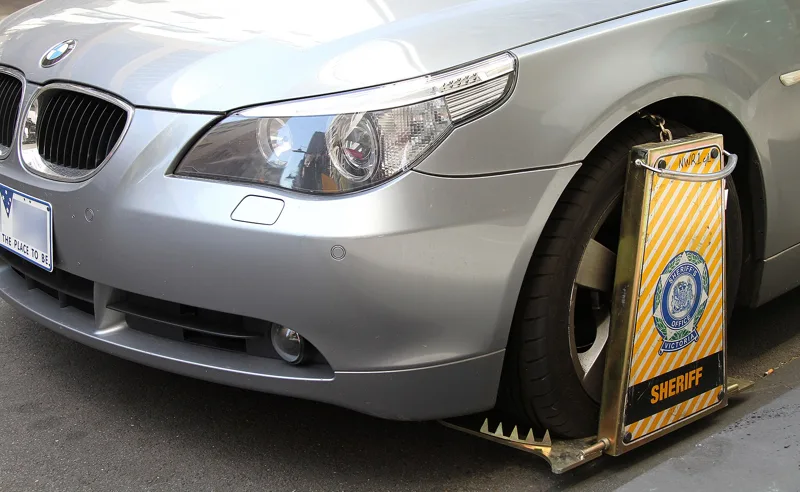
The ticket is normally left on the car while the driver is away. What happens to an unpaid one depends on the place. In California, ignoring a ticket cannot lead to a misdemeanor charge against the registered owner, but plate renewal can be refused. In New York City a vehicle with overdue fines can be towed and auctioned, and in Boston a car with several outstanding citations may be booted. In New Zealand tickets are issued by council parking officers or police, and a fee not paid on time can be passed to a court and become a fine.
Sweden treats street violations as traffic crimes, with fines set by its enforcement agency, while off-street violations are breaches of contract that carry penalty fees. In Korea, a survey found 56.1% of drivers would avoid paying parking fees if possible, and only 5.8% believed in paying naturally.
Fines have always been money as much as discipline. American merchants complained in 1926 that unenforced kerbside parking and too few off-street places were driving customers elsewhere. When the Great Depression hit city budgets, meters offered fresh income in nickels and fines for overstaying, and by 1944 American cities were earning 10 million dollars a year from them. The first meter tickets also produced the first court challenges. One Oklahoma City minister had his citation dismissed after saying he had gone to a shop for change. In a 1937 Oklahoma case, a challenger argued that charging for street use violated a right of all citizens. The courts ruled that free use of the streets is not absolute, though they warned that a city using meters for revenue alone, at inordinate profit, might be judged differently.
Multi storey car park: where the idea began
The earliest known multi-storey car park opened in May 1901 at 6 Denman Street in central London, run by the City and Suburban Electric Carriage Company. It held 100 vehicles over seven floors in 1,800 square metres (19,000 sq ft). The company sold, stored, valeted and delivered electric vehicles that could cover about 65 km (40 miles) and reach 32 km/h (20 miles per hour). A second site for 230 vehicles opened in 1902, and the first underground facility was built in Barcelona in 1904.
In the United States, the first public parking garage for motor vehicles opened in Boston on 24 May 1898, and livery stables in city centres began to be converted into garages. In the cities of the Eastern US, many former stables with lifts for carriages still operate that way. A garage built in 1918 for the Hotel La Salle in Chicago, designed by Holabird and Roche, is also described as the earliest known parking garage in the United States, a claim that competes with the Boston date. The hotel was demolished in 1976 but the garage survived until 2005, when it was demolished after failing to win landmark status. When the Capital Garage in Washington, D.C. opened in 1927 it was reportedly the largest of its kind in the country. It was imploded in 1974.
How a multistorey car park is built
Cars move between floors by inclined ramps inside the building, which is the common choice, or by circular or helical ramps, exterior ramps, vehicle lifts, which are the least common, or automated robot systems that combine a ramp and a lift. On sloping land the structure may be split-level.
The engineering logic is that a car park carries lighter loads than the offices it serves: about 2.4 kPa (50 pounds per square foot) against 3.8 to 4.8 kPa for offices. That allows floor spans of 17 to 20 metres (55 to 65 feet), so cars can park in rows with no columns in between. Podium parking beneath tall buildings has shorter spans of 7.6 to 9.1 metres (25 to 30 feet), because the floors above need more support, and the columns that result get in the way of parking rows, making those structures less efficient.
Many are now built into larger buildings, often as basements. That saves land, is cheaper and more practical than a separate structure, hides the cars and shields them from rain, snow and baking sun. In Toronto, a 2,400-space underground structure below Nathan Phillips Square is among the world's largest, while British shopping centres such as The Oracle in Reading and Festival Place in Basingstoke often put the parking on the roof, with lifts running straight down into the centre.
Cost is a major factor. In the United States, garages cost around $28,000 per space and $56,000 for underground spaces, excluding land, though another estimate gives $25,000 and $35,000. Cities often require them through parking mandates for new buildings, whereas London has abolished the minimum requirements it once had. Many are built from precast concrete to save time.
Few car parks are praised for their looks. A handful have won admiration all the same, including 1111 Lincoln Road in Miami Beach, designed by Herzog and de Meuron, the Brutalist Preston bus station in Britain, which incorporates a multistorey car park, and Castle Terrace Car Park in Edinburgh.
| Name | Where it is used |
|---|---|
| Multistorey car park | United Kingdom, Hong Kong and many Commonwealth countries |
| Parking structure | Western United States; also used worldwide as a synonym for parking garage |
| Parking garage | Throughout the US and Canada, often meaning underground parking |
| Parking deck | Mostly the Southern United States |
| Parking ramp | Upper Midwest, especially Minnesota and Wisconsin |
| Parkade | Western Canada and South Africa |
| Parking building | New Zealand |
Why parking is such a point of conflict
The International Parking Institute describes parking as a 25 billion dollar industry, with annual US revenue of 10 billion dollars. Early economic analysis treated it as an end-of-trip cost, but later work recognised how much urban land it consumes. Prices can be steep: in Boston in August 2020 a space cost just under $39,000 in the West End and almost $250,000 in the South End. Since drivers do not want to walk far, a car park near the destination holds a local monopoly.
Who pays is the argument. The cost of building, maintaining and running spaces, plus indirect environmental and social costs, may be recovered through fees, taxes and tolls, or covered by subsidy. When municipal parking is underpriced and roads are not tolled, the shortfall can be read as a large subsidy for driving. When cities charge market rates, driving becomes less competitive against other modes. Drivers do respond to price: the average parking price elasticity is -0.52 for commuting trips and -0.62 for non-commuting trips.
Donald Shoup's 2005 book The High Cost of Free Parking made the case against giving so much land to cars, and popularised market-rate and performance parking. In a performance scheme, electronic meters charge more in desirable places and at desirable times, and sensors and networked meters can raise or lower the price automatically to keep 85 to 90% of spaces occupied, so that a free space is always available. Redwood City, California, has used the approach, and San Francisco and Los Angeles have been implementing it. One study of San Francisco's SFpark found that block-level elasticities vary so widely that planners cannot predict the response to a price change. Its conclusion was that they should adjust prices according to observed occupancy until the target is met.
Planning rules add another layer. Authorities usually set minimum, or more rarely maximum, numbers of spaces for new housing and commercial buildings, and the costs can become a heated point in local politics. San Francisco's Board of Supervisors weighed a controversial plan in 2006 to limit spaces in new residential developments. Tradeable allowances have been proposed for dense residential areas, with each resident receiving a fractional annual right to park on the street and assembling a whole one by buying fractions from neighbours who own no car.
National rules differ. German law treats parked cars as traffic and limits the freedom of cities to experiment, so motorists tend to assert a right to park free on the public highway. Annual resident permits cost 360 euros in Bonn, 30 euros in Munich and Chemnitz and just 10 euros in Berlin. Japan has required since 1962 that a buyer obtain a garage certificate from local police proving a space no more than 2 kilometres from home, and overnight street parking is not allowed, although kei cars may be exempt in some sparsely populated areas. South Korea, where vehicles outnumber spaces, offers 50% off parking for electric, hydrogen and hybrid vehicles and 50 to 60% off for compact cars.
Where this goes next
The direction of travel is towards smarter, more flexible charging. Meters that detect cars, accept phones and cards and adjust their prices are already in place in some cities. In-vehicle payment devices, which began in Arlington, Virginia, in the late 1980s, have spread to campuses and municipalities. In South Korea, researchers have argued for higher fines. Tradeable parking allowances remain a proposal, put forward to make dense residential areas fairer and more liveable.