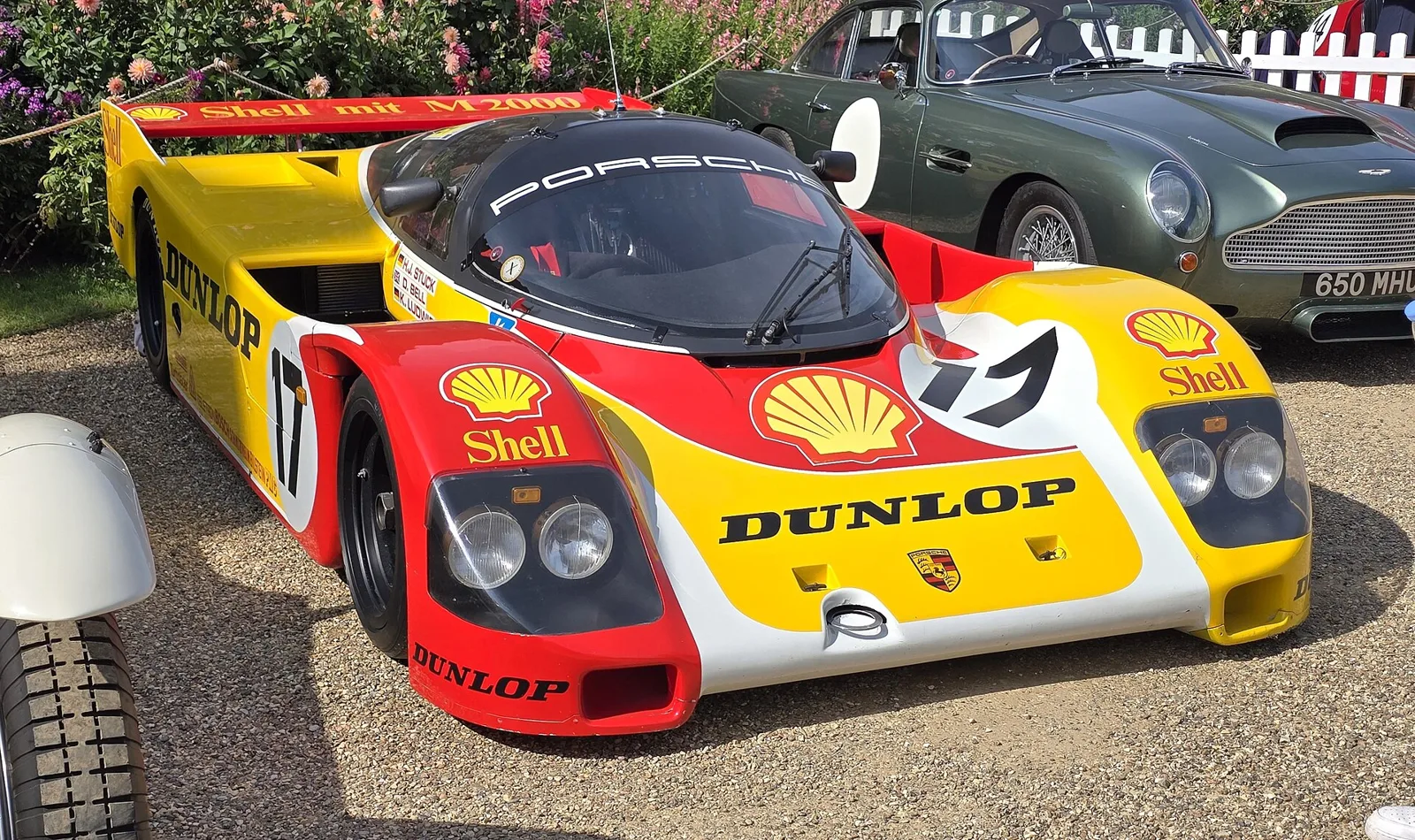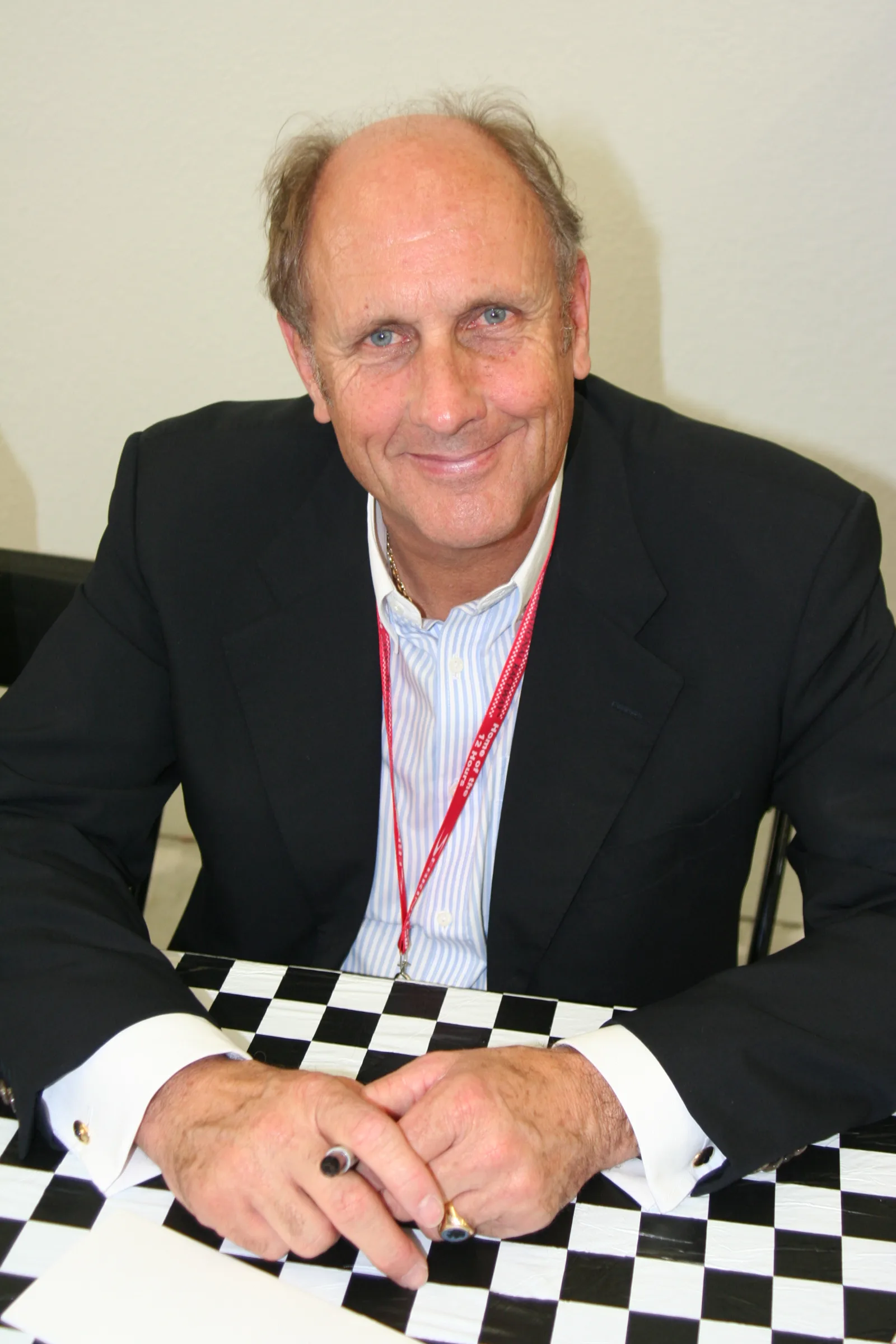
Three men who won Le Mans in Porsches, and a fourth who started it thirty times without taking the overall win.
Ludwig and Haywood won Le Mans three times each in Porsches and Stuck won it twice, in 1986 and 1987. Bob Wollek, the fourth, entered thirty times without winning overall, yet collected 71 of his 76 career victories in Porsche cars, including four at Daytona.
Bob Wollek started the 24 Hours of Le Mans thirty times and never won it outright. In 1998 Porsche took a 1-2 finish, and he was in the second car. Three of his contemporaries in Porsche cockpits did get their names on the trophy: Klaus Ludwig and Hurley Haywood three times each, and Hans-Joachim Stuck twice. Their careers span the era of the 935, the 956 and the 962.
Who were the great Porsche endurance drivers?
Klaus Ludwig, Hans-Joachim Stuck, Hurley Haywood and Bob Wollek were four drivers who built long endurance careers largely in Porsches. Ludwig won Le Mans three times, Stuck twice and Haywood three times. Wollek never took the overall win at Le Mans but won 71 races in Porsche cars.
They came from three countries: Ludwig and Stuck are German, Haywood is American, and Wollek was French. Each also reached beyond Porsche, in touring cars, Formula One, IndyCar or skiing, which is part of what makes their stories worth telling separately.
Wollek started Le Mans thirty times and never won it outright.
Who is Klaus Ludwig?
Klaus Ludwig, born on 5 October 1949, is a German driver known as Koenig Ludwig, or King Ludwig, for his success in both touring cars and sports cars. He is a three-time winner of Le Mans for Porsche, a three-time DTM champion and the 1998 FIA GT champion. In the 1970s he drove for Ford in the German DRM series and won it in 1979 with a Kremer Racing Porsche 935, repeating the title in 1981.
How did Ludwig win Le Mans in a 935?
In 1979 Ludwig took the outright win at Le Mans in the rain with the Kremer 935, a car based on a Porsche 911 road car design that was then 15 years old. That was an unprecedented result against faster, purpose-built sports car prototypes, and only in 1995 was it repeated, by a McLaren F1 GTR on its first attempt.
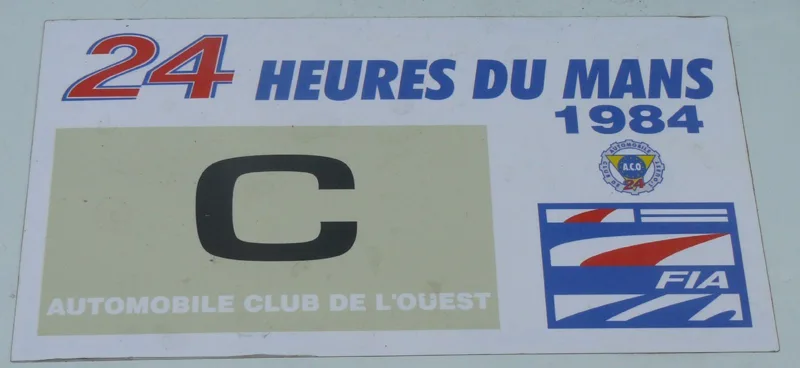
He added wins in 1984 and 1985 for Joest Racing in their number 7 Porsche 956. The Porsche Cup, an annual award given by Porsche to the most successful privateer driving its cars in a customer team, went to him in 1979 and again in 1986.
What did Ludwig do after Le Mans?
He stepped back from Le Mans and sports cars after the deaths of Manfred Winkelhock and Stefan Bellof, which he considered too dangerous, and Ford recruited him for the 1987 World Touring Car Championship. He lost it by a single point to BMW's Roberto Ravaglia, after a post-season disqualification. At the Bathurst 1000 in Australia, he and Klaus Niedzwiedz had finished second behind their teammates Steve Soper and Pierre Dieudonne, but both Ford Sierra RS500s were disqualified for illegal wheel arch size.
The setback did not slow him for long. He moved to the DTM and became champion in 1988 in a Sierra RS500, then repeated the success with Mercedes-Benz in 1992 and 1994. He went back to sports cars with Mercedes in 1997 and was FIA GT champion in 1998, retiring when the series did not continue in 1999.
The retirement was brief. In June 1999 he won the 24 Hours Nurburgring on the Nordschleife for the third time, in a Zakspeed Viper. When the DTM resumed in 2000, he returned and won at the Sachsenring aged 50. In 2004 and 2005 he entered the Nurburgring 24 Hours with Uwe Alzen in a Porsche 996 GT2 Bi-Turbo. In 2006, in a naturally aspirated Porsche 997 GT3 shared with Christian Abt, he beat the old distance record but finished second, one lap behind the winners. He has also worked as a television commentator on DTM races.
Who is Hans-Joachim Stuck?
Hans-Joachim Stuck, born on 1 January 1951 and nicknamed Strietzel, is a German former racing driver. He shared the 1985 World Endurance Championship for Drivers, won Le Mans in 1986 and 1987 with Porsche, and took the 1990 DTM title. He is the son of Hans Stuck, the 1930s Auto Union Grand Prix driver who was runner-up in the 1936 European Drivers' Championship.
Born in Garmisch-Partenkirchen in Bavaria, he learned to drive on the Nurburgring as a boy, started his first race on the Nordschleife in 1969 and, aged 19, won the Nurburgring 24 Hours in a BMW 2002ti the following year. He won it again in 1998 and 2004, each time with a BMW touring car, making three victories there. Across a four-decade sportscar career he also won the Spa 24 Hours, in 1972 with Jochen Mass in a Ford Capri RS2600. He took eight World Sportscar Championship victories for BMW and Porsche.
What did Stuck do in Formula One?
Stuck contested 81 Grands Prix between 1974 and 1979, starting on 13 January 1974, for March, Brabham, Shadow and ATS. Two podiums, at the German and Austrian Grands Prix in 1977 for Brabham, were the high points of a career that earned him 29 championship points. In the wet at Watkins Glen he led the 1977 United States Grand Prix, yet Niki Lauda took his Brabham seat for 1978. He also missed a chance to join Williams just before the team became successful. A small piece of trivia: he was the first driver born after the inaugural Grand Prix in 1950.
Away from F1 he raced the BMW 3.0 CSL known as the Batmobile in 1974 and 1975, in the German DRM and, with Ronnie Peterson, in the United States, then a turbocharged BMW 320i later in the decade.
How did Stuck win Le Mans with the Porsche 962?
With the Porsche 962, Stuck won Le Mans in 1986 and 1987. He still calls it his favourite racing car, and says it blended power and downforce perfectly. He had never sat in a car so advanced, he says, as the 962C with its PDK semi-automatic transmission. In the World Sportscar Championship he won the title in 1985 and finished runner-up in 1986 in the 962C.
After the DTM title in 1990 with Audi he returned to Porsche until Le Mans in 1998, then took on an official role with BMW. In 2006 he raced in the inaugural season of the Grand Prix Masters for retired Formula One drivers, after finishing sixth in the first event at the Kyalami circuit in South Africa in November 2005. In January 2008 he began work with Volkswagen Motorsport, where he has helped refine road cars including the Golf VI GTI.
He announced the end of his 43-year active career after the 2011 Nurburgring 24 Hours. He entered a Reiter Engineering Lamborghini Gallardo LP600+ GT3 with Dennis Rostek and his sons Ferdinand and Johannes, and Team Stuck3 finished 15th overall after gearbox problems. In April 2012 he was elected president of the German Motorsport Association.
Who is Hurley Haywood?
Hurley Haywood, born on 4 May 1948, is an American former race car driver with five overall victories at the 24 Hours of Daytona, three at Le Mans and two at the 12 Hours of Sebring. He became the fifth man to finish the informal triple crown of endurance racing.
His Daytona wins came in 1973, 1975, 1977, 1979 and 1991, a tally that ties him as the most successful driver there. At Le Mans he won in 1977 in a Porsche 936, in 1983 in a Porsche 956 and in 1994 in a Dauer 962 Le Mans. He won Sebring in 1973 and 1981. He is also credited with the 1988 Trans-Am title, two IMSA GT Championships and 23 IMSA wins, three Norelco Cup championships and a SuperCar title.
What else did Haywood do besides endurance racing?
Haywood made five IndyCar starts and finished eighteenth in the 1980 Indianapolis 500. IMSA sent him to the International Race of Champions four times, in 1986, 1989, 1992 and 1995. Drafted into the army in 1970, he served as a Specialist 4 with the 164th Aviation Group near Saigon in the Vietnam War, and when his tour ended he won his first IMSA GT title in 1971.
When Peter Gregg died, Haywood became a spokesperson and executive with the Brumos Automotive dealerships. At the Porsche Track Experience, held at Barber Motorsports Park outside Birmingham, Alabama, he is honorary chief driving instructor, and the actor Patrick Dempsey produced a documentary about his life called Hurley. He was inducted into the Motorsports Hall of Fame of America in 2005 and was Grand Marshal at the 2019 24 Hours of Le Mans.
Who was Bob Wollek?
Robert Jean Wollek, known as Bob and nicknamed Brilliant Bob, was a French driver from Strasbourg, born on 4 November 1943 and died on 16 March 2001. He won 76 races in his career, 71 of them in Porsches, including four editions of the 24 Hours of Daytona and one of the 12 Hours of Sebring. He was also known as Monsieur Porsche.
Before cars there were skis. Wollek was a member of the French National Skiing Team between 1966 and 1968 and won three gold and two silver medals at the Winter Universiade, until an injury ended his skiing career. In 1967 he had already entered the Mont-Blanc Rally in a Renault 8 Gordini, and he won. A Volant Shell scholarship race at Le Mans's Bugatti Circuit followed, where he finished second to Francois Migault, and the Alpine Trophy Le Mans, which he won. That earned him a place in the 1968 24 Hours of Le Mans, and on debut in an Alpine A210 he finished 11th overall and second in class.
Single-seaters came next: Formula France in 1969, then French Formula Three, and in 1971 Formula Two for Ron Dennis's Rondel Racing. After one point in his first year, he won once at Imola in 1972 and scored 21 points to place seventh. He then dropped his Formula One ambitions to concentrate on sportscars, where he became one of the best-known names.
How close did Wollek come to winning Le Mans?
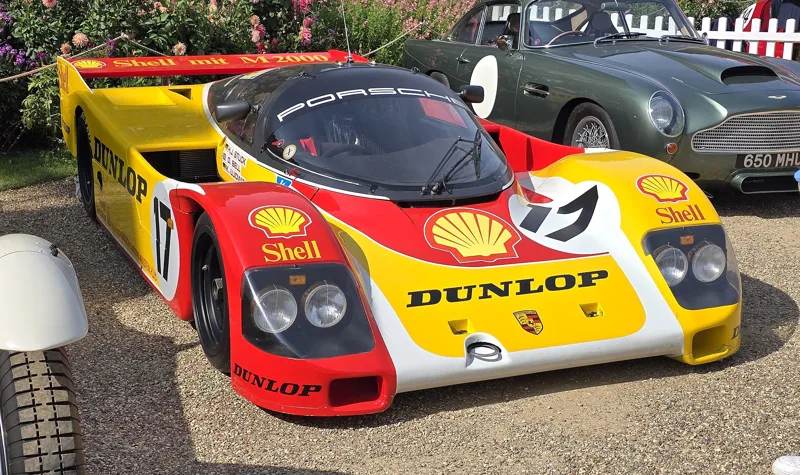
Across three decades of sports car racing, almost always in Porsches, Wollek won Daytona in 1983, 1985, 1989 and 1991, the DRM in 1982 and 1983, and the 1983 European Endurance Championship with the Joest Racing Porsche 936 and 956. In 1985 he won Sebring with A. J. Foyt in a Porsche 962. In the mid-1970s he raced a Kremer Racing 935K2, and in 1981 he drove a Kremer-built Porsche 917 in Group C trim, about a decade after those cars were first retired. The Porsche Cup went to him seven times, in 1976, 1977, 1978, 1981, 1982, 1983 and 1989.
For years he challenged the factory team in private cars. Porsche hired him for its official Le Mans team in 1978, 1979, 1986, 1987, 1988, 1996, 1997 and 1998. Yet the overall win slipped away in several of those thirty attempts. In 1997 his factory Porsche 911 GT1 was leading when a minor incident damaged it and forced a retirement. In 1998 Porsche finished 1-2, and again Wollek was in the runner-up car.
How did Wollek's career end?
After 1998 Porsche withdrew its GT1 cars from the Mercedes-dominated FIA GT Championship. In 2000 he picked up many class wins in the American Le Mans Series with a Porsche 996 GT3. His final race entry was the 2001 12 Hours of Sebring in a 996 GT3-RS. Though he was past 50 and still racing hard, he kept fit by riding bicycles, and he cycled to Le Mans from his home across France. He also ran a Jaguar dealership.
On Friday 16 March 2001, leaving Sebring International Raceway after practice, Wollek followed his habit of cycling to his accommodation on Highway 98. He was struck from behind by a van at about 4:30 p.m. and was pronounced dead on arrival at Highlands Regional Medical Center. His car, the Petersen Motorsports Porsche 996 GT3-RS he was due to share with Johnny Mowlem and Michael Petersen, was withdrawn from the race, and organisers held a minute of silence. He had announced that he would retire from racing to become an ambassador for Porsche, and was due to sign that agreement after returning from Sebring.
How do the four drivers compare?
| Driver | Born | Le Mans wins | Other major titles |
|---|---|---|---|
| Klaus Ludwig | 1949 | 1979, 1984, 1985 | DTM 1988, 1992, 1994; FIA GT 1998 |
| Hans-Joachim Stuck | 1951 | 1986, 1987 | World Endurance Championship 1985; DTM 1990 |
| Hurley Haywood | 1948 | 1977, 1983, 1994 | Daytona 24 Hours five times; Trans-Am 1988 |
| Bob Wollek | 1943 | None in thirty attempts | Daytona 24 Hours four times; European Endurance Championship 1983 |
What happened to their careers next?
Stuck's later roles include his work with Volkswagen Motorsport and the presidency of the German Motorsport Association from April 2012. Ludwig returned to the Nordschleife as a hobby pilot whenever he was offered a high-powered car, and commented on DTM races for television. Haywood teaches at the Porsche Track Experience and was honoured at Le Mans in 2019. Wollek's retirement plan, to act as a Porsche ambassador, never began.
What do the four careers have in common?
The same few cars keep turning up. Ludwig and Wollek both drove for Joest Racing, Ludwig to his 1984 and 1985 Le Mans wins in the 956 and Wollek to the 1983 European Endurance Championship in the 936 and 956. Both also raced Kremer Porsches, the 935 in Ludwig's case and the 935K2 in Wollek's. The 962 links Stuck, who won Le Mans twice in it, Haywood, who won in a Dauer-built 962 Le Mans, and Wollek, who won Sebring in one.