From Jordan in 1991 through administration, a brake duct ruling and a Sakhir win to a green Aston Martin on the grid.
Racing Point was the name of the Silverstone-based Formula One team in 2019 and 2020, formerly Force India and, before that, Jordan. After Lawrence Stroll invested in Aston Martin, it was commercially rebranded as Aston Martin for 2021. Its 2020 RP20 drew protests for resembling the Mercedes W10.
The team that raced as Racing Point kept the name for only two seasons, yet in that short spell it won a Grand Prix, took a pole position and was fined 400,000 euros over a car that looked strikingly like a Mercedes. Its roots reach back to Jordan in 1991, and its Racing Point colours vanished when Aston Martin took over the entry for 2021.
That is the compact version of Racing Point F1 history. The longer one is a tale of administrations, takeovers, a protest at three consecutive races and a billionaire's bet on a British sports car brand.
Where did Racing Point come from?
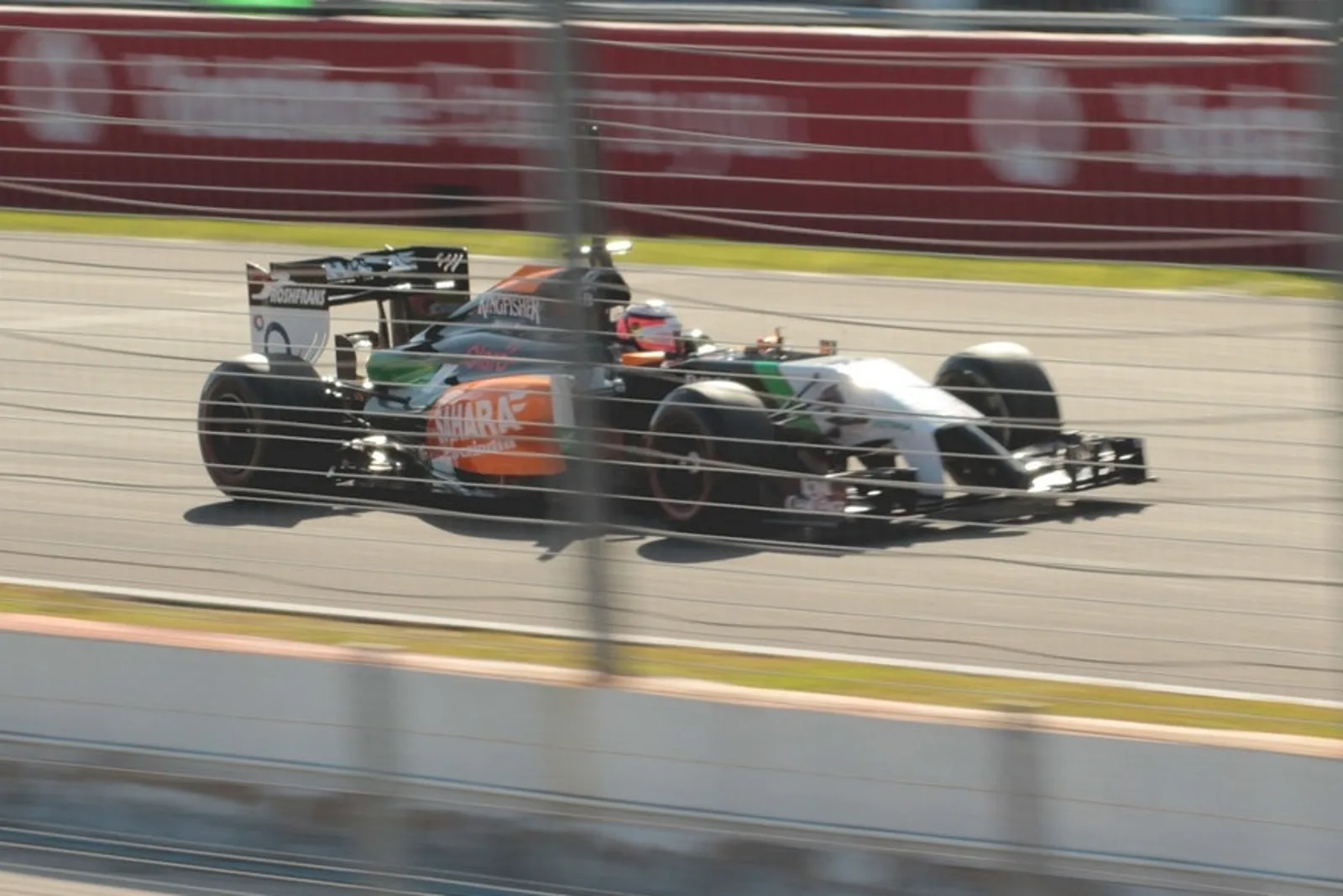
Racing Point's origins lie with Jordan Grand Prix, which first raced in 1991 and took two wins and third place in the 1999 constructors' standings. After a decline, Jordan was sold to the Midland Group in 2005 and passed through a run of owners and names, ending with Vijay Mallya's Force India in 2008.
| Name | Seasons | What defined it |
|---|---|---|
| Jordan Grand Prix | From 1991 | Two wins and third in the constructors' table in 1999 |
| Midland F1 Racing | 2006 | Bought from Jordan by the Midland Group; no points scored |
| Spyker F1 | 2007 | Dutch sports car maker Spyker Cars bought it late in 2006; first point in over two years came in Japan |
| Force India | 2008 to 2018 | Owned by Vijay Mallya; pole position in Belgium in 2009, six podiums, fourth in the constructors' table in 2016 and 2017 |
| Racing Point Force India | Rest of 2018 | Racing Point UK consortium led by Lawrence Stroll buys the assets |
| Racing Point | 2019 and 2020 | Seventh in 2019, a win in 2020 |
| Aston Martin | 2021 onwards | Commercial rebrand after Stroll invests in the car maker |
Midland did not last. The team was passed to Spyker Cars before 2006 was out and raced as Spyker in 2007, when a single point at the Japanese Grand Prix was its first in more than two years. Mallya then bought it, and the Silverstone-based outfit became Force India for 2008, its fourth identity in as many years.
Racing Point kept its name for two seasons, yet won a Grand Prix and lost a headline-making protest.
How did Force India turn into Racing Point?
Force India was put into administration in 2018 because of financial and legal trouble faced by its owner, Mallya. A consortium called Racing Point UK, led by Canadian businessman Lawrence Stroll, bought the assets, but the Formula One entry itself could not be transferred, which formally ended the entry that began in 1991.
Force India had spent ten and a half years in the sport. It took pole position at the 2009 Belgian Grand Prix, collected six podium finishes and finished fourth in the constructors' table in both 2016 and 2017. The new owners raced as Racing Point Force India through the rest of 2018, and the team became plain Racing Point for 2019.
What did Racing Point do in 2019?
The 2019 car, the RP19, was announced in Toronto, and the team ran as SportPesa Racing Point, named for a Kenyan betting company that was its lead sponsor. Sergio Perez and Lance Stroll scored in each of the first four races, including a double points finish in Azerbaijan, where they were sixth and ninth.
Then the form dipped. Over the next six races Stroll's ninth place in Canada was the only haul. The high point of the year came in Germany, where wet weather and a well-judged tyre strategy let Stroll lead for a spell before he finished fourth.
Significant upgrades arrived ahead of the Belgian Grand Prix, and the second half of the season looked very different. Perez scored in eight of the next nine races, the exception being a Singapore retirement with an oil leak. That run lifted the team past Alfa Romeo, and it closed the year seventh with 73 points.
Why was the RP20 nicknamed the Pink Mercedes?
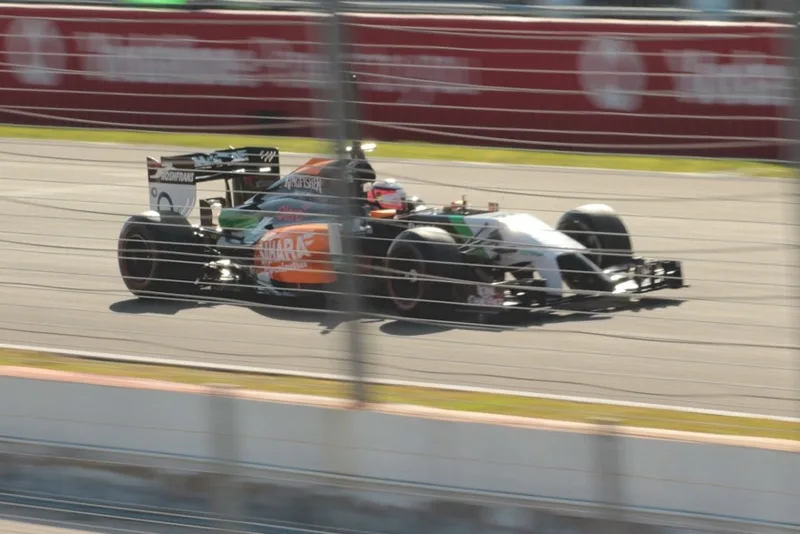
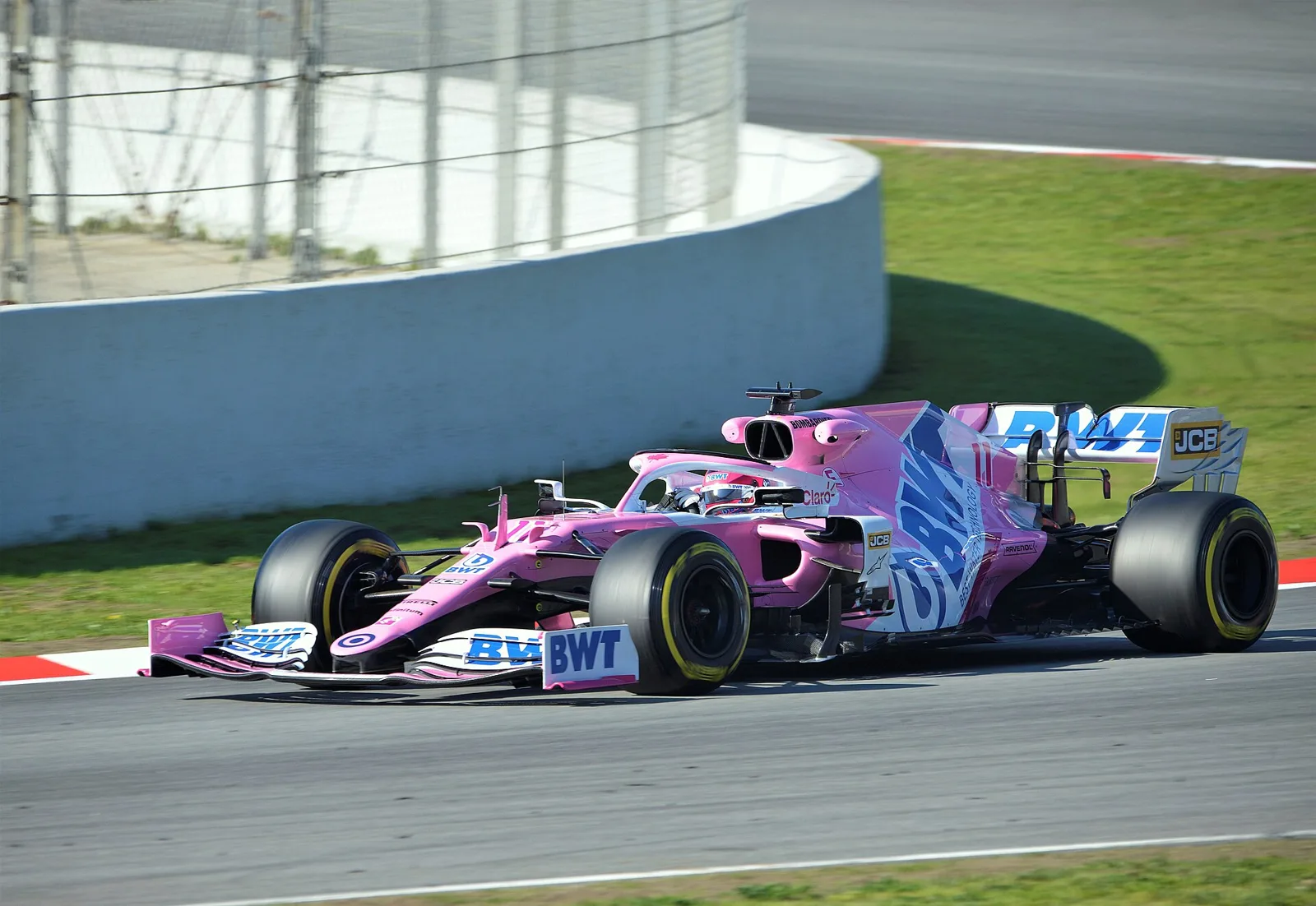
During pre-season testing in 2020, the new RP20 looked so much like the Mercedes AMG F1 W10 EQ Power+, the car that won the 2019 championship, that it was dubbed the "Pink Mercedes" and the team was nicknamed "Tracing Point". Racing Point technical director Andrew Green accepted some resemblances but denied any transfer of designs.
The car had passed its crash test in January 2020 at the Cranfield Impact Centre in Bedfordshire, which cleared it for homologation with the FIA. Team principal Otmar Szafnauer called it an evolution of the previous car, pointing to the limited rule changes for that year, and said work had started in July 2019, before the summer break.
Other teams were not convinced. McLaren chief executive Zak Brown said before the opening race that it appeared to be last year's Mercedes. That opening race, planned for Australia, was itself a casualty of the pandemic, which cancelled or postponed most of the original calendar and pushed the RP20's debut back to the Austrian Grand Prix.
What did the brake duct protests decide?
Renault protested after the Styrian Grand Prix, arguing that the RP20's brake ducts, a component the rules say each team must design itself, might be too similar to those on the Mercedes W10. The FIA upheld the protest, fining Racing Point 400,000 euros and deducting 15 constructors' points.
Stewards impounded the ducts from the RP20 and asked Mercedes to hand over its own for comparison. Renault repeated the protest after the Hungarian Grand Prix and again at Silverstone following the British Grand Prix, while Ferrari asked the FIA for clarification on the same point.
The ruling drew a fine line. The FIA stated that the car complied with the technical regulations, but the way the rear brake ducts were designed breached the sporting rules. Racing Point had built them from CAD drawings supplied by Mercedes, so the governing body regarded Mercedes, not Racing Point, as their designer.
The front ducts passed. Racing Point had run a comparable design in 2019, back when no team was obliged to draw its own ducts, so that part was judged legal.
The points penalty carried a real price. Racing Point scored the third-highest total of the season, but the deduction demoted it to fourth in the constructors' standings, behind McLaren.
How good was the RP20 on the track?
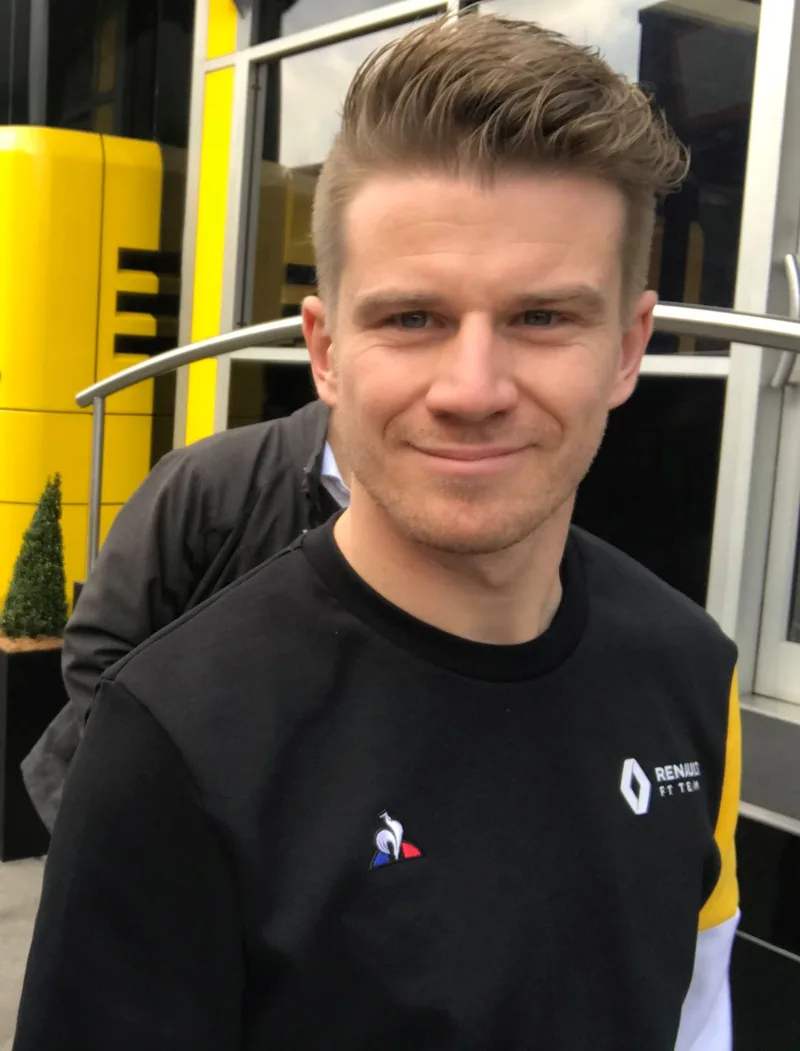
Good enough to produce the first pole position, the first podium and the first win in the team's Racing Point era. The season was messy all the same. Perez tested positive for COVID-19 three days before the British Grand Prix and missed that race and the 70th Anniversary Grand Prix, with Nico Hulkenberg stepping in.
The first podium came at the Italian Grand Prix, where Stroll finished third. At the Eifel Grand Prix it was Stroll's turn to miss out through a positive test, and Hulkenberg again deputised, climbing to eighth after starting 20th.
Turkey brought the team's first pole position, set by Stroll, with Perez third on the grid. Stroll led early and slipped to ninth, while Perez came through to second. Bahrain was grim: Perez retired with an engine failure on lap 54, and Stroll's car ended upside down after a collision with Daniil Kvyat, making it the first race of the year in which neither car scored.
The turnaround came at the Sakhir Grand Prix. Perez won, Stroll was third, and the result gave Racing Point its first win as both a constructor and a legal entity. It was the first win by any version of the team since Jordan took the 2003 Brazilian Grand Prix, and the fifth Grand Prix victory in the whole lineage.
Perez had been signed through the end of 2022 and Stroll re-signed for 2020, while BWT, an Austrian water technology company, replaced SportPesa as title sponsor. Joining in 2014, Perez was on course for nine straight seasons at the least with the outfit, spread over four different names.
What was Aston Martin's earlier Formula One career?
Aston Martin first appeared in Formula One in 1959 with the DBR4, its first single-seater, which used the company's own engine and scored no points. The car had been built and tested in 1957 but waited two years because attention went to the DBR1 sports car, the machine that took the 1959 24 Hours of Le Mans.
By the Dutch Grand Prix the DBR4 was outdated. Carroll Shelby and Roy Salvadori qualified tenth and thirteenth out of 15 and both retired with engine failures. At the British Grand Prix Salvadori surprised by qualifying second, though he finished sixth and narrowly missed a point. Portugal brought sixth and eighth, and Italy saw the cars qualify 17th and 19th.
The 1960 DBR5 was lighter and had independent suspension, but its heavy front engine left it outclassed by the more common rear-engined cars. After the British Grand Prix of that year, with no championship points in two seasons, the company stepped away to concentrate on sports car racing.
Talk of a return surfaced more than once. In 2006 David Richards, head of the consortium behind the car maker, and his firm Prodrive were granted a place as a potential entrant for 2008, but Richards said partnering with an existing team looked the better route. In 2009 he announced an intent to return in 2010, which did not materialise. From 2016 to 2020 the brand sponsored Red Bull Racing, and was its title sponsor from 2018 to 2020.
How did Racing Point become Aston Martin?
In January 2020 Lawrence Stroll invested in Aston Martin and took a 16.7% stake in the car maker. That led to a commercial rebranding of Racing Point UK's team as Aston Martin F1 Team for 2021, with the BWT pink replaced by a modern take on British racing green.
Cognizant was named title sponsor in January 2021, and the AMR21 was unveiled that March as the first Formula One car to carry the Aston Martin name in 61 years. The team kept using Mercedes power units, as it had under its various names since 2009.
Perez, who had been contracted until 2022, was replaced by four-time champion Sebastian Vettel, who joined Lance Stroll, son of the owner. Hulkenberg stayed on as reserve and development driver. Vettel gave the new team its first podium with second place in Azerbaijan, and finished second in Hungary too, though he was later disqualified over a fuel sample issue.
What changed after the rebrand?
Growth. In June 2021 Szafnauer confirmed that the workforce would expand from 535 to 800. He left the team in January 2022 after 12 years, and Mike Krack, who had worked at BMW and Porsche motorsport, replaced him. Aramco became joint title sponsor in February 2022, and in December 2023 signed a five-year agreement as exclusive title sponsor, with Cognizant staying on as a strategic partner.
Vettel retired after 2022, and Fernando Alonso, a two-time champion, took over on a multi-year contract for 2023. Stoffel Vandoorne became test and reserve driver, and Hulkenberg returned to a full-time race seat with Haas. Alonso and Stroll have been the pairing since 2023, and both were retained for 2025.
The base at Silverstone was rebuilt as well. Construction of a 37,000 square metre factory began in September 2021 on a 40-acre (16 ha) site opposite the circuit. Building One was finished in July 2023, Building Two a year after that, with Building Three, which holds the wind tunnel, in the first week of November 2024. The tunnel was commissioned by January 2025 and became operational in mid-March, ahead of the 2025 season. Six different constructors have now worked from that site since 1991.
Where this goes next
In 2026 the team began a works partnership with Honda, whose Formula One programme is run through its motorsport arm, Honda Racing Corporation. The deal brings full factory support and power units designed specifically for the chassis, and the Silverstone team will build its own gearbox package for the first time. Many in the sport regard works status as a prerequisite for a genuine title challenge.
It ends seventeen seasons with customer Mercedes engines, from 2009 to 2025. The team has history with Japanese power, having used Mugen-Honda engines from 1998 to 2000, full Honda units in 2001 and 2002, and Toyota engines in 2005 and 2006.
Adrian Newey left Red Bull in May 2024, signed with Aston Martin that September and joined in March 2025, becoming a major shareholder. Enrico Cardile began as chief technical officer in August 2024. Heading into 2026 Andy Cowell moved to chief strategy officer and Newey became team principal.
The name itself was settled in February 2026, when AMR GP secured perpetual rights to use "Aston Martin F1 Team" in Formula One under a 50 million pound agreement with Aston Martin Lagonda. In August 2026 Woody Johnson, once the United States ambassador in London and owner of the New York Jets, acquired a minority stake.