A motor that runs backwards, a railway that makes more power than it uses, and the one-pedal trick that lets some cars stop without touching the brake.
Regenerative braking slows a vehicle by running its traction motor in reverse as a generator, sending the energy to a battery or capacitor instead of wasting it as heat. It cannot stop a car alone, so friction brakes remain, but they wear far more slowly.
On the railway that carries iron ore from the mines at Kiruna in northern Sweden down to Narvik, a Norwegian port, the loaded trains give back far more electricity than they take. From Riksgransen on the border to Narvik, they draw just one fifth of what they put back into the wires, and the surplus flows out to homes and businesses in the region. The line as a whole is a net generator of electricity.
That is regenerative braking at its most dramatic, and the same idea sits beneath the brake pedal of every hybrid and electric car.
What is regenerative braking?
It is a way of slowing a vehicle that keeps the energy of its movement instead of throwing it away. A conventional brake squeezes friction material against a disc or drum and turns motion into heat, which leaks off into the air. A regenerative system turns the same motion into electricity, which can be stored and spent again to help drive the car.
The hardware is the traction motor the car already has. Electric motors are reversible: feed one current and it spins, spin it from outside and it pushes current out. When the driver lifts off or presses the pedal, the control electronics run the motor backwards, so the wheels drive it and the effort of generating power slows the car. The electricity travels back into the battery. Because it depends on electric drive, the technique belongs mostly to hybrid and electric vehicles.
The motor that drives the car is the same one that slows it, and every slowing hands energy back.
Where does the recovered energy go?
Usually into the battery, where it is stored chemically. Other designs hold it as electricity in a bank of capacitors, or as motion in a spinning flywheel. Hydraulic hybrids work differently again, using hydraulic motors and holding the energy as compressed air. A hydrogen fuel cell car sends its motor's electricity to a battery, just as a battery electric or hybrid car does.
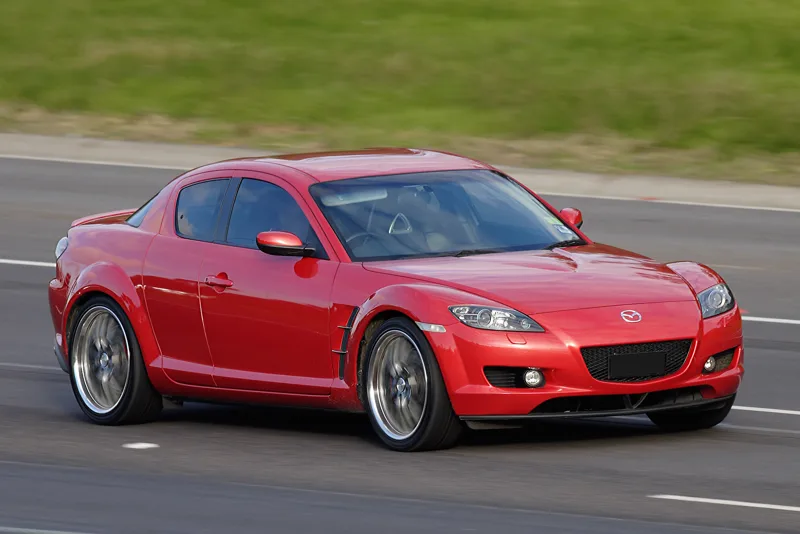
The capacitor route has one big attraction: it takes in energy much faster than a battery and at higher voltages. Mazda used it in some 2018 cars, pairing a rectifier with a large capacitor under the name i-ELOOP.
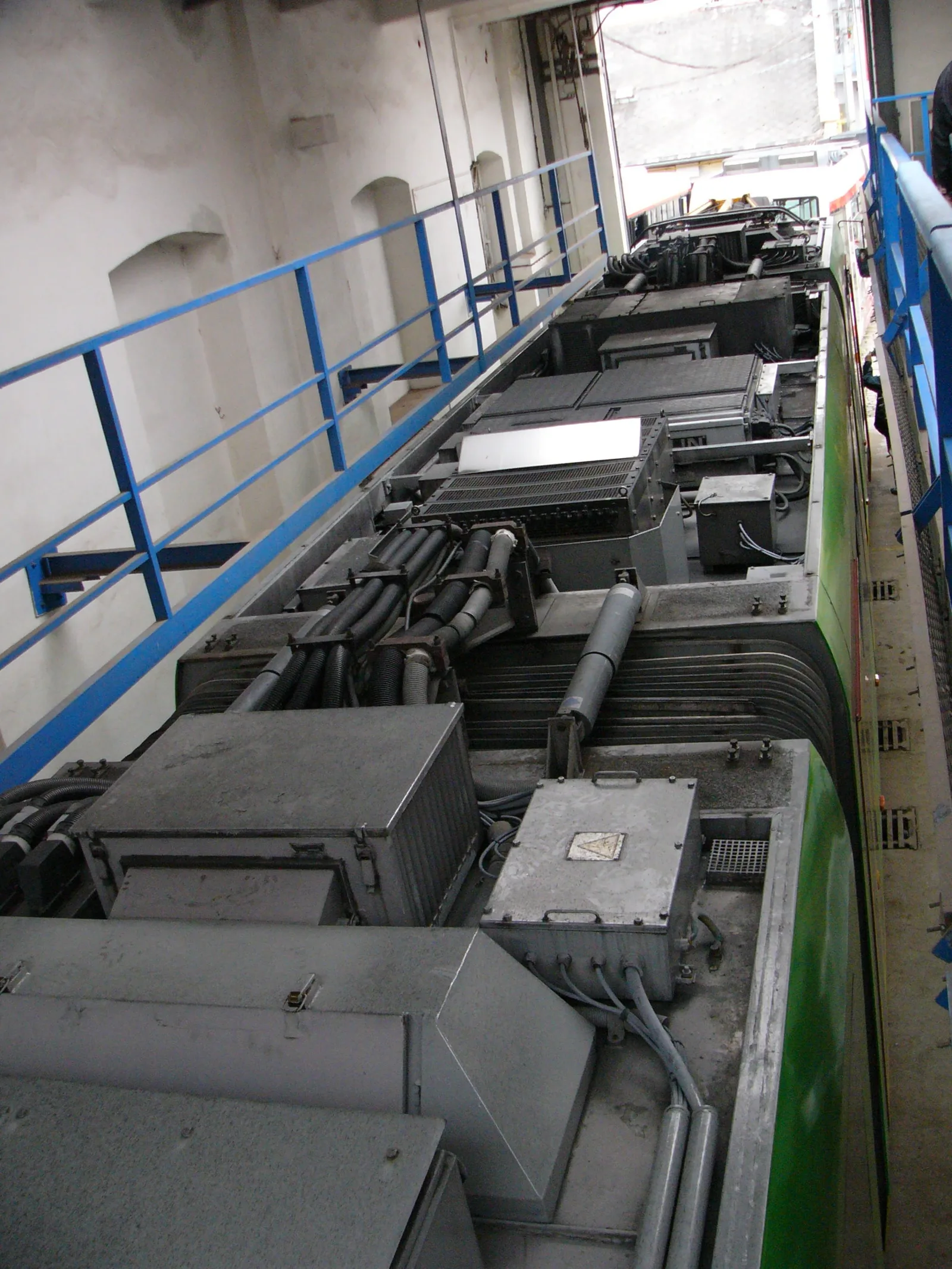
Plenty of systems recover the electricity and then waste it on the spot. Rheostatic brakes, also called dynamic brakes, run the motors as generators but push the current through banks of resistors, which turn it into heat. Forklift trucks, diesel-electric locomotives and trams use them. The heat can warm the interior or be shed through large radiator-like cowls over the resistors.
| Braking method | What happens to the energy | Where it is used |
|---|---|---|
| Friction (disc or drum) | Becomes heat, stored in the disc or drum and passed slowly to the air | Almost all wheeled vehicles |
| Rheostatic (dynamic) | Generated by the motors, then dissipated as heat in resistors | Forklift trucks, diesel-electric locomotives, trams |
| Regenerative | Generated by the motors and stored or used again | Hybrid and electric cars, electric railways |
| Regenerative (hydraulic) | Pumped into a pressure reservoir called an accumulator | Hydraulic hybrids |
Why do EV brakes last so long?
Because the motor does a large share of the slowing, the friction parts have less to do. Discs, calipers and pads are still fitted for the moments when regeneration is not enough, but they age more slowly than they would on a car that relies on them alone.
The comparison with ordinary brakes explains why that matters. Friction brakes have wear surfaces, the pads or shoes and the disc or drum, that must be renewed from time to time. Drum brakes, which are cheap to build and still sit on the rear axle of some low-cost new cars, wear out faster than discs because they tend to overheat. Every kilometre of slowing that the motor handles is a kilometre the pads do not.
There is a driving lesson in this too. Energy is always lost when a car brakes, and regeneration is not perfectly efficient, so the amount a driver brakes is a decent gauge of how efficiently the car is being used. Cutting down on brake use is one of the habits that squeeze the most economy from any vehicle.
Why can regeneration not do the whole job?
It cannot stop a car safely on its own, and the reasons are practical rather than theoretical.
- The effect fades as the car slows, so with today's technology it cannot bring a car to rest promptly.
- It only acts on wheels that carry motors. Many road vehicles, such as two-wheel-drive cars, do not have motors on every wheel, and for safety every wheel must be able to brake.
- Its effect is limited, so large speed reductions and final stops still call for the mechanical brakes.
- Some systems cannot hold a stationary car, which means a physical lock is needed to stop it rolling down a hill. The Chevrolet Bolt is an exception: it can stay put on small slopes using only its motor.
The answer is to use both systems and blend them, with software deciding how much of the total braking comes from each. The GM EV-1 was the first production car to manage it. Two patents for the brake-by-wire technology behind it went to the engineers Abraham Farag and Loren Majersik, in 1997 and 1998.
What is one-pedal driving?
It is what happens when the regenerative effect is strong enough to bring the car to a stop the moment the driver eases off the accelerator. The Chevrolet Bolt can do this on level ground, provided the driver has learned how far the car travels while regenerating. In the 2020s, most vehicles with regenerative braking can stop reasonably quickly in a one-pedal mode.
It has drawn two safety concerns. Some cars do not light the brake lamps when slowing through regeneration, and most regulations do not require them to. Then there is sudden unintended acceleration: because the brake pedal is seldom used in one-pedal driving, a driver under stress could reach for the accelerator by mistake.
China has acted on the first of these. Its GB 21670-2025 vehicle standard requires the brake lights to light whenever regenerative deceleration is above 1.3 m/s2.
How much energy can a car really get back?
The physics favours speed. Kinetic energy rises with the square of velocity, so an object moving at 10 m/s carries 100 times the energy of the same mass at 1 m/s. The theoretical braking distance at the limit of tyre grip grows in the same way, up to 100 times as long. At speed, a fast vehicle also loses a lot of energy to air drag, and that loss climbs rapidly as speed rises.
Hills change the sum entirely. On a steep descent at real traffic speeds, the energy that can be recovered while going down at less than terminal speed is far greater than what is available from bringing the car from terminal speed to a stop. One cyclist's example puts a number on the other side of the ledger: at terminal speed on a descent, roughly three hair dryers' worth of power, about two horsepower, is lost to air drag.
Railways give the best figures, because they have measured them. British Rail Class 390s are claimed to save 17 per cent, while Caltrain says 23 per cent of the energy its Stadler KISS trains use is recovered and passed back to the grid. The Delhi Metro reported regenerating 112,500 megawatt hours between 2004 and 2007, which it says avoided about 90,000 tons of carbon dioxide.
The railways got there first
Frank J. Sprague's company introduced regenerative braking in 1886, alongside a constant-speed, non-sparking motor. Tramways followed. John S. Raworth's Traction Patents of 1903 to 1908 brought automatic regenerative control to operators in England, with systems at Devonport in 1903, Rawtenstall, Birmingham and the Crystal Palace to Croydon line in 1906. The trams also carried wheel brakes and track slipper brakes in case the electric braking failed. A serious accident at Rawtenstall brought an embargo in 1911, and the method returned twenty years later.
In the early 1930s, the Baku-Tbilisi-Batumi railway began using it, to particular effect on the Surami Pass, a steep and dangerous stretch. The Kiruna to Narvik line followed the same logic on a grander scale. Its loaded ore trains carry thousands of tons downhill, with recuperative braking force peaking at 750 kN, and the energy they hand back is enough to power the empty trains up to the border again.
Some of the best ideas are the simplest. On parts of the London Underground, small slopes lead up into and down out of stations. The climb slows the train, and as it leaves on the downslope the movement is returned from energy stored as height. This is found mostly in the deep tunnel sections rather than on the cut and cover lines.
Regeneration is harder to run on a railway than the dynamic alternative. The generated current has to be matched closely to the supply, which on a DC supply means tightly controlled voltage, and the supply frequency has to match as well. Maintenance costs of the lines rise too. Where a train has a constant demand for power that has nothing to do with moving, such as heating or air conditioning, that load can soak up the recovered energy. North American passenger railroads like the method because their head end power loads run at around 500 kW year round.
How regeneration reached the car
In the 1890s in Paris, Louis Antoine Krieger converted horse-drawn cabs to front-wheel drive. His electric landaulet had a motor in each front wheel and a second set of parallel windings, a bifilar coil, for regeneration. During the First World War, the Orwell Electric Truck from Ransomes, Sims and Jefferies in England used regenerative braking that the driver switched in by hand.
Such systems were awkward. The Baker Electric Runabout and Owen Magnetic needed many switches and several modes, wired through a costly control unit known as a black box or drum switch. They could be used practically only on downhill stretches and had to be engaged manually.
The danger of the manual approach was real. In many early electric vehicles the same controller positions applied power and applied the regenerative brake, with a separate manual switch swapping the roles. Drivers sometimes accelerated when they meant to brake. A runaway train accident at Waedenswil in Switzerland in 1948, in which twenty-one people died, is a stark example.
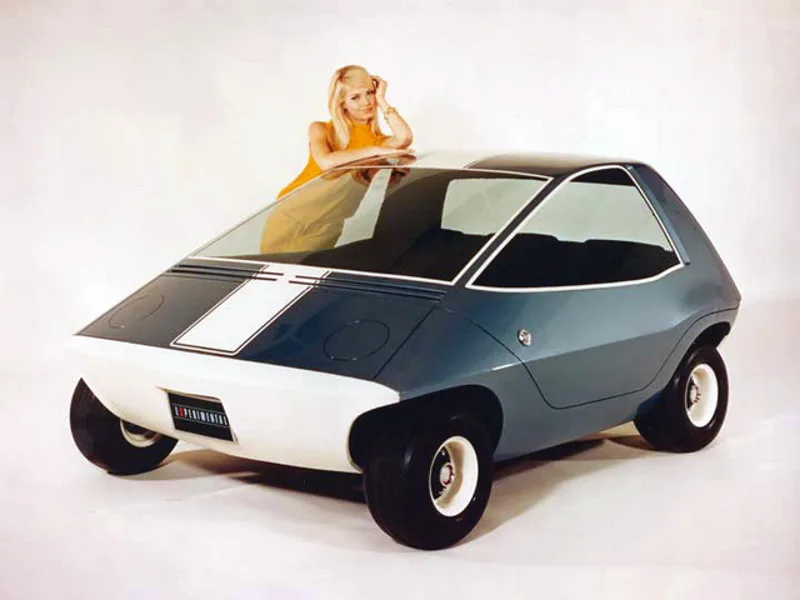
Better electronics solved it. The AMC Amitron of 1967, an experimental electric car designed by Gulton Industries, automated the process: its motor controller began charging the battery the moment the driver pressed the brake pedal. Today's hybrids and electric cars lean on the same technique to stretch the battery pack's range, above all those with an AC drivetrain. Most earlier designs ran on DC.
What it means for the car you drive
For a buyer, regeneration is one of the practical gains that comes with an electric drivetrain. When manufacturers began to turn to hybrids, the electric motors they added were powered in part by energy recovered from braking. In a battery electric car, the recovered energy goes straight back to the battery.
The long life of the friction brakes is the other benefit. The pads, discs and calipers stay fitted because the motor cannot stop the car alone, but they are called on less often.
Behind the wheel, three points matter. A one-pedal car can stop itself on level ground, but the driver must know how far it takes. Regeneration works best on the driven wheels and fades as the car slows, so the brake pedal remains the safety net for the final stop. And the brake lamps may or may not come on during regeneration, depending on the model and the rules in force where it was built.
Where this goes next
On the regulatory side, the GB 21670-2025 standard has now set a threshold of 1.3 m/s2 at which brake lights must light during regenerative braking. On the rail side, the Delhi Metro expected to cut its emissions by more than 100,000 tons of carbon dioxide a year when phase II was finished, thanks to regenerative braking.
The road market that uses the technology keeps growing. In 2024, over 20 per cent of new cars sold were electric, and as of September 2025 nearly half of new vehicle sales in China were electric. Each of those vehicles carries a motor that can run backwards.