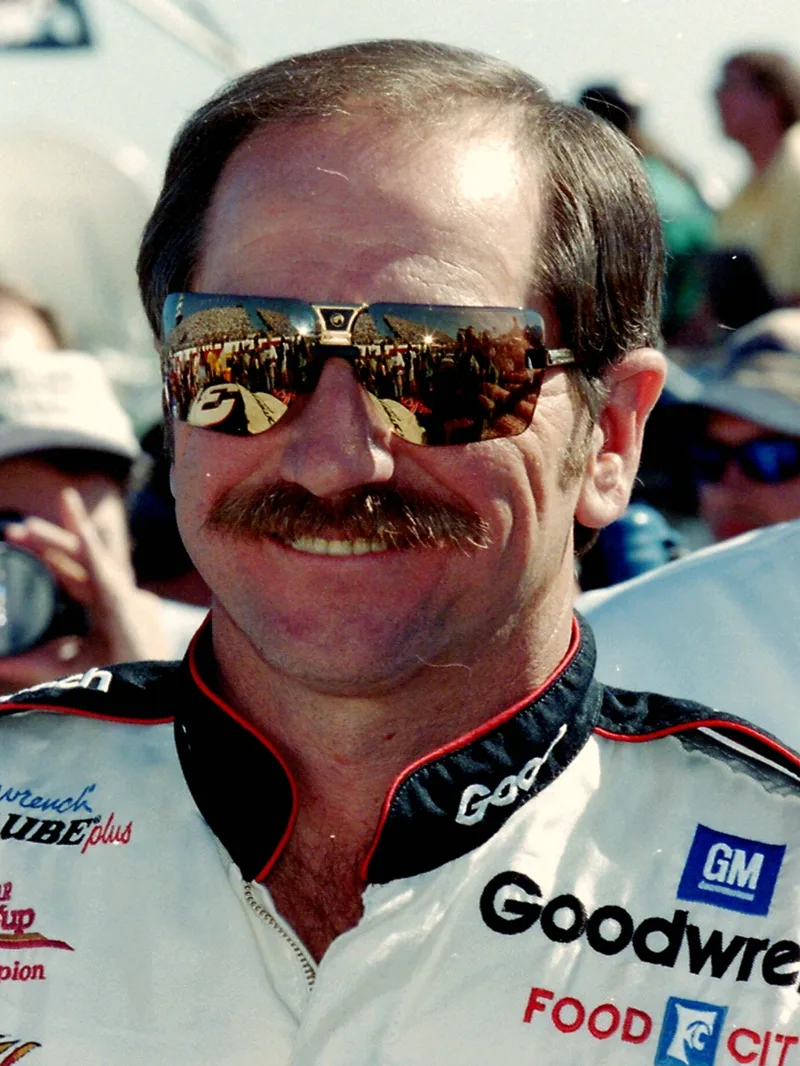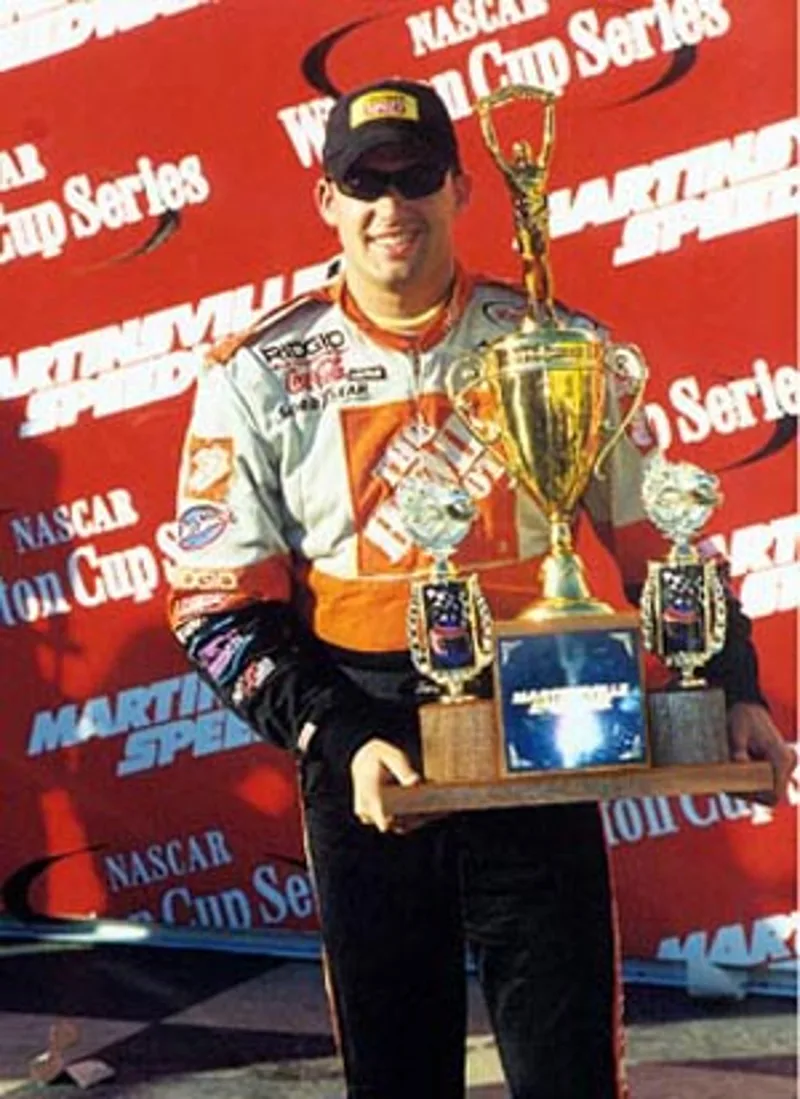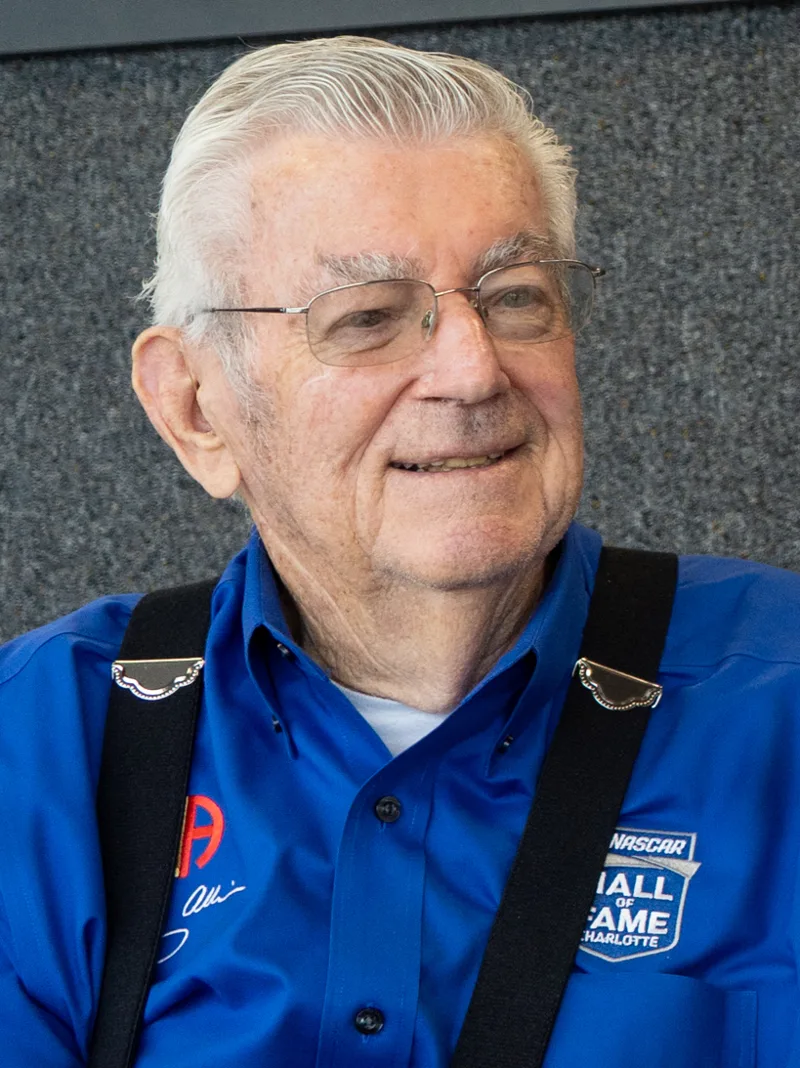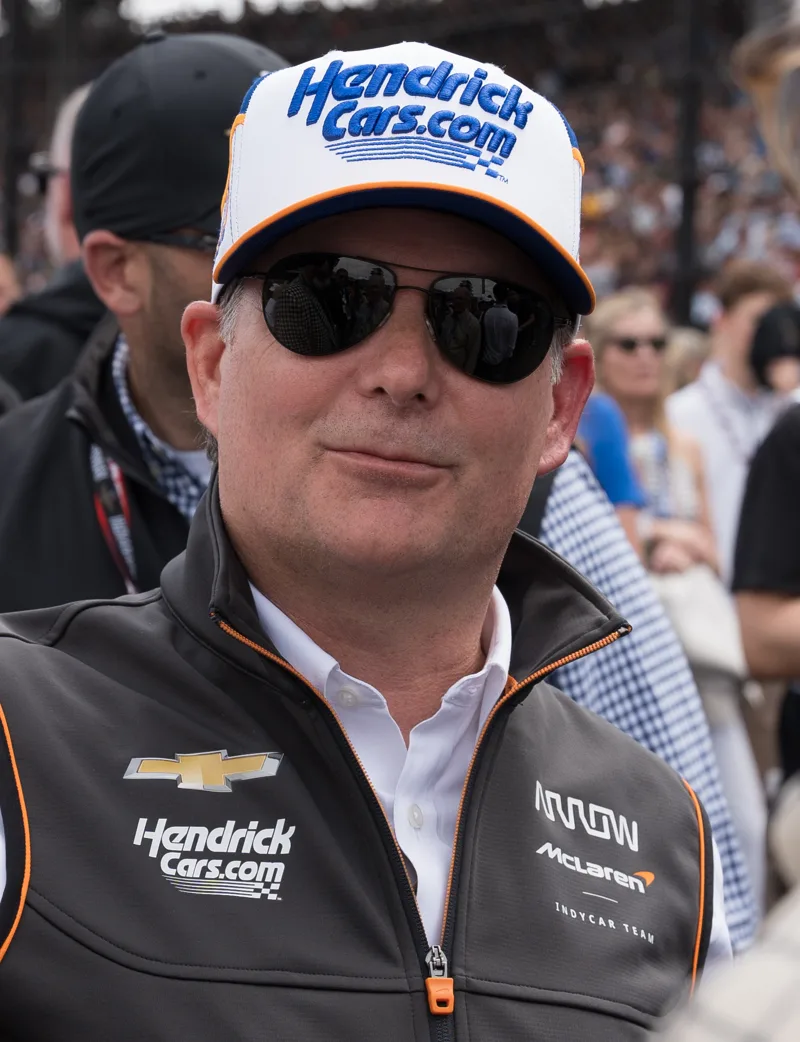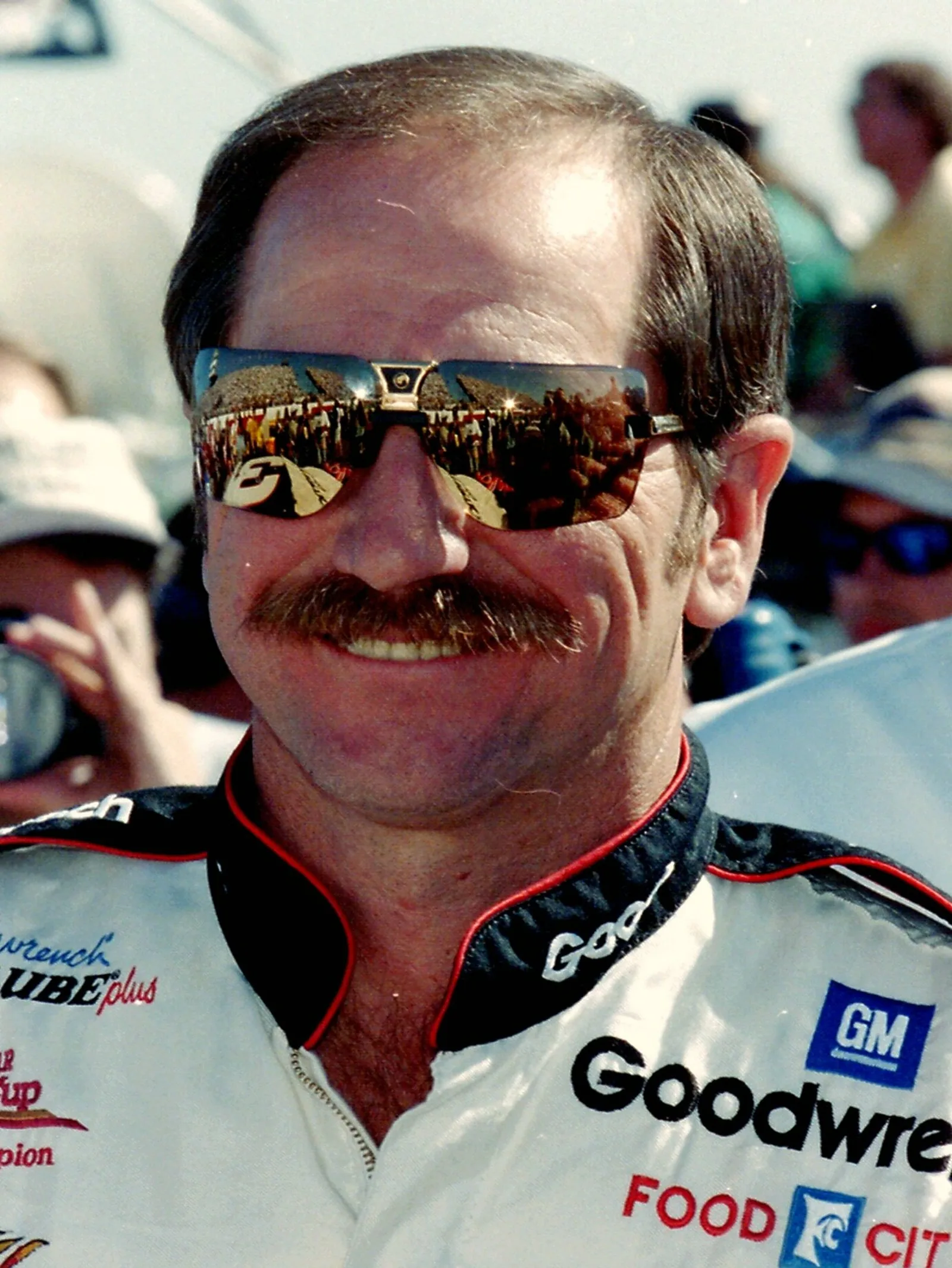
Nine Modified titles, more than 700 wins, three Late Model Sportsman crowns and 31 Busch Series victories: four careers built on short tracks.
Evans won nine NASCAR National Modified titles, Hendrick claimed more than 700 victories as Mr. Modified, Farmer took three straight Late Model Sportsman crowns and hundreds of wins, and Ingram won 31 Busch Series races between ages 45 and 50, plus the 1982 and 1985 titles.
Richie Evans clinched his ninth NASCAR National Modified title at Thompson, Connecticut, and was dead within the week. On 24 October 1985 he was practising at Martinsville Speedway when he hit the concrete wall in Turn 3. From 1978 onward he had won every title, and the ninth took his total to a figure the sport's international hall of fame describes as among its supreme feats.
Evans is the most decorated name here, but he shares the story with three other drivers who built careers on short tracks: Ray Hendrick, Red Farmer and Jack Ingram. Between them they cover the Modified division, the Late Model Sportsman ranks and the Busch Series, and each has a place in a hall of fame.
Richie Evans: the Rapid Roman
Richard Ernest Evans was born on 23 July 1941 and left the family farm in Westernville, New York, at 16 to work at a garage in nearby Rome. Street racing came first, then drag racing, and a local stock car racer named Chuck Mahoney told him to build a car for the Utica-Rome Speedway. His first oval car, run in 1962, was a Hobby Stock built from a 1954 Ford and numbered PT-109, after the torpedo boat John F. Kennedy commanded in the war. He moved up to the Modified division, which the sport regards as the premier short-track class, and won his first feature on the last night of the 1965 season.
Evans had clinched his last national title at Thompson one week before the crash at Martinsville.
How Evans won nine National Modified titles
He took his first national title in 1973. Then, in 1978, the man called the Rapid Roman started a run that did not end for seven more seasons, giving him eight in a row to 1985. By the time he died he had 518 known feature wins: 516 in Modifieds, one in Limited Sportsmen and one in Supermodifieds, across 40 tracks in 12 US states and two Canadian provinces.
The track-by-track numbers show how thoroughly he owned the Northeast. Shangri-La Speedway in Owego, New York, gave him 66 wins between 1972 and 1985, Spencer Speedway 52, Fulton Speedway 44, New Smyrna Speedway in Florida 39 and Stafford Motor Speedway 38. He also collected 30 track championships at 11 tracks in four states, all in Modifieds on pavement. Thompson Speedway alone gave him five.
Almost every victory came on asphalt. His one dirt win was at Weedsport Speedway in 1971. He won the Modified Race of Champions three times, at Trenton in 1973 and at Pocono in 1979 on the 2.5-mile track and in 1980 on the 0.75-mile oval. He also won Modified races at Daytona International Speedway in 1979 and 1980, and the New Smyrna World Series of Racing title six times between 1977 and 1984.
Regional series, and the week it ended
When NASCAR created what is now the Whelen All-American Series in 1982, then called the Winston Racing Series, the aim was to pay successful short-track racers and encourage them to back their local weekly tracks. Evans was the first NASCAR champion at Holland Speedway in 1982 and won the Northeast Region title every year he entered, from 1982 through 1985, though he never took the national title in that series.
The final week is the part people remember. A week before his death he had already secured the inaugural Winston Modified Tour championship at Thompson. Martinsville was hosting the Winn-Dixie 500 tripleheader, three races in a single day: 200 laps for Modifieds, 200 for the Busch cars and 100 for Late Models. Evans was practising for the Modified event when he crashed.
His orange paint, Swamp Holly Orange, started with paint borrowed from the local highway department garage. Utica-Rome Speedway, his home circuit, retired his No. 61 in 2008, and on the Whelen Modified Tour the number is unofficially the one retired figure anywhere in NASCAR. In 1985 the IROC Series put a 61 on the rear fender of each orange car as a tribute. Fans chose him as the Modifieds' Most Popular Driver nine times.
NASCAR listed him among its 50 Greatest Drivers in 1998 and its 75 Greatest in 2023. The NASCAR Hall of Fame elected him on 14 June 2011 alongside Cale Yarborough, Darrell Waltrip, Dale Inman and Glen Wood, and held his induction on 20 January 2012. No one from outside what is now the Cup Series had been enshrined before him. He was survived by his wife, Lynn, and six children.
Ray Hendrick, Mr. Modified
Ray Hendrick was born on 1 April 1929 and died on 28 September 1990. A Virginia native who became a Richmond star, he earned the name Mr. Modified over a 36-year career, mainly in modified stock cars. His tally passed 700 victories across modifieds and the NASCAR Late Model Sportsman Series, which later became Busch Grand National.
His famous winged No. 11 Modified coupe was fielded by Jack Tant and Clayton Mitchell, and Rick Hendrick, no relation, was a member of its pit crew in the 1960s. South Boston Speedway gave him five track titles: four in the NASCAR Modified division, one in Late Model Sportsman.
The National Modified Championship eluded him, though he was always near it. Nine seasons between 1960 and 1969 ended with him in the points top ten. His best were third in 1964 and again in 1966; 1967 brought fifth, 1963 and 1968 sixth, 1960 and 1965 seventh, 1961 ninth and 1969 tenth. In Late Model Sportsman points he was eighth in 1974 and ninth in 1975.
Hendrick at Martinsville and everywhere else
His marquee wins included the Modified Race of Champions twice, in 1969 on the one-mile asphalt at Langhorne and in 1975 on the 1.5-mile oval at Trenton. On Memorial Day weekend in 1970 he took a 100-lap National Championship race at Stafford Motor Speedway.
At Martinsville Speedway he leads the all-time winners list with 20 victories between 1963 and 1975. Richard Petty is next with 15, then Geoff Bodine, Darrell Waltrip and Richie Evans.
Hendrick's creed was to race anywhere and everywhere. That approach kept him from running the Winston Cup full-time. In 17 Cup starts he finished in the top five twice and the top ten six times.
NASCAR named him one of its 50 Greatest Drivers in 1998, and the National Motorsports Press Association inducted him in 1993. Virginia's Motorsports Hall of Fame made him its first inductee in 2003, and he followed that with places in the international hall in 2007 and the state sports hall in 2012. He was ranked fourth on the all-time top ten Modified drivers list in 2010. The NASCAR Hall of Fame lists him for induction in 2026.
Red Farmer and the Alabama Gang
Charles "Red" Farmer was born on 15 October 1932 and ran his first race in 1948 at Opa-locka Speedway near Miami, in a 1934 Ford. As a member of the Alabama Gang he became famous, and he thought of Hueytown, Alabama, as home. Estimates of his career victories range from 700 to 900, and most came in the late 1950s and early 1960s. He also won numerous championships at local tracks.
Before the Grand National series he raced modifieds in the northeast, and he was one of the first drivers to move from that world into the early Grand National ranks. Yet he started only 36 Cup races between 1953 and 1975, because he was content to run mainly in the Late Model Sportsman Series, the forerunner of today's Xfinity Series. He was its National champion three years running from 1969 to 1971. His best Cup results were fourth at the 1972 Talladega 500 and fourth at the 1968 Middle Georgia 500, near Macon. NASCAR named him its most popular driver four times.
Farmer still racing late in life
Farmer's cars were white and gold with the number 97, and in the mid-1960s a white, gold and red Ford Fairlane carried F-97. Davey Allison's Busch Series crew chief at one point, Farmer still went back behind the wheel, running two Busch Grand National races in 1992 and the ARCA opener at Daytona in 1993.
At 72, in June 2005, he outran current Cup stars to win a heat at Tony Stewart's Eldora Speedway, then came eighth in the feature of the Sprint Prelude to the Dream. As of 2022 he was still a regular in a late model at Talladega Short Track, a dirt oval of one-third of a mile in Eastaboga, Alabama, where his grandson Lee Burdett also competes. These days he races part-time for his own team in 602 Crate Dirt Late Models, in a Ford Mustang numbered F97. A tornado damaged his house, race shop, hauler and dirt late model on 25 March 2021.
Farmer was riding with Davey Allison on 12 July 1993 when Allison's helicopter crashed at Talladega Superspeedway as he tried to land in a car park nearby; Allison died. The pair had been heading to see David Bonnett, whose father Neil was another Alabama Gang driver, practise. Farmer's injuries were a broken collarbone and fractured ribs.
He belongs to five halls of fame. He was in the first class on the Talladega-Texaco Walk of Fame, and the International Motorsports Hall of Fame waived its five-year retirement rule for him, reasoning that he would never retire. NASCAR placed him among its 50 Greatest Drivers in 1998 and inducted him into its Hall of Fame in 2022.
Jack Ingram, the Iron Man
Jack Ingram was born on 28 December 1936 and died on 25 June 2021, aged 84. Nicknamed the Iron Man, he got his start at New Asheville Speedway, where he and his rival Bob Pressley were marquee drivers. Before the Busch Series itself began in 1982, he had taken the Late Model Sportsman title three years running, in 1972, 1973 and 1974.
His Busch career spanned eight seasons. In them he won 31 races and took five poles, along with the 1982 and 1985 championships. Unlike most winners, he scored all 31 between the ages of 45 and 50. For much of that time he drove the Skoal Bandit car, from 1984 to 1991, and he almost always raced as the No. 11.
It was not all calm. In 1986 NASCAR suspended him for two races after he rammed another driver at New Asheville Speedway. After his Busch retirement in 1991 he held the series record for wins until Mark Martin passed him in 1997; as of 17 August 2019 he stood sixth on the career list. The International Motorsports Hall of Fame took him in 2007, and he was nominated for the NASCAR Hall of Fame in 2013 and inducted a year later.
Four short-track careers side by side
| Driver | Lived | Main class | Headline record | NASCAR Hall of Fame |
|---|---|---|---|---|
| Richie Evans | 1941 to 1985 | Modifieds | Nine National Modified titles; 518 known feature wins | Inducted 2012 |
| Ray Hendrick | 1929 to 1990 | Modifieds | More than 700 wins; 20 Martinsville wins | Listed for 2026 |
| Red Farmer | Born 1932 | Late Model Sportsman, dirt late models | 700 to 900 wins estimated; titles 1969 to 1971 | Inducted 2022 |
| Jack Ingram | 1936 to 2021 | Late Model Sportsman, Busch Series | 31 Busch wins; titles 1982 and 1985 | Nominated 2013, inducted a year later |
Which of the four are in the NASCAR Hall of Fame?
Evans was inducted on 20 January 2012 and Farmer in 2022. Ingram was inducted a year after his 2013 nomination, and Hendrick is listed for induction in 2026.