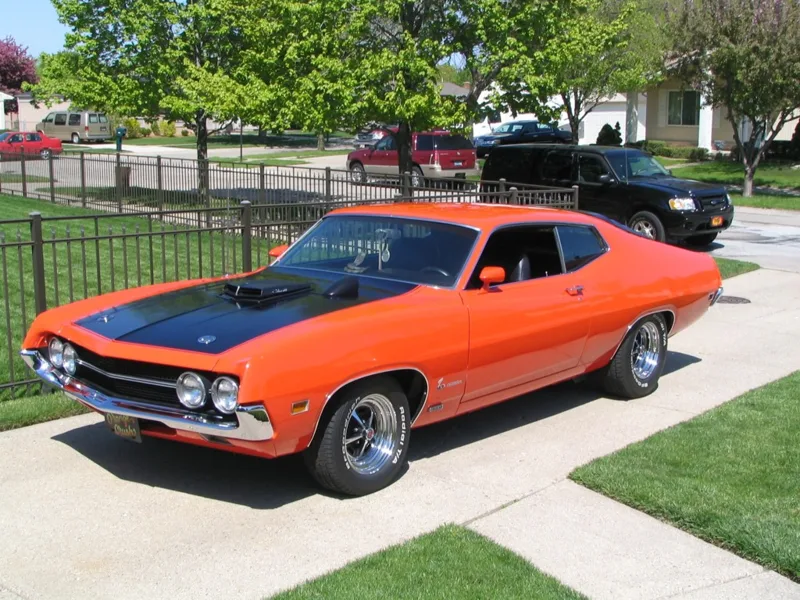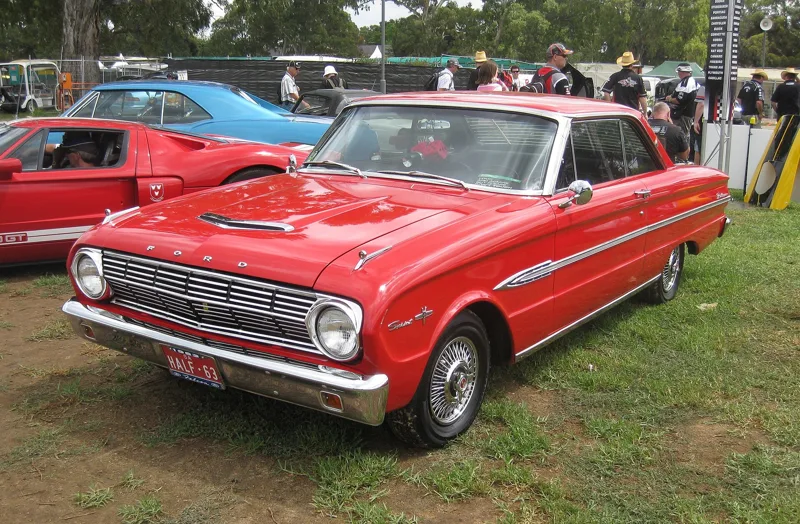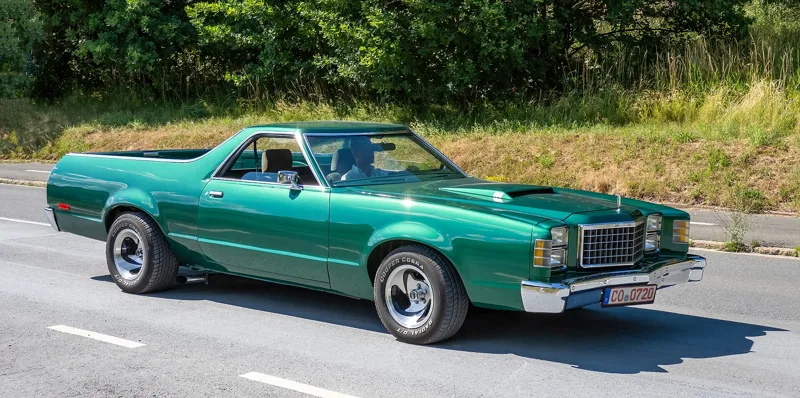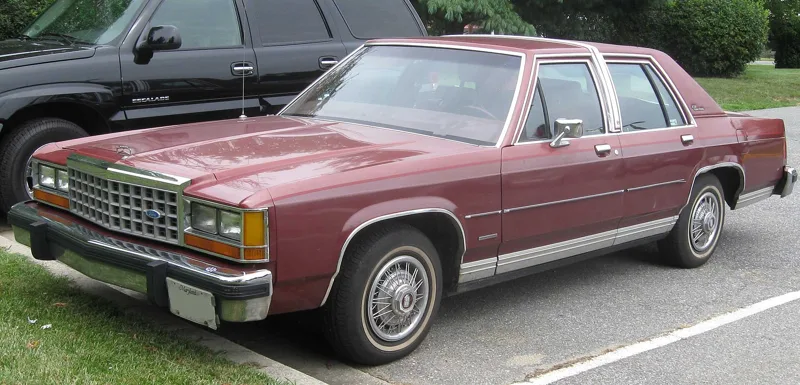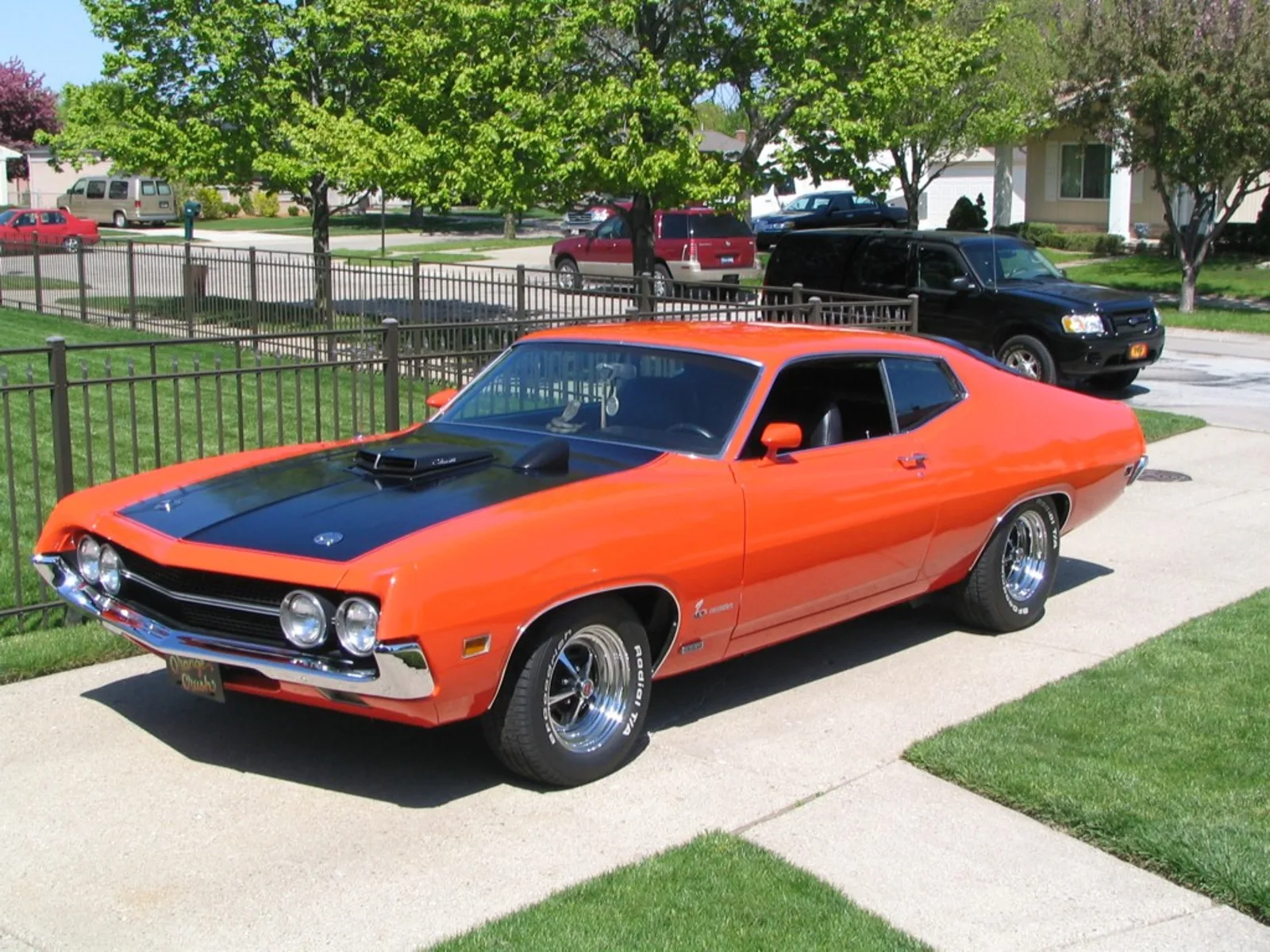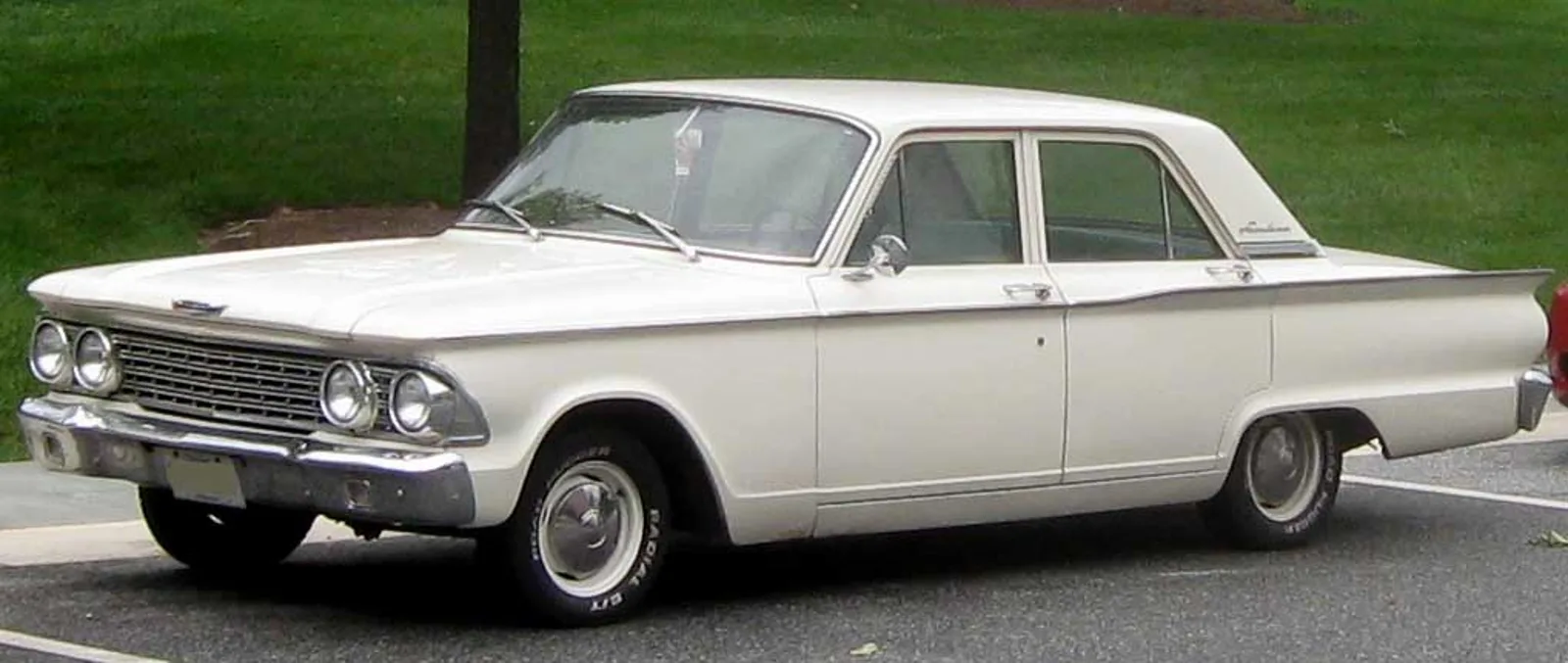
From a full-size flagship to a drag-strip Thunderbolt, a long-wheelbase Falcon cousin and a 2005 people-mover concept, the Fairlane name covered a lot of ground.
Seven generations of the Fairlane were built for North America between 1955 and 1970. The name began on Ford's full-size flagship, moved to an intermediate in 1962, and gave way to Torino from 1971, with later builds in Argentina and Venezuela.
Few nameplates travelled as far as the Fairlane did, with its name moving from full-size flagship to mid-size car over seven generations. It later reappeared in Argentina and Venezuela, and in a 2005 concept that became the Ford Flex. The name is a useful guide to how Ford's model range changed through the 1960s.
What was the Ford Fairlane?
The Ford Fairlane was a North American model sold between the 1955 and 1970 model years, and the nameplate covered seven generations of cars. It began as the flagship of the full-size Ford range, moved to an intermediate in 1962, and was dropped in 1971 when the Torino name took over the intermediate line.
The name came from the Dearborn, Michigan estate of Henry Ford. Buyers could choose sedans, hardtops, station wagons and convertibles, and the convertibles included a retractable-hardtop version as well as the traditional soft-top kind.
The Fairlane also introduced the Crown Victoria and 500 nameplates. Those names went on to live beyond the Fairlane itself, and the Fairlane 500 became a trim level that sat above the base cars.
From full-size flagship to drag-strip Thunderbolt, the Fairlane name covered more ground than most nameplates ever did.
How did the Fairlane start as a full-size flagship?
For 1955 the Fairlane replaced the Crestline as Ford's premier full-sized model, and six body styles were offered. The Town Sedan was the most popular Ford sedan that year, with 254,437 built at a US$1,960 list price, or $23,557 in 2025 dollars.
Power came from a 223 cu in (3.7 L) straight-six or a 272 cu in (4.5 L) V8. A 292 cu in (4.8 L) Y-block was optional, and Ford badged it the Thunderbird V-8. Every model carried the trademark stainless-steel Fairlane stripe along its side.
The Skyliner was distinguished by its tinted, transparent plastic roof. The regular Crown Victoria coupe carried a great deal of stainless steel trim, and the convertible was called the Sunliner.
For 1956 two more V8s were offered, including a 312 cu in (5.1 L) unit that produced up to 225 bhp (168 kW; 228 PS). The Lifeguard safety package arrived that year, and a one-year two-door wagon called the Parklane was marketed against the Chevrolet Nomad.
What did the 1957 to 1959 Fairlanes bring?
The 1957 restyle gave the car a longer, wider, lower and sleeker look with low tailfins. It helped Ford outsell Chevrolet for the first time since 1935, and the Fairlane 500 was added as a new top trim level in the range.
The Fairlane 500 Skyliner was a power retractable hardtop whose solid roof folded down into the trunk at the press of a button. The Ranchero coupe utility also joined the range, and the Country Sedan was added to the Fairlane line.
For 1958 a facelift brought quad headlights and a grille that matched the Thunderbird. Big-block FE V8s displacing 332 and 352 CID (5.4 L and 5.8 L) took over at the top, and a stronger three-speed automatic was offered as well.
The Ford Galaxie arrived at mid-year 1959 as the new top full-size model, and its early cars carried both Fairlane 500 and Galaxie badging.
What were the 1960 and 1961 Fairlanes like?
The full-size Fairlane and Fairlane 500 were restyled for 1960 and again for 1961, while the Galaxie stayed at the top of the range. Fairlane 500 models were demoted to mid-level and were equivalent to the Chevrolet Bel Air.
Base Fairlanes were sold mainly to fleets, including taxis and police. The bodystyles were a two-door Club Sedan and Business Sedan and a four-door Town Sedan, and the 1961 big-block 390 CID V8 was the top-horsepower option.
Why did the Fairlane become an intermediate in 1962?
Ford moved the Fairlane name to a new intermediate for 1962, placing it between the Falcon and the Galaxie. At 197 in (5004 mm) long on a 115.5 in (2934 mm) wheelbase, it measured 16 in (406 mm) more than the Falcon and fell 12.3 in (312 mm) short of the Galaxie.
Like the Falcon, the new Fairlane used a unibody. Its body included what Ford called torque boxes, which were boxed structures in the lower body meant to absorb road shock. The front suspension was an independent short-long arm design, with Hotchkiss drive at the rear.
The 1962 car was aimed at the Plymouth Belvedere and the AMC Rambler, which were the senior compacts of the day. It was initially offered only as a two-door or four-door sedan.
Which engines did the 1962 to 1965 Fairlanes use?
The standard engine was a 170 CID (2.8 L) six. The optional V8 was Ford's new lightweight Windsor, first offered at 221 CID (3.6 L) and 145 hp (108 kW), and a 260 CID (4.2 L) Challenger joined at mid-year, advertised at 164 hp (122 kW).
A Challenger 289 CID arrived in mid-1963 with an advertised 271 hp (202 kW), using solid lifters and other performance parts. It was coded K in the vehicle identification number, and it was identified by fender badges that read 289 High Performance.
In 1964 a two-barrel 289 with hydraulic lifters, rated 195 hp (145 kW), extended the range. The 221 V8 was dropped after 1963 and the 260 after 1964, leaving the two-barrel 289 as the base V8.
From 1965 the standard wheels grew from 13-inch (330 mm) to 14-inch (360 mm). Cruise-O-Matic became the only automatic available for the Fairlane that year, because the older Fordomatic was finally phased out.
What did the Sports Coupe and pillarless hardtops add?
The company answered the trend with pillarless hardtop coupes for 1963, sold as Fairlane 500 and Sports Coupe models. The Sports Coupe had bucket seats and a small floor console, and from 1964 it carried its own spinner wheel covers and extra brightwork.
Station wagons called the Ranch Wagon and Ranch Custom Wagon arrived in 1963. The Squire wagon, a fake woodie, was offered for that year only, and a Swing-Away steering wheel could be ordered from 1964.
What was the Thunderbolt?
The Thunderbolt was a drag-racing version of the Fairlane two-door sedan, fitted with a 427 CID (7.0 L) V8 that had two four-barrel carburettors and was rated at 425 hp (317 kW) at 7,500 rpm. Accounts differ on how many were built, with figures between 111 and 127 cars.
The car competed in NHRA Super Stock and was based on the mid-level Fairlane 500 two-door pillared sedan. In 1964 it set records of 11.6 seconds and 124 mph (200 km/h), and it won the Super Stock title and the Manufacturer's Cup.
The car weighed 3203 lb (1453 kg) with a full tank, just above the NHRA minimum of 3200 lb (1451 kg). Metal front bumpers were mandated by NHRA at that point, so later cars received an aluminium one, and earlier buyers could get one too.
Thunderbolt production ended because NHRA changed its Super Stock rules to require 500 vehicles built for entry. Ford had been losing $1500 to $2000 on each car sold at its $3900 sticker price.
The first 11 Thunderbolts were painted Vintage Burgundy, a maroon shade, and the rest were white. Of the cars built, 99 had manual transmissions. About 50 similar Mercury Cyclones were also produced in 1964 to be modified for A/FX competition, where they dominated.
What changed when the fifth generation arrived in 1966?
For 1966 the Fairlane became a long-wheelbase version of the revised Falcon platform, and its appearance was changed to match the full-sized Galaxie with vertically stacked dual headlights. The XL, GT and GTA packages arrived, and a convertible was added to the sedans, hardtops and wagons.
The GT had a 390 CID FE V8 as standard, rated at 335 bhp (250 kW) with higher compression and a four-barrel carburettor. The GTA added the SportShift Cruise-o-Matic automatic, and the Fairlane Squire wagon was reintroduced for 1966.
Mid-year, Ford built 57 special Fairlane 500 two-door hardtops with an R-code 427 V8, which produced 480 lb ft (651 N m) of torque at 3,700 rpm. They were built to qualify the engine and transmission for NHRA and IHRA Super Stock racing, and they had fibreglass hoods with a forward-facing scoop.
For 1967 the Fairlane was mildly facelifted, and federal safety rules shaped the cars across the range. The changes included an energy-absorbing steering column with a large padded hub, soft interior trim and a dual-chamber braking system.
How did the 1968 and 1969 Fairlanes differ?
The sixth generation arrived for 1968 with a 116 in (2,946 mm) wheelbase, and the cars were about 4 inches (102 mm) longer and 200 lb (91 kg) heavier than the models they replaced. A Sportsroof fastback joined the Fairlane 500 series, and the Torino sat at the top of the intermediate range.
The Sportsroof and Torino together contributed 172,083 of the 371,787 units sold that year. Base hardtop sales more than doubled, reaching 44,683 units.
The base engine was a 200 cu in (3.3 L) six, with several optional V8s. Mid-year, the 428 cu in (7.0 L) Cobra Jet, rated at 335 bhp (250 kW), took over the top performance slot from the 390.
The Cobra arrived in 1969 as a rival to the Plymouth Road Runner. Its standard 428 CID V8 was rated at 335 bhp (250 kW), and buyers could add bucket seats, a hood scoop, a tachometer and power disc brakes.
What happened to the Fairlane in 1970 and after?
The seventh generation arrived in 1970 on a 117 in (2,972 mm) wheelbase, and at the start of the year only the Fairlane 500 remained as the base model in what was now effectively the Torino series. For 1971 the Falcon and Fairlane 500 names were dropped, and every intermediate took the Torino name.
The largest engine was a 429 cu in (7.0 L) with a four-barrel carburettor and 360 bhp (270 kW). The Cobra gave 370 bhp (280 kW) with different heads and higher compression, while the Drag Pack was rated at 375 bhp (280 kW).
The Falcon name moved to a lower-trim intermediate on January 1, 1970, and it stayed in use in Australia for years afterwards. The Fairlane name continued in Venezuela through 1978 on Torino-based cars.
How was the Fairlane built in Argentina?
Ford built the Fairlane in Argentina from 1969 to 1973 on the 1968 body style, followed by the 1969 body from 1973 to 1981. The engines were a 221 CID six with 132 hp (98 kW) and the old Y-block V8, which was rated at 185 hp (138 kW).
In 1971 Ford Argentina improved the 292 by redesigning the head and manifold, and the compression rose to 8 to 1. The engine also received redesigned spark plug placement, making them easier to change without removing the engine.
Argentine cars came in Standard, 500 and LTD trims. The LTD Elite became the most luxurious version made in Argentina, and almost 30,000 Fairlanes had been built by the end of production in 1981.
What was the Fairlane in Venezuela?
In Venezuela Ford built the Torino under the Fairlane and Fairlane 500 names. Those cars matched the US Torino through 1976, and the Fairlane was then based on the American LTD II for the final model years of the Venezuelan run.
Did the Fairlane name come back after 1970?
Yes, as a concept. At the 2005 auto show circuit Ford revealed a Fairlane crossover concept, a people-mover with three-row seating for six that previewed a chromed three-bar grille. The production version became the Ford Flex, which debuted at the 2007 New York Auto Show.
The Flex entered production for the 2009 model year and has seven seats, one more than the concept's six. It sits on the Ford D3 platform that is also used by the Taurus, and it was meant to take over the people-mover role of the Ford Freestar minivan.
What were the Fairlane generations?
The table lists each generation with its years, a key engine and one defining detail. Engine figures apply to the models named in the row.
| Generation | Years | Key engine | Defining detail |
|---|---|---|---|
| First | 1955 to 1956 | 272 CID (4.5 L) V8; 312 CID (5.1 L) up to 225 bhp (168 kW) in 1956 | Town Sedan, 254,437 built in 1955 |
| Second | 1957 to 1959 | Big-block FE V8s of 332 and 352 CID (5.4 L and 5.8 L) | Fairlane 500 Skyliner retractable hardtop |
| Third | 1960 to 1961 | 390 CID (top option in 1961) | Base cars sold mainly to fleets |
| Fourth | 1962 to 1965 | 170 CID (2.8 L) six; Windsor V8; 289 CID | 115.5 in (2934 mm) wheelbase, 197 in (5004 mm) long |
| Fifth | 1966 to 1967 | 390 CID FE V8 in the GT, 335 bhp (250 kW) | XL, GT and GTA packages |
| Sixth | 1968 to 1969 | 200 CID (3.3 L) six; 428 Cobra Jet, 335 bhp (250 kW) | 116 in (2,946 mm) wheelbase |
| Seventh | 1970 | 429 CID (7.0 L), 360 bhp (270 kW) | 117 in (2,972 mm) wheelbase |
Frequently asked questions
How much did the Thunderbolt cost new?
The Thunderbolt had a $3900 sticker price, and Ford had been losing $1500 to $2000 on each one sold.
Why did Thunderbolt production stop?
A later NHRA ruling demanded that 500 vehicles exist before a model could enter that class, and Thunderbolt output stopped as a result.
Was there a Fairlane in Argentina?
Yes. Argentine production ran from 1969 to 1981, and almost 30,000 Fairlanes were made by the end of production. The cars used a six and an older Y-block V8.
Was the Flex a Fairlane?
The Flex was a production version of the Fairlane concept, but it was sold under its own Flex name. It keeps the people-mover purpose of the concept.