A Canberra festival that drew about 130,000 people in 2026 and a cargo body that became a cultural icon by the early 1970s, from the first Summernats on New Year's Eve 1987 to the last Sandman in 1979.
Summernats is an annual car festival in Canberra, held since 1987 and drawing more than 130,000 people in 2025, with burnout contests, show cars and a Grand Champion award. The Australian panel van, led by the Holden Sandman of 1974 to 1979, became a cultural icon of the same modified-car world.
In January 2026 about 130,000 people and 3,000 entrant vehicles filled Canberra for Summernats, and police seized 19 cars for hooning and burnouts outside the sanctioned areas, a rise they put at 280% on the year before. Its older cousin in Australian car culture is the panel van, a cultural icon by the early 1970s whose most popular model was the Holden Sandman.
What is Summernats in Canberra?
Summernats is a yearly car festival in Canberra, running since 1987 and missing only 2021 because of COVID. The name joins "Summer" and "National", and the event normally runs at the start of the year. It lasts four days, with two more beforehand for vehicle inspections, and in 2025 it set an attendance record of more than 130,000.
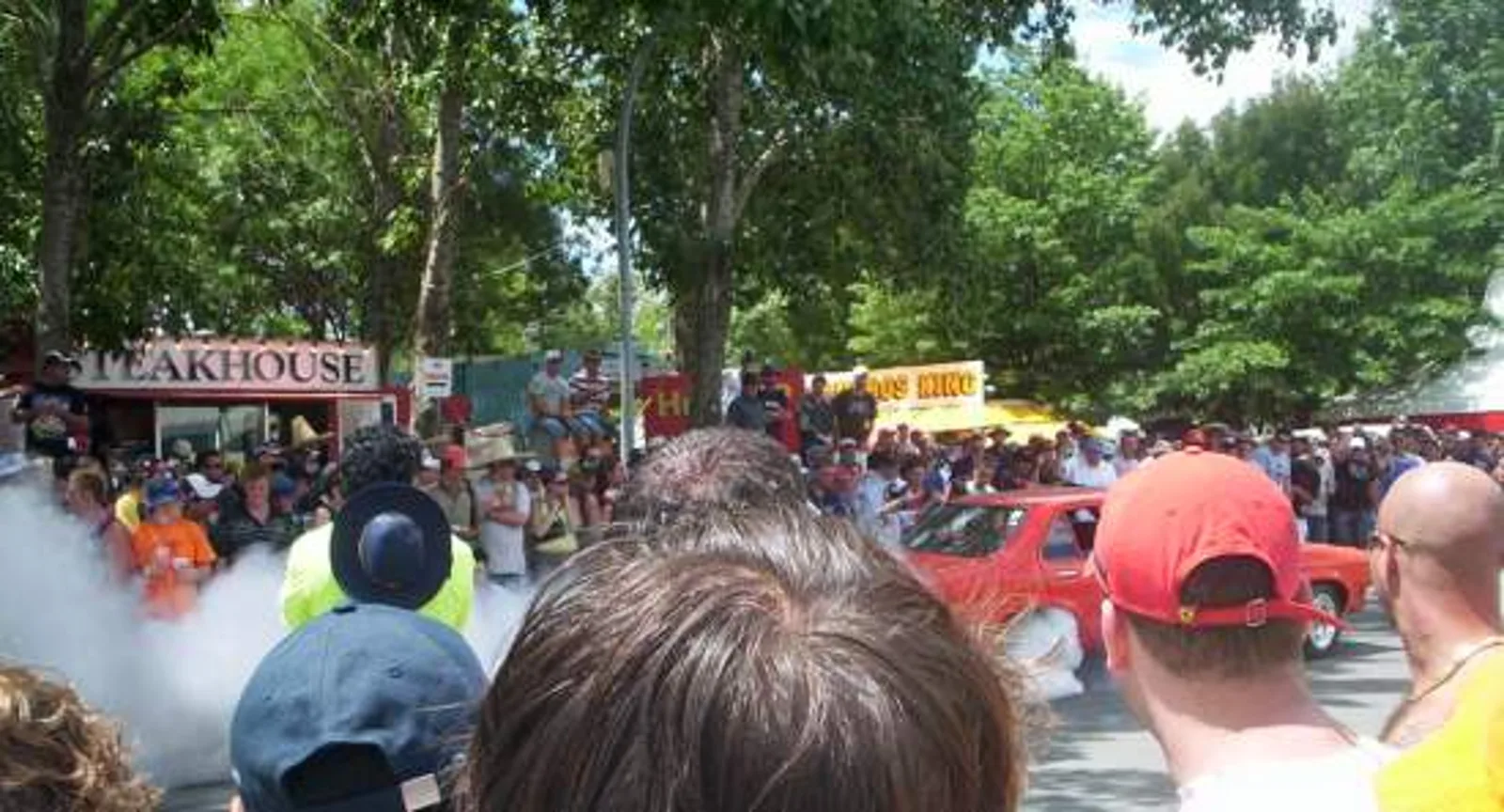
The programme takes in burnout competitions and parades of cars around the circuit, with fireworks after dark and two outdoor concerts on Friday and Saturday evenings. The cars range from restored and classic machines to heavily modified ones, many carrying airbrushed artwork. Promoters increasingly pitch it as a family event.
The first one took place on 31 December 1987 under the name Street Machine Summer Nationals. Chic Henry promoted and organised it until 2009, when he sold it to a new company, Summernats Pty Ltd. Street Machine magazine holds the naming rights and Rare Spares is presenting sponsor. The ACT Government has repeatedly backed the festival, praising the economic benefit to Canberra.
A buyer who ticked every Sandman extra got a velvet mattress embroidered with the Holden logo.
Where is Summernats held?
The main event sits at Exhibition Park in Canberra, known as EPIC, at the corner of Flemington Road and the Federal Highway in Lyneham. A Fringe Festival runs separately on Lonsdale Street in Braddon. The grandstand beside the burnout pad was given the founder's name in 2022, during Summernats 34, in recognition of Chic Henry.
What happens in the Summernats burnout competitions?
Driving awards cover the Burnout Championship and Burnout Masters, Best Cruiser, Heads-Up Go to Whoa and Horsepower Heroes. Each Summernats opens its driving programme with the City Cruise, whose entry was limited to 300 vehicles until the cap rose to 400.
Horsepower Heroes is the contest of numbers. Entrants' cars are strapped to a machine that reads power at the wheel hubs, in what the festival calls the Dyno-cell, and readings of more than 3000 hp at the wheels have been recorded.
The Show and Shine runs from Real Street, Street, Elite and Tuff Street classes up through the Top 60, Top 20 and Top 10, with separate Top Judged awards for Elite and Street cars. Among the most coveted extras are Master Craftsman, High Impact and Artistic Impression, plus a People's Choice award. Custom airbrushing has its own exhibition in the Meguiar's Pavilion. The Miss Summernats awards were cancelled from the 2018 edition onwards.
What is the Summernats Grand Champion award?
The Grand Champion is the festival's top prize. It was introduced at Summernats 6, where Peter Fitzpatrick became its first winner, the first of six Grand Champion awards for him. Before that, the highest honour was Top Street Machine Overall.
Why has Summernats divided Canberra?
Opinion has been split from the first event. A call-in survey in December 1991 by Liberal police and justice spokesman Gary Humphries recorded 77 callers generally in favour and 59 against. The worries were cars at speed in suburban streets and harassment of women. Summernats 6, held from late 1992 into early 1993, was a low point, when large crowds outside the venue, notably in Civic on New Year's Eve, became uncontrollable.
Street cruises were stopped after the 2005 event because of crowd-control problems. The City Cruise returned in 2014 backed by the ACT Government and the Australian Federal Police, after several years of exemplary behaviour from crowds and entrants. A crash at the 2006 event hurt several people, with reports putting the number at four, five or six. Henry has described the trouble as people having a bit too much fun, sometimes with a bit too much alcohol.
The festival has also been hit by repeated complaints and allegations about sexual harassment and violence towards women by participants. In 2008 journalists observed a mob of up to 400 men surrounding and harassing women, and Federal Sex Discrimination Commissioner Elizabeth Broderick said conduct of that sort can foster the kind of environment that may lead to rape. The press described security staff as powerless, though Henry said he was happy with their performance. Another mob was alleged in 2011, and in 2017 the promoters announced a zero-tolerance approach to harassment.
Summernats crowds and police figures, 2023 to 2026
| Edition | Year | Crowd | Vehicles | Police action on cars |
|---|---|---|---|---|
| Summernats 35 | 2023 | More than 120,000 passes sold | Capped at 2,700 | 4 cars seized |
| Summernats 36 | 2024 | 130,000 passes sold | 2,500 entered | 13 cars impounded |
| Summernats 37 | 2025 | More than 130,000 visitors | 2,500 cruising and on show | 3 vehicles seized |
| Summernats 38 | 2026 | About 130,000 | About 3,000 entrants | 19 vehicles seized |
The 2023 festival sold out, and the cruise circuit was shut early because of antisocial behaviour. In 2024 there were also two arrests and more than 100 defect notices, along with reports of assaults, a large brawl involving dozens of people and rocks and bottles thrown at officers. Police in 2025 counted almost 30 move-on directions, more than 95 traffic infringement notices, 32 defect notices and five drivers who tested positive to illicit drugs.
For 2026, police said 25 spectators were evicted and six people arrested for anti-social behaviour, with more than 200 speeding and unsafe-driving infringements and 100 defect notices, numbers they expected to double once counting finished. Of 2,200 random breath and drug tests, 14 drivers tested positive for drugs and eight were over the alcohol limit. Eight arrests were made on ACT roads for impaired and dangerous driving, including burnouts.
What did COVID do to Summernats?
Summernats 34 was due in January 2021 but moved to January 2022, because ACT Health had taken over EPIC for COVID-19 testing, running through to at least the end of November 2021. A smaller "Summernats Rev Rock 'n' Roll" planned for the 5-7 March 2021 long weekend, capped at 5,000 people against the usual ~100,000, was cancelled on 13 January 2021.
What is a panel van?
A panel van is a small cargo vehicle built on a passenger car chassis, typically with one front bench seat and blank sides behind the B-pillar. It is smaller than a panel truck or cargo van, which use truck chassis. It is called a delivery van in the United Kingdom and a sedan delivery in the United States, and also goes by blind van or car-derived van.
Because they come from passenger cars, panel vans followed local models. North American examples began with two-door station wagons, Europe's narrower roads called for the smaller chassis of subcompacts, and Australian panel vans grew from the ute, often borrowing a station wagon's longer wheelbase. The body style was well established by the end of the 1920s. Holden's version is an exception to the unibody rule, though its ladder chassis adapts a passenger car design.
In America, Ford sold a "Wood Panel Delivery" in the late 1920s and Plymouth built sedan deliveries from 1935 to 1941. Chevrolet dropped the body type after 1960, and the Vega Panel Express of 1970 made up less than 2% of Vega output from 1971 to 1975, with sales sliding to 1,525 in 1975 from a first-year peak of 7,800. In Britain, panel vans carry lower taxes than estate cars and escape the speed restrictions placed on larger vans.
Europe went small. The Citroen 2CV Fourgonnette, Morris Minor and Renault Estafette were among its twentieth-century panel vans, and more recent ones include the Renault Kangoo of 1997, the Fiat Doblo of 2001 and the Volkswagen Caddy of 2004. Since the 1980s most makers have offered light van versions of small hatchbacks, with the rear seats removed and sometimes the rear windows blanked.
How did Australia make the panel van its own?
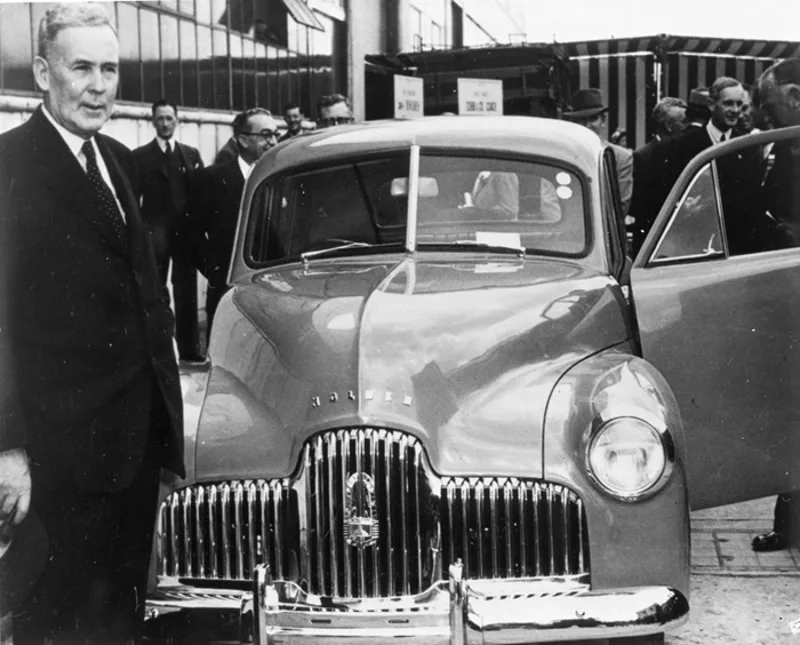
The first Holden panel van built in Australia was the FJ Holden, released in December 1953, though many makers had offered panel vans before it. Ford Australia followed in May 1961 with a panel version of the XK Falcon sold as a "sedan delivery", and the first Chrysler Valiant panel van arrived in April 1977 in the CL range.
The appeal was cargo space and a customisable interior in a compact vehicle, which suited painters, electricians, labourers and film crews. Police forces used them too, and the vans picked up the nicknames "divvy vans" and "paddywagons". Early examples kept swing-down and swing-up tailgates and a standard roof height, a sign of their ute and station wagon roots. In the mid 1960s Holden and then Ford introduced higher, unique rooflines for more space, and in the early 1970s Ford brought in horizontally opening rear doors nicknamed "barn doors".
What was the Holden Sandman?
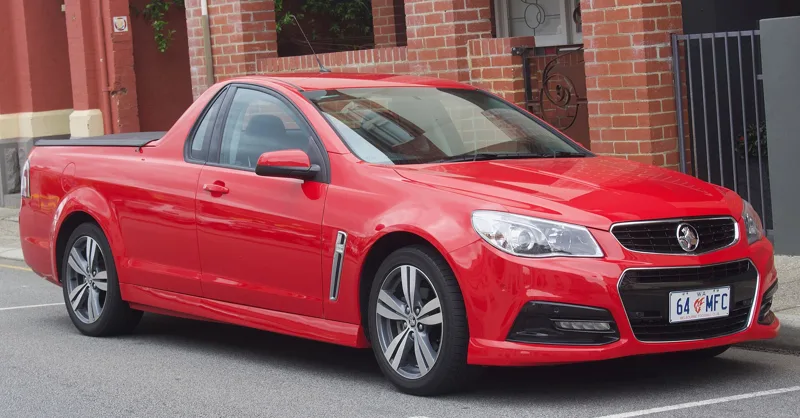
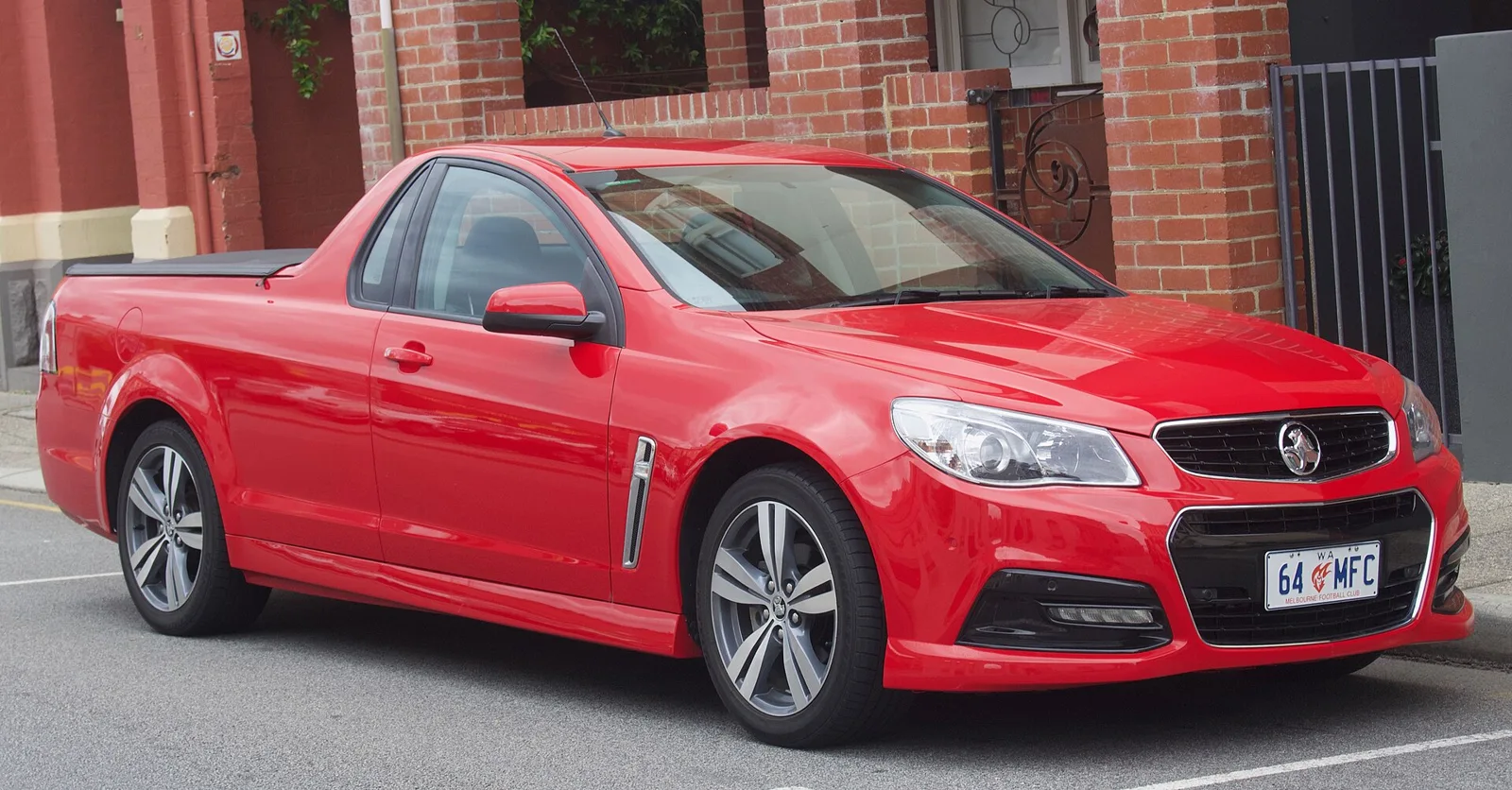
The Sandman was Holden's panel van aimed at a surfing lifestyle, and the most popular model of the early 1970s boom. The first was built in small numbers in 1974 in the HQ range, and its popularity climbed sharply with the HJ generation, released in October 1974.
It reached the screen in the 1979 film Mad Max, in which a modified 1975 HJ Sandman was one of the cars driven by its lead character, played by Mel Gibson. Ford's rival was the Surferoo, introduced in the XB Falcon range in 1973 and replaced in 1977 by the Sundowner, the more popular of the two, in the XC range, which also brought back traditional tailgate-style doors as an option. Chrysler answered in 1976 with the Drifter, part of the CL Valiant range, which ceased production in 1978.
Younger drivers were drawn to panel vans partly because a mattress fitted easily in the cargo bay, which earned them labels like "sin bins" and "shaggin' wagons". Surfers favoured them, as they did Volkswagen Kombi microbuses, since they could sleep in the back with boards on the roof. Many owners applied airbrushed murals to the sides in the 1970s, paralleling a similar trend in America, and airbrushing is still celebrated at Summernats with its own exhibition.
How did the panel van era end?
The Sandman had largely drifted out of youth culture by late 1979. Orders were down, and buyers were taking vans with the stripes and tailgate badges left off. The last Sandman, in the HZ series, came with V8 engines only, a four-headlight grille and an under-bumper front spoiler. Holden dropped both the Sandman ute and the panel van that October as the HZ series ended.
Prices show what buyers were paying for the image. In 1979 a basic HZ Holden panel van cost A$6,076, and the Sandman package added A$1,700. A buyer who ticked every Sandman extra, which pushed the price more than 50% above a basic HZ panel van, received a velvet mattress embroidered with the Holden logo.
Panel vans slipped further through the 1980s. Holden's last, the WB, ceased production in 1984, and Ford kept going until the XH Falcon ended production in 1999. In 2000 Holden revealed a show car with retro Sandman styling on a VU Ute base, but never released it. A canopy with the same styling went on sale from 2003 to 2006 as an A$6,150 accessory for Holden utes, though installation was complicated and the ute's rear window and cab wall stayed in place, so nobody could climb through to the cargo bay as in a purpose-built panel van.