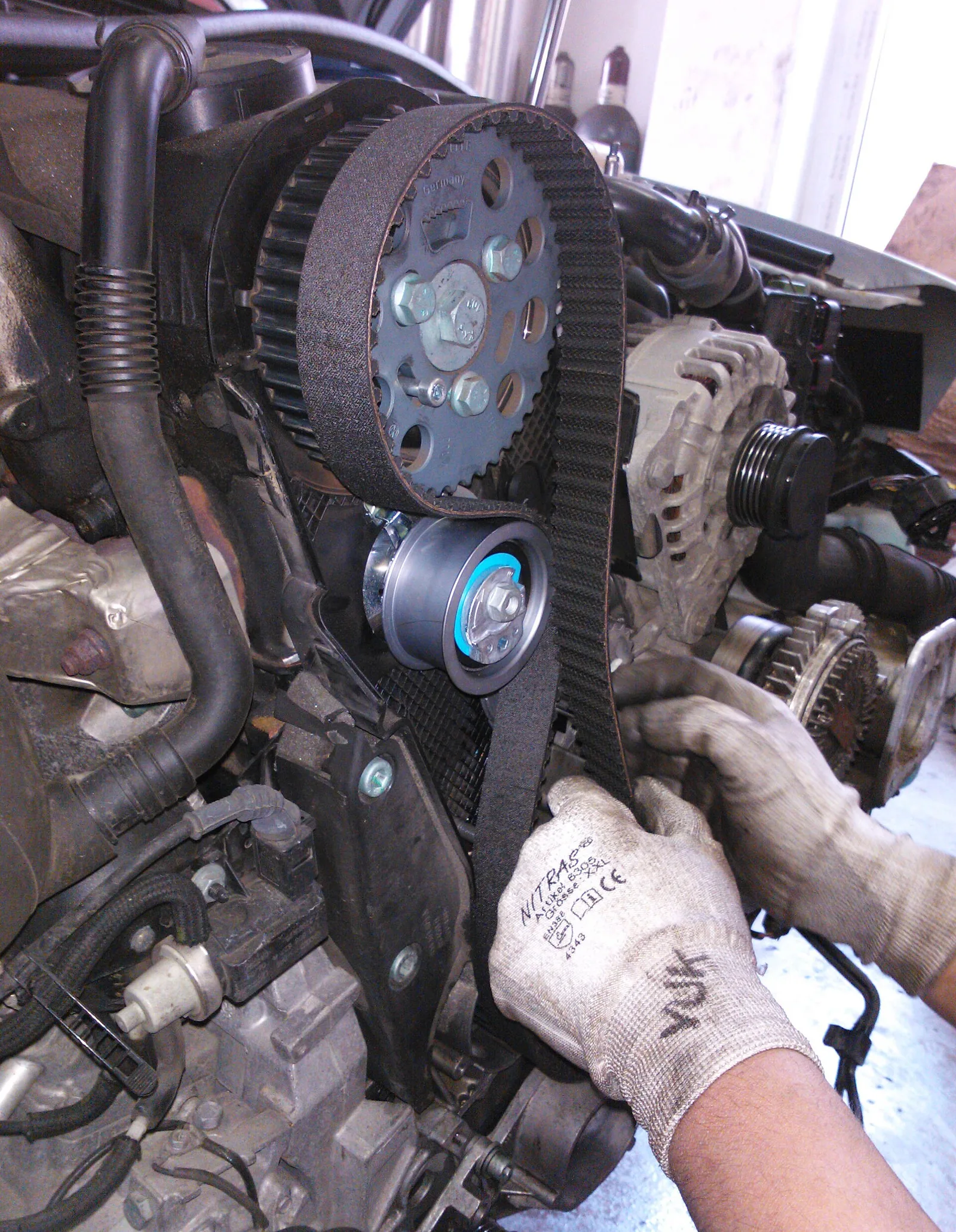
A rubber belt gives no warning before it fails, while a chain usually rattles first. What each design does, how long it lasts and what happens when it goes.
A timing belt is a toothed rubber belt that is cheaper and quieter but must be replaced at intervals and gives no warning before failing. A timing chain is metal, wears little and usually rattles when worn. In an interference engine, failure of either can send valves into pistons.
A rubber timing belt gives no warning before it lets go, and in the wrong sort of engine the next thing that happens is a piston meeting a valve. A chain, by contrast, usually complains first, with a rattle from the front of the engine.
What does the timing drive actually do?
In a piston engine the crankshaft turns as the pistons move, and the camshaft opens the valves that let air in and exhaust out. Those two shafts must stay in step. The crankshaft drives the camshaft through a timing belt, a timing chain or a set of gears, and that link makes sure each valve opens and shuts at the right moment for where its piston is.
Think of two dancers who have to move together. If one slips half a beat, the whole routine falls apart. In a four-stroke engine the valves open only half as often as the pistons cycle, so the camshaft is geared to turn at half the speed of the crankshaft.
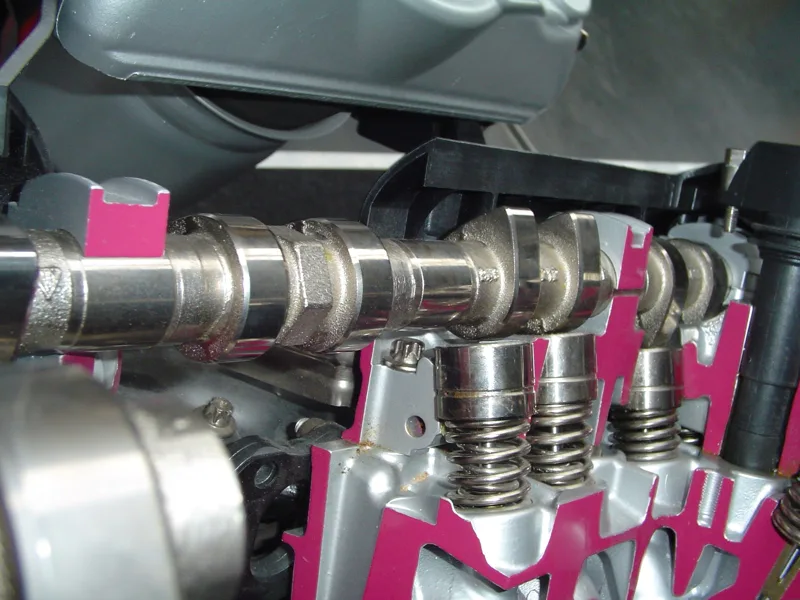
The camshaft itself is a shaft carrying a row of pointed cams, converting rotary motion into the reciprocating motion of the valves. As each lobe rotates it pushes a valve open, and a valve spring pushes it shut again. Some designs make the same shaft turn the oil pump and the fuel pump, and now and then the power steering pump. A belt may also drive the water pump.
Where the camshaft lives
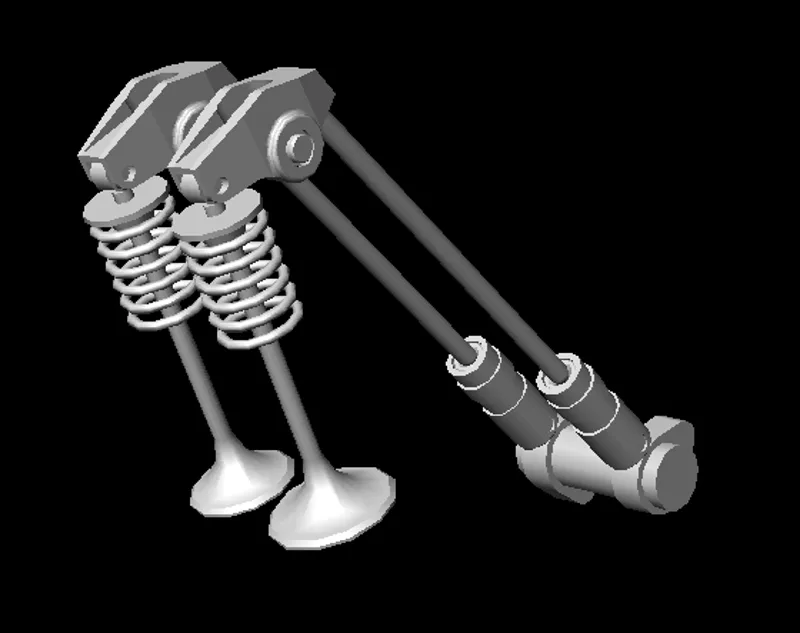
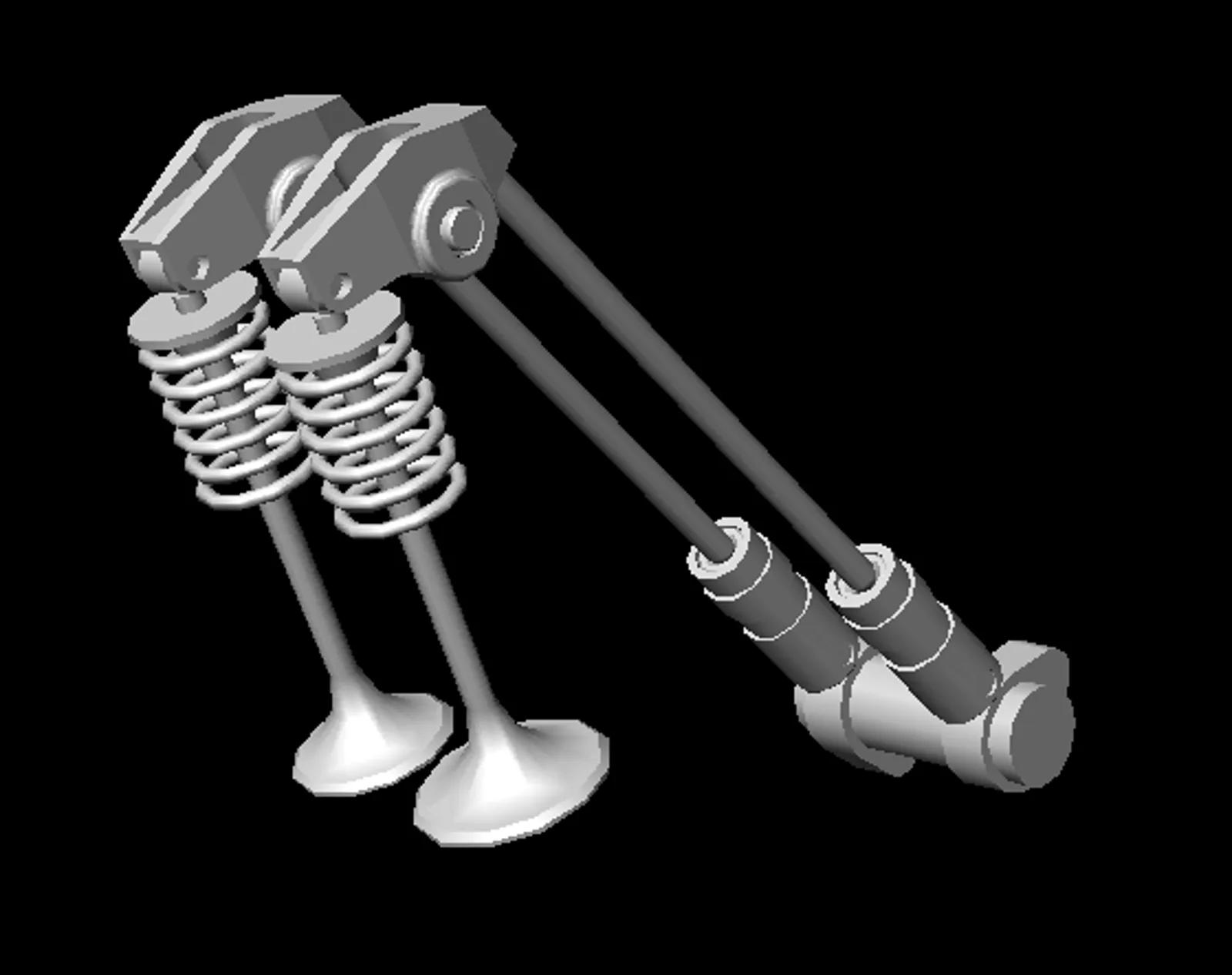
Early engines kept the camshaft down in the block, near the bottom of the engine. In an overhead valve layout, the cam pushes a pushrod that carries the motion to a rocker at the top. As engine speeds climbed through the 20th century, the single overhead camshaft (SOHC), with the shaft in the cylinder head, became increasingly common, followed by the double overhead camshaft (DOHC). Layouts are named by cams per cylinder bank, so a V6 with four camshafts, two per bank, is a double overhead camshaft engine, though some call it a quad-cam.
What the camshaft is made of
Most camshafts are steel or cast iron. Chilled cast iron suits high-volume production because the chilling hardens it and gives good wear resistance, while billet steel is sometimes chosen for high-performance engines or small runs, a slower and generally dearer process.
Why the timing has to be exact
Cam shape and phasing set how an engine behaves. A longer duration, meaning the valve stays open longer, can lift power at high revs at the cost of low-rev torque. Greater lift lets more air through, but it brings the valve closer to the piston and raises the forces needed to open it. At high revs the valve spring may fail to keep the valve following the cam, a problem called valve float, which loses power and in extreme cases leaves a valve bent when the piston hits it. Shifting the camshaft's phase by small amounts changes where the power sits, which is what variable valve timing adjusts on the move.
A belt gives no sign before it fails. A worn chain usually makes itself heard first.
Timing belt vs timing chain: the two designs compared
| Timing belt | Timing chain | Timing gears | |
|---|---|---|---|
| Made of | Toothed rubber, sometimes polyurethane or neoprene | Metal roller chain | Steel, or fibre or nylon covered gears |
| Strengths | Lower cost, less friction loss, quieter, traditionally no lubrication needed | Minimal wear in the chain itself; removes the regular replacement interval | Suit engines with the camshaft close to the crankshaft |
| Weak point | Wears over time and needs replacing at set intervals | Lubrication, tensioner and guide failures cause early wear | Fibre and nylon can fail suddenly |
| Warning of trouble | None before failure | Rattle from the front of the engine; codes on later VVT engines | Not described |
Overhead camshaft engines mostly use belts or chains, because both transfer drive well over larger distances. Older overhead valve engines, with the camshaft in the block near the crankshaft, often use a simple gear system instead. Belts were a mass-production staple until the 1970s and 1980s. From the 1990s chains took over as the more usual choice, largely to escape the replacement intervals that belts demand.
Inside a timing belt
When people say timing belt they usually mean a toothed rubber belt, reinforced with corded fibres that carry the tension and a fabric covering on the toothed surface. Its advantages are lower cost, reduced friction losses and less noise. The disadvantage is wear, which is why replacement at set intervals is recommended, often along with the water pump, because the pump also wears and is easy to reach once the belt is off.
What shortens a belt's life
Rubber degrades in heat and on contact with engine oil, so a belt lasts less time in a hot or leaking engine. Water and antifreeze attack the reinforcing cords, which is why a belt that can get wet needs to drain quickly. Grit mixed with oil and grease also wears the belt, an often overlooked cause of early failure.
Usual failure modes are stripped teeth, which leave a smooth patch where the drive cog slips, and delamination and unravelling of the fibre cores. Outright breakage is uncommon, because of the strength of the fibres. Older belts had trapezoid teeth that wore quickly. Newer manufacturing allows curved teeth that run quieter and last longer.
Standard-specification belts may stretch at high revs, which retards the cam and with it the ignition. Stronger aftermarket belts do not stretch, so the timing is preserved. Designers also trade width against weight: a wider belt is stronger, a narrower one lighter with less friction.
The wet belt
A few engines since 2008 have used wet belts, lubricated by engine oil. The aim is to reduce friction losses by 30 percent and fuel consumption by 1 percent.
How often should you change a timing belt?
A timing belt is a semidurable part. Some engines see it last their whole working lives; others need it renewed once, or several times, with the count depending on use and on how long the car stays on the road. For interference engines, manufacturers recommend replacement intervals ranging from 97,000 to 167,000 km (60,000 to 104,000 miles).
The surrounding parts matter as much as the belt. The tensioner, the gear and idler bearings can fail and derail the belt or chain. Where the belt drives the water pump, a seized pump can break the belt or chain. For that reason belts and chains are often sold as kits including the water pump, tensioner and idler pulleys.
Timing chain stretch, rattle and the warning signs
Metal chains have become more widespread in engines made since the 1990s, to cut out the regular maintenance interval of replacing a rubber belt. The chains themselves wear very little. The trouble comes from poor lubrication, or from failure of the tensioner and chain guides, which can cause excessive wear or an early failure.
Unlike a rubber belt, a worn chain system usually makes itself heard. Older engines without variable valve timing produce a rattle. Later VVT engines tend to log engine codes and light the check engine lamp before any rattle begins. Pushrod engines, where the crankshaft and camshaft sit very close together, use a short chain rather than direct gears. Gears would suffer noise and wear as the cam profiles kick back against the crank's drive, over and over.
What is an interference engine, and why does it matter?
In an interference engine, at least one valve in its fully open position reaches into space the piston may travel through. In a non-interference engine, the piston never enters the area into which the valves open. The timing drive keeps the piston clear of the open valve by ensuring the valves are shut as the piston nears top dead centre.
Interference designs are prevalent among modern production cars, because they allow designers to maximise the compression ratio. The price is risk. If a belt, chain or gear fails, the piston can strike a valve and cause major internal damage.
The likely result is bent valves. If a chunk of valve or piston breaks off inside the cylinder, the debris may severely damage the cylinder and possibly the connecting rods. After a break, mechanics look for bent valves, either with a leak-down test on each cylinder or by measuring valve gaps; an unusually large gap points to a bent valve. If only valves are bent, new valves, a rebuilt cylinder head and fresh timing parts may be enough. Once pistons and cylinders are hurt, the engine needs a rebuild or a replacement.
Which is cheaper to own?
The belt is cheaper to make, and also smaller, lighter and quieter. It isolates crankshaft harmonics from the valve train, needs less power to turn than a chain and can potentially run without lubrication. The chain avoids a scheduled replacement but is open to lubrication and tensioner faults. Neither design wins on every count: a belt asks for money on a schedule, while a chain asks for attention to oil and noise.
How the two designs arrived
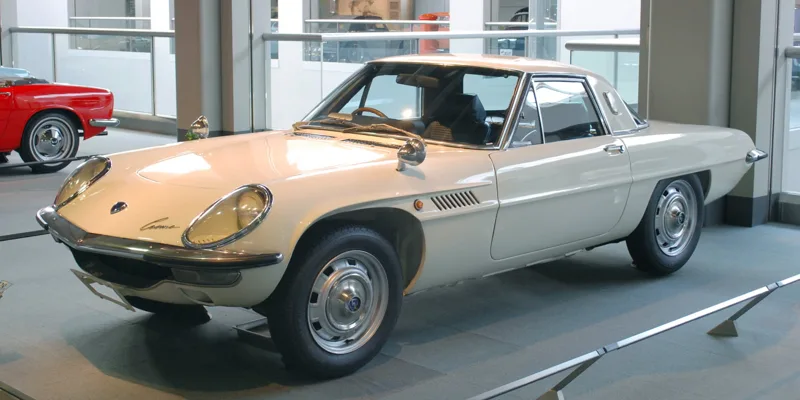
Toothed belts began life in textile mills in the early 1940s. The first car engine known to use one sat in the American Devin-Panhard racing car of 1954, which had been converted from pushrods to overhead camshafts using a belt from the Gilmer Company. That car took the 1956 national championship of the Sports Car Club of America. The Glas 1004 of 1962 was the first mass-produced vehicle with a timing belt. In 1966 the Pontiac OHC Six became the first American mass-produced belt engine, and the Fiat Twin Cam the first mass-produced belt engine with twin camshafts. Carmakers adopted belts widely in the 1970s.
The camshaft is older still. Ismail al-Jazari described camshafts in 1206. The Maudslay of 1902 and the 1903 Marr Auto Car were among the first cars with a single overhead camshaft. Camshaft timing is also adjustable: advancing it raises low-rpm torque and retarding it raises high-rpm power, in changes of often around 5 degrees, which is what variable valve timing does automatically.
Where this goes next
Chains keep their place in newer engines, and the check engine codes on later VVT engines give an earlier alert than the older rattle. Wet belts have appeared on a few engines since 2008. Some designs go further and remove the camshaft entirely. Camless piston engines open valves with electromagnetic, hydraulic or pneumatic actuators; they debuted in turbocharged Renault Formula 1 engines in the mid-1980s, and the Koenigsegg Gemera is slated to bring one to the road. Other valve systems exist too, such as the desmodromic valves Ducati has used since 1956, which close the valves positively instead of by spring.