From pop-ups a small car can pull to semi-trailer fifth-wheels, how weight, hitch type and trailer design decide what your tow vehicle has to do.
What a caravan or trailer asks of your car depends on its weight class and coupling. Light pop-ups suit small cars, mid-range models need pickups or SUVs, and the biggest fifth-wheels need a tractor unit. The hitch decides how the trailer's weight sits on the tow vehicle.
The lightest pop-up trailers weigh under 320 kg and can be pulled by a small economy car. The biggest fifth-wheel caravans are full semi-trailers up to 17.5 m long that need a tractor unit and air brakes.
Between those extremes lies every question a buyer faces before towing a caravan or trailer. The type decides what size of vehicle is needed, the coupling decides how the two are joined, and the connection changes the way the combination behaves.
What kinds of caravan and trailer are there?
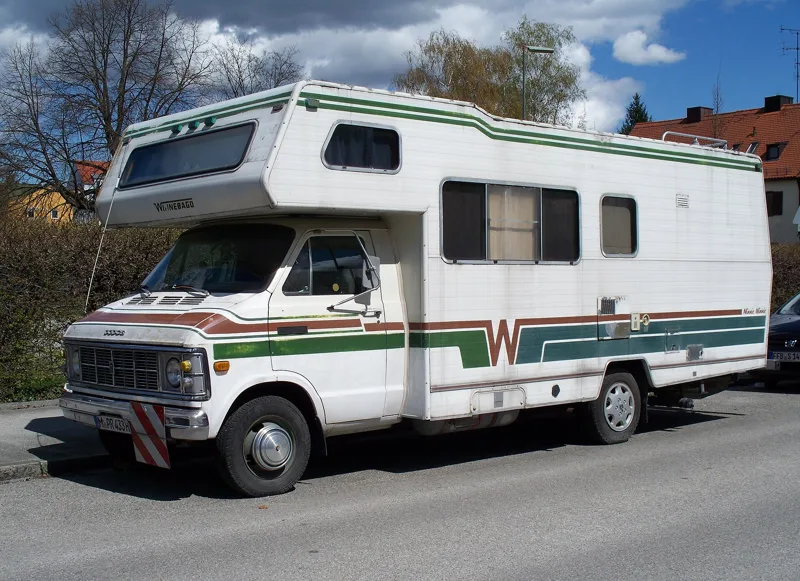
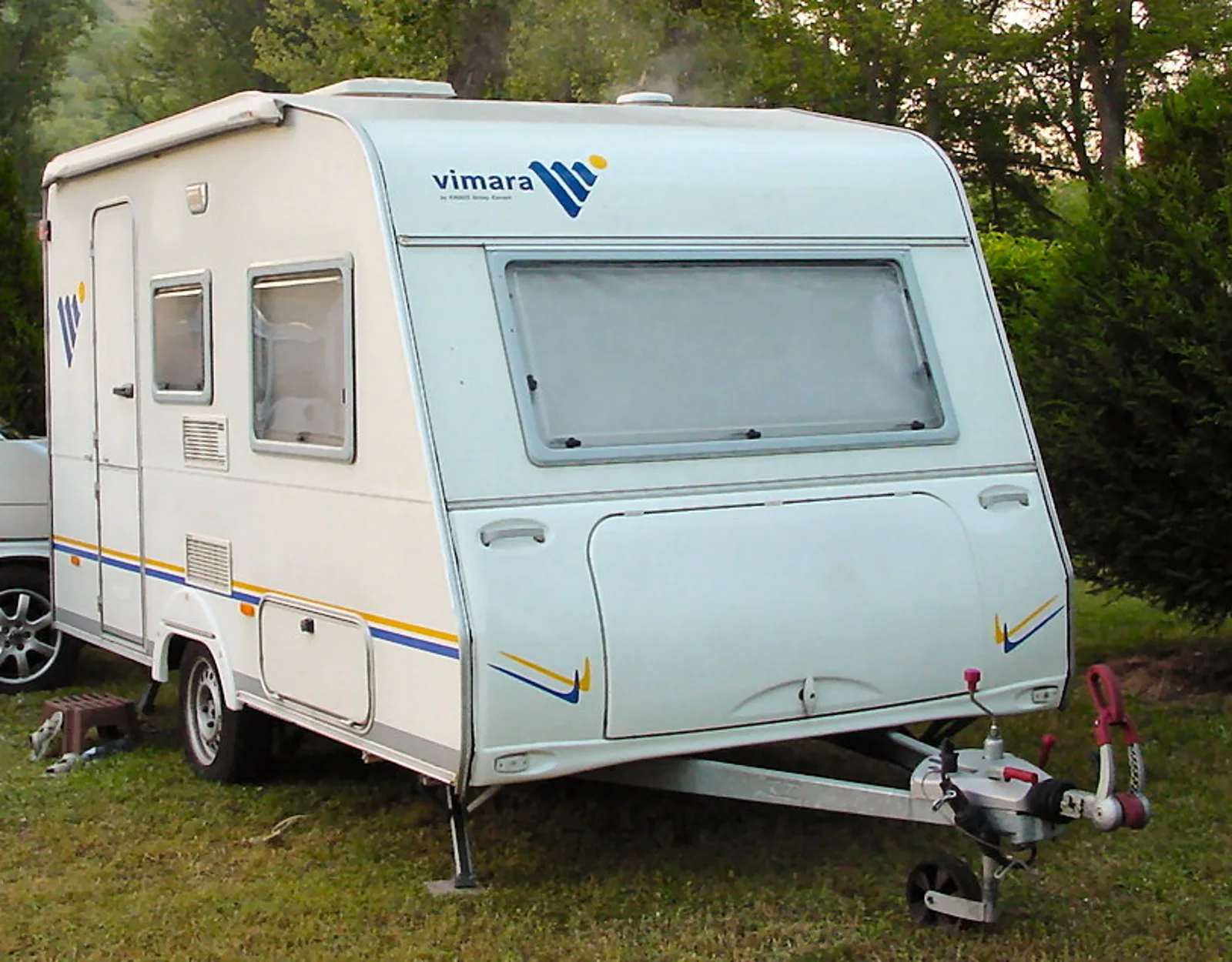
Strictly speaking, a trailer is any vehicle without its own engine that a powered vehicle pulls. A caravan, also called a travel trailer, camper or tourer, is the sleeping version: a home on wheels that is more comfortable and better protected than a tent. Models run from bare-bones shells to units with several rooms and the furnishings of a house.
The name depends on the country. Caravan is the British word, while North Americans say travel trailer or camper trailer and file them under recreational vehicles, or RVs. A fifth-wheel is a larger caravan that sits on the bed of a truck instead of a conventional hitch. The travel trailer is a fixture from North America and Europe to Australia and New Zealand, and some countries restrict campers to designated sites that charge a fee.
Trailers in general split into two families. A full trailer carries its entire weight on its own wheels and passes none to the towing vehicle. A semi-trailer carries part of its weight on its own wheels and leaves the rest on the tow vehicle. The idea predates the car by millennia: before the wheel, early people dragged loads on sleds.
A full trailer hands none of its weight to the car; a semi-trailer hands over part of it, and that changes everything about the tow.
Can my car tow a caravan?
That depends on the weight of the trailer set against the towing capacity of the car. Smaller travel trailers and pop-ups are built for touring, run under 5.5 m (18 ft) long and are light and quick to set up. Most weigh under 1,400 kg (3,000 pounds) and can be towed by a large car or a small truck, subject to its towing capacity.
Towing weight classes
| Class | Length | Weight | Typical tow vehicle |
|---|---|---|---|
| Lightweight pop-up | Under 5.5 m (18 ft) | Under 320 kg (700 pounds) | Small economy car |
| Small travel trailer | Under 5.5 m (18 ft) | Under 1,400 kg (3,000 pounds) | Large car or small truck, depending on towing capacity |
| Mid-range travel trailer | 5.5 to 7.6 m (18 to 25 ft) | 2,300 kg (5,000 pounds) or more | Compact pickup or SUV |
| Larger travel trailer | 7.6 to 12.2 m (25 to 40 ft) | 5,400 kg (12,000 pounds) or more | A purpose-built tow vehicle, a highway tractor, or a big truck or SUV |
| Largest fifth-wheel | 14.5 to 17.5 m (48 to 57 ft) | Semi-trailer weight | Tractor unit, because of the weight and air brakes |
Even a long-bed pickup has a ceiling. Most have a maximum tow weight of 7,000 kg (15,500 pounds), and the biggest trailers can weigh more than that.
Going lighter than a small car is possible but contested. A few exceptionally light models are said to be within reach of a motorcycle, even a bicycle, though no motorcycle maker recommends towing a trailer with its machines because of the extra safety hazards for riders.
How does a caravan hitch to the tow car?
For most towing, the connection is a ball and socket. The trailer's coupler fits over a ball mounted on the tow vehicle, and the joint lets the car and trailer move relative to one another over uneven road surfaces. If you are working out how to tow a caravan, the hitch is the first thing to understand.
The ball sits on the rear bumper or on a drawbar, which may be removable and is pinned into a receiver on the hitch. Couplers come in three common types: straight, A-frame and adjustable. There is a catch. Bumper-pull hitches and drawbars put enormous leverage on the tow vehicle, which makes it harder to recover from a swerve.
Heavier loads call for different gear. Fifth-wheel and gooseneck couplings suit loads between 4.5 and 13.6 tonnes (10,000 to 30,000 pounds) and bolt into the truck bed over the rear axle rather than to the frame or bumper. That position lets the truck turn more sharply, haul heavier trailers and stay stable. A fifth-wheel coupling, also called a kingpin hitch, is a smaller version of the one on a semi-trailer truck. Fifth wheels and goosenecks look much alike but couple differently.
Why is a fifth-wheel trailer said to tow more securely?
Because the weight on the hitch is carried right above the pickup's rear axle or tyres, rather than hanging off the back of the vehicle. The result is a more secure tow than a traditional travel trailer manages, along with a shorter overall combination for the same living space.
Location brings other gains. Placing the hitch in the bed cuts the chance of jackknifing and makes reversing easier to control, and the trailer is connected simply by backing the truck underneath it. Because roads in North America offer more room, fifth-wheels sell better in the US and Canada than in Europe. On rough ground, a gooseneck hitch can stand in.
The drawback is that the hitch occupies the pickup's cargo bed whether or not a trailer is attached. It can be unbolted, but that takes considerably more effort than unhitching a trailer.
Commercial work uses other arrangements. A close-coupled trailer has a rigid towbar that projects from its front and hooks onto the tractor, and unlike a drawbar it cannot pivot. A full trailer, known as an A-frame drawbar trailer in Europe and a dog trailer in Australia, has a towing device that steers its front axle and puts no significant static load on the tow vehicle.
How much of the trailer's weight does the tow vehicle carry?
Weight placement decides how much of the trailer the car actually carries. With a full trailer, none of the load reaches the tow vehicle. With a semi-trailer or fifth-wheel, part of it does, which is why the fifth-wheel hitch is placed over the truck's rear axle. At the top end, fifth-wheel trailers are proper semi-trailers, and their weight and air brakes demand a tractor unit.
Utility trailers show the other end of the scale. They are general-purpose trailers for modest, compact loads weighing no more than a few tonnes, with short sides, a rear gate or ramps and no roof. Specialised versions include flatbeds without sides, car transporters with rails and ramps, and enclosed box trailers. A pickup or van of ordinary kind can haul an enclosed toy trailer or a motorcycle trailer, and generally no permit is needed beyond a normal driving licence.
Streamlined caravans try to ease the load on the tow car. Aerodynamic campers such as the BMW Air Camper are built lower than the tow vehicle to reduce drag, while the folding hi-lo trailer drops to a height of about five feet for less wind resistance when travelling.
What are the legal limits in the United States?
By law, the living area of a travel trailer there may not exceed 400 square feet (37 m2). A single semi-trailer cannot exceed 57 ft (17.37 m) on interstate highways without a special permit, although two smaller ones can be linked up to 63 ft (19.20 m).
Riding as a passenger inside a moving travel trailer is generally against the law. Triple towing, which means towing two trailers behind one vehicle, is not allowed in some states, including California, Alabama, Florida and New York. Texas permits it if the combined length stays within 65 ft (20 m).
Where did the caravan come from?
The caravan began with the Romani people and travelling showmen, for whom a horse-drawn wagon was home for most of life. Until the early nineteenth century these vardos mainly carried people from place to place. Then more Romani families began living in them instead of in tents, and a family's caravan, commissioned by newlyweds, might need as long as a year to complete.
The leisure caravan has a precise birth date. In 1880 the Bristol Wagon & Carriage Works built an 18-foot (5.5 m) caravan for the author William Gordon Stables, who named it Wanderer and travelled the British countryside in it. He described the journeys in The Gentleman Gypsy in 1885, and the Duke of Newcastle commissioned a caravan of his own, The Bohemian. Samuel White Baker had already shipped a Romani wagon to Cyprus in 1879.
Clubs followed quickly. The Camping and Caravanning Club, founded by Thomas Hiram Holding, was established in 1901, and the Caravan Club arrived in 1907 with Stables as vice president. In North America the idea took off in the 1920s, with early users nicknamed tin can tourists. By the 1930s and 1940s the trailers were being called house trailers. In the 1950s and 1960s the industry split into the recreational vehicle business and the mobile home business.
Fibreglass changed the lightweight end. The Playpac, launched in 1971 as the first US-built mini travel trailer, sleeps six, can be pulled by a small car and was designed with the owners of small cars in mind. It was short-lived, ending in 1973 after the first Arab oil embargo slowed RV sales. The Boler was developed in Canada in 1968, and moulded fibreglass has since gained popularity for its durability and light weight.
The caravan trade is big business. The National Caravan Council puts the British industry, including motorhomes, touring caravans and static caravans, at over 1 billion pounds, with manufacture of caravans worth more than 650 million pounds.
What else gets towed behind a car?
Plenty besides caravans. Stock and horse trailers range from small units that hold one to three animals and can be pulled by a pickup, an SUV or even a quad bike, up to large semi-trailers. Horse trailers are designed for comfort and safety, with adjustable vents and windows, suspension for a smooth ride, and internal partitions that keep animals upright and apart. American roads see everything from single-axle dollies to six-axle semi-trailers 4.1 m high and 16.2 m long.
At the big end, larger campers tend to be fully integrated RVs, and those often tow single-axle dolly trailers or enclosed car trailers so owners can bring a small car along. Parks differ by country too: in North America a caravan park is more like an RV park, and trailer parks usually hold mobile homes fixed in place, while Australian English calls both caravan parks.
What other caravan designs exist?
The hybrid travel trailer combines a pop-up and a hard-sided model. In camping mode, bunks fold down from the sides with canvas tent covers, and for travel they fold up to leave four hard sides. Its advantage is more room for each kilogram, but the canvas ends have no insulation, so heat escapes and condensation forms.
Built for rough backcountry, off-road travel trailers go by names such as 4x4 trailers. Many have skid plates, large tyres, long-stroke independent suspension, lift kits and articulation systems. Trailer caravans are defined in ISO Standard 3833:1977 for road vehicles.