The real differences between campervans, motorhomes and RV classes, how conversions work, and what overlanding demands of a vehicle.
A campervan is a van fitted out for sleeping and cooking, while a motorhome has a coachbuilt body and is usually larger and more comfortable. Overlanding is self-reliant remote travel where the journey is the goal, which demands an off-road capable vehicle prepared for months or years and for crossing borders.
About a million Americans live in a recreational vehicle, and by March 2021 some 11.3 million US households owned one, 26 percent more than ten years earlier. The idea of a home that drives is no longer a niche, yet the vocabulary around it remains a muddle. A campervan is not quite a motorhome, a motorhome is not quite an RV, and none of them is built to do what an overlanding rig does.
Types of RV: what the term covers
A recreational vehicle, or RV, is a motor vehicle with living quarters built in. In some places it is called a camping car. The family includes motorhomes, coaches and truck campers, and the standard kit is a kitchen, a bathroom and one or more beds. At the plain end that may mean sleeping space and basic cooking facilities. At the other it means air conditioning, water heaters, televisions, satellite receivers and quartz worktops.
RVs are either towed trailers or vehicles you drive. Most have one level, a few have two, and larger ones save space on the road with slide-outs or canopies that open up once parked. The driven kind is called a motorhome. Where the engine sits at the back, the vehicle is a pusher, and pushers have generally run on diesel while front-engined pullers used petrol, though more diesel front-engined models have appeared in recent years.
A campervan is a van fitted out. A motorhome is a coachbuilt body. An overlanding rig has to carry the whole journey.
Campervan vs motorhome: where the line falls
A campervan gets you from place to place, gives you somewhere to sleep and usually somewhere to cook. In short, it is a van that has been fitted out. A motorhome is one with a coachbuilt body. The words are often used interchangeably, but the motorhome is typically larger and aimed at comfort, while the campervan puts the emphasis on ease of movement and lower cost. Some campervans have no built-in toilet or shower, and no partition between the living area and the cab.
Roofs are the first clue. A campervan may have a pop-up roof raised for camping, or a fixed one: either the high-top roof of the commercial van it is based on, or part of a custom coachbuilt body. Inside there is usually a small kitchen with a fridge running on gas, battery or campsite mains, a two-burner hob and a grill. The lighting is dual-voltage and can run off a dedicated leisure battery or off campsite power. Larger models add a water heater, space heating, air conditioning, a portable toilet and a shower. Smaller ones often settle for a portable toilet and perhaps an outdoor shower behind an awning.
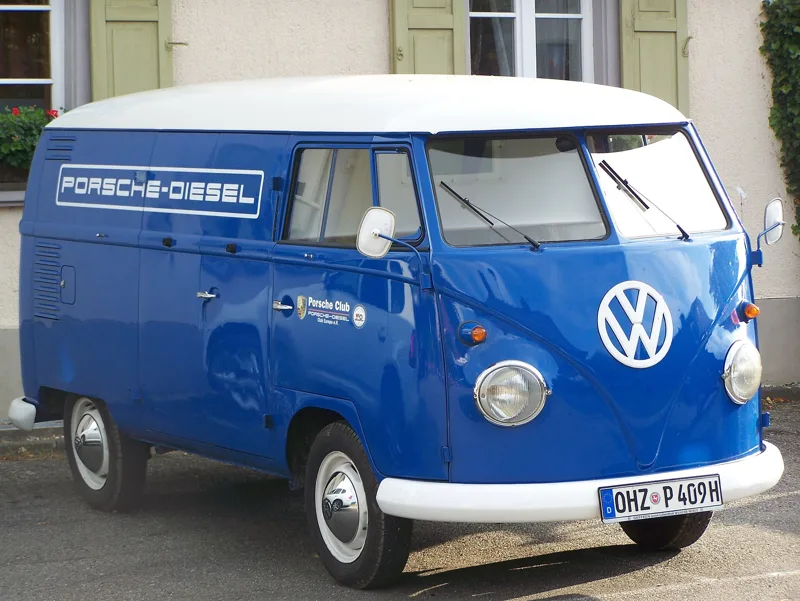
Brand names have become generic along the way. In Britain a campervan is sometimes called a Dormobile after a once-popular conversion, while in Australia and elsewhere it is a Kombi. The type took off in the 1950s, after Volkswagen commissioned Westfalia to use the Kombi version of its Type 2 transporter as the base.
RV class A, B and C and the European codes
| Type | Build | Shower and toilet | Typical base vehicles |
|---|---|---|---|
| A-class (AC) | Fully coachbuilt on a medium-to-large van chassis, from 7.5 tonnes up | Highly appointed | Large van chassis |
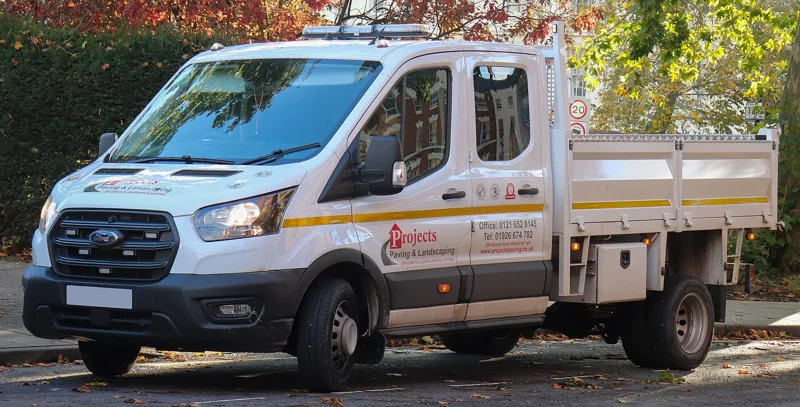
| Overcab (OC) | Coachbuilt body keeping the van cab, with a raised bed area above it | Usually fitted | Fiat Ducato, Renault Master, Ford Transit |
| Low profile (LP) | Coachbuilt, no raised bed over the cab | Usually fitted | Lighter or smaller-engined versions of the overcab bases |
| High top (HT) | High-top van of roughly 2.8 to 4.5 tonnes gross, little coachbuilding | Sometimes fitted | Same bases as above; Dodge, GMC or Ford vans converted professionally |
| Rising roof (RR) | Small van of 2 to 3 tonnes gross with a roof that lifts on fabric sides | Rarely fitted | Classic Volkswagen Type 2, Volkswagen Transporter, Ford Transit |
| Fixed roof (FR) | Similar in size to rising roof; beds made up by moving seats | Very rarely fitted | Volkswagen Transporter, Mercedes-Benz Vito, Fiat Scudo |
| Dismountable (DM) | Coachbuilt body on a pick-up load bed, removable at campsites | Varies | Ford, Toyota, Nissan, Mitsubishi pick-ups |
| B-class (BC) | Van chassis supplied unfinished and upfitted by a coachbuilder | Varies | Mostly imported North American models |
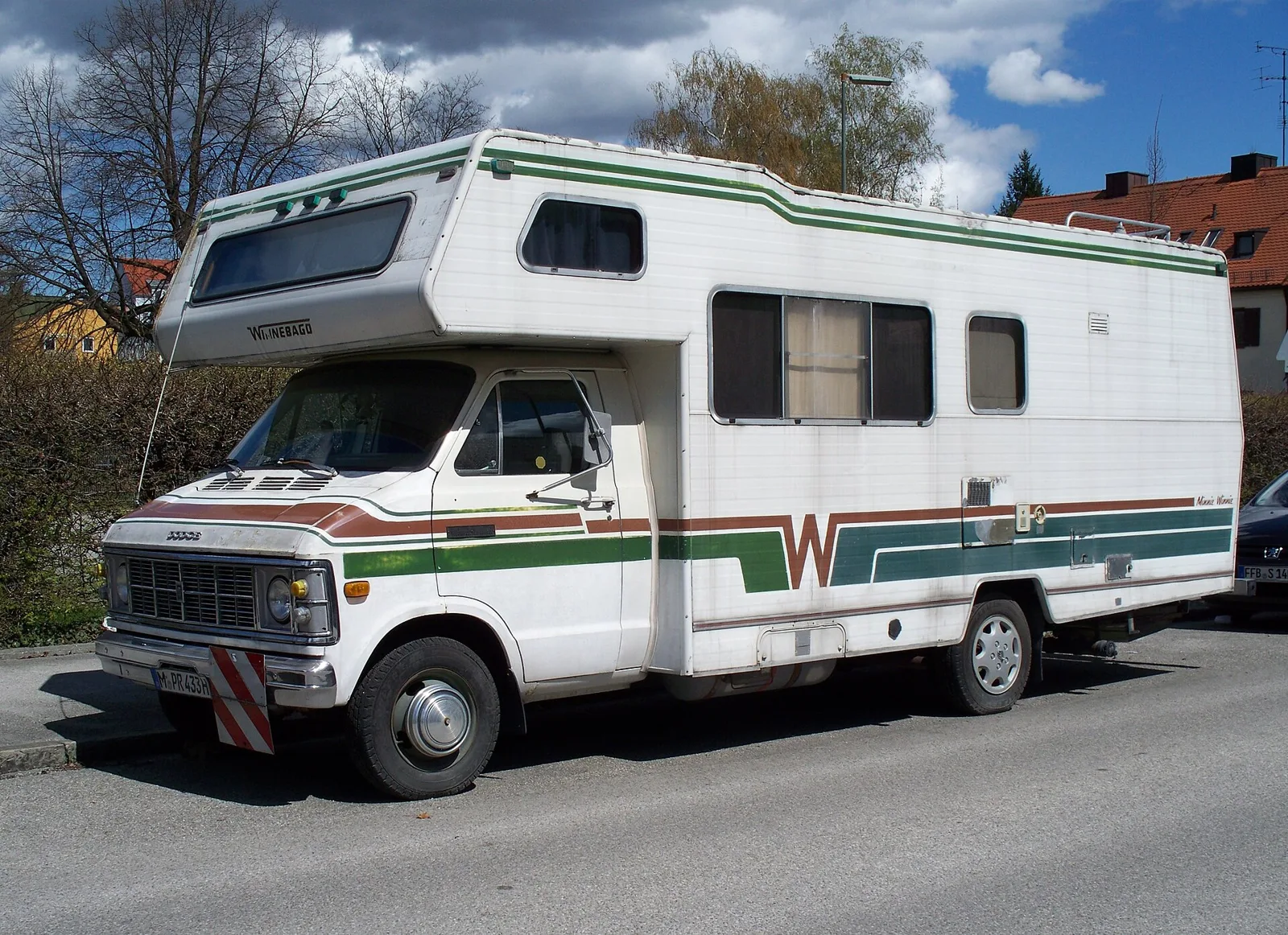
The European A-class resembles the North American Class A, which is sometimes called generically a Winnebago, though it tends to be smaller. The biggest versions add electric slide-outs and even a hydraulic garage for a small car. A smaller A-class under 7.5 tonnes also sells in Europe. It is about the size of an overcab but swaps the base vehicle's cab for a wider one, which leaves room for a drop-down bed above and is recognisable by a large curved windscreen. The overcab is roughly comparable to the North American C-class.
The B-class label is rarely used outside imports from North America. Those vehicles vary a great deal in size, from semi-low-profile coachbuilts to van conversions. A manufacturer supplies the van chassis as an incomplete vehicle, a coachbuilder adds the RV amenities, and the finished result usually carries safety certification from the RV Industry Association.
At the light end sits the fixed roof. Often called a surf van or day van, it can be based on anything from a Volkswagen Transporter to a small Fiat Doblo for casual use with little beyond a place to sleep.
Campervan buying guide: ready-made, converted or self-built
You can buy a campervan finished, or make one. During the 2020 to 2023 pandemic, converting a van became popular among people who wanted a campervan but could not afford to buy one. Conversion means replacing the van's interior with new components: insulation and lining, furniture, electrics, windows, a pop-up top, and a sink with a water supply. A hybrid route has a professional company fit the big elements, such as the roof, windows and bed, and the owner finishes the job. Gas work must be carried out or certified by a qualified tradesperson. Insurance needs a policy flexible enough to cover the vehicle as a van, during the conversion and as a completed campervan.
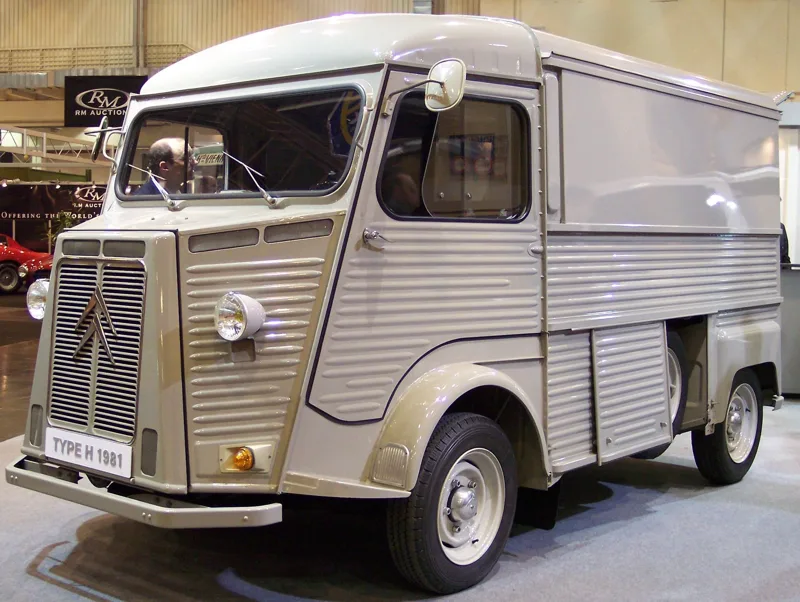
The donor vehicle makes a difference. Volkswagen made several types, known by age as the splitty (split windscreen), the bay (bay-framed windscreen) and the bricky (brick-shaped). Mercedes built a similar light van that was often converted in the 1960s and 1970s, as was the British Commer Spacevan. In Europe the Citroen H-Van is a favourite with Dutch and Belgian users. It has a low floor and a high ceiling, a legacy of its original work as a mobile shop, so it does not usually need a pop-top. A modern Toyota Hiace is sometimes dressed up to look like a classic Volkswagen. North American builders have favoured Japanese vans since the 1970s, along with European models built on the Ford Transit, Fiat Ducato and Bedford.
A smaller alternative is the car camper, an estate car or station wagon converted into a travel home. The rear becomes a double bed on an aluminium frame with camping gear stored beneath, so nothing needs unloading before you sleep.
How the RV got here
The first recreational vehicles were horse-drawn, evolving in the second half of the nineteenth century from stage wagons, gypsy vardos, living vans and sheep herders' wagons. The first known purpose-built RV was the horse-drawn Wanderer, which Dr Gordon Stables had made by the Bristol Wagon Works Company in 1884. His enthusiasm for leisure caravanning helped inspire the world's first RV club, The Caravan Club, in 1907. America's McMaster Camping Car followed in 1889. Horse-drawn use declined after the First World War as cars became cheaper, more powerful and more widely available.
Power arrived in France. The first powered RVs were steam-drawn trailers in 1896 and 1898, the first steam motorhome was the Quo Vadis of 1900, and the first petrol motorhome was the Passe Partout of 1902. Early motorhomes, called house cars in the US, were usually converted goods trucks, heavy, noisy and expensive. Lightweight tent trailers caught on in America from 1911, helped by better roads, new national parks and cheap tow vehicles such as the Ford Model T. The first US RV club, the Tin Can Tourists, was formed in 1919.
Trailers took over in the interwar years. Caravans dominated in Britain in the 1920s and 1930s thanks to low cost and flexibility, and America had a travel trailer boom in the 1930s as production-line methods met demand from leisure users and from people seeking cheap housing during the Great Depression. Airstream, which started in 1931, is the only survivor of more than 400 pre-war US RV makers. The small, lightweight Volkswagen Kombi of 1950 brought the one-box RV, and between 1945 and 1960 RVs flourished in many western countries as incomes and leisure time grew, with dedicated RV parks opening and better batteries, fridges, gas cookers and toilets making them far more comfortable.
The RV market, in numbers
The pandemic gave the industry a lift. By March 2021, 11.3 million US households owned an RV, and in October 2021 North American factories built 58,000, the most in any single month. The average age of US owners was 45 in 2016, three years younger than the year before, and 2020 research suggested more millennials were interested. Analysts expect industry revenue to grow by 1.1% through 2026.
It is a concentrated business. About 85 percent of RVs sold in the US are built in Indiana, and roughly two-thirds of that in Elkhart County, which has 206,000 people and calls itself the RV Capital of the World. According to the RV Industry Association, the industry has a 32.4 billion dollar annual economic impact in Indiana and supports 126,140 jobs. Tariffs on steel, aluminium and Chinese parts have hurt: shipments fell 22% in the first five months of 2019 after dropping 4% in 2018.
Uses range from road trips to permanent living. In Australia a retired person who travels in an RV is a grey nomad, and some owners fit solar panels and work remotely off the grid. Living in one is legal everywhere in the US, though rules govern where and for how long it can be parked. The environmental cost is real: RVs accounted for nearly 10 percent of US mobile-source hydrocarbon emissions in 2000, and demand for lauan plywood from the industry has been linked to deforestation in Indonesian Borneo, though manufacturers deny knowing of deforested wood in their supply chains.
What is overlanding?
Overlanding, or four-wheel-drive touring, is self-reliant travel by land to remote places where the journey is the goal. It usually uses off-road capable transport, anything from bicycles to trucks, with camping as the main lodging, often for months or years and across international borders.
The word began in Australia, where it meant droving livestock over long distances. Alfred Canning opened the Canning Stock Route between 1906 and 1910, and in the 1940s and 1950s Len Beadell built many of the roads that opened the Outback, which overlanders still use under the names he gave them, including the Gunbarrel Highway and the Anne Beadell Highway.
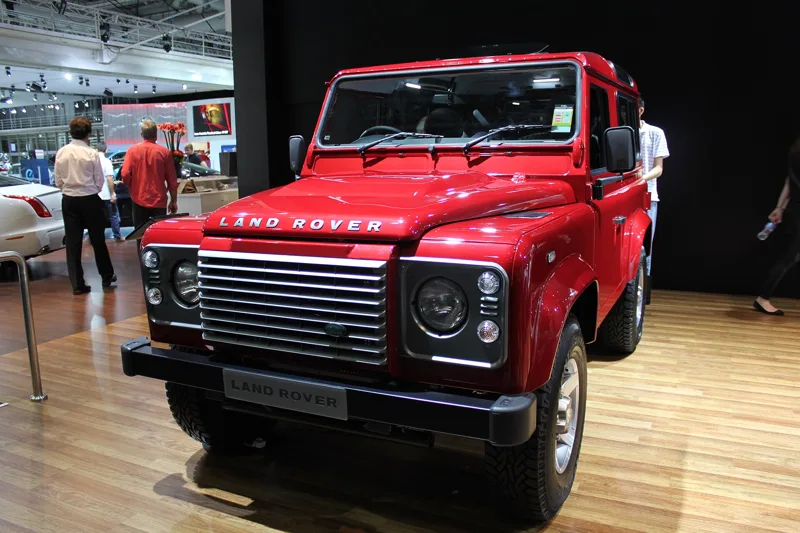
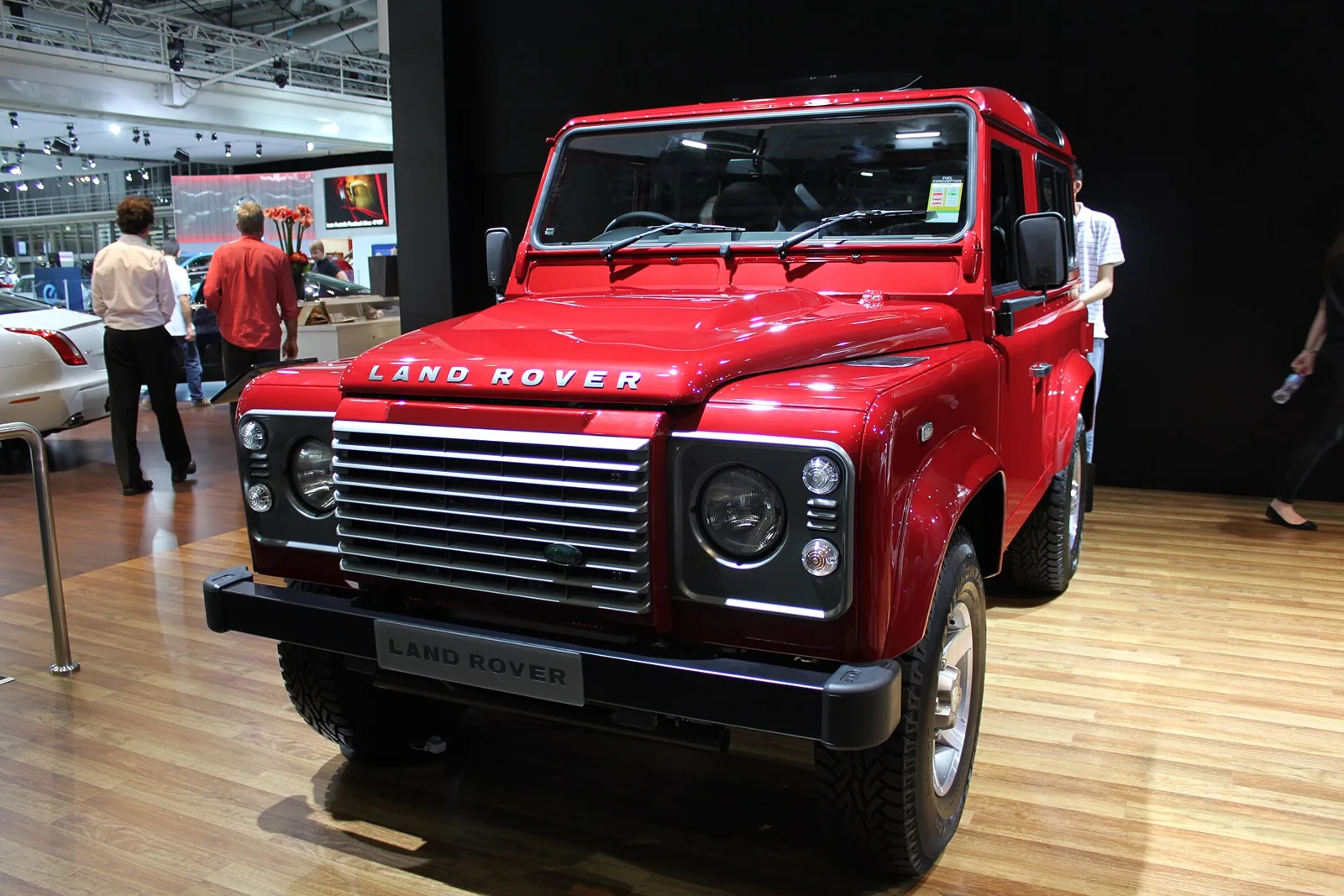
The modern form began in the middle of the twentieth century with commercially available four-wheel-drive trucks: G-Classes, Land Cruisers, Unimogs, Jeeps and Land Rovers. A few earlier pioneers went in unsophisticated vehicles. In the early 1920s John Weston and his family travelled from Britain to Greece and back in a converted one-ton truck, and in 1931 they drove the same truck from the south-western tip of Africa to Cairo and on to Britain. It survives in a South African museum. In 1949 Colonel Leblanc drove a new 80-inch Series I Land Rover from the UK to Abyssinia.
A guide published that year by the Automobile Association of South Africa, Trans-African Highways, covered the choice of vehicle, the start time, petrol, water, provisions, equipment, rules of the road, officials and rest houses. Its serious tone shows the scale of such trips. Barbara Toy made solo Land Rover journeys, including Tangier to Baghdad in 1951-2, and the 1955-6 Oxford and Cambridge Far Eastern Expedition drove from London to Singapore.
Interest grew through the Camel Trophy, run from 1980 to 2000 over punishing terrain. Overlanders now meet each Christmas at Ushuaia and swap route information online. The Overlanding Association, created in 2015, presses the European Commission and the FIA on behalf of Carnet users in Europe. Commercial overland trips began in the late 1960s, mostly in Africa, with paying passengers sharing the cooking, shopping and camp chores in large, specially equipped trucks. One example, the Truck Surf Hotel, expands when parked into a two-storey, five-room hotel of 70 square metres (750 sq ft) and moves between surf breaks on the Portuguese and Moroccan coasts.
What overlanding asks of a vehicle
Self-reliance sets the requirements. The vehicle must be capable off road, double as a camp, and keep going for long periods far from help. That is why many overlanders treat preparing the vehicle as a central part of the experience, and why the US, South Africa and Australia have significant industries making accessories for overland travel. A comparison with the campervan world helps. Off-road campervans, often called 4WD or 4x4 campers, may carry expandable roof tents or pop-up roofs, and some are built on off-road vehicles so as to compromise between expedition and relaxed camping. Others are demountable bodies that lift off the back of a pick-up.
Distance and borders do the rest. The Cairo to Cape Town route covers more than 10,000 km (6,200 miles) and generally follows the Nile through Egypt and Sudan, then Kenya, Tanzania, Malawi, Zimbabwe, Botswana and Namibia. In 1959 the American trailer maker Wally Byam took a caravan of trailers the other way, from Cape Town to Cairo. From the mid-1980s the journey was blocked by the closure of the Aswan to Wadi Halfa ferry and by instability in Sudan, northern Uganda and Ethiopia, but it is possible again, with commercial trucks carrying about 20 paying passengers as well as independents on motorcycles or in four-wheel-drive vehicles. The traditional route from London to Nairobi and Cape Town began in the 1970s with old four-wheel-drive Bedford trucks carrying about 24 people, and groups in Land Rovers, crossing the Sahara into Niger. Border closures have reshaped it since.
The Pan-American route from Alaska to Tierra del Fuego is considered the longest in the world, at around 22,000 km, though its endpoints are disputed. It needs no major formalities and no specially equipped vehicle, and English and Spanish cover almost all of it. Most travellers take around two years and cover 70,000 to 100,000 km, passing from below sea level to altitudes above 5,000 metres, and no visa is needed for most nationals except in the USA. The road is broken between Panama and Colombia at the Darien Gap, so vehicles are usually shipped from Colon to Cartagena. Right-hand-drive vehicles are not allowed into Nicaragua and Costa Rica, so they ship from and to Veracruz in Mexico, and sea transport can be a significant cost. Starting in North America puts the two most expensive countries at the beginning, while the budget is intact.
Where this goes next
Analysts expect RV industry revenue to rise 1.1% through 2026 as US residents keep planning domestic trips, and 2020 research pointed to growing interest among younger buyers. On the overlanding side, the Overlanding Association is pressing for Carnet users' rights, and the Cairo to Cape route has again become popular after years when it was closed off.