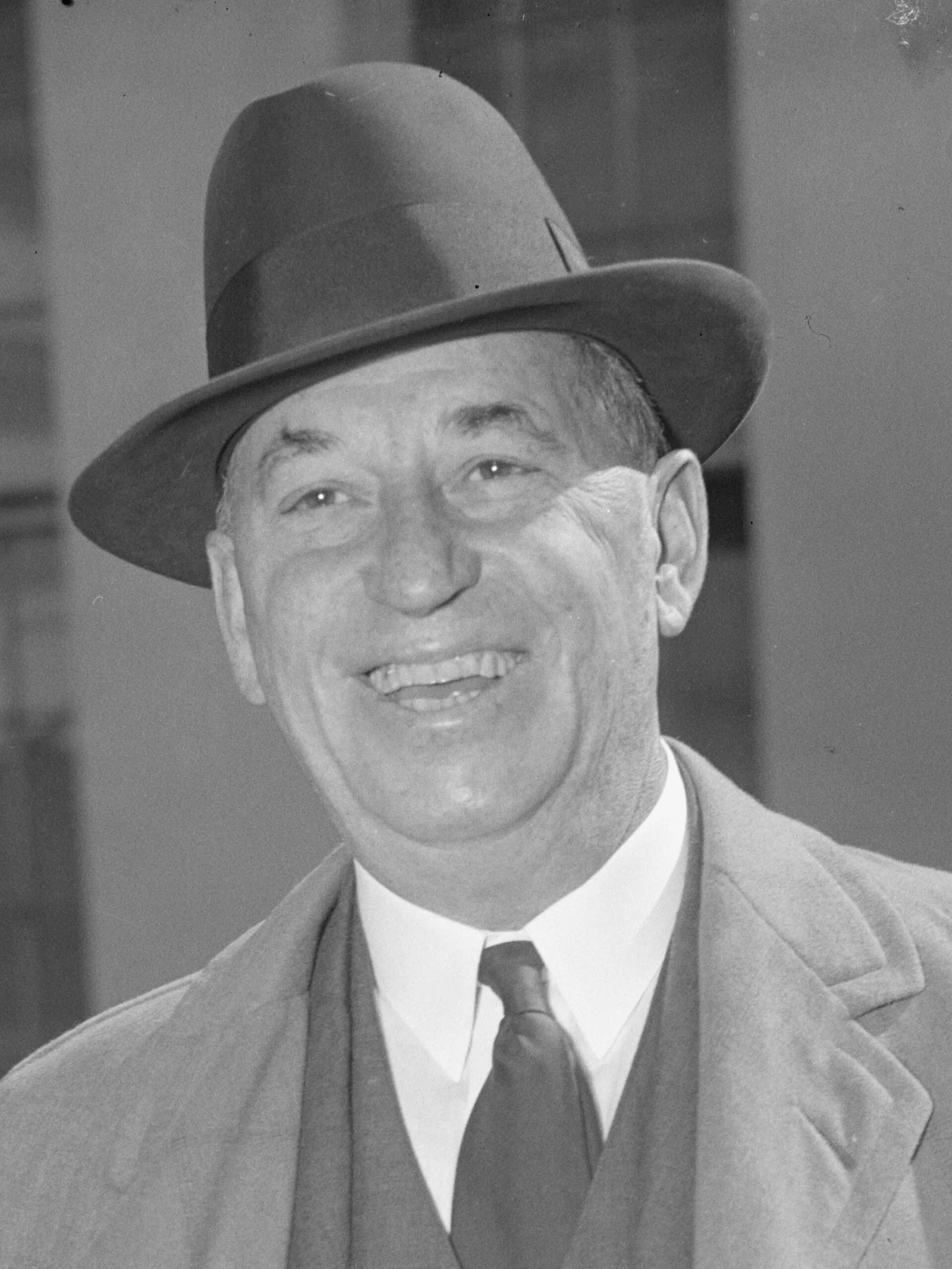
He once asked a boss to repeat a pay offer of $10,000 a month. Then he took a debt-ridden carmaker and built the company that carried his name.
Walter P. Chrysler, born in Kansas in 1875, founded Chrysler Corporation in Detroit in 1925. He had taken a controlling interest in the debt-laden Maxwell Motor Company in 1921, corrected its quality faults, then absorbed it into his own firm. Plymouth and DeSoto followed, and in 1928 he bought Dodge Brothers.
In 1916 a former railway mechanic from Ellis, Kansas, was offered $10,000 a month to stay on as head of Buick. He asked the man across the table to say the figure again. Walter Chrysler accepted, ran Buick for three more years and left General Motors among the wealthiest people in America. Six years later he had put his own name on a car company.
That company grew out of a wreck. The Maxwell Motor Company was deep in debt, with over half its output unsold, when Chrysler stepped in during 1921, and the cars he built from its remains carried the Chrysler and Plymouth names.
Who founded Chrysler?
Walter Percy Chrysler, born on 2 April 1875 in Wamego, Kansas, was the founder and namesake of the Chrysler Corporation. He died on 18 August 1940. The company came into being in Detroit in 1925, after he took control of Maxwell and absorbed it, and he remained chairman of its board from the beginning until he died.
Maxwell ended in 1925, but its design lived on in the four-cylinder Chrysler of 1926 and, reworked, in the first Plymouth.
From a Kansas railway shop to Pittsburgh
Chrysler grew up in Ellis, Kansas, where his childhood home is now a museum. His father Henry, born in Chatham, Ontario, in 1850, was a locomotive engineer on the Kansas Pacific Railway. Walter began as a machinist and railroad mechanic in the Ellis shops and took correspondence courses with International Correspondence Schools in Scranton, earning a mechanical degree. At school he met Della Viola Forker, later his wife.
Then he roamed. Working as a roundhouse mechanic with a name for setting valves, he drifted from Wellington, Kansas, in 1897 to Denver for two weeks and on to Cheyenne, Wyoming. The moves owed something to restlessness and a quick temper, but they also broadened his railway knowledge. His ladder ran from foreman at Trinidad, Colorado, through superintendent and division master mechanic up to general master mechanic. During 1905 and 1906 he was with the Fort Worth and Denver Railway at Childress in West Texas, and later at the Chicago Great Western's main shops in Oelwein, Iowa.
The peak of his railway career came in Pittsburgh, as works manager for Alco, the American Locomotive Company, in its Allegheny shops where locomotives were assembled.
How did Walter Chrysler get into the car business?
In 1911 James J. Storrow, a banker and Alco director, summoned him and asked if he had considered making automobiles. Chrysler had been a car enthusiast for more than five years. Storrow arranged an introduction to Charles W. Nash, president of Buick, who was looking for a sharp production chief, and Chrysler resigned from railroading for good to become works manager at Buick in Flint, Michigan. He started on $6,000 a year.
He trimmed production costs in many ways, one of them stopping the practice of finishing a car's undercarriage to the same luxurious standard as the body.
The $10,000 a month offer
In 1916 William C. Durant, the 1908 founder of General Motors, took the company back from the bankers who had seized it. Chrysler was close to those bankers and handed in his resignation to Durant in New York. Durant caught the first train to Flint to keep him.
His offer was then unheard of: $10,000 a month for three years, with a $500,000 bonus every year end, payable instead as $500,000 in stock. Chrysler would report straight to Durant and would run Buick without anyone's interference. Apparently in shock, Chrysler asked Durant to say it again. Durant did, and Chrysler accepted at once.
Chrysler ran Buick for three more years. Not long after the contract ended, in 1919, he resigned as president because he did not share Durant's view of where GM should go. Durant paid him $10 million for his GM stock. Harry H. Bassett, who had risen at the Weston-Mott axle company, then a Buick subsidiary, took his place.
Willys-Overland and the road to Maxwell
Bankers who feared losing their investment in Willys-Overland of Toledo, Ohio, hired Chrysler to attempt a turnaround. He asked for, and got, a salary of $1 million a year for two years, a sum that was astonishing at the time. In 1921 he left Willys after failing to take control from John Willys, and he bought control of the sickly Maxwell Motor Company.
What was the Maxwell Motor Company?
Maxwell was an American carmaker that ran from 1904 to 1925, and the present-day successor, by way of Chrysler, is Stellantis North America. It began as the Maxwell-Briscoe Company, based in North Tarrytown in New York state and named after founder Jonathan Dixon Maxwell, a former Oldsmobile man, and his partner Benjamin Briscoe, an industry pioneer.
A fire destroyed the North Tarrytown factory in 1907, and Maxwell-Briscoe opened a vast new plant at New Castle, Indiana. Newspapers wrote that it would work as a single machine, raw material in at one end and finished cars out of the other. Chrysler used the plant after taking over Maxwell, and it stood until 2004.
For a while Maxwell counted with General Motors and Ford among the top three car firms in America, though the Big Three label was not yet in use. It was also the only profitable member of the United States Motor Company, formed in 1910. That combine collapsed in 1913, when its last supporting car maker, Brush Motor Company, failed, and Maxwell alone survived.
The Model 25 and its rivals
Low-priced cars were multiplying, and Maxwell answered with the Model 25, its cheapest four yet.
| Car | Price |
|---|---|
| Success | $250 |
| Black | $375 |
| Brush Runabout | $485 |
| Western Gale Model A | $500 |
| Ford Model N | $600 |
| Oldsmobile Runabout | $650 |
| Maxwell Model 25 | $695 |
The five-seat Model 25 had high-tension magneto ignition, an electric horn, a shock absorber to protect the radiator and, as options, an electric starter and headlights. By 1913 Walter Flanders was overseeing the assets and reorganised the firm as Maxwell Motor Company, Inc., moving it to Highland Park, Michigan, with three plants at Dayton, Ohio, building some of the cars too. By 1914 the total sold stood at 60,000 cars.
Selling to women
Maxwell was among the earliest car firms to court women buyers directly. In 1909 it backed Alice Huyler Ramsey, who campaigned for women drivers, on the first coast-to-coast drive across the United States by a woman. In 1914 it declared it would hire as many female sales staff as male, held a reception at its Manhattan dealership with suffragettes such as Crystal Eastman, and put a woman in a showroom window to take an engine to pieces and rebuild it in front of passers-by.
How did Walter Chrysler take over Maxwell?
Maxwell had overreached and sank deep into debt. In the recession that followed the First World War, over half its 1920 production went unsold. In 1921 Chrysler arranged to take a controlling interest and re-incorporated the company in West Virginia with himself as chairman. One of his first jobs was to put right the faults in a car whose quality had slipped, and the improved model was sold as the "good Maxwell".
Around then Maxwell was also in an awkward merger with the ailing Chalmers Automobile Company, which stopped making cars in late 1923.
By 1925 Chrysler had set up his own business, the Chrysler Corporation, and that year the Maxwell line was phased out with its assets folded in. The name lived on through its engineering: the new four-cylinder Chrysler for 1926 was created largely from the previous year's Maxwell. A second reworking in 1928 produced the first Plymouth.
Plymouth, DeSoto, Dodge and a skyscraper
Besides the Chrysler car, the new company created the Plymouth and DeSoto marques. In 1928 Chrysler bought Dodge Brothers and gave the firm the shorter name Dodge. He also paid for the Chrysler Building in New York City, finished in 1930, and Time magazine made him its Man of the Year for 1928. The Automotive Hall of Fame inducted him in 1967.
Where did Walter Chrysler come from?
His father Henry, known as Hank, was Canadian, with German, English and Dutch ancestry, and a veteran of the American Civil War. Hank worked as a locomotive engineer, first for the Kansas Pacific and then for the Union Pacific that succeeded it. Walter's mother, born in Rocheport, Missouri, was also of German descent.
Chrysler showed little interest in distant forebears. His collaborator Boyden Sparkes recalled that when a genealogist reported a Dutch sea captain in the family tree, Chrysler answered with a Jimmy Durante line about having millions of ancestors. Yet in his autobiography he did record that his father was brought from Chatham, Ontario, to Kansas City aged five or six. Later researchers, including Karin Holl, traced the family back to Johann Philipp Kreissler, born in 1672, who emigrated to New York in 1709. The Chryslers came from Guntersblum in the Rhineland-Palatinate.
His own story first ran as a serial in the Saturday Evening Post in 1937 and was privately printed as a book, Life of an American Workman, that same year with Sparkes. Popular Mechanics profiled him in August 1932 under the title "The Man Who Bet His Dreams".
Walter Chrysler's last years
In 1923 Chrysler bought a twelve-acre (5 ha) waterfront property at Kings Point on Long Island from Henri Willis Bendel and renamed it Forker House. He also built a country home in Warrenton, Virginia, horse country, and in 1934 carried out an extensive restoration of the Fauquier White Sulphur Springs resort and spa nearby. He and Della raised four children: Thelma Irene, Bernice, Walter Jr. and John Forker.
He turned 61 in spring 1936 and stepped back from daily management. Two years later his wife died at 58, and the loss of his childhood sweetheart devastated him; he suffered a stroke from which his health never recovered. Chrysler died of a cerebral haemorrhage in August 1940 at Forker House and is buried at Sleepy Hollow Cemetery, in New York.
The Kings Point estate was sold in December 1941 to the War Shipping Department and became Wiley Hall at the United States Merchant Marine Academy. The Warrenton resort was sold in 1953 and turned into a country club.
Where the Maxwell name lived on
A battered old Maxwell became one of the best-known cars in comedy, the jalopy Jack Benny drove on his radio and television series for decades after production ended. His supposed meanness stopped him replacing it while it still ran. Mel Blanc supplied the sputtering start-up noises when a recording failed to play and he improvised, and the audience liked it enough to keep him on.
In 1962 Benny appeared in a cameo in a comedy film, driving an antique that many viewers took for a Maxwell. It was a 1931 Cadillac convertible coupe.
In 1920 Maxwell commissioned actress and producer Nell Shipman to make a short promotional film. She stretched the budget into a multi-reel feature called Something New, in which the sturdy little car races across the Mexican badlands. The mechanic Maxwell sent to the set had to keep replacing the car's transmission.