A car can be a total loss while still roadworthy. How insurers decide, how the payout is set, where the wreck goes and how motor fraud is hunted.
An insurer writes a car off when repairing it would cost more than the car is worth. The owner is then paid under the policy's settlement method, the insurer takes the wreck, and claims showing signs of fraud can be investigated before anything is paid.
About one in seven car accident claims in North America ends with the insurer declaring the vehicle a total loss, and the car in question does not have to be a wreck. A fully roadworthy car of modest value can be written off over a scorched interior.
What does written off mean when a car is damaged?
A write-off, or total loss, happens when what a damaged item has lost in value, or what it would cost to repair or salvage, runs past the amount it is insured for, and starting afresh with an equivalent item is cheaper. The test is blunt: if returning the car to a sellable state costs more than the car would then be worth, it is written off.
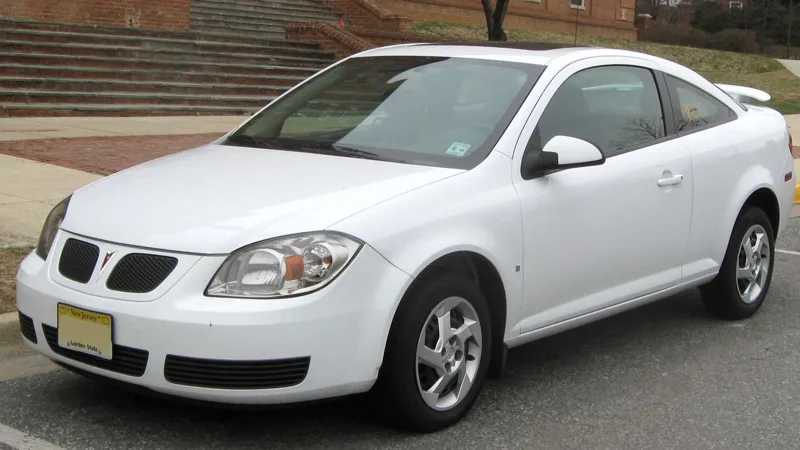
That arithmetic explains the oddities. Severity of the crash is not the trigger. A cheap car can be written off while fully roadworthy because of damaged paintwork or upholstery, perhaps after an interior fire, hail damage, or a spill of toxic chemicals. The list of real examples even includes a bullet-riddled car and a so-called biohazard car in which something decomposing was found.
A written-off car is rarely worth nothing. Unless the circumstances are extreme, it still holds used parts that can be sold, and at the very least it has value as scrap metal. Much of this section of insurance practice comes from North America, and other places, Australia among them, run their own regulations.
A cheap car can be written off while fully roadworthy, and the crash does not have to be severe: it is the sum that decides.
How does an insurer decide a car is a total loss?
The insurer adds up the repairs needed, the value of the parts that would remain, and the cost of paying for the driver's rental car while the work is done. When the total is higher than the car's worth after repair, the insurer treats it as lost for good. It is a sum, not a judgement about how bad the impact looked.
Insurance language draws a line between an actual total loss and a constructive one. For a vessel, an actual total loss means repair is physically or legally impossible, and a ship that disappears can be presumed lost. A constructive total loss is looser: the cost of repair plus the cost of salvage equals or exceeds the value, and it can also take account of incidental expenses beyond the repair itself. Reports on British cars use the constructive label.
Who holds the pen on the threshold? The policy sets the level at which a loss counts as total rather than partial. As a general principle of the law of total loss, though, it is the policyholder and not the insurer who has the last word on whether to put in a partial claim or a total one.
What does the owner receive after a total loss?
After a total loss the policyholder is owed full indemnity, and in return the damaged car passes into the insurer's ownership through a legal process called subrogation. How the sum is worked out depends on the settlement method written into the policy, and there are generally three of them.
Three ways a total loss is settled
| Method | When the value is set | What gets paid |
|---|---|---|
| Actual Cash Value | After the total loss occurs | The value the claims adjuster determines |
| Agreed Value | Before the policy period begins | The value fixed at the outset |
| Stated Value | A hybrid of the two | The lower of Actual Cash Value and the vehicle limit in the policy declarations |
A gap between expectation and cheque is where most disputes live. A policy normally gives a car a market value, and it may be lower than the figure the owner had in mind. Any disagreement has to be challenged, perhaps through arbitration. Policies on assets that lose value with age may also pay out far less than the full cost of replacement, which is how an item can be a total loss even though something of it remains.
Repair does not end the money story either. Diminished value is the drop in a vehicle's market value that follows a wreck and its repair, a loss also called accelerated depreciation. Insurers usually ask for a diminished value report before they will consider it. Some American states recognise it and offer the cover directly. In Canada a person has to retain legal counsel and order an accelerated depreciation report for the court's use.
Where does a written-off car go next?
In many places the insurer sells it on, to the general public, to dealers, to brokers or to auto wreckers. In most jurisdictions the write-off decision also leaves a mark on the title: the car is branded as salvage, or as rebuilt if it is repaired and passes inspection under a later owner.
The route depends on the damage. A car that is not severely hurt can be restored to its original condition and, after a government-approved inspection, returned to the road. If it is badly damaged by the standards set by the state or province, it is dismantled by a wrecker and sold for parts or scrapped. Property that is written off is usually demolished, scrapped or recycled for parts once its policy has been settled.
What should a buyer know about a repairable write off?
The brand on the title tells the story: salvage before repair, rebuilt after repair and reinspection. A road-ready inspection is not a quality audit, though. The inspection may not attempt to judge how well the repairs were done, which is left to a professional mechanic or inspector.
Value is the second question. A car that has been written off and repaired can still lose worth, and that reduction in market value is the diminished value described above. In Britain, repairable cars are written off as Category S or N when the remedial work would cost more than the vehicle is worth.
Why are more repairable cars being written off in Britain?
Because repairs have become dearer. In the UK, the number of vehicles declared a constructive total loss rose significantly between 2019 and 2025. The accident management trade points to average repair bills that climbed by 25%, with parts and labour both getting dearer and cars fitted with ADAS driver-assistance systems proving harder to repair.
So repairable cars are often classed as total losses, in Category S or N, whenever the remedial work would cost more than what is left of their value. A gap opens between the settlement and the price of a replacement, and more motorists are leaning on GAP insurance to bridge it.
How does insurance fraud touch car claims?
Insurance fraud is any intentional act meant to deceive an insurer during the application or the claims process, and it also covers an insurer wrongly refusing a legitimate claim. In motor insurance, that means someone knowingly seeking a benefit they are not entitled to receive.
It is as old as insurance. A first-century poem by the Roman writer Martial sneers at a man who bought a house for two hundred denarii, saw it destroyed in an accident and collected ten times as much. The poet's suggestion is plain: he burned it himself. The Coalition Against Insurance Fraud attributes it mostly to greed and to gaps in the safeguards.
Investigators sort fraud into two broad kinds. Hard fraud is a loss deliberately planned or invented, such as a collision, a car theft or a fire, and criminal rings are sometimes behind it. Soft fraud, also called opportunistic fraud, is more common: a policyholder inflates an otherwise genuine claim, for example by claiming more damage than the collision caused.
Which motor claim frauds do insurers look for?
The recognised schemes range from one person fibbing to organised rings. The main types are:
- Staged collisions. Rings fake traffic deaths or engineer a crash with an innocent driver, and some involve claims adjusters who authorise the payments. A pedestrian who leaps into the path of a car and then claims injury is another version. In 2009, according to the Association of Chief Police Officers, about 30,000 UK auto accidents were staged.
- Exaggerated claims. An owner asks for cover beyond what the accident caused, such as preexisting damage, or a driver or passenger overstates their injuries.
- False reports of theft. The insured party reports the vehicle stolen when it was not.
- Rate evasion. The owner registers the car at an address where rates are lower than where they really live.
- Fronting. Someone other than the real main driver is named as the primary driver, for instance a young driver insured in a parent's name.
Staged collisions can operate on three levels. At the top sit lawyers who file the claims, backed by doctors who fabricate or inflate diagnoses and treatment records. Below them sit the middlemen known as cappers or runners, who find cars to wreck, hand claims up to the professionals and sign up the participants. At the base are the recruits who risk injury in the crash itself. Organised crime may be involved.
What does insurance fraud cost, and how is it spotted?
Nobody knows exactly, since undetected fraud is invisible, and the estimates vary with the method and the country. The Coalition Against Insurance Fraud put the United States loss at about $80 billion in 2006. According to the FBI, fraud outside health insurance costs an estimated $40 billion per year and adds between $400 and $700 annually to the premiums of an average American family. The UK Insurance Fraud Bureau puts British losses at about 1.5 billion pounds ($3.08 billion), which it says raises premiums by 5%.
An estimate from the UK Insurance Research Council held that, in 1996, between 21 and 36 percent of auto claims contained elements of suspected fraud. Personal injury fraud in Canada costs about C$500 million a year, by the Insurance Bureau of Canada's reckoning.
No insurer can examine every claim, so detection starts by picking out the suspicious ones. That can be done by computerised statistical analysis comparing a claim with expected values, or by review from claims adjusters and agents. Some cases surface through a law enforcement investigation or a tip from a member of the public. A claim flagged as suspect can then be investigated.
The statistical side may use machine learning, supervised or unsupervised. A supervised approach learns its expected values from records of both fraudulent and genuine claims, and it only works if the training claims have been correctly labelled in the first place.