A fix said to cost 57 cents, a set of parts costing $15.30, and two courts and a Congress asking the same question about what the company knew and when.
The 2014 GM ignition switch recalls covered nearly 30 million cars, after switches that failed GM's own torque requirement cut engine power and airbags. Grimshaw v. Ford, decided in 1978, awarded $127.8 million over the Ford Pinto's fuel system after evidence that cheap fixes were known and deferred.
In 1978 a California court heard that four changes costing a combined $15.30 a car would have made the Ford Pinto's fuel tank safe in a rear-end collision at 34 to 38 mph. In 2014 a US congresswoman told General Motors' chief executive that fixing each faulty ignition switch would have cost 57 cents. In both cases the question put to a carmaker was the same: what did you know, and why was it not fixed sooner?
One case ended with a record jury award over a small car's fuel system. The other produced nearly 30 million recalled cars, a Congressional hearing and a $900 million settlement. Both turned on internal documents and testimony about what the manufacturer knew.
What was the GM ignition switch recall?
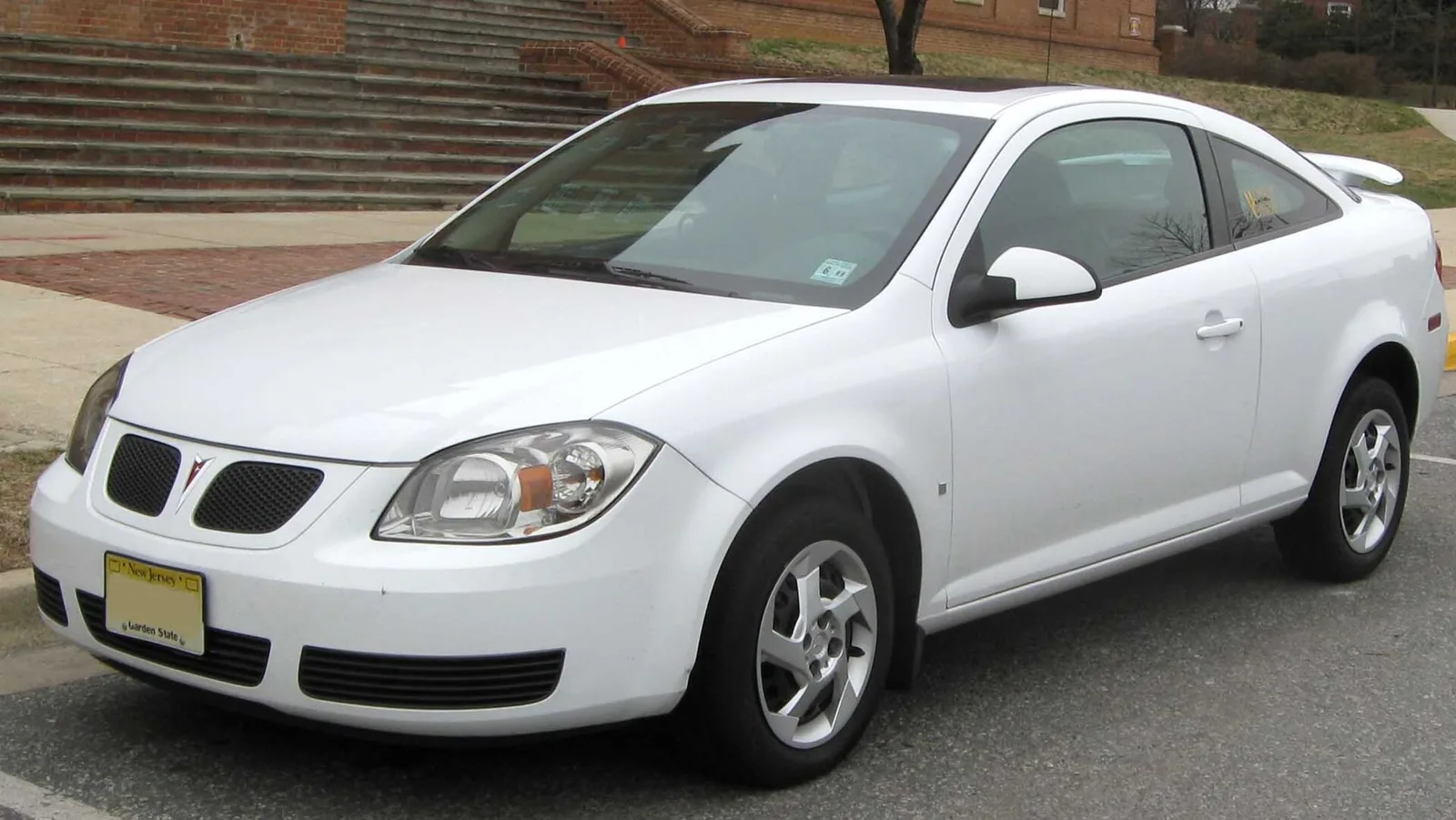
In February 2014 GM recalled about 800,000 small cars, Chevrolet Cobalts and Pontiac G5s, because the ignition switch could shut off the engine while the car was moving. With the switch out of Run, the airbags would not inflate in a crash. More recalls followed through the year. On 31 March GM announced over 1.5 million more cars across six models for faulty power steering, three of them also caught in the ignition recall. By 15 May it had recalled another 2.7 million, taking the 2014 total to 12.8 million worldwide, of which 11.1 million were in the United States.
In June came the biggest step. On 16 June GM announced 3.4 million more cars built from 2000 to 2004, and said it would replace their keys, because without that the switches could rotate and shut the engine off, disabling power steering. On 30 June it added 8.45 million, almost all for defective ignition switches, which brought the North American total to about 29 million. Counted worldwide, the recalls reached nearly 30 million cars.
Both cases asked what the manufacturer knew, and when.
How did the ignition switch fail?
US safety regulators set no torque or vibration standards for ignition switches. GM wrote its own, as a guide for engineers, and the switches in the recall failed two of them. The first was torque, the resistance that keeps the switch from changing position. GM's standard required between 10 and 20 newton centimetres. The recalled switches measured less than 10, so little force that they could slip. The second was vibration: in extreme vibration, or with heavy objects on the keychain, the switch moved from Run to Accessory without the driver meaning it to.
Think of a light dimmer switch that turns itself when the table shakes. Here the consequence was far worse. In Off or Accessory the switch is designed to remove power from the airbags, so a car that slipped into Accessory before a crash would not deploy them, and the driver would find it harder to steer and brake. GM knew of the problem and held meetings on it as early as 2005. Federal regulators later said they had expected the airbags to be able to deploy for 60 seconds after the engine stalled. GM later told the Associated Press the figure was only 150 milliseconds.
Why did it take a decade?
The defect was not disclosed by GM and was not found by regulators. It reached the public through Lance Cooper, an attorney in Marietta, Georgia, who sued GM for the family of a woman who died in a crash. He obtained thousands of pages of documents and took depositions from several GM engineers. Sean Kane, president of a vehicle safety research firm, said Cooper had single-handedly set the stage for the recall.
Emails that surfaced in November 2014 showed that GM ordered half a million replacement ignition switches nearly two months before it ordered the recall. GM's own review found that a lack of communication about the problem to upper management had contributed to the delay. GM lawyers appear to have known of the defect from 2005, and chief executive Mary Barra and the board have said they learned of it in January 2014.
Congress and the apology
Before Barra testified on 1 April, families of 13 people who died in crashes involving the recalled cars gathered outside the US Capitol with four Democratic politicians, pressing for tougher rules on disclosing defects. The recall cost GM more than $3 billion in shareholder value over four weeks.
Barra told the hearing she did not know why it took nearly a decade to begin a recall and apologised to those affected. She said GM would use Kenneth Feinberg, who has more than 20 years of mass-injury experience, to advise on compensation, and that attorney Anton Valukas would investigate why the recall took so long. When Congresswoman Diana DeGette told the subcommittee a fix would have cost 57 cents per switch, Barra called GM's concern about the cost disturbing. Senator Barbara Boxer asked why in 33 years at GM she had never heard of the switches. Some victims' relatives dismissed the apology as a public relations exercise. David J. Friedman, then acting head of the National Highway Traffic Safety Administration, was asked why the agency had not acted sooner, and his written testimony blamed GM for not passing on critical information.
How many people died?
| Who | When | Deaths linked to the switch |
|---|---|---|
| GM | April 2014 | 13 |
| Reuters analysis of federal data | 3 June 2014 | 74 |
| Reuters | End of September 2014 | 153 |
| GM | April 2015 | 87 |
| GM compensation fund | On completion | 124 compensated |
Part of the gap came from how GM counted. It originally tied the failures to 13 deaths and 31 crashes, and it counted only head-on collisions in which the airbags failed to deploy. In one crash that killed two young women in a Cobalt, GM counted only the woman in the front seat. GM disputed the Reuters figure of 74. The compensation fund eventually offered payments for 124 deaths, nearly ten times the 13 GM reported in April 2014. Even that may understate the toll, because the fund turned down more than 90% of claims and left out claims in the continuing multidistrict litigation. Most victims were under 25.
Lawsuits and the deferred prosecution
Many lawsuits followed, including at least two class actions. Delphi Automotive, which made the switches, was named in two. On 29 July 2014 a suit was filed in Manhattan on behalf of 658 people, alleging GM had known of the switch problem since 2001. The Orange County District Attorney sued on behalf of California for unfair competition and false advertising. Among bellwether trials, GM won the first two, and in April 2016 it settled the third, the case of James E. Yingling III, days before it was due in court.
On 17 September 2015 GM signed a deferred prosecution agreement with the US Department of Justice. In it GM admitted that from the spring of 2012 to February 2014 it failed to disclose a deadly safety defect to its US regulator and falsely told consumers the defect posed no safety concern. GM agreed to forfeit $900 million, and gave $600 million in compensation to surviving victims.
What was Grimshaw v. Ford?
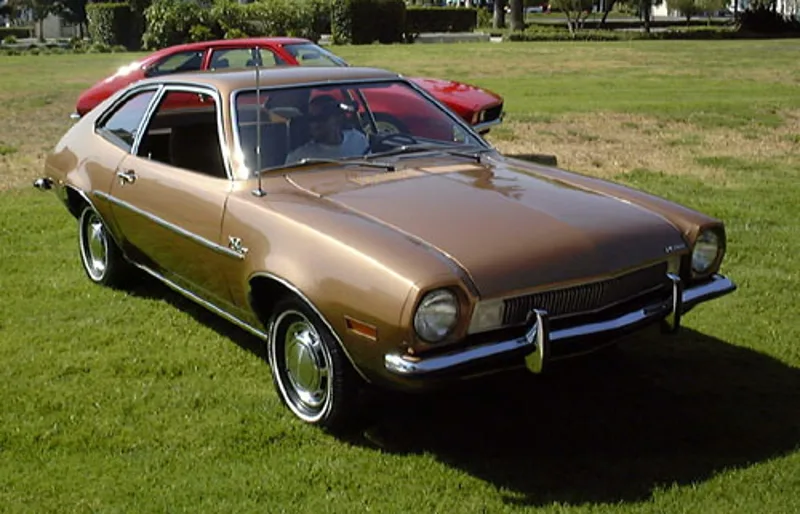
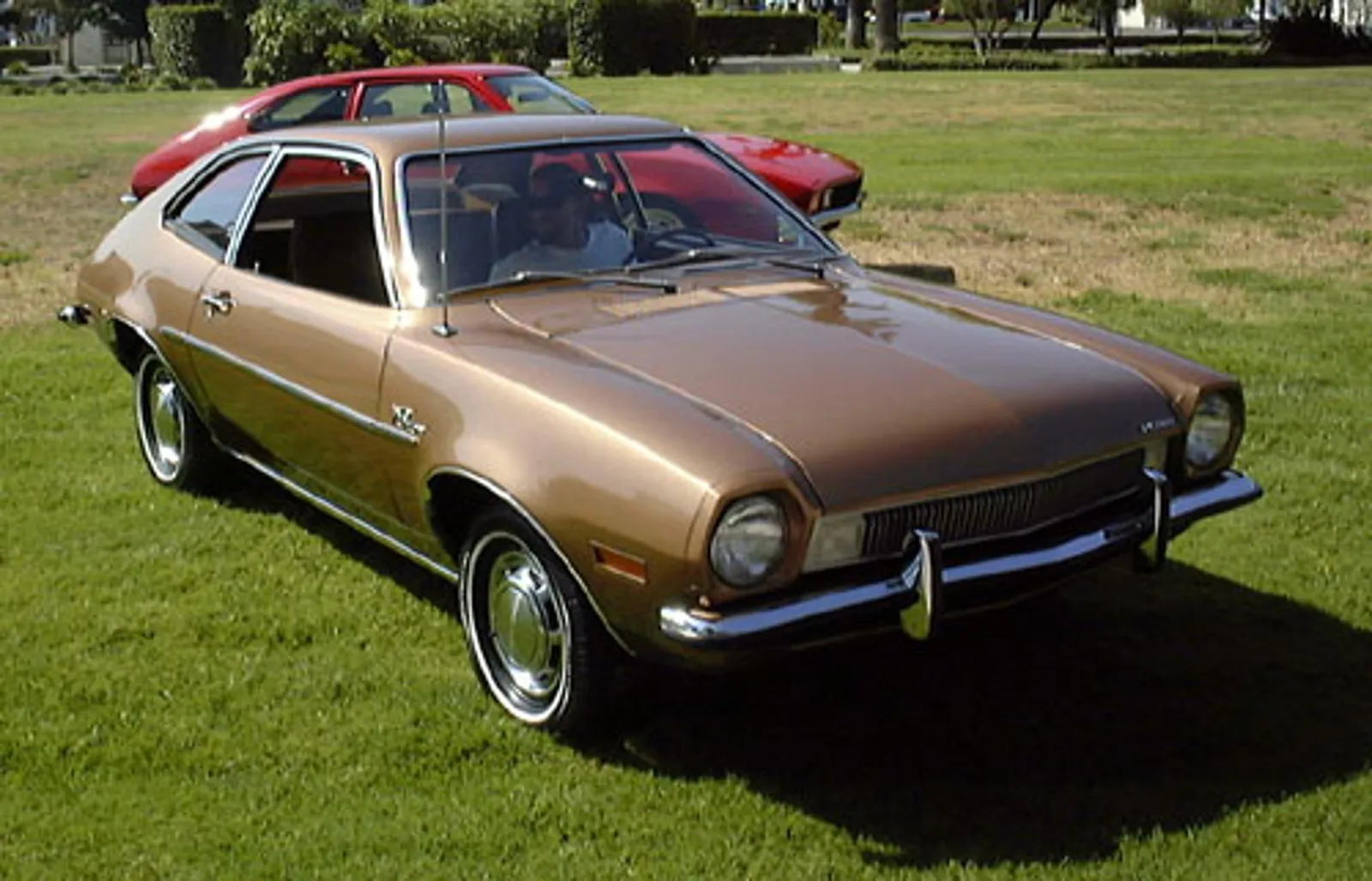
Grimshaw v. Ford Motor Company was a personal injury case tried in Orange County, California, with a verdict in February 1978 that an appellate court affirmed in May 1981. It concerned the safety of the Ford Pinto's design. In 1972 a Pinto was hit from behind and caught fire in San Bernardino. Driver Lilly Gray died, and passenger Richard Grimshaw, then 13, was severely injured. Their families filed separate suits that were joined for trial.
The jury awarded $127.8 million, the largest ever in a US product liability or personal injury case. Of that, $125 million was punitive damages, and the compensatory awards were $2,841,000 to Grimshaw and $665,000 to the Gray family. It was one of more than a hundred suits against Ford over rear-end Pinto accidents. The trial judge cut the punitive award to $3.5 million, which he said was still about five times larger than any other punitive award in the state. No larger verdict against an automaker came until a $150 million award in a 1996 case, Hardy against General Motors.
What the courts found about the Pinto
Ford began designing the car in 1968. The courts found that Lee Iacocca, then a vice president, conceived the project and drove it, with an objective of a car at or below 2,000 pounds that would sell for no more than $2,000. They described a rush project in which styling came before engineering. The styling placed the fuel tank behind the rear axle, rather than over it as was preferred practice in Europe and Japan, and left only 9 or 10 inches (23 to 25 cm) of crush space, less than any other American car or Ford's own overseas subcompacts. The courts also found a flimsy bumper and a rear structure without reinforcements used on Ford's overseas cars. A flange and line of bolts on the differential housing could puncture a tank pushed forward in a rear impact.
Ford crash-tested production Pintos and prototypes. Proposed federal rules called for rear impacts without significant fuel spillage, at 20 mph (32 km/h) by 1972 and 30 mph (48 km/h) by 1973. The Pinto failed. The tank was driven forward and punctured, and fuel could enter the passenger compartment through gaps in the floor. Modified prototypes with a rubber bladder, a tank above the axle or added reinforcement stayed safe at speeds where the standard car failed. The courts held that, after a failed test, the engineering standard was to redesign and retest, and that Ford sold the car without remedying the defects.
What the fixes would have cost
- Longitudinal side members: $2.40 each
- Cross members: $1.80 each
- Smooth differential housing: $2.10
- Protective shield between differential and tank: $2.35
- Improved rear bumper: $2.60
- Shock-absorbing flak suit for the tank: $4.00
- Tank within a tank, with the tank over the axle: $5.08 to $5.79
- Nylon bladder in the tank: $5.25 to $8.00
- Additional 8 inches (200 mm) of crush space: $6.40
- Tank over the axle with a protective barrier: $9.95
A package of reinforced rear structure, smooth axle, improved bumper and extra crush space, at $15.30 in total, would have made the tank safe in a 34 to 38 mph (55 to 61 km/h) rear collision by a car the size of a Ford Galaxie. Adding a bladder or shield would have raised that to 40 to 45 mph (64 to 72 km/h), and placing the tank over the axle to 50 mph (80 km/h) or more.
What did Ford management know?
Regular Pinto product reviews were chaired by Ford vice presidents, who also attended them, and the car was approved by a Product Planning Committee that included Iacocca. At an April 1971 review, Ford engineers distributed a report titled Fuel System Integrity Program Financial Review. It referred to crash tests and estimated the financial impact of changes to meet proposed federal fuel standards, and it recommended deferring fixes to bank cost savings. Ford's own engineers advised putting off flak suits or bladders, available for $4 to $8 per car, in all Ford cars until 1976, which allowed a saving of $20.9 million. Harley Copp, a former Ford engineer who had run the crash testing programme, testified that the top level of management chose to go ahead knowing the tank was vulnerable and that cheap fixes existed. The appellate court said a reasonable inference was that management deferred corrective measures to save money and boost profits.
Ford had objected that the report was irrelevant and prejudicial, and on appeal argued that the punitive damages lacked malice, lacked statutory authority and were unconstitutional. The court affirmed the trial verdict, finding no error serious enough to warrant reversal.
Reading the Pinto case with care
The case has been argued over since. Law professor Gary T. Schwartz, writing in 1990, called the verdict plausible but said the famous Ford report cannot be read as proof that Ford weighed lives against dollars. He thought trunk space and American custom best explained the tank's position. On the evidence, he put the cost of one combination of improvements, including a stronger bumper and a smooth differential, at $9, and considered it plausible that Ford rejected them mainly on cost.
Schwartz also warned that the appellate opinion should be treated cautiously as a source of fact, because the court had to take the evidence in the light most favourable to the plaintiffs. Ford's position at trial, which the opinion never mentions, was that the approaching Galaxie had not slowed and hit the Pinto at over 50 mph (80 km/h), a speed at which, the plaintiffs themselves argued, even the best fuel system could not hold. The Los Angeles Times wrote in 2010 that the verdict told carmakers they would be punished hard for ignoring known defects.
What it means for buyers
Both cases rest on records inside the companies. In the GM case the switch missed GM's own torque requirement. In the Pinto case the crash tests failed proposed federal limits. GM's recalls ran across Chevrolet, Cadillac and smaller brands, with Chevrolet at 1.4 million cars and Cadillac at over 2 million, so owners of many models were affected.
Where this goes next
The Grimshaw verdict stood after its 1981 appeal, and GM's deferred prosecution agreement, its $900 million forfeiture and its $600 million for surviving victims date from 2015. Multidistrict litigation over the ignition switch was described as continuing.