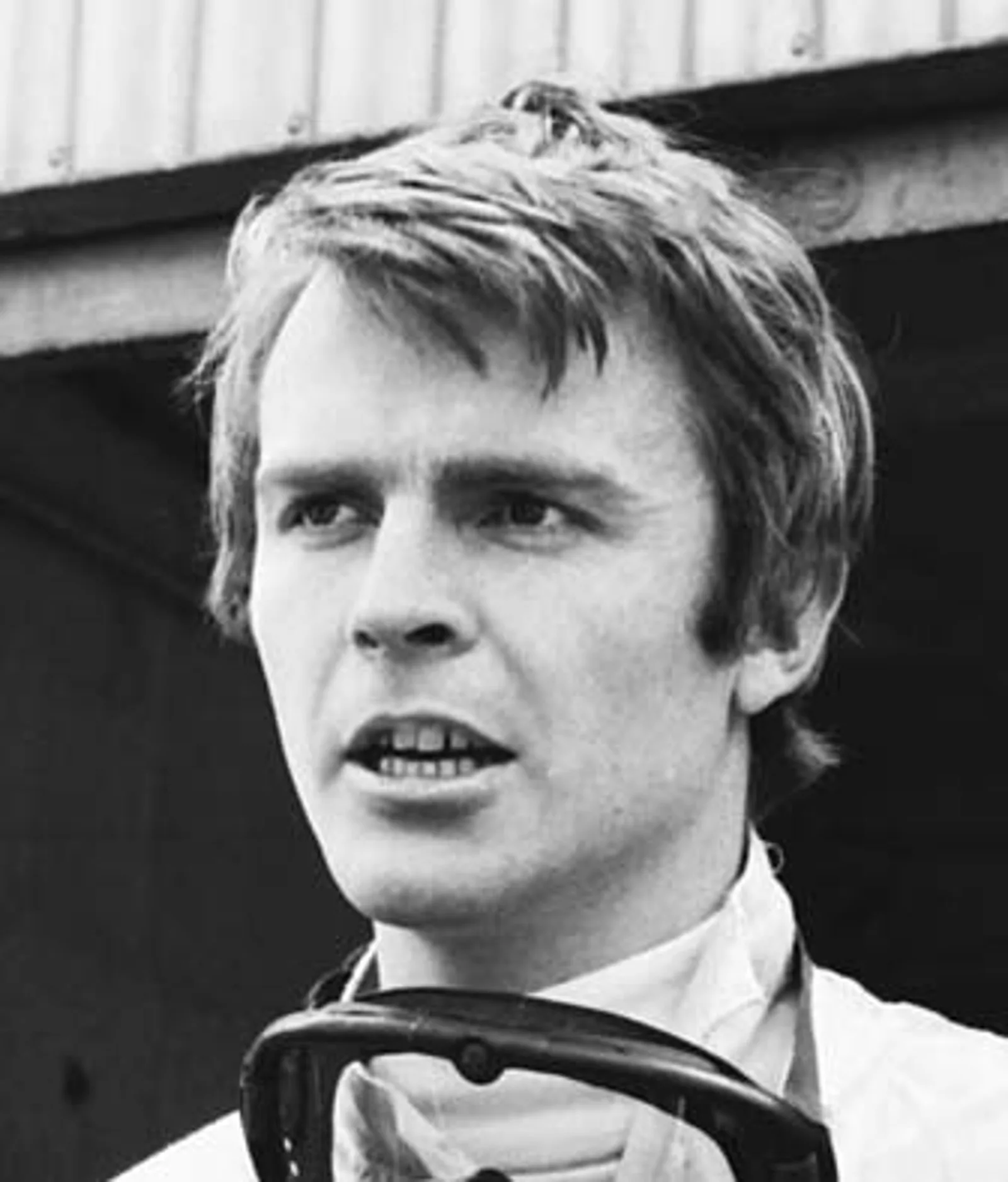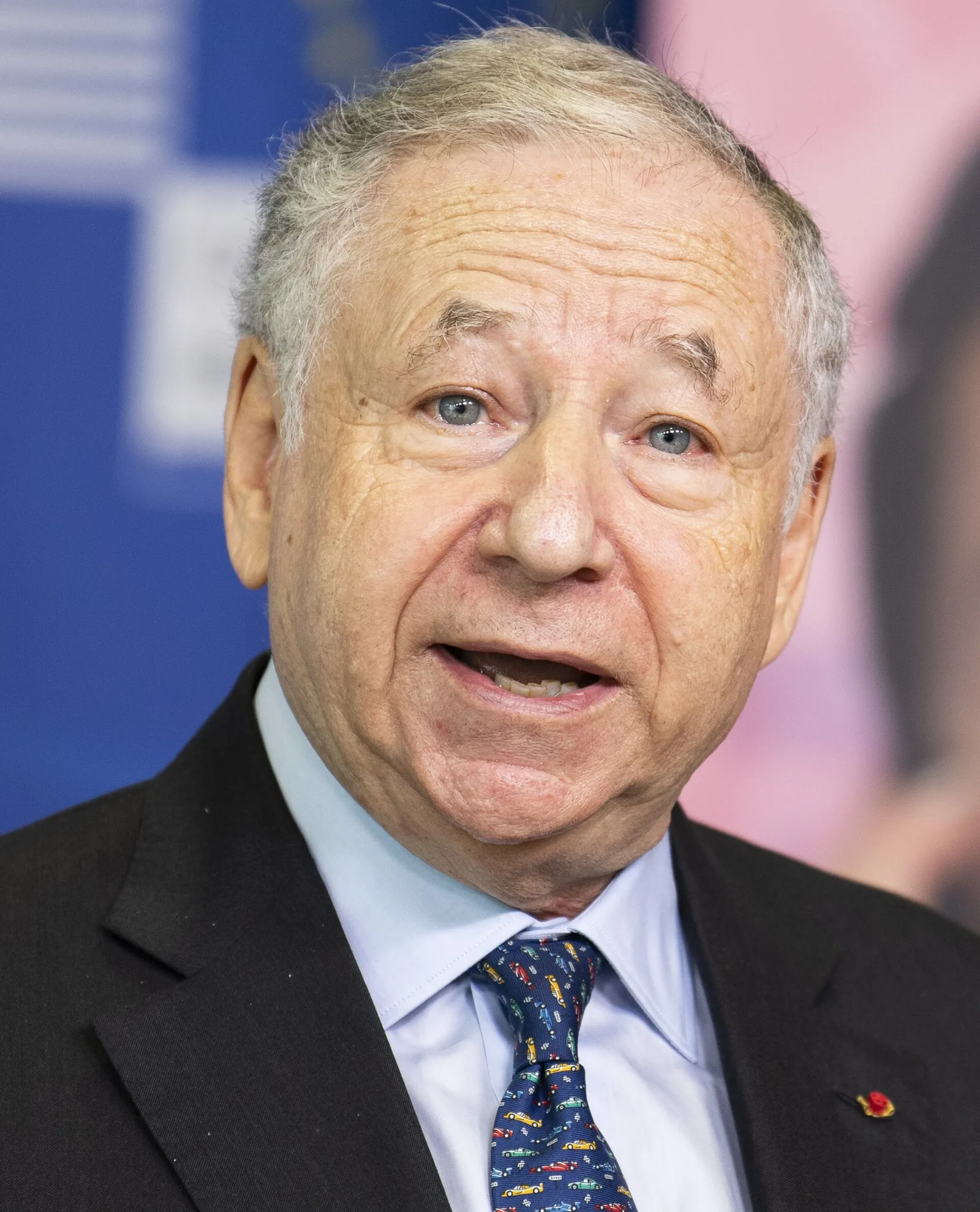
The FIA writes the rules, a company holds the commercial rights for 100 years and a secret contract decides who gets paid.
Liberty Media owns the Formula One Group, which holds the sport's commercial rights under a 100-year grant from the FIA. The FIA sets the sporting rules, while the secret Concorde Agreement fixes how television money and prize money are divided between the governing body, the teams and the group.
The people who write the rules of Formula One do not collect its money. The FIA handed the commercial rights to a company for 100 years from the start of 2011, and that company sits inside a group now owned by Liberty Media. Between the rule-makers, the owners and the teams stands a contract, the Concorde Agreement, which exists in nine versions.
The structure has three layers. The FIA is the legislator, the Formula One Group is promoter and landlord, and the Concorde Agreement is the treaty that fixes who races, who pays and who gets paid. Follow the money back through that treaty and the same characters keep turning up: Bernie Ecclestone, who spent 40 years running the commercial side, and Jean Todt, a Ferrari team principal who ended up as president of the FIA.
Who owns Formula One now?
Liberty Media does. It agreed in late 2016 to take control of the Formula One Group for $4.4 billion (3.3 billion pounds), and after regulators approved the deal it completed on 23 January 2017. The group is listed on Nasdaq as a tracking stock, under the tickers FWONA and FWONK.
Stefano Domenicali, a former Ferrari team boss, runs the group as president and chief executive; his appointment was announced in September 2020. Chase Carey, who ran it from 2017 to 2020, is non-executive chairman. In 2025 Liberty also took the majority of Dorna Sports, holder of the MotoGP and Superbike commercial rights, and placed it inside the same group.
The people who write the rules of Formula One do not collect its money.
What sits inside the Formula One Group?
A stack of subsidiaries, each holding a different slice of the sport's commercial life. The most important is Formula One World Championship Limited, which took the rights from the FIA for 100 years, starting in 2011, and replaced a sister company that had held them for a 14-year period beginning in 1996. The others handle broadcasting, branding, advertising and feeder series.
- Formula One World Championship Limited negotiates the contracts to stage Grands Prix, sells the television deals and collects licensing fees. It also sits on the FIA's World Motor Sport Council.
- Formula One Licensing BV, a Dutch company, claims the trademarks: the F1 logo, the names Formula 1, Formula One and F1, and the intro design shown before broadcasts of Grands Prix.
- Formula One Management produces the television feed of every session and supplies it to broadcasters through the Eurovision network from a base at Biggin Hill Airport in London. It also structures the calendar, with the FIA council overseeing, and puts up part of the investment for new tracks and new teams.
- Allsport Management, a Swiss company in Geneva, sells almost all of the trackside advertising and runs the Paddock Club, the corporate hospitality operation. Its founder, Paddy McNally, devised themed advertising, where one advertiser owns a whole stretch of track. Monaco is the only Grand Prix where Allsport plays no part.
- Formula Motorsport Limited, formerly GP2 Motorsport Limited, runs feeder series at the European rounds so that young drivers get seen by F1 teams.
CVC bought Allsport in 2006 and the feeder-series company a year later, which brought every revenue stream the sport has under the one roof.
What does the FIA control in Formula One?
Everything on the sporting side. The Federation Internationale de l'Automobile licenses and sanctions Formula One alongside the World Rally Championship, the World Endurance Championship, Formula E and others, and its World Motor Sport Council holds decision-making responsibility for every discipline it governs.
It is an old body. Founded in Paris on 20 June 1904 as a gathering of national motor clubs, it took its present name after the Second World War and is headquartered at 8 Place de la Concorde. It has two arms: a mobility division that speaks for road users and motoring clubs, and a sport division that governs racing. Membership is put at roughly 243 to 245 organisations in 147 to 149 countries. It organised the first World Championship for Drivers in 1950, and a constructors' title followed from 1958.
Authority runs upward through a General Assembly of member organisations, which amends the statutes, approves the budget and elects the officers. Its chairman is the president, elected for four years. Below sit the World Motor Sport Council, with seven vice-presidents chosen by the president, five automatic members and fourteen more approved by the assembly, and the International Court of Appeal, the final tribunal for international motor sport.
The response to the 2022 invasion of Ukraine shows how far that authority reaches. The FIA banned Russian and Belarusian teams, barred competitions in both countries, cancelled the Sochi Grand Prix that had been due on 25 September and terminated the contract to host it.
What is the Concorde Agreement?
A contract between the FIA, the teams and the Formula One Group that sets the terms on which the teams race and how television revenue and prize money are shared. It generally obliges the teams to take part in every race, which makes the sport dependable for the broadcasters who spend heavily on rights, and it gives the teams a percentage of commercial revenue in return.
The terms were kept strictly secret. Only one version has ever reached the public: the 1997 text, 120 pages long, which the racing journalist Forrest Bond published on RaceFax at the end of 2005.
How did the FISA-FOCA war lead to the first Concorde Agreement?
By 1980 the feud between the federation's sporting arm and the teams' association had cancelled several races and voided the Spanish Grand Prix. When Goodyear threatened to leave Formula One altogether, Ecclestone gathered the team managers and the federation's officials in Paris, and on 19 January 1981, after thirteen straight hours of talks, they signed.
The federation's sporting arm, FISA, was headed by Jean-Marie Balestre. Facing him was the Formula One Constructors Association, FOCA, founded in 1974 to give the teams commercial muscle, with Ecclestone as chief executive and Max Mosley as legal adviser.
The contract took its name from the Place de la Concorde in Paris, where the talks were held. Its terms stayed largely confidential, but it bound the signatory teams to enter every race and guaranteed them the right to do so, promising the new television audience a show to watch. FOCA gained the right to televise the races and leased it to a company Ecclestone owned. A third pillar was stable rules, which shielded the teams from sudden changes imposed by the governing body. The deal expired on 31 December 1987.
How did Bernie Ecclestone end up with the commercial rights?
Step by step, across four agreements. The first leased the television right to a company he owned. In 1987 he stopped owning a team and set up a firm to sell television rights for the teams. By 1995 the FIA was moving the commercial rights themselves to a company run by his side for 14 years, in return for an annual payment.
The firm set up in 1987, later renamed Formula One Management, took 49% of television revenue, with 1% going to the teams and 50% to the FIA.
For the third agreement Ecclestone sent his business partner Paddy McNally, who was fluent in French, to negotiate with Balestre. Balestre was unaware of how aggressively Ecclestone was expanding or how valuable the television rights had become. Mosley replaced him as FIA president in 1993.
The fourth agreement brought open revolt. McLaren, Williams and Tyrrell refused to accept the rights transfer. Ken Tyrrell was especially angry that Ecclestone, as president of FOCA, had negotiated it in favour of his own company, and he objected to an addendum being kept secret, arguing that secrecy would only benefit Ecclestone by weakening everyone else's bargaining power.
Everyone else signed on 5 September 1996, and the three holdouts paid for their stand, losing both influence and the income they would have received as signatories. A compromise followed on 27 August 1998 that brought them back in, with a new agreement running to the end of 2007. The car makers grew restless too, and a holding company formed by manufacturers threatened a rival championship for 2008.
The nine Concorde Agreements
| Agreement | Seasons | What defined it |
|---|---|---|
| First | From 1981, expired 31 December 1987 | Ended the FISA-FOCA war; teams committed to every race; television right leased to an Ecclestone company |
| Second | 1987 to 1991 | New company took the television rights, split 49%, 1% and 50% among it, the teams and the FIA |
| Third | 1992 to 1996 | Negotiated by McNally with Balestre |
| Fourth | 1997 to 2002 | Signed 5 September 1996 without McLaren, Williams and Tyrrell; rights moved for 14 years |
| Fifth | 1998 to 2007 | Compromise signed 27 August 1998 that accommodated the three holdouts |
| Sixth | 2008 to 2012 | Extensions and a memorandum, then a full deal in 2009 |
| Seventh | 2013 to 2020 | Bilateral deals with the Formula One Group, plus an implementation agreement with the FIA |
| Eighth | 2021 to 2025 | Budget cap, new prize money distribution, up-front fee for new entrants |
| Ninth | 2026 to 2030 | Commercial deal in force 1 January 2026 with all 11 teams; governance deal signed 12 December 2025 |
How did the later agreements change the deal?
They loosened the structure and then reset it. The sixth was patched together from extensions and a memorandum before a full deal arrived in 2009; the seventh dissolved into one-to-one contracts with the Formula One Group; the eighth, signed in August 2020, brought a budget cap and an entry fee for newcomers.
The sixth began with a bid. On 7 December 2004, at a meeting of team bosses that Ferrari did not attend, Ecclestone offered 260 million pounds over three years for unanimous renewal. Ferrari announced its own extension to the end of 2012 in January 2005, and others followed through the year. A 2009 dispute between the FIA and the teams' new association ended with an agreement signed by Mosley and all the teams, which continued the terms of the 1998 deal until the end of 2012 and came with a programme of resource restriction.
The seventh took far longer than promised. The FIA expected a settlement within weeks in October 2012; it came in September 2013. Strictly it was not a Concorde agreement at all, being separate bilateral contracts between Ecclestone's group, the FIA and each team. A Concorde Implementation Agreement signed by the FIA and the group in July 2013 ran out on 31 December 2020. A promised multi-party agreement never materialised.
The eighth was the most public. Talks began in 2017, the deadline slid to 31 October 2019 and the pandemic delayed matters further. Mercedes team principal Toto Wolff voiced dissatisfaction with a budget cap from 2021 and changed prize money distribution. After talks with Chase Carey, Wolff changed his stance. On 18 August 2020 Ferrari, McLaren and Williams announced they had signed, and the next day Formula One said the rest had too. It was the first agreement under Liberty, in force from 1 January 2021.
Where does the money come from, and who gets it?
Teams receive 50% of the television money, shared out in Constructors' Championship order, plus a prize fund based on results that is drawn from the fees promoters pay to stage a race. Formula One Management also covers a set amount of transport for the teams at races outside Europe.
The eighth agreement added a protective layer for existing teams. A new entrant must pay $200 million up front, shared equally among the 10 existing teams, and gains a revenue share in its first year; previously newcomers only collected prize money from their second year. Cadillac, approved in March 2025 to join in 2026, must pay $450 million.
From Kirch to CVC to Liberty, who owned the Formula One Group before?
A succession of financiers and one collapsed media empire. In June 1999 the European Commission announced an investigation into the FIA and two Formula One companies for abusing a dominant position. Outside money followed: Morgan Grenfell Private Equity paid 234 million pounds for 12.5% of the holding company in October 1999, and Hellman and Friedman paid 625 million pounds for 37.5% in February 2000. The German media company EM.TV bought their joint vehicle for 1.1 billion pounds on 22 March 2000.
That purchase nearly sank EM.TV. Its share price fell 90%, and the Kirch Group rescued it in return for control, borrowing 1.6 billion euros to lift the stake. Kirch's creditors forced the company into receivership in 2002, and its share passed to three banks. They sued Ecclestone for more control in November 2004, and Justice Andrew Park sided with them on 6 December, though Ecclestone insisted the verdict meant nothing at all.
CVC Capital Partners then moved in. After the European Commission approved the deal on 21 March 2006, it bought out the banks, and on 30 March 2006 bought Lehman Brothers' 14.1% to reach 63.4% of the group. A Singapore flotation planned for June 2012, valuing the group at $10 billion, stalled; CVC sold part of its holding to Waddell & Reed, BlackRock and Norges Bank, cutting its stake to 35.5%. Liberty's purchase followed a few years later.
Jean Todt, from rally co-driver to FIA president
Born in Pierrefort in the Auvergne on 25 February 1946, Todt began as a rally co-driver in 1966 and soon decided that calculation, strategy and organisation were his strengths. Over fifty-four world championship rallies he took four victories, and with Guy Frequelin in a Talbot he won the manufacturers' World Rally Championship in 1981.
Appointed Peugeot's director of racing that year, he built Peugeot Talbot Sport. The 205 Turbo 16 won the manufacturers' world titles of 1985 and 1986, the team took four straight Paris-Dakar victories from 1987 to 1990, and the 905 won Le Mans in 1992 and 1993. On the 1989 Dakar he settled a rivalry between his drivers Ari Vatanen and Jacky Ickx with a coin toss.
Ferrari recruited him in 1993 to run its racing division, and he was the first non-Italian to head the Scuderia since Marco Piccinini. The team had not won a drivers' title since 1979. At the end of 1995 he asked Michael Schumacher to join, then brought in Rory Byrne and Ross Brawn. Ferrari won the constructors' title in 1999, and Schumacher took five straight drivers' titles from 2000 to 2004. In all, Ferrari teams won 13 titles under Todt, with Schumacher scoring 72 of his 91 victories. Todt became Ferrari chief executive on 1 June 2004 and resigned all his functions at the company in March 2009.
On 23 October 2009, with the backing of the outgoing president Mosley, Todt won the FIA presidency by 135 votes to Ari Vatanen's 49. He was re-elected unopposed in 2013 and 2017, and his term ended in December 2021; the Saudi Arabian Grand Prix that year was the last race he attended as president. Mohammed Ben Sulayem succeeded him. Since 2015 Todt has also served as a United Nations envoy for road safety.
Where this goes next
The ninth Concorde Agreement is the one now in force. Its commercial part, signed by all 11 teams on 16 March 2025, runs for the seasons from 2026 through 2030 and took effect on 1 January 2026. The governance part was announced as signed by Formula 1, the FIA and all 11 teams on 12 December 2025. Cadillac were approved to join in 2026, Liberty has added the commercial rights of MotoGP to the group, and at the FIA the chief executive post created in 2022 had no holder as of August 2024.