A triple-voltage standard was planned in the 1990s and mostly abandoned by 2009, while 48 volts quietly arrived in mild hybrids and the Cybertruck.
Cars run on 12 volts because lead-acid batteries and bulbs suit it, and because 12-volt systems proved able to do jobs once thought to need more. A 42-volt standard planned in the late 1990s was mostly abandoned by 2009, while 48-volt systems spread in mild hybrids. Fuses guard the wiring.
In March 2023 Tesla began building the Cybertruck with a 48-volt electrical system, the first production vehicle to use 48 volts for its entire low-voltage side. It was an odd moment, because the car industry spent the late 1990s planning a move to 42 volts, then dropped the plan, and watched a humble 12-volt standard carry on for decades afterwards.
The 12-volt system survived because it kept managing the jobs 42 volts was supposed to take over, and the fuse box under the dash still guards every circuit on it.
Why cars run on 12 volts
The 12 is not exact. A six-cell lead-acid battery produces around 12.6 volts when it is discharging, and the alternator that recharges it is designed to produce 13.5 to 14.5 volts. A so-called 12-volt system typically runs at about 13.8 volts, which is why engineers sometimes call it a 14-volt system. Depending on operating conditions, the voltage in a car today can swing between 6.5 and 16 volts, with ripple riding on top.
Habit played a part, and so did hardware. Incandescent light bulbs work well at 12 volts, and switching a 42-volt circuit is harder than switching a 12-volt one. Applications once thought to need higher voltages, electric power steering among them, were later achieved on 12 volts after all.
The 42-volt standard was exactly triple the 12 volts it was meant to replace.
What the 42-volt plan was meant to fix
A 42-volt electrical power standard was proposed in the late 1990s. It aimed to support increasingly powerful electric accessories and lighter wiring harnesses. Electric motors for power steering and other systems promised more compact installations, with no drive belts and no heavy cables for high-current loads.
The proposed figure was exactly triple the existing 12 volts. It was chosen to give wiring and devices more power capacity while staying under the 50-volt guideline for electric shock hazard. Daimler-Benz proposed the brand name 42V for the conversion.
The arithmetic of wiring explains the appeal. With three times the voltage, a thick conductor can shrink to a third of its cross-section, and the relative voltage drop also falls to a third. Keep the same cross-section and the relative drop is no more than one ninth. Those arguments, along with lower weight and better stability, produced a voltage so close to three times the existing one that 42 became the obvious second level.
How a 42-volt standard was built
The Society of Automotive Engineers discussed a higher standard voltage as early as 1988. In 1994, on the initiative of Daimler-Benz, a first workshop on automotive electrical distribution was held at the Massachusetts Institute of Technology (MIT), with suppliers, Ford and General Motors taking part from the start. In Europe, Daimler-Benz also drove the first Vehicle Electrical System Forum, held in Hanover in 1994 for German manufacturers.
In September 1995 the MIT group used a tool called MAESTrO to compare architectures at 12 volts, 12/24 volts DC, 12/48 volts DC and 12/60 volts AC. It concluded that the highest possible direct voltage was the best alternative, and in December 1995 it set the future level at approximately 40 V. A consortium was set up in early 1996, and a workshop in March 1996 confirmed 42 V.
The European side kept pace. BMW presented its 42V/14V PowerNet in June 1996, and the cooperation between BMW and Daimler-Benz produced a joint Load List 2005 and a draft specification for a dual-voltage system. On 6 March 1997 BMW presented its draft in Hanover, and on 24 March 1997 Daimler-Benz handed MIT its own.
The nominal figure also came from the charging system. The existing six-cell lead-acid system is described as nominally 14 volts, and 42 volts approximates the output of the new standard's charging system. The 14-volt branch of a dual system was meant to be freed of higher-power loads and to run within much narrower limits, and loads could be converted gradually as needed.
| System | Nominal voltage | Where it stands |
|---|---|---|
| 12-volt | About 12.6 volts discharging, 13.5 to 14.5 volts charging | Still the main automotive standard |
| 42-volt | Triple 12 volts; 36-volt lithium-ion battery with 42-volt charging | Plans mostly abandoned by 2009; Volvo used it in some mild hybrids |
| 48-volt | Added on top of a 12-volt network | Popular in mild hybrids from the 2010s; Cybertruck uses it for the whole low-voltage system |
Why 48 volts was ruled out, and 42 never arrived
The voltage ceiling was a shock-hazard protection limit of 60 volts, which must not be exceeded even during voltage swings in extreme conditions. That limit eliminated a nominal 48-volt battery system from the 1990s analysis, because at low temperatures the charging voltage can reach 60 V. Cell count mattered as well: the price, weight and volume of a battery rise with the number of cells, so it had to be kept to a minimum.
Lead-acid batteries were cheap and had a forgiving charge and discharge characteristic, and new battery technologies would not have been available at affordable cost for a 42 V/14 V PowerNet. Semiconductor makers found that roughly 40 V suited their devices.
Many manufacturers predicted a switch, but the 42-volt changeover did not occur by the early 21st century, and plans were mostly abandoned by 2009. Higher-efficiency motors, new wiring techniques and digital controls took away much of the need. A focus on hybrid systems with high-voltage starter-generators did the rest. By the late 2000s 42-volt components were found in only a few applications. Volvo used 42 V for some of its mild hybrids.
The 48 volt mild hybrid arrives
In the 2010s, 48-volt systems became popular. The spread of hybrid technology led to 48 volts in mild hybrids, which add electric boost to an internal combustion engine and recover some energy during braking to save fuel.
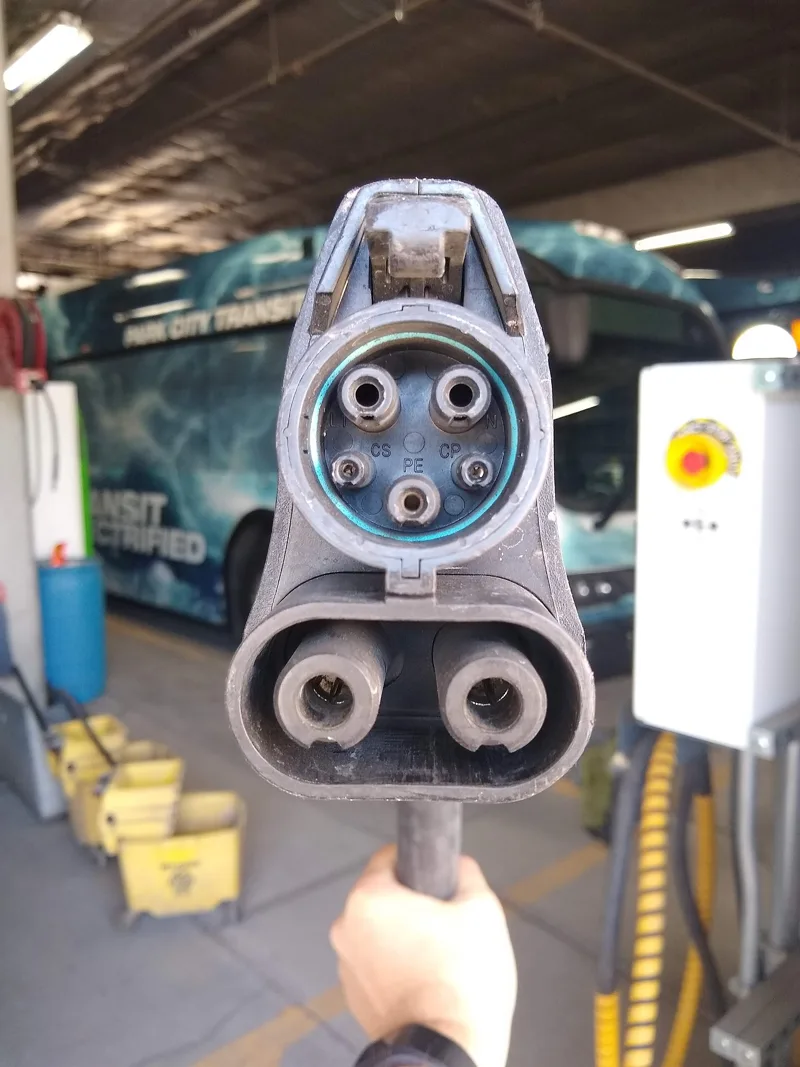
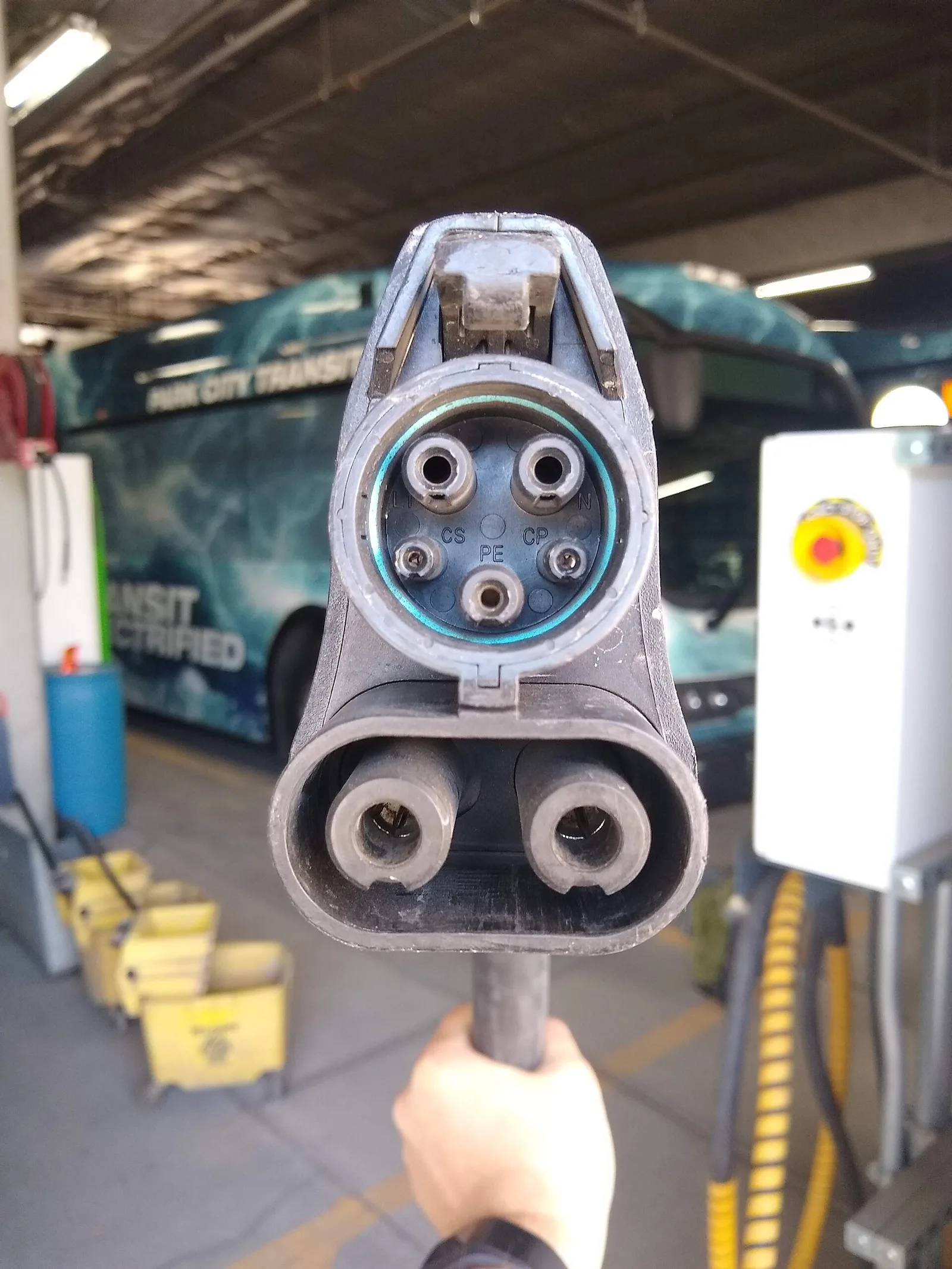
In 2011 several German car makers agreed a 48-volt on-board network on top of the existing 12-volt one, and introduced the Combo plug, a shared plug for DC charging of electric vehicles. By 2018 the 48-volt system had been applied in production vehicles such as Porsche and Bentley SUVs, and Volvo and Audi planned to use it in 2019 vehicles. The Cybertruck followed in March 2023, and Tesla has indicated that its next-generation vehicle will use a 48-volt low-voltage system as well.
What the fuse box protects
Automotive fuses guard the wiring and electrical equipment. They are generally rated for circuits no higher than 32 volts DC, although some types are rated for 42-volt systems. They normally sit in one or more fuse boxes, also called an integrated power module, on one side of the engine compartment or under the dash near the steering wheel. Individual fuses or circuit breakers may be elsewhere, such as near the cabin fan or the airbag controller. Circuit breakers that reset with a switch also exist.
One fuse is worth knowing about: the ignition off draw fuse controls the current drawn while the vehicle is switched off. Leaving it out for more than a few weeks prevents excessive depletion of the battery.
Car fuse types
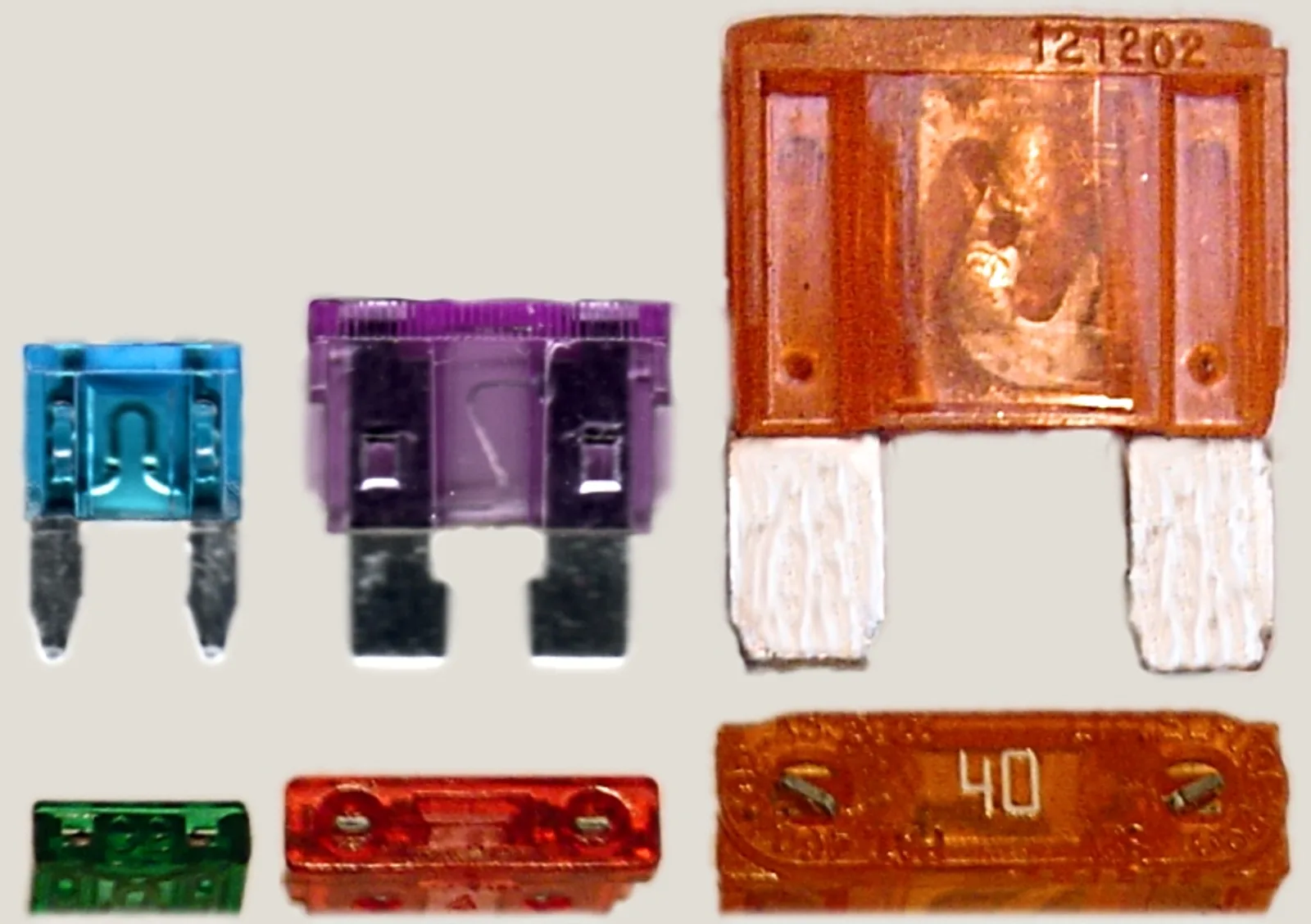
Blade fuses, also called spade or plug-in fuses, are the type mostly found in cars. A plastic body carries two prongs that fit into sockets, and the rated current in amperes is printed on top. They come in six physical sizes: Micro2, Micro3, low-profile mini, mini, regular and maxi. The regular size was developed as the ATO by Littelfuse in 1976, and the mini followed in the 1990s. Maxi is the heavy-duty one. Bussmann makes an equivalent regular fuse that meets the same ISO and SAE standards, and OptiFuse is a newer entrant.
Blade fuses use a common colouring scheme for the Micro2, Micro3, low-profile mini, mini and regular sizes, with a partial similarity for the maxi, so the colour tells the rating. Where space allows, a miniature circuit breaker can replace a blade fuse in the same holder.
| Type | Where found | Notable detail |
|---|---|---|
| Blade | Most cars; also campers and boats | Six sizes from Micro2 to maxi |
| Cartridge | Automotive applications | MCASE, MCASE+, JCASE and low-profile JCASE |
| Bosch | Old, often European cars | 6 x 25 mm with conical ends, colour-coded by rating |
| Lucas | Old British cars | Printed figure is twice the continuous rating |
| Glass tube (SFE) | North American cars up to at least 1981 | 32 volts DC, 4 to 30 amperes |
| Limiter | Close to starter battery fuse boxes; electric vehicles | Metal strip for currents over 10 amperes |
Bosch, Lucas and glass tube fuses in older cars
Bosch fuses, known variously as ceramic, porcelain, continental, torpedo or European, measure 6 x 25 mm with conical ends, and follow DIN standard 72581/1. Lucas fuses turn up in old British-made or British-assembled cars, as ceramic types 1 inch or 1.25 inch long with conical ends, or as glass tubes with straight ends. A Lucas fuse has three ratings. The number stamped on it is the continuous fusing current, twice the continuous amperage the circuit should be carrying, which can mislead anyone replacing it with a different make. The Lucas quarter-inch glass fuse is 29 mm long, against 32 mm for the American standard, though many Lucas holders accept the longer American one.
North American cars up to at least 1981 protected their circuits with cylindrical glass cartridge fuses rated 32 volts DC and from 4 to 30 amperes. They are known as SFE fuses, because the Society of Fuse Engineers designed them to prevent anyone inserting a grossly inadequate or unsafe fuse. Lookalikes labelled AG are rated for 125 or 250 volts AC and are not meant for car circuits; the AG label is variously said to stand for Automobile Glass or All Glass.
Limiter fuses, or fusible links, are a metal strip for currents over 10 amperes. The element melts and creates a high resistance, cutting the size and length of the current to protect the circuit and equipment. At least one manufacturer also supplies a fuse with a built-in lamp that lights when the link has melted, to speed identification of the blown one.
What this means for anyone with a car or a fuse box
The rating printed on a blade fuse is the figure to match when replacing it, and the colour follows the rating. Older cars are less forgiving: Bosch, Lucas and glass-tube fuses each have their own conventions, and the Lucas habit of printing a fusing current rather than a working current is a trap. In the newest cars the voltage on the other side of the fuse is changing, with a 12-volt network able to share the car with a 48-volt one.
Where this goes next
The 48-volt network sits beside the 12-volt one rather than replacing it. That is the arrangement the German makers agreed in 2011, and it is the one in the mild hybrids already on sale. The Cybertruck goes a step further by running its whole low-voltage side at 48 volts.