The elements are not scarce, the magnets are strong, and the supply is concentrated. Why many electric motors use neodymium, and the alternatives being tried.
Many EV motors use neodymium magnets because they are the strongest commercial permanent magnets, so motors can be smaller and lighter. Rare earths are not scarce, but China supplied around 90% of demand in 2019. Alternatives include recycling and switched reluctance motors, which have no rotor magnets.
The rare-earth elements are not rare. Cerium, one of them, is the 25th most abundant element in the Earth's crust at 68 parts per million, which is more than copper. The trouble is that they are spread thinly through rock as trace impurities, so getting usable purity means processing enormous amounts of ore, and in 2019 China supplied around 90% of the world's demand for the 17 rare-earth powders.
What are rare-earth elements?
The rare-earth elements are a family of 17 soft, heavy, silvery metals that are almost impossible to tell apart: the 15 lanthanides together with scandium and yttrium. Their compounds serve in electrical and electronic parts, lasers, glass, magnets and industrial processes. The name is a misnomer. They are not scarce; they are found only in compounds, never as pure metals, and they are hard to isolate and purify. They are also often found alongside thorium and, less commonly, uranium, and that co-occurrence with radioactive deposits has made some nations more conscious of pollution and human rights questions.
Their discovery began in 1787 with a black mineral, gadolinite, from a quarry in the village of Ytterby in Sweden, and four of the elements carry names derived from that single village. Separating them proved so hard that false discoveries ran to dozens. The last to be found, promethium, was produced synthetically in 1945, and in the 1940s Frank Spedding and others developed ion-exchange procedures for separating and purifying them, during the Manhattan Project.
Chemists group them as light or heavy by atomic number. Lanthanum to promethium, numbers 57 to 61, are commonly called light and those from 62 up are heavy, though authors classify them inconsistently. By 2015 most of the output was going into catalysts and magnets, and the move toward renewable energy technologies such as electric vehicles and wind turbines, along with advanced electronics and defence uses, has since added to demand. The environmental effects of extracting and processing them are still being explored.
Rare earths are plentiful in the crust. Usable ones are not, and the processing is concentrated in a few places.
What is a neodymium magnet?
A neodymium magnet, also called NdFeB, is a permanent magnet cast from an alloy of three elements, neodymium, iron and boron, in the crystal form Nd2Fe14B. It is the most widely used rare-earth magnet and the strongest permanent magnet available commercially. General Motors and Sumitomo Special Metals developed it independently and almost at once in 1984, spurred by the high raw materials cost of the samarium-cobalt magnets that came before. GM founded Magnequench in 1986 to commercialise its bonded version, while Sumitomo's sintered version passed to Hitachi, and Hitachi has since accumulated over 600 patents on the technology.
Strength is why they spread. Because they are stronger, smaller and lighter magnets can do a given job, which is why neodymium has replaced other types in cordless tool motors, hard disk drives, magnetic fasteners, loudspeakers, power steering and motors that drive hybrid and electric vehicles. A Toyota Prius needs one kilogram (2.2 lb) of neodymium in its electric motors.
Where does the strength come from?
Think of a crystal that has a strong preference. The Nd2Fe14B structure magnetises readily along one axis and resists any other direction, a property called high uniaxial magnetocrystalline anisotropy. During manufacture the microscopic grains are lined up in a powerful field so that their axes all point the same way. The crystal lattice then refuses to turn its direction of magnetisation, which gives the alloy very high coercivity, or resistance to demagnetisation.
Atomic structure adds to it. A neodymium atom has 4 unpaired electrons against roughly 3 in iron, and aligned spins generate the field. The compound reaches a saturation magnetisation of about 1.6 T and a remanent magnetisation of typically 1.3 teslas. The potential magnetic energy stored is about 18 times that of common ferrite magnets for the same volume, and 12 times for the same mass, and higher than in samarium cobalt. Neodymium and iron are more plentiful than samarium and cobalt, and the alloy contains relatively little rare earth, 12% by volume and 26.7% by mass, so the price stays below that of samarium-cobalt magnets.
Sintered grades are rated by maximum energy product, from N28 up to N55, with N64 as the theoretical ceiling. Letters after the number indicate coercivity and the highest operating temperature, from a default of up to 80 C (176 F) to 230 C (446 F) for the TH grade.
Heat and rust
Neodymium magnets have weak spots, and heat is the first. Their coercivity is high at room temperature but falls drastically once the temperature goes above 100 C (212 F), until the Curie temperature of around 320 C (608 F). That limits the efficiency of the magnet in hot places such as wind turbines and hybrid vehicle motors. Adding dysprosium or terbium curbs the fall, and special alloys with those elements tolerate higher temperatures, but they cost more to produce.
Corrosion is the second. Sintered Nd2Fe14B tends to corrode, especially along grain boundaries, and the damage can crumble a magnet into powder or flake off a surface layer. Most commercial products protect it with nickel, nickel-copper-nickel or zinc plating, or with polymer and lacquer coatings.
Why do EV motors use rare-earth magnets?
The case rests on magnet strength. A magnet that packs so much energy into a small, light piece is attractive in a drive motor, and the Prius example shows the quantities involved. The same properties explain the dependence on supply: dysprosium or terbium where the magnets run hot, coatings against rust, and a raw material that is costly and energy-intensive to refine.
Where does the supply sit?
China dominates the world's rare-earth reserves and production. Between 1985 and 1995 it raised its share of production from 21% to 60%, a rise attributed to tax cuts, favourable credits, cheap labour and a lack of environmental regulation. Beijing has restricted the supply and sale of rare earths since around 2010. Further Chinese restrictions followed in 2025, after the United States escalated its trade war with China, and countries with known reserves responded by stepping up their exploration and output.
| Measure | Figure | Detail |
|---|---|---|
| China's supply of the 17 rare-earth powders | Around 90% of global demand | 2019 |
| China's share of rare earth element production | More than 95% | A separate estimate, which also gives about 76% of the world's rare-earth magnets |
| NdFeB output worldwide | Roughly 220,000 to 240,000 tonnes | Analysts' estimate for 2024; at least 85% made in China |
| Japan's share of the NdFeB market | About 7% | Second-largest producer |
| Vietnam's share of the NdFeB market | Around 1% | 2023, expanding as new factories open |
The figures differ by measure and by year. Outside China, as of 2025 the United States ranks second in output and Australia third, while Brazil has the second-largest reserves. Magnet capacity in the United States and Europe is small but growing, supported by industrial policy. In January 2027 a US defense procurement restriction is scheduled to begin, barring rare-earth metals and magnets of Chinese origin from American defense systems.
Can the dependence be reduced?
Substitutes and recycling
America's Department of Energy has said substitutes for rare-earth metals in permanent magnets are needed, and has paid for research. Its Advanced Research Projects Agency-Energy sponsored the Rare Earth Alternatives in Critical Technologies programme, and in 2011 awarded US$31.6 million to rare-earth substitute projects. Some have argued that neodymium will be a prime subject of geopolitical rivalry in a renewable-energy world, but critics reply that most wind turbines use no permanent magnets and that economic incentives to expand production are stronger than the argument allows.
Recycling is a growing research and industrial focus. Several routes are in development: machining scrap or old magnets can be processed with hydrogen into a powder that is re-sintered into new magnets; acid can dissolve the magnets so that rare-earth oxides are separated by solvent extraction or precipitation, which gives high purity but needs large volumes of chemicals; high-temperature smelting recovers rare-earth alloys but uses a lot of energy; and an emerging process called selective extraction, evaporation and electrolysis aims to use fewer chemicals and produce alloys that can go straight back into magnet manufacture.
Pilot projects are under way. The American start-up HyProMag USA is planning an industrial-scale recycling plant close to Dallas-Fort Worth, expected to open in 2027 and to handle about 750 tonnes of recycled magnets a year. The EU-funded SUSMAGPRO project in Europe has shown pilot-scale recycling of magnets from loudspeakers, motors and wind turbines. Japan's Envipro Holdings has signed a memorandum with HyProMag to run recycling trials on scrap from the Japanese market.
The switched reluctance motor
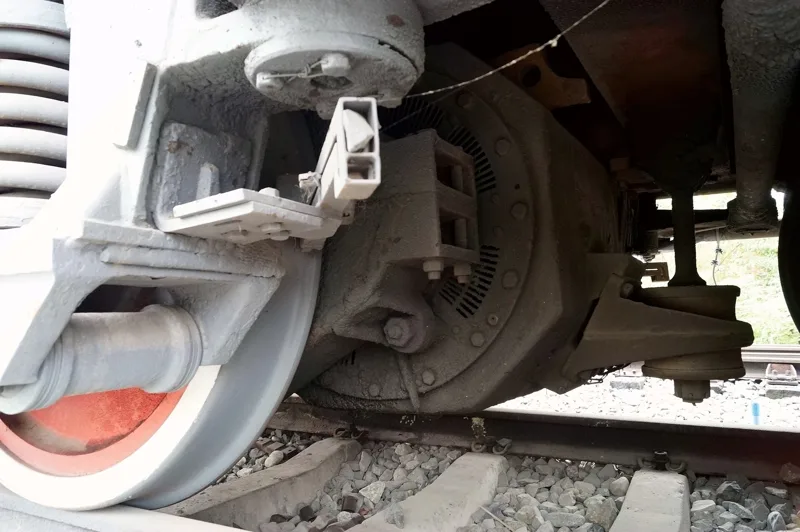
A different answer is to remove the magnets. In a switched reluctance motor (SRM), power goes to windings in the stator and the rotor has no magnets or coils at all. The rotor is a solid piece with salient poles, cut from soft magnetic material, usually laminated steel. Power a stator winding and magnetic reluctance exerts a force on the rotor that tries to line a rotor pole up with the nearest stator pole. An electronic position sensor reads the angle of the shaft and solid-state electronics switch the windings in sequence so that the stator field stays ahead of the rotor and pulls it round, in place of a mechanical commutator.
The attractions are cost and robustness. No electric motor is cheaper to build than the simplest SRM. Because the windings are electrically isolated from one another, the motor is more fault tolerant than an induction motor, and if a phase is disconnected it may continue to run at lower torque. It has no slip, so the rotor position can be known exactly. The power circuit can switch at a frequency as much as 10 times lower than for AC motors, and an asymmetric bridge converter feeds the energy stored in a winding back to a capacitor for re-use, which improves efficiency.
The drawbacks are mostly in the electronics. Delivering power to different windings complicates the electrical design, a switching system has to limit torque ripple, and the ideal drive waveform is not a pure sine wave. The first patent was granted to W. H. Taylor in the United States in 1838, and the principles were described around 1970 and developed further by Peter Lawrenson and others from 1980. At the time some experts thought the technology unfeasible, and practical use has been limited, partly through control problems and unsuitable applications, and partly because low production numbers keep the cost high. It is found in some appliances, in magnetic levitation trains, in industrial sewing machines and in wave energy converters, and it also suits explosive atmospheres, mining among them, since there is no commutation.
What this means for someone buying an electric car
The motor choice is made by the maker. A permanent magnet motor typically relies on neodymium, with dysprosium or terbium added if the magnets run hot, and with supply concentrated in one country. A magnet-free design avoids that dependence, at the price of more demanding control electronics.
Where this goes next
Several dates are on the calendar. The American defense procurement rule on Chinese-origin rare earths and magnets is scheduled for January 2027, and HyProMag USA's Dallas-Fort Worth recycling facility is expected to begin operations in 2027. Countries with known reserves have been ramping up exploration and output since China tightened its restrictions in 2025, and Vietnam's magnet output is expanding as new factories come online. Research into substitutes continues under programmes such as REACT.