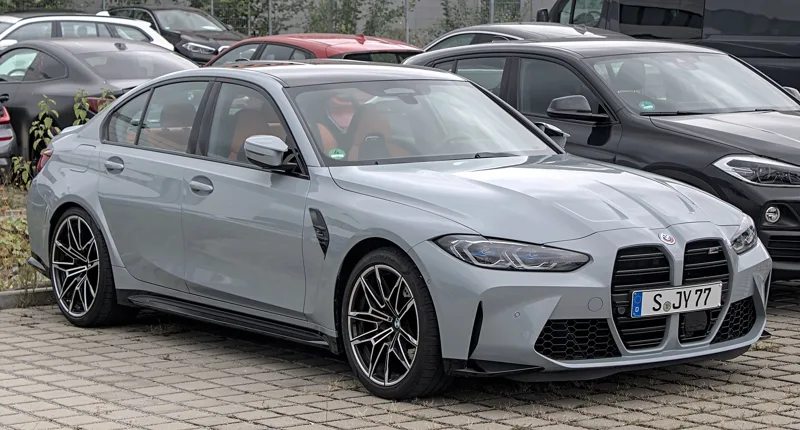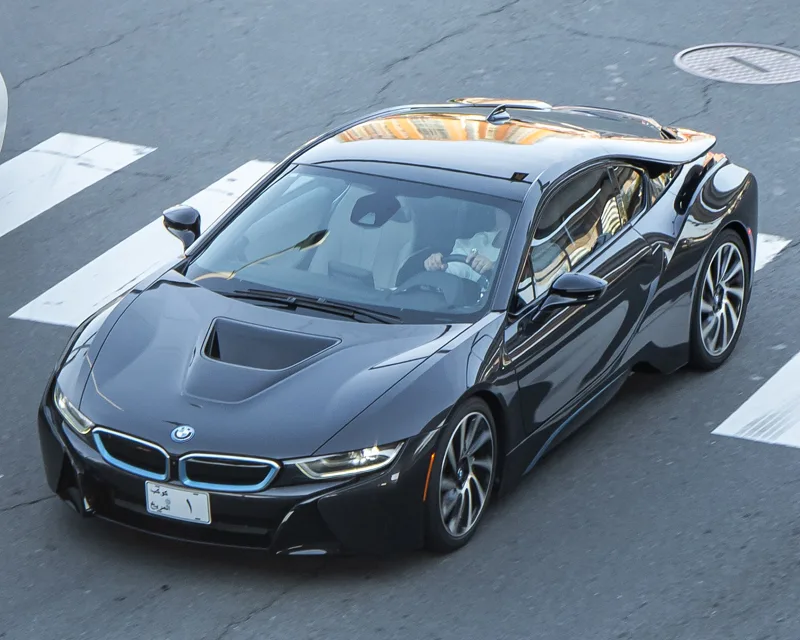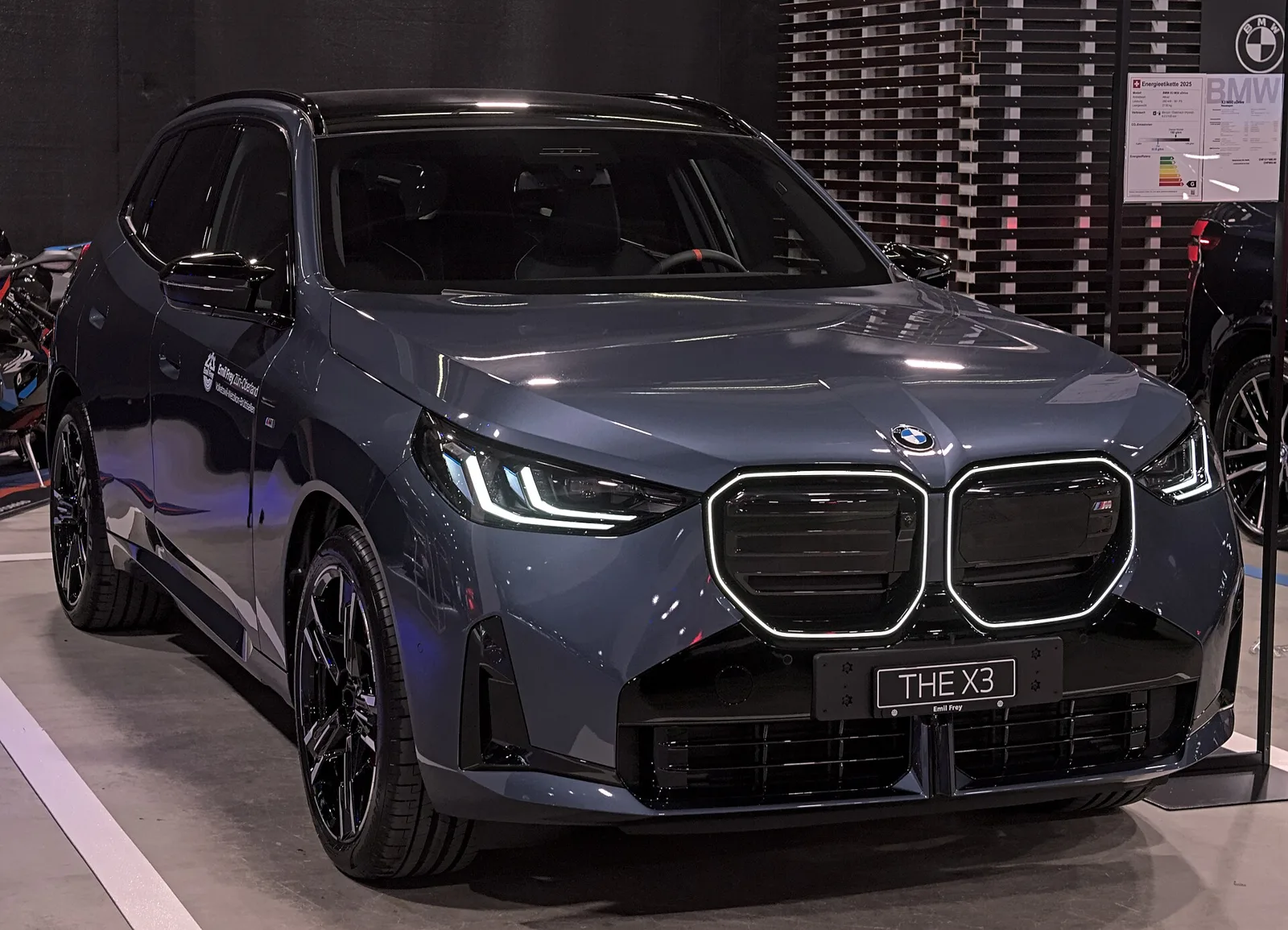
BMW's compact luxury crossover, built on the 3 Series platform since 2003, has grown through four generations, a full M model and an electric iX3 spin-off.
The BMW X3 is a compact luxury SUV that BMW has built since 2003, sitting on the 3 Series platform. Four generations later it has added an M performance version and an electric iX3 model, and the 2024 fourth generation continues the line.
Since 2003, BMW has built this compact luxury SUV on the foundation of the 3 Series. BMW calls it a Sports Activity Vehicle, and the model has moved through four generations, a full M version and an electric iX3 spin-off. It was the first mid-size premium SUV of its kind on the market.
Where did the first X3 come from?
The first X3, codenamed E83, premiered at the Frankfurt show in September 2003 and was designed by BMW with Magna Steyr of Graz, Austria. Magna Steyr also built every first-generation car under contract. The car was the first BMW model to use the xDrive name, which the company applied to its all-wheel-drive system.
The idea had an earlier preview. At the 2003 Detroit show BMW presented the xActivity concept, which used the 3 Series platform with a fixed-profile convertible body and reinforced longitudinal rails in place of the B- and C-pillars.
The X3 was designed to bring the agility of a compact model to an SUV body. Its upright seating, which BMW marketed as command seating, gave the driver a high view of the road, and its styling mixed concave and convex surfacing with a reinterpreted Hofmeister kink.
From a 2003 Frankfurt debut to a 2024 fourth generation, the X3 has kept the same idea of a compact premium crossover.
How did the xDrive system work?
Every X3 ran BMW's all-wheel-drive layout, which defaulted to a 40:60 front-to-rear split. An electronically controlled multi-plate clutch varied the split, and up to half of the engine's torque could be sent to the front axle when conditions demanded.
The rear-biased layout sends drive directly to the rear axle from the transmission, while the front receives power only through the transfer clutch as needed. That arrangement suited acceleration and towing, because weight shifts rearward under load and the rear axle stays directly driven.
Advanced traction control allowed both axles to act like electro-hydraulically controlled limited-slip differentials, which gave the car traction on most surfaces. BMW's descriptor for the family, Sports Activity Vehicle, reflected that all-wheel-drive emphasis.
How did the X3 change across its generations?
Production of the F25 ran from 1 September 2010 to August 2017 at BMW's South Carolina plant. The G01 that followed was shown in June 2017 and weighed up to 55 kg (121 lb) less than the car it replaced. The fourth-generation G45 was unveiled on 19 June 2024.
The F25 offered a rear-wheel-drive sDrive28i in 2012, the first non-xDrive BMW SAV sold in the United States. A 2014 LCI facelift brought twin circular headlights, a redesigned kidney grille and new bumpers for the 2015 model year.
The third generation was designed by Calvin Luk, BMW's Australian designer. It shared its technology with the 5 Series, including gesture control as an option, LED lighting throughout and a 12.5-inch navigation touchscreen controlled through iDrive 6.0.
What engines did the X3 use?
Early cars used the 3.0-litre M54 inline-six, and the third generation offered the B47 two-litre diesel, the B57 3.0-litre diesel and the B58 petrol straight-six. The X3 M then added the 3.0 L S58 straight-six, rated at 473 horsepower.
The X3 M Competition produced 503 horsepower, which made it the most powerful X3 yet. It was the first time the X3 had a full M version, and it sat at the top of a range that also included xDrive and sDrive models.
A plug-in version, the xDrive 30e, paired a 50 kW (67 hp) electric motor with a 12 kWh pack, of which 9.6 kWh was usable. Its XtraBoost function added up to 30 kW (40 hp) of temporary electric power.
How did the iX3 fit into the family?
The iX3 is the battery-electric version of the G01 X3, with production starting in September 2020 at BMW's plant in Shenyang, China. It has an 80 kWh pack with 73.83 kWh usable, delivers 210 kW (282 hp) from a single rear motor and covers up to 460 km (290 mi) on the WLTP cycle.
The iX3 accelerates from 0 to 100 km/h in 6.8 seconds. Fast charging at 150 kW DC takes the battery from empty to 80 per cent in 34 minutes. Its boot holds 510 litres, which is 40 L less than a conventional X3.
The NA5 iX3 succeeded the G08 in 2025 and sits alongside the gasoline-powered G45 X3. That split reflects how the family now serves both combustion and electric buyers under one name.
How did the Alpina and M models perform?
The Alpina XD3 was shown at Geneva in 2018 with an Alpina-modified version of the B57 diesel. Its quad-turbo version made 285 kW (382 hp) and 770 Nm, reaching 100 km/h in 4.6 seconds on the way to a maximum of 266 km/h (165 mph).
The X3 M and its Competition model marked the performance peak of the range before the fourth generation arrived. Their engines turned the X3 from a sensible crossover into a car with real M-car credentials.
Motorsport also touched the badge through the X3 CC, a rally raid car that used a twin-turbo diesel to tackle a very different kind of course from the road models.
What did critics say about the X3's safety and reputation?
The first generation was initially criticised for its harsh ride and austere interior, but Canadian judges still named the 3.0i their best sports utility vehicle for 2005. The third generation later earned a five-star NHTSA rating and an IIHS Top Safety Pick+ award.
An emissions report claimed that a BMW X3 20d diesel exceeded the EU Euro 6 limit by over 11 times. BMW denied the claim in a statement on 24 September 2015, and the dispute became part of the model's diesel history.
Owners who bought the first cars often remember the model for its practicality and driving manners rather than its badge alone. That reputation helped the X3 build a loyal following through successive generations.
How many X3s have been built?
Graz produced its 500,000th X3 on 18 June 2008, an early milestone for the first generation. The total grew through the second and third generations, with the third generation also built at BMW's Rosslyn plant in South Africa alongside the Spartanburg plant.
Fourth-generation sales opened in North America and Europe in late 2024, badged as 2025 models. The long-wheelbase G48 is China-only, which means the model now runs in two different body lengths depending on the market.
| Specification | Detail |
|---|---|
| First generation | E83, 2003 to 2010, built in Graz |
| Second generation | F25, 2010 to 2017, built in South Carolina |
| Third generation | G01 from June 2017, 55 kg (121 lb) lighter than before |
| Fourth generation | G45, unveiled 19 June 2024 |
| X3 M | 3.0 L S58 straight-six, 473 horsepower |
| X3 M Competition | 503 horsepower |
| iX3 battery | 80 kWh, 73.83 kWh usable |
| iX3 power | 210 kW (282 hp), 0-100 km/h in 6.8 seconds |
| iX3 boot | 510 litres |
The table shows how quickly the range has diversified. Each generation kept the same basic formula while adding new engines, electric options and performance versions that sit above the core models.
How did the X3 compete in the premium SUV segment?
Early on, the X3 stood as the first mid-size premium SUV on sale, and from 2008 BMW faced the Mercedes-Benz GLK-Class head-on. Its 3 Series driving feel, combined with a raised seating position, offered buyers something fresh. It gave buyers a premium option with a driver's focus that rivals had not offered before.
The early cars were criticised for their harsh ride and austere interior, and they lacked real off-road capability. Even so, the X3 set a template for the compact premium SUV that other makers would follow over the next decade.
The 3.0i earned Canadian recognition as the best sports utility vehicle of 2005, an early sign that the dynamics were winning over buyers who expected a traditional truck-based SUV.
What did the 2006 and 2010 updates change?
BMW revised the E83 in 2006 with new headlights, grille, bumpers and tail lights. The second-generation F25 arrived in 2010 with xDrive as standard and either a six-speed manual or an eight-speed ZF automatic. Those changes kept the model competitive as its rivals multiplied.
The US market had its own changes. From the 2007 model year the X3 used the N52 inline-six, which had debuted on the 3 Series, while European buyers could choose a range of four- and six-cylinder petrol and diesel units.
The F25 was built in South Carolina rather than Austria, which marked a shift in where the car was made, while the drive layout stayed true to the xDrive concept.
How did the X3 handle off-road use?
The X3 was designed for on-road comfort, and early reviews criticised it for limited off-road capability. Its all-wheel drive system gave it stability in poor weather and better traction on loose surfaces, but it was not a hard-core off-roader. Buyers who wanted real off-road capability had to look elsewhere.
The Cross Country variant showed a different path. Built for rally raid competition, it used a twin-turbo 2.9-litre diesel inline-six derived from the 3.0-litre unit, which proved the platform could be adapted to much harsher terrain.
The gap between the road car and the rally car explained why the X3 was never sold as an off-road specialist, even as its drivetrain gave it a useful edge in bad weather.
What did the third generation add technologically?
The G01 third generation shared technology with the 5 Series, including optional gesture control and LED lighting inside and out. It introduced the iDrive 6.0 system and offered an sDrive rear-wheel-drive option from July 2018. That brought the X3 closer to BMW's flagship models in equipment.
Electrified versions followed. The xDrive 30e plug-in arrived in 2019, and the xDrive20d gained a 48-volt mild hybrid system in early 2020, which widened the range well beyond diesel and petrol engines.
Those additions made the third generation a broader product, linking the traditional X3 with the electrified models that followed under the same badge.
How did the X3 suit everyday family use?
The X3 offered generous room for passengers and luggage, which made it a practical choice for families as well as commuters. Its raised seating position gave drivers a commanding view, and the large boot suited weekend trips. Passengers in the rear benefited from the high seating position as well.
Over the generations those practical strengths stayed constant even as the car grew more sophisticated. The interior space and the flexibility of the rear seats kept the X3 useful for daily life, not only for the occasional long journey.
Frequently asked questions
How much lighter was the third-generation X3?
The third generation was up to 55 kg (121 lb) lighter than its predecessor, a saving that came with the G01 launch in 2017.
How far can the iX3 go on a charge?
The WLTP range reaches 460 km (290 mi), with 73.83 kWh of usable energy. A 150 kW DC charger brings it to 80 per cent in 34 minutes from a flat battery.
Was there a rear-wheel-drive X3?
Yes. The sDrive28i arrived in 2012 with rear-wheel drive only, and it was the first BMW SAV without xDrive to be sold in the US.
How quick is the Alpina XD3?
The quad-turbo Alpina XD3 reached 0-100 km/h in 4.6 seconds and had a maximum of 266 km/h (165 mph). Its engine is a tuned B57 diesel from Alpina.