Two premium compact crossovers that met in the same segment from 2008: platforms, all-wheel drive, engines, safety, sales and the buyer each suited.
The BMW X3 and Mercedes-Benz GLK-Class rivalled each other in the premium compact SUV market from 2008. The X3, built on the 3 Series platform since 2003, used xDrive all-wheel drive. The GLK-Class, built from 2008 to 2015 on the C-Class platform, used 4Matic.
The BMW X3 and the Mercedes-Benz GLK-Class were premium compact crossovers that competed directly from 2008. The X3 had been on sale since 2003 on the BMW 3 Series platform, while the GLK-Class was a Mercedes built on the C-Class platform from 2008 to 2015. Both offered all-wheel drive, and both were sold as premium alternatives to the larger, more expensive SUVs of their day.
This comparison covers why the two were rivals, how they were designed, how their drive systems worked, which engines they offered, how they sold, what their safety records show, and which buyer each car suited on the facts available.
Why were the BMW X3 and Mercedes-Benz GLK-Class rivals?
They were rivals because both sat in the premium compact SUV segment at the same time. BMW began competing with the GLK-Class in 2008, and by then the X3 had already become an established model. The GLK also faced numerous other SUVs in the segment, so it had to win buyers from several directions at once.
The X3 was the first mid-size premium SUV on the market when it appeared in 2003. Its purpose was to pair a compact footprint with the sort of driving feel found in the X5, and that positioning gave it a clear identity from the start.
The GLK-Class was a newer arrival. Its name came from the German term Gelandewagen Luxus Kompaktklasse, and it was the compact member of a family that began with the GL-Class. Mercedes replaced it with the GLC in 2015 under a revised naming scheme for its SUVs.
Two premium compact crossovers that met head on from 2008, built on different platforms and sold in very different ways.
How were the two cars designed?
The X3 was built on the BMW 3 Series platform, and its first generation was designed by BMW together with Magna Steyr of Graz, Austria. Magna Steyr also manufactured every first-generation X3 under contract.
The X3 placed its driver high in the car, with an upright seating layout that BMW marketed as command seating. Its styling used interacting concave and convex surfaces, typical of BMW at the time, along with a reinterpreted Hofmeister kink.
The GLK-Class shared the C-Class W204 platform, and its design was heavily influenced by the C-Class. The concept cars that preceded it suggested a different heritage. The Vision GLK Freeside drew on the original G-Class, combining that off-road character with contemporary passenger car features.
The GLK's launch was helped by a set of tuner and marketing projects. Four custom builds were shown at the 2008 SEMA Show, and a prototype appeared in the Sex and the City movie before the car's Detroit debut. Those projects framed the GLK as a lifestyle vehicle as well as a practical one.
How did the two cars handle their drive systems?
Both cars offered all-wheel drive, but their systems were built differently. The X3's xDrive used a default torque split of 40:60 between the front and rear axles, and the front axle could take a larger share when conditions called for it. The GLK used Mercedes' 4Matic system, which was all-wheel drive only at launch in Germany and North America.
The X3's system was rear-biased. The rear axle received direct drive from the transmission, while the front axle received torque only through an electronically controlled multiple-plate clutch. That arrangement shifted weight rearward during climbs and made the system durable for acceleration and towing.
Traction control in the X3 allowed both axles to act as electro-hydraulically controlled limited slip differentials, synchronising torque to the left and right tyres as grip changed. That gave the car strong traction across a wide range of surfaces.
The GLK offered a rear-wheel drive version later in its life, although its early line-up was all-wheel drive. Its Freeside concept had used a seven-speed automatic with 4Matic, showing the direction of the platform's development. Buyers in markets where the car was not offered should bear that in mind when weighing the two.
Which engines did the two cars offer?
The X3's engines moved from inline sixes to fours over its life. In the United States the first generation relied on the 3.0 litre inline six, later the N52, from 2007. Elsewhere, buyers could choose 2.0-litre petrol and turbo diesel fours, along with larger six-cylinder diesels in Europe.
The second-generation F25 made the change more pronounced. In 2012 the 3.0-litre naturally aspirated six in the xDrive28i was replaced by a 2.0-litre turbocharged four, and a 2.0-litre turbo diesel joined the range in 2013 as the xDrive28d. The third-generation G01 brought 2.0-litre diesels, a 3.0-litre diesel, a 2,998 cc petrol straight six and a plug-in hybrid.
The GLK's engines were mostly fours and sixes too. The Freeside concept used a 2.2-litre BlueTec four-cylinder diesel rated at 170 PS (125 kW; 168 hp). The production range at launch included the GLK 220 CDI, 320 CDI, 280 4Matic and 350 4Matic, and the Edition 1 cars were based on V6 engine models.
By 2009 the GLK 280 4Matic and GLK 320 CDI had been replaced by the GLK 300 4Matic and GLK 350 CDI. From the 2012 update, every gasoline engine carried an ECO start-stop function and direct fuel injection, which brought the range into line with the wider Mercedes line-up.
Which car suited buyers in the UK?
The X3 had a clear path into the British market, with UK models going on sale on 18 November 2010 in the second generation. The early UK range included the xDrive20d, and the xDrive35d followed in September 2011. The X3 was therefore available to British buyers from late 2010 onwards.
The GLK-Class was not sold in right-hand drive markets such as the UK and Australia. The reason given was a driveshaft that operated the front wheels on four-wheel drive versions, which occupied the space used by the steering column in right-hand drive cars. The two configurations could not be made compatible, so the GLK was never a choice for those buyers.
For a British buyer, that single fact settles much of the comparison. The X3 was available, while the GLK was not. Anyone weighing the two outside the UK would have a different set of considerations, such as which engine and drive layout suits their driving.
How did sales compare?
The GLK-Class started strongly. Mercedes-Benz had received 10,000 orders by the end of July 2008, including 1000 orders for the Edition 1 models. By 3 November 2008, 25,000 orders had been placed for the GLK in Western Europe, with deliveries beginning on 18 October 2008.
Those figures show a car that attracted a large early response. Orders are not the same as sales, though, and the comparison does not provide a cumulative sales total for either model. Any claim about which car sold more over its life would need figures that the comparison does not include.
The X3's production history is marked by a move of its second generation from Magna Steyr in Austria to BMW's United States plant in Greer, South Carolina. Output ran from 1 September 2010 until August 2017. The X3's later production moved to Rosslyn in South Africa from 2017, alongside the Spartanburg plant.
How did safety ratings compare?
The third-generation X3 has been well regarded for safety. It earned a five-star rating from the National Highway Traffic Safety Administration and the Insurance Institute for Highway Safety (IIHS) named it a Top Safety Pick+. Both are independent assessments, which gives buyers an outside view of its protection.
The GLK-Class carried nine airbags, with seatbelt tensioners, and its vehicle structure was rated Good. Those points describe its protection systems, but they do not allow a direct ranking against the X3's later ratings, because the two cars were assessed in different years and by different bodies.
The X3 has also faced a claim of its own. In 2015 a report alleged that the X3 20d diesel exceeded the EU Euro 6 limit by over 11 times, and BMW denied the report on 24 September 2015. That is a claim rather than an established finding, and it belongs in any buyer's research.
Which buyer suits each car?
On the facts given, the X3 suits a buyer who wants a premium compact SUV with a choice of petrol and diesel engines, a rear-biased all-wheel drive system and a model that has been available in the UK since late 2010. The GLK-Class suits a buyer who wants a Mercedes compact crossover with a C-Class based design and a range of four-cylinder and V6 engines, provided they are not in a right-hand drive market.
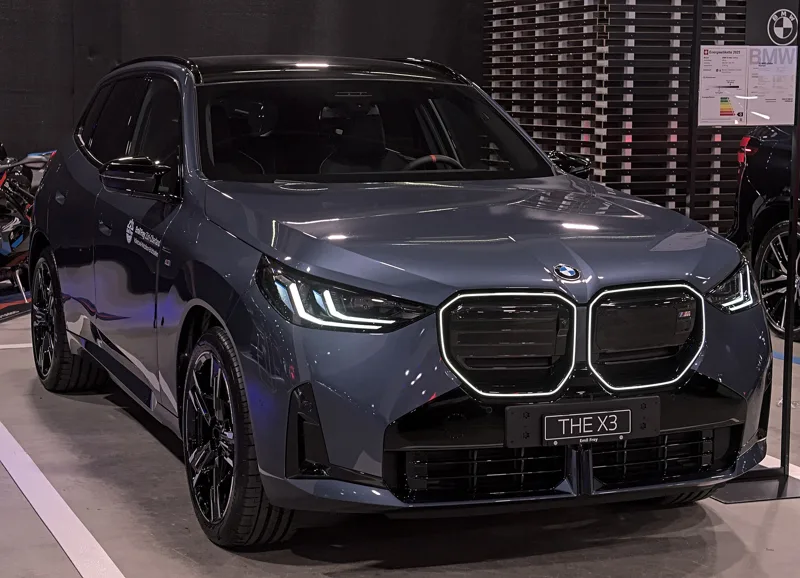
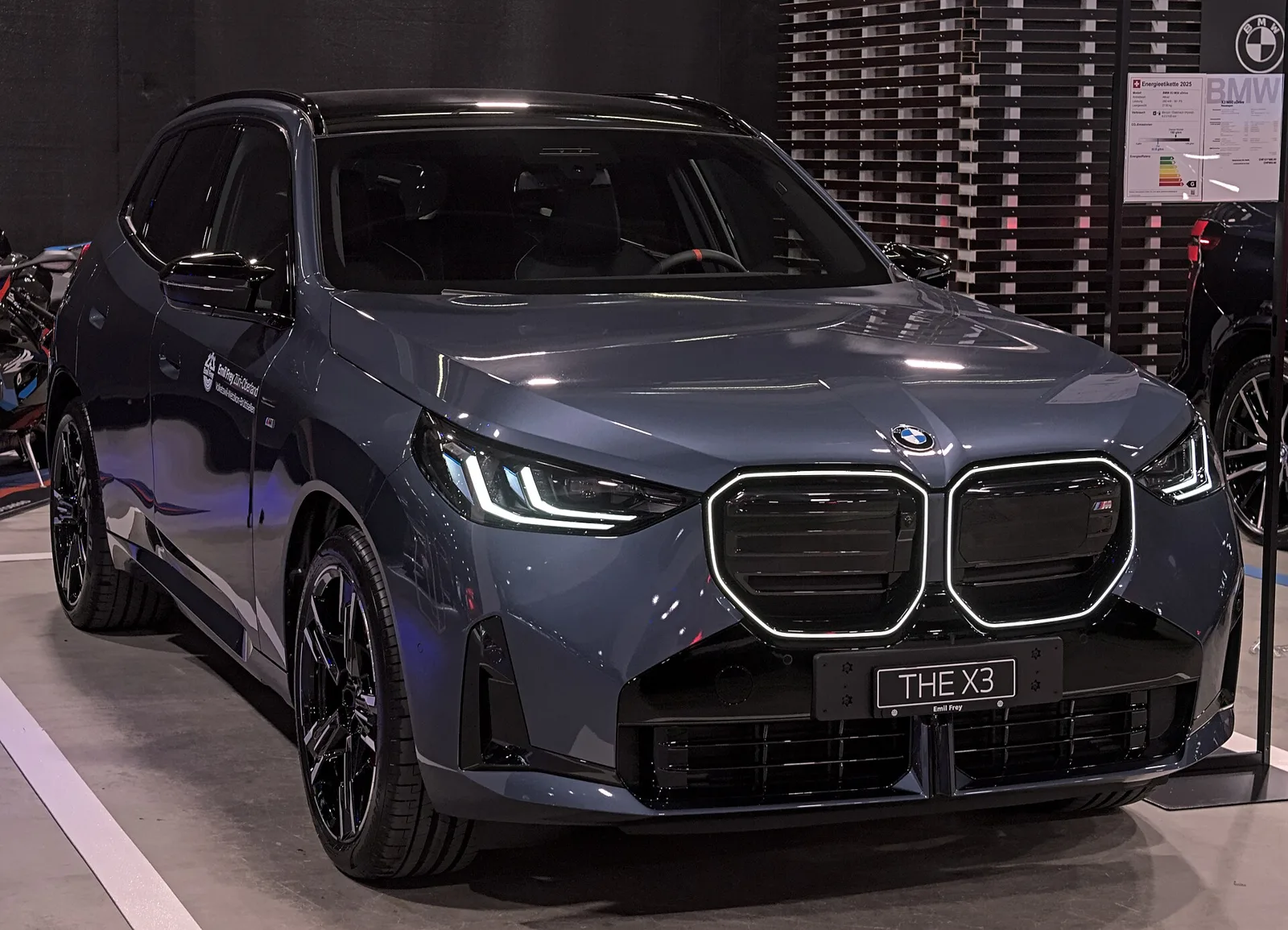
A buyer looking for the most generations of development would find the X3 has the longer story, running from 2003 through to the fourth generation G45 in 2024. A buyer who wanted the GLK's distinctive heritage, drawn from the G-Class and the Mercedes off-road lineage, would find that the car's design points in that direction.
Neither car is shown to be better across the board. The X3 has the longer history, the availability for British buyers, and a five-star rating for the third generation. The GLK has the notable early order book and a design built around a separate Mercedes heritage. The right choice depends on where the buyer lives and which heritage they prefer.
Specifications at a glance
The table sets the two cars against each other on the figures available. Where a detail is not documented for one of them, the cell says so rather than filling the gap with an estimate.
| Feature | BMW X3 | Mercedes-Benz GLK-Class |
|---|---|---|
| Launch | September 2003, Frankfurt Auto Show | Debut at the 2008 Beijing Auto Show; European sales from June 30, 2008 |
| Model code | E83 (first generation) | X204 |
| Production run | 2003 onwards; G45 fourth generation from 2024 | 2008 to 2015 |
| Successor | Fourth generation G45 from 2024 | GLC from 2015 |
| Platform | BMW 3 Series | C-Class W204 |
| Drive system | xDrive all-wheel drive, 40:60 default split | 4Matic all-wheel drive at launch; rear-wheel drive later |
| Gearbox | Six-speed manual or eight-speed ZF 8HP (second generation) | No figure given for production models |
| Diesel engine | 2.0-litre B47 (third generation) | 2.2-litre BlueTec four-cylinder in the Freeside concept |
| Top petrol engine | 2,998 cc straight six (B58, third generation) | V6 engines in Edition 1 models |
| Right-hand drive | On sale in the UK from November 2010 | Not sold in the UK or Australia |
| Orders or sales | No figure given | 10,000 orders by the end of July 2008 |
| Safety | Five-star NHTSA rating; IIHS Top Safety Pick+ (third generation) | Nine airbags; structure rated Good |
| Motorsport | X3 CC rally raid car with a 2.9-litre twin-turbo diesel six | Rally Racer concept with 350 PS (257 kW; 345 hp) |
Frequently asked questions
When did the Mercedes-Benz GLK-Class go on sale?
European models went on sale on June 30, 2008, and deliveries started that autumn. The car was built from 2008 to 2015.
Was the GLK-Class sold in the UK?
No. Its four-wheel drive driveshaft clashes with the steering column on right-hand models, so the car was never offered in the UK.
What replaced the GLK-Class?
The GLC replaced it in 2015, when Mercedes revised the naming of its SUVs.
What is the current BMW X3?
The current model is the fourth-generation G45, which went into production in 2024.
What was the X3's default torque split?
The default split is 40:60, so the rear axle takes the larger share, and the front can receive a higher proportion when the system needs it.