A low-cost Russian supermini that grew from one sedan into hatchbacks, estates, a sporty trim and a rare electric wagon between 2004 and 2018.
The Lada Kalina was a Russian supermini built by Lada from 2004 to 2018. It began as a sedan, then gained a hatchback and station wagon, and its second generation was a facelift of the first. Its petrol engines ran from 81 to 98 hp, and a rare electric wagon arrived in 2011.
Lada's Kalina grew from a single four-door sedan in 2005 into a family of hatchbacks and estates. It carried Russian budget motoring through most of the 2000s and into the following decade, and its story runs from a low-cost family car to a rare electric wagon.
What is the Lada Kalina?
The Lada Kalina is a supermini built by Lada, the brand of AvtoVAZ, in Russia. Production ran from 18 November 2004 to July 2018. The name comes from the Russian word for a type of viburnum, while Finnish buyers knew the car as the Lada 119.
A supermini sits in the smallest mainstream class in Europe, below the family hatchback and above the city car. The Kalina was built as a volume car for a price-sensitive market, rather than as a prestige product that chased image or handling first.
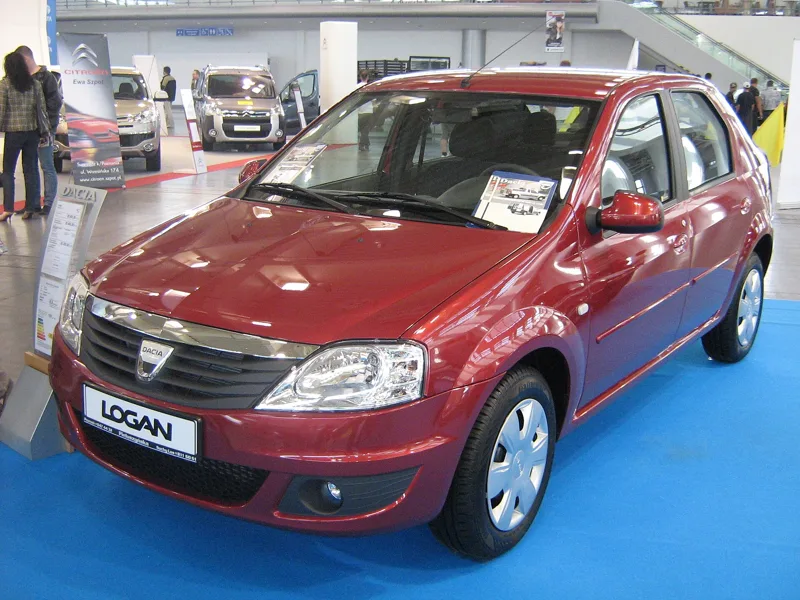
Its main competitors were low-priced cars such as the Dacia Logan and Hyundai Accent. Against those rivals the Kalina had to offer value, equipment and simple mechanicals, and most of its design choices reflect that brief.
The supermini class shapes how buyers judge a car like this. Running costs, interior space for the size and value for money count for more than outright performance, and the Kalina's specification reflected those priorities.
A budget Russian supermini that grew from one sedan into hatchbacks, estates and a rare electric wagon before production ended in 2018.
Where did the Kalina come from?
Work on the Kalina began in 1993, and the project was named Lada-Kalina in 1998. Prototypes followed in 1999 as a hatchback, in 2000 as a sedan and in 2001 as an estate. Production started with the four-door sedan in 2005, with the five-door hatchback in 2006 and the station wagon in 2007.
The gap between the first design work in 1993 and the first customer cars in 2005 was more than a decade. That long run shows how slowly the programme moved, and it also explains why the car was sold in stages rather than as one complete launch.
The prototype sequence also shows how the body styles were settled, with the hatchback shown first, the sedan a year later and the estate last.
The Kalina's body was designed for a volume market, with a layout meant to be built and sold at a low price point. Its five-door hatchback and four-door sedan versions shared that basic approach.
What did the first-generation Kalina offer?
Safety and comfort kit on the first generation covered airbags for both front seats, anti-lock brakes, power steering assistance, climate control and a rear bench that folds flat into a load platform. Its body used hot-dip galvanised steel with enhanced corrosion resistance, developed by several Russian steel producers.
Galvanised steel matters for a car that will spend years in damp or salted conditions, because the zinc coating slows rust in the panels that matter most. The steel was developed in Russia by several producers, so the body was built around domestic material.
Buyers in Western European markets found it a budget proposition. At that level it sat firmly in the budget segment, offering airbags, ABS and air conditioning at a low price.
How safe was the Kalina?
In a 2005 frontal test by the Russian ARCAP programme, the first generation managed 5.6 points from a possible 16, which earned one star of four. That result is low by modern standards and reflects the era in which the car was designed.
Driver and passenger airbags and ABS were fitted, so the car's active and passive equipment was more complete than its crash score alone suggests. The test was a frontal impact, so the result says most about how the car performed in that one scenario.
Anyone considering an older Kalina should check the crash record of the specific model year they plan to buy. The ARCAP figure is a snapshot of one test, not a verdict on every car sold.
Which engines did the Kalina use?
The first-generation Kalina used three inline-four petrol engines, ranging from 81 to 98 hp (60 to 72 kW). The 1.4-litre 16-valve made 91 hp (67 kW), the 1.6-litre 8-valve made 81 hp (60 kW), and the 1.6-litre 16-valve made 98 hp (72 kW).
The valve count matters for a practical reason. A 16-valve head breathes more freely than an 8-valve design of the same capacity, which is why the 98 hp variant stands above the 81 hp unit with the same displacement.
Choosing between the three first-generation units came down to price and performance, with the most powerful 16-valve car at the top of the range. The gap between the two 1.6-litre versions is a modest step in output. The second generation's top figure of 105 hp sits 7 hp above the best first-generation output.
The second generation carried the 1.6-litre petrol engines forward with 8 and 16 valves. They produced 86 to 105 hp (64 to 78 kW) and 140 to 145 Nm (14 to 15 m kgf) of torque. Electronic throttle control replaced the earlier arrangement, and the engines kept the same basic capacity.
What sporting versions did the Kalina have?
Lada also sold a livelier model, the GS Sport. The Super 1600 concept used a turbocharged version of the standard 1.6-litre petrol unit, built up from the naturally aspirated original. The GS Sport was a production model, while the Super 1600 remained a concept car.
A sport version was also available in the Russian market in the second generation, alongside the hatchback and wagon. That trim gave buyers a sharper option without moving the Kalina out of the supermini class.
Sporting trims suit a supermini because they add visible character without changing the car's basic size or shape. The Super 1600 shows what the platform could take when it was pushed. A turbocharged engine built from the standard unit points to the potential of the design, although the concept never became a mass-market car.
How popular was the Kalina in Russia?
At home the Kalina sold well. Its 2009 total of 60,746 cars placed it fourth nationally, and it reached the top spot by 2012. On Top Gear Russia it played the Reasonably-Priced Car. Those results made it one of the most visible budget cars on Russian roads at the time.
Those sales figures reflect a market in which a cheap new car was a practical choice for many households. The Kalina's low price made it a natural fit for that demand. Two data points stand out: 60,746 sales in 2009 placed it fourth, and it rose to first place by 2012.
Its role as the Reasonably-Priced Car on a television motoring show put the model in front of a wide audience, alongside its sales rankings.
What was the Lada El Lada?
The El Lada arrived in 2011 as a battery-powered take on the Kalina estate. It used a 30 kW electric motor and a 23 kWh battery pack. Only 100 electric Ladas were produced, so it remains a rare footnote in the model's history.
It was a conversion of an existing station wagon rather than a new car, which explains the small run. Within a petrol-only family, the El Lada stands apart as the single electric variant.
Electric cars were still a niche choice in that period, so building a small batch from an existing wagon was a sensible way to test the idea. The short production run means surviving examples are unusual sights on the road today.
What changed in the second generation?
The second generation was revealed at the 2012 Moscow International Automobile Salon as a facelifted first generation. It had a slightly longer wheelbase and length, 13- or 14-inch wheels, electronic throttle control, and was offered only as a hatchback and wagon.
Its interior controls were changed to English only, matching the recently introduced Lux models of the Lada Granta. That brought the Kalina into line with the Lux models of the Granta.
Because the second generation was a facelift rather than a new design, the basic body and layout stayed with the first generation. The changes were concentrated in the wheels, the throttle and the interior language.
The Kalina also became the basis for the Japanese Datsun mi-DO, a model produced specifically for the Russian market. The second-generation hatchback entered production in May 2013, and the wagon followed in September.
What is the Kalina Cross?
The Kalina Cross is a wagon variant that debuted in 2014 with 20 mm more road clearance than the standard car. Its gear ratios were altered and it wore a plastic body kit. It was a raised, rugged take on the wagon.
Extra ground clearance is a useful feature on the rough surfaces common across Russia, where potholes and uneven tracks are part of everyday driving. The plastic body kit added a rugged look and some protection for the lower body.
The Cross kept the Kalina's wagon shape while adding height, so buyers got a tougher-looking estate in the same size class.
Buyers choosing between the standard wagon and the Cross were weighing a small step in height against the car's normal road manners.
What are the Lada Kalina specifications?
The table covers the main figures across both generations and the electric Lada El Lada. Where a figure belongs to one generation or model, the row says so. Metric figures come first, with imperial values in brackets where they are quoted.
| Specification | Detail |
|---|---|
| Production run | 18 November 2004 to July 2018 |
| Body styles, first generation | Four-door sedan (2005), five-door hatchback (2006), station wagon (2007) |
| Engine, first generation | 1.4-litre 16-valve 91 hp (67 kW); 1.6-litre 8-valve 81 hp (60 kW); 1.6-litre 16-valve 98 hp (72 kW) |
| Engine, second generation | 1.6-litre petrol, 8 and 16 valves; 86 to 105 hp (64 to 78 kW); 140 to 145 Nm (14 to 15 m kgf) |
| Wheels, second generation | 13- or 14-inch |
| Crash test, first generation | 5.6 of 16 points; one star of four (ARCAP, 2005) |
| Export price, Western Europe | About 7,000 to 8,000 euros |
| El Lada motor | 30 kW electric, 23 kWh battery pack |
| El Lada production | 100 electric Ladas |
| Kalina Cross clearance | 20 mm more than the standard wagon |
Frequently asked questions
Was the Kalina sold outside Russia?
Yes. It was exported to most Western European markets, where it was priced at about 7,000 to 8,000 euros. In Finland it carried the Lada 119 name.
Which cars did the Kalina compete with?
Dacia and Hyundai models set the budget benchmark the Kalina had to meet. Buyers compared it with those cars on price, equipment and running costs.
Does the Kalina have a sporty version?
Yes. The GS Sport was the production sporty model, and the Super 1600 concept showed a turbocharged 1.6-litre variant that never reached the market as a standard car.
How did the Kalina's safety score compare with modern cars?
The 5.6 of 16 points from the 2005 ARCAP test sits well below what current assessment programmes expect. Frontal impact standards have tightened considerably since then, so the score reflects its era.