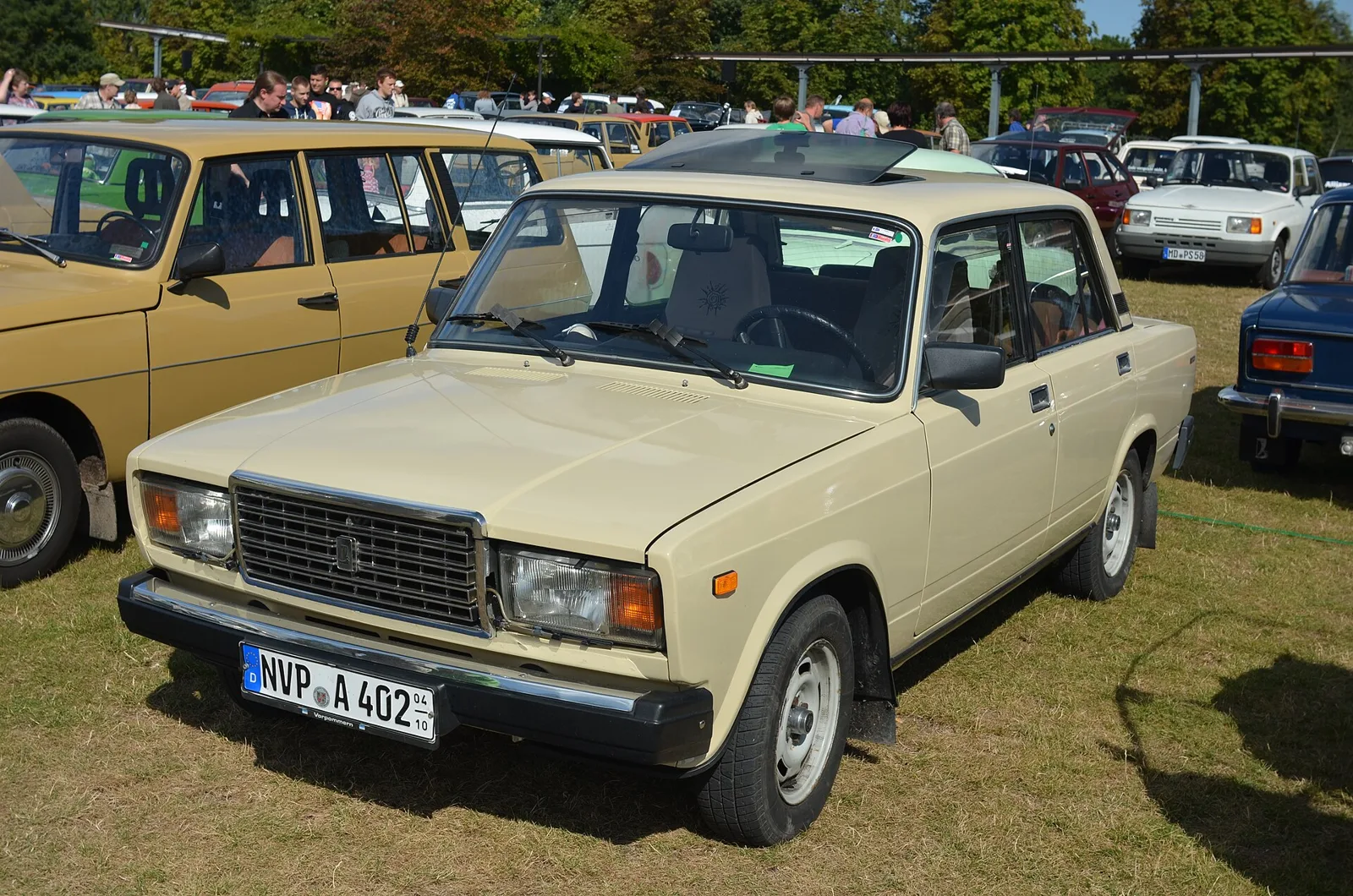
Built by AvtoVAZ from 1979 on the Fiat 124 base, the Riva sold in the millions, reached Britain in 1983 and stayed in production in Russia until 2012.
The Lada Riva was a compact Lada saloon and estate from the VAZ-2105, 2104 and 2107 family, introduced in 1979 and based on the Fiat 124. It reached Britain as the 1300GL in 1983, was withdrawn from the UK in 1997 and was built in Russia until 2012.
The Lada Riva is the name given to the VAZ-2105, VAZ-2104 and VAZ-2107 compact cars that AvtoVAZ built from 1979 onwards. The saloons and estate are part of the Zhiguli family, a Fiat 124 derivative, and in Britain the car arrived as the 1300GL in 1983. Russian production did not finish until September 2012.
When did the Lada Riva go on sale?
The Riva was introduced in 1979 in the Soviet Union and first produced in quantity in 1980. Western European markets received it from 1983, three years after its Soviet release, and the car was aimed squarely at the budget end of the market.
The British market first received the Riva as the 1300GL in July 1983. The 21051 model, known as the Riva 1200L, carried the 1,198 cc engine, and the range was built around low prices and durability.
A Fiat 124 derivative from Togliatti that sold in the millions, reached Britain in 1983 and stayed in production in Russia until 2012.
Where did the Riva's design come from?
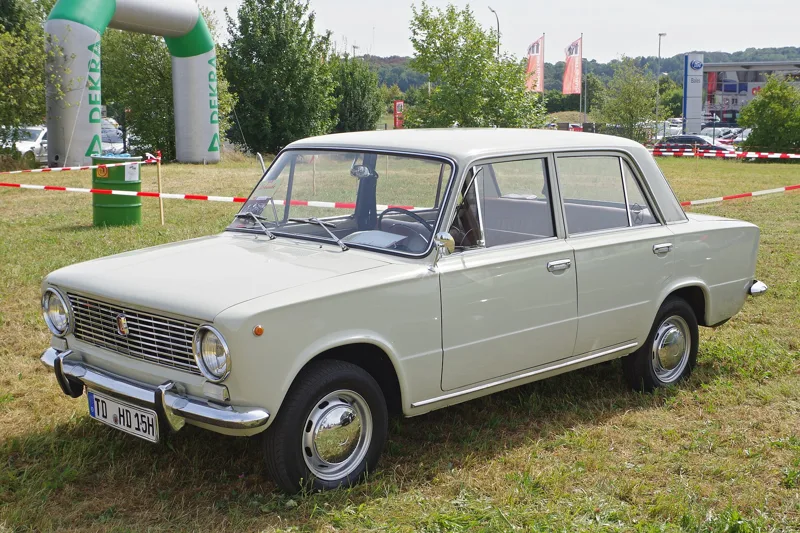
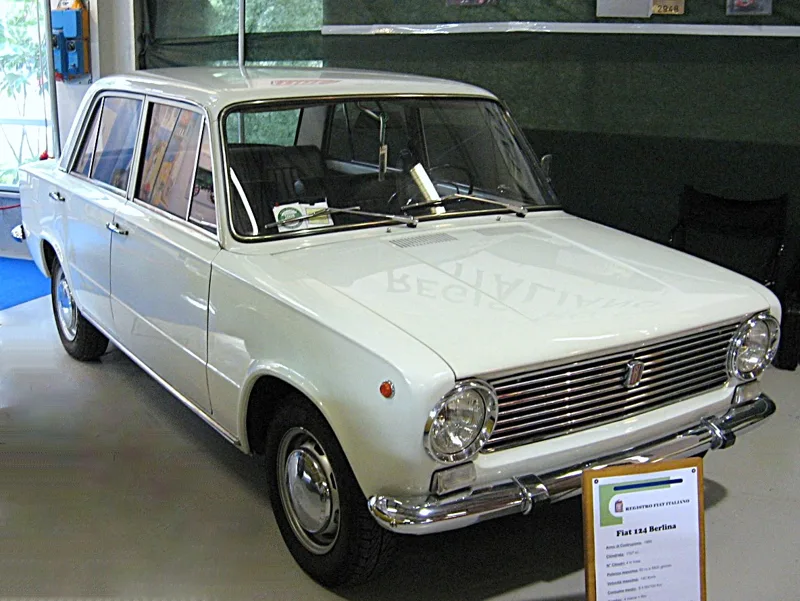
The Riva is a modernised and restyled version of the original Lada VAZ-2101 Zhiguli saloon, which was introduced in 1970 as a modified licence copy of the Fiat 124. Development of the facelift began as early as 1975, and the first prototypes were built in 1977.
Along with the other Fiat 124 derivatives, the Riva is one of the most successful single-generation platforms in automotive history. It ranks third in sales behind the Volkswagen Beetle and the Ford Model T, and it sits alongside the Beetle and the Toyota 70 Series among the longest-running platforms.
What were the Riva's model codes?
The Riva was officially designated VAZ-2105 for the base saloon, VAZ-2104 for the station wagon and VAZ-2107 for the deluxe saloon identified by its large chromed grille. In Russia the three are treated as different cars rather than variants, but all of them belong to the single Klassika, or Classic, family alongside the older VAZ-2101.
Outside Russia the name changed with the market. The car was sold as the Riva for right-hand drive models in the UK and New Zealand, and as the Lada Nova in Germany.
Russian owners gave the models popular nicknames: Pyatyorka, meaning the five, for the 2105, Chetvyorka, meaning the four, for the 2104 and Semyorka, meaning the seven, for the 2107.
What engines did the Riva use?
The smaller-engined 2105 produced 66 PS (48 kW; 65 hp) from a 1,294 cc unit, which had been revamped compared with the original VAZ-2101 engine. The old overhead camshaft was chain driven, but the new one used a toothed belt. The larger-engined 2107 carried on with a 1,452 cc chain-driven OHC engine taken from the Lada 1500.
Some cars had a later 1,569 cc 1.6-litre VAZ-2106 or 21067 engine. The 21074-20 and 21074-30 variants of the 2107 used that 1.6-litre engine with distributed injection, meeting Euro-2 and Euro-3 standards respectively. The 2107 was offered with a 1,294 cc unit as the 21072 or a 1,570 cc unit as the 21074, and the 21079 used a Wankel rotary engine. In 1992 single-point fuel injection and catalytic converters were introduced to meet emissions rules. The injected 2105 b took a 1.6-litre distributed-injection engine from the VAZ-2103 and met Euro-2 emissions standards. The carburetted 21053 used a 1.45-litre VAZ-2103 engine, producing 52 kW (71 PS).
How did the Riva's mechanicals work?
The Riva was mechanically almost identical to the first-generation VAZ-2101. It kept the Fiat-derived manual transmissions and coil spring suspension, while the rear brakes were alloy drums fitted with cast iron shoes.
Where else was the Riva built?
Outside Russia the Riva was made in several plants. Production of the wagon was taken over by Izh in 2002, assembly began at the Bogdan Group's LuAZ plant and later moved to Cherkasy in Ukraine, and the 2107 was also built at a ZAZ factory and at a Suzuki plant in Egypt.
What were the estate versions?
The 2104 station wagon arrived in 1984 in three versions. The 2104 used a 1,294 cc engine, the 21041 a 1,198 cc unit, and the 21043 a 1,452 cc engine borrowed from the VAZ-2103, so buyers had a choice of sizes in the estate line.
The wagon also appeared as a pickup. The VAZ-21043-33 Pikap ran a 1.5-litre engine with 52 kW and was produced from 1991 to 2012 at PSA VIS-Avto.
Why were there police and Wankel Rivas?
Small series of Rivas were built for the traffic police and the Interior Ministry. The 21054 used a carburetted 1.57-litre engine with an extra fuel tank and battery, and the Wankel-powered 21079, which debuted in 1982, was built for the same agencies.
The 21079 was fitted with a two-rotor 1,300 cc engine and a five-speed manual gearbox. It could reach 0-97 km/h (0-60 mph) in nine seconds, and it was priced at 58,000 rubles. An earlier 21059 version had debuted in 1980 for the same agencies.
Lada Riva specifications at a glance
The table below sets out the main figures for the base 2105, the injected versions and the traffic police models. Each row names the variant it covers, so the rally and Wankel cars are kept apart from the production saloon.
| Specification | Detail |
|---|---|
| Introduced | 1979 in the Soviet Union; Western Europe from 1983 |
| Body styles | Saloon (2105 and 2107) and station wagon (2104) |
| 2105 carburetted (2105) | 47 kW (64 PS); 92 N m (68 lb ft); 4-speed |
| 2105 injected (2105 b) | 54 kW (73 PS); 110 N m (81 lb ft); 5-speed |
| 21051 Riva 1200L | 1,198 cc; 43 kW (59 PS); 85 N m (63 lb ft) |
| 21054 police model | 1.57-litre; 53 kW (72 PS); 122.5 N m (90 lb ft) |
| 21079 Wankel model | Two-rotor 1,300 cc; 0-97 km/h (0-60 mph) in nine seconds |
| VFTS sports car | 118 kW (160 PS) at 7000 rpm; WEBER 45 DCOE carburettors |
| Russian production ended | September 2012 |
| 2105 units | Nearly 3,000,000 |
How was the 2107 positioned in the range?
The 2107 was announced in 1982 as the luxury version of the Riva and the most expensive model in the line-up. It had a better interior with front headrests, a new instrument panel and a chrome grille.
In August 2011 the 2107's Russian assembly moved to Izh.
How did the Riva sell in Britain?
British sales were built on a low price and durability. More than 20,000 Ladas were sold in Britain in 1986, almost all of them Rivas. Sales peaked above 30,000 in 1988, and by then the Samara was in the range.
Autocar noted the Riva's low price of GBP 3,158 in its review and praised its standard equipment, which included height-adjustable headlamps, a heated rear window and a 21-piece toolkit. Its spartan interior and ageing design, however, meant that it was never aimed at buyers of the market leaders' more expensive rivals.
Why did Lada leave the British market?
In the early 1990s new models from budget competitors such as Daewoo, Hyundai, Kia and Proton began to take sales, and the Riva's market fell into decline. Stricter emissions rules also demanded investment that was not available, so Lada withdrew from the UK and Canada on 4 July 1997.
Many of the surviving Rivas on British roads were not scrapped at first. Over the following years most were re-exported to Russia, where used examples were in short supply, and some are still running there.
Riva sales had in fact finished several months earlier. Cars fitted with catalytic converters, which EU rules required from 1992, were built with carburettors, and the catalysts were quickly damaged, so most cars failed their first MOT test at three years old.
Which other markets bought the Riva?
Export sales were very good in Eastern Europe. In the West the Riva had a limited presence in the United Kingdom, the Netherlands, New Zealand and Canada. Finland bought far more because of its closer economic ties with the Soviet Union, and Canada was the only market to offer whitewall tyres.
In Jamaica the Riva became a popular taxi, replacing the old fleet of Morris Oxfords, and the cars were paid for in bauxite ore under a barter agreement with the Soviet Union. In New Zealand the car was distributed by the Dairy Board, which received the cars in exchange for deliveries of mutton and butter.
Were there sporting Rivas?
Yes. The Lada 2105 VFTS was a sports car built at the Vilnius factory under the guidance of Soviet rally driver Stasys Brundza. It was homologated to FISA Group B standard and used a 1.6-litre engine with Weber DCOE carburettors, with aluminium doors fitted from 1986.
The 2105 VIHUR was a rally car built in Tallinn and homologated for Group A-2/1. Small numbers of Lada rally cars were also built with 150 PS (110 kW) Wankel engines and a pair of Weber DCOE twin-choke carburettors.
How did the Riva fare in safety tests?
At launch the car met UNECE safety rules and GOST technical standards. In 2001 a 2107 scored 0 points out of 16 in a frontal crash test by the Russian ARCAP programme, earning zero stars out of four.
Reviewers noted that the result was easily predictable for an old car with an outdated body design. In 2002 the Za Rulyom magazine tested a new and a used Lada 21053, and it found that the older car failed the UNECE standard that the newer one met.
How did production end?
The 2105 ceased production at AvtoVAZ's Togliatti plant at the end of 2010, after a 30-year run and nearly 3,000,000 units. The 2107 moved to IzhAvto in August 2011, which ended production of the original Fiat 124 derived models at Togliatti after 41 years and over 14 million units.
Through the 2010s sales of the Lada Classics stayed strong in Russia and some former Eastern Bloc nations, and the Riva remained the most sought-after second-hand car in its home market after production ended.
The last 2104 came off the IzhAvto line on 17 September 2012, and production at Izhevsk was replaced by the Lada Granta from that month. The 2107 remained in production in Egypt, where a Suzuki plant in Cairo had assembled it since 2000.
Frequently asked questions
Was the Riva the same car as the Fiat 124?
No, but it was closely related. The VAZ-2101 Zhiguli was a licence copy of the Fiat 124, and the Riva was a modernised and restyled version of that car.
Why was the 2107 the priciest Riva?
It was announced in 1982 and was the top-priced model in the range. Its cabin upgrades set it apart from the 2105 and 2104.
Was the Riva sold in Canada?
Yes. A few Canadian 2107s carried the Dennis Signet name for a short time, which came from the importing firm, and Canadian sales ended on 4 July 1997.
When was the last Riva built?
The last 2104 station wagon was produced by IzhAvto on 17 September 2012. The 2107 remained in production in Egypt, where it was still being built in 2014.
.jpg)