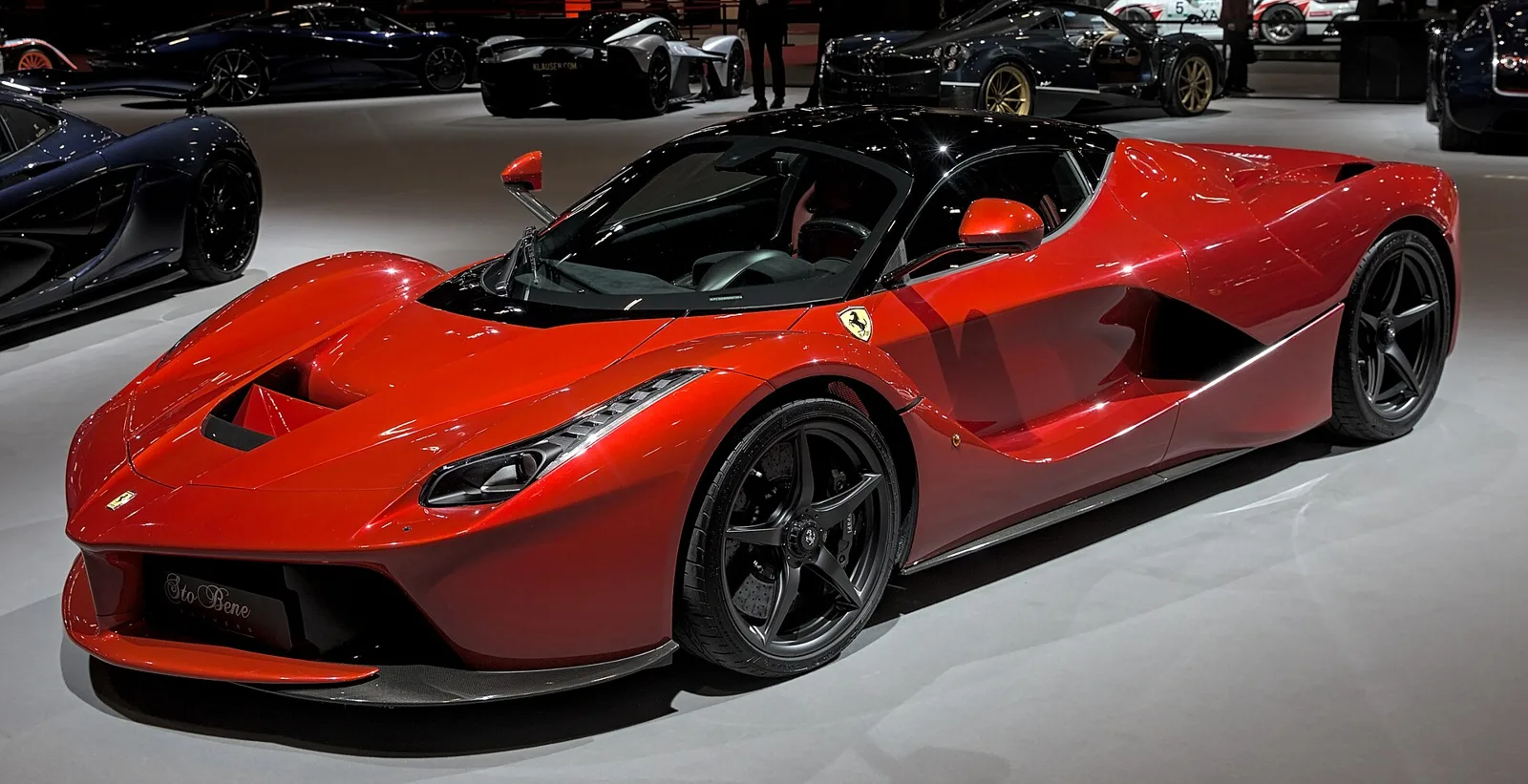
A limited V12 hybrid coupe, an open-top Aperta and track-only FXX-K models that pushed Ferrari's hybrid engineering furthest.
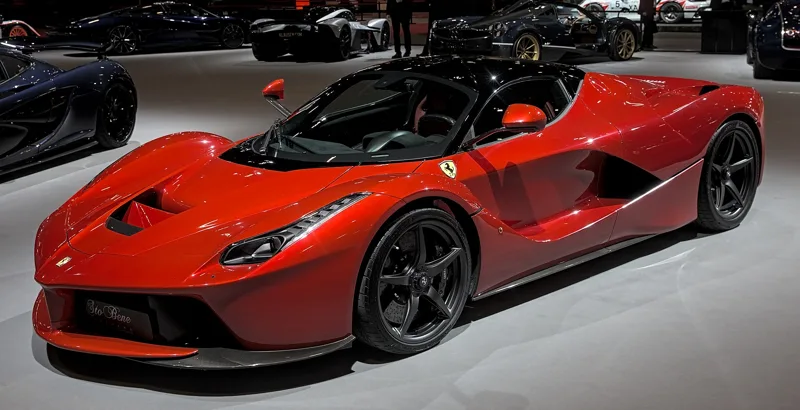
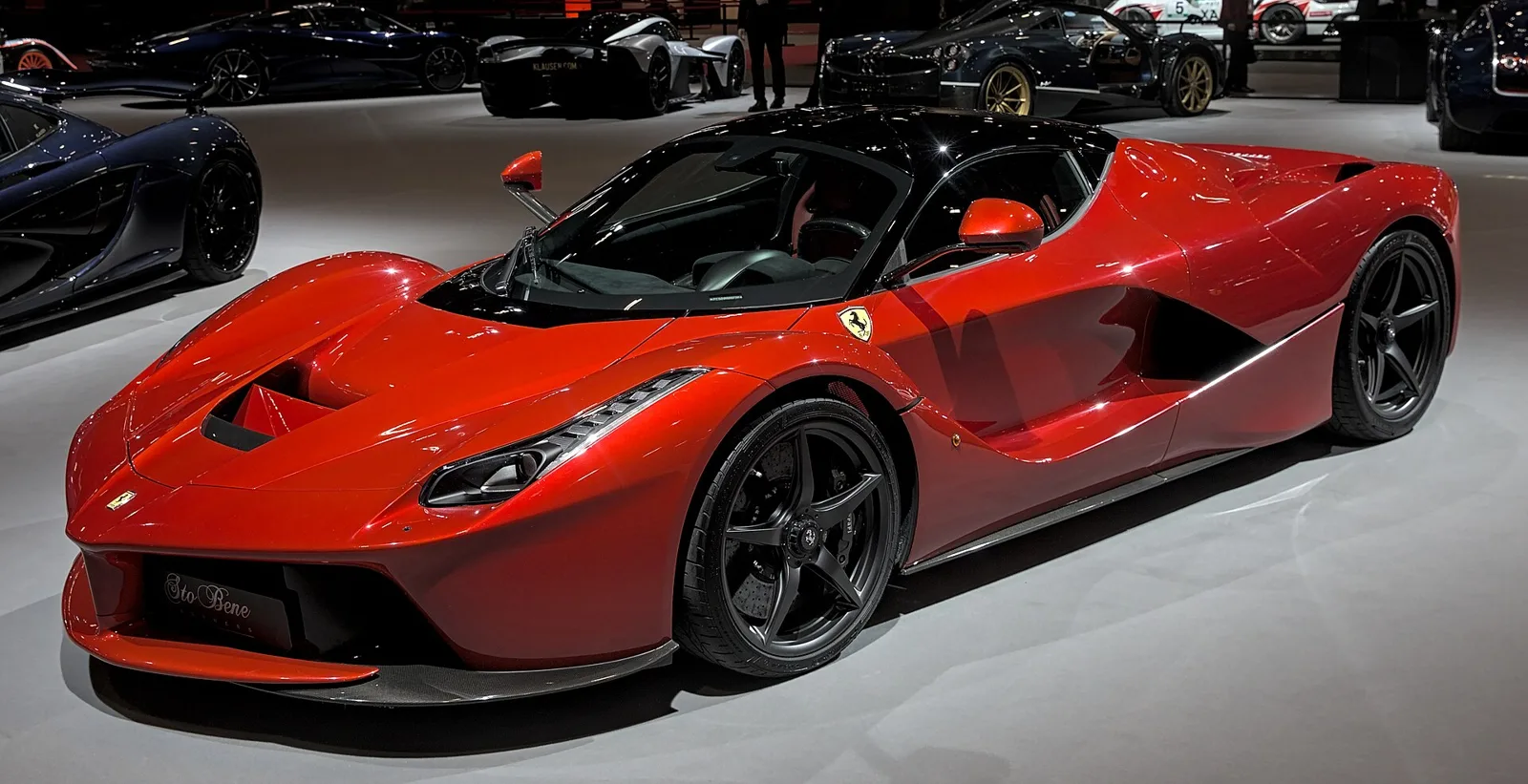
LaFerrari, shown at the 2013 Geneva Auto Show, was built as a limited hybrid flagship with a V12 and an electric boost. Its combined output of 963 PS was matched by only 499 coupes, and the Aperta convertible and track-only FXX-K followed.
LaFerrari was Ferrari's limited-production hybrid flagship, shown at the 2013 Geneva Auto Show. Its V12 and HY-KERS unit gave 963 PS (708 kW; 950 hp) combined, and only 499 coupes were built. An open-top Aperta and track-only FXX-K models followed later.
Where did LaFerrari come from?
The project was known internally as F150, and its name was meant to signal that it was the definitive Ferrari. Nine design studies were considered in 2011, reduced to five in April of that year, before the design team settled on a single direction.
Two full-size concepts were built, the Manta and the Tensostruttura. The concepts were unveiled at the Ferrari Museum in Maranello and at Ferrari World in Abu Dhabi, and the final production shape closely followed the Manta.
LaFerrari drew on findings from the FXX development prototype and on research carried out by the Millechili Project at the University of Modena. That link fed speculation that the car would be extremely light, although the claimed dry weight was a more modest figure.
The name means 'The Ferrari' in Italian, which reflected the car's role as the company's most advanced road car at the time. It was intended to be the benchmark for everything that followed.
A mid-engined V12 hybrid that gave Ferrari a convertible and a track family from one clean design.
How much power did LaFerrari make?
The F140 V12 displaced 6,262 cc and made 800 PS (588 kW; 789 hp) at 9,000 rpm, with 700 Nm (516 lb ft) of torque at 6,750 rpm. A HY-KERS unit added 163 PS (120 kW; 161 hp), giving a combined 963 PS (708 kW; 950 hp) and 900 Nm (664 lb ft).
The bore and stroke were 94 mm and 75.2 mm, with a compression ratio of 13.5:1, giving 94 kW (128 PS) per litre. The engine was mated to a seven-speed dual-clutch transmission, and the hybrid system supplied short bursts of extra power on demand.
Ferrari claimed CO2 emissions of 330 g/km and a 40% cut in fuel consumption compared with its earlier models. LaFerrari was the first full hybrid the company had produced, and it delivered the highest power output of any Ferrari road car up to that point.
The electric unit added short bursts of power on top of the V12, so the petrol engine and the motor worked as one drivetrain rather than as separate systems.
How quick was the LaFerrari?
Ferrari claimed 0-100 km/h in 2.6 seconds and 0-200 km/h in under 6.9 seconds, with a top speed in excess of 350 km/h (220 mph). The 0-300 km/h claim of 15 seconds was later challenged, and the verified time was 21.99 seconds.
Ferrari also claimed a Fiorano lap of 1:19.70. That time sat alongside a design that used F1-based electronics, including E-Diff 3 and F1-Trac, both integrated with the hybrid system.
Twenty-one onboard computers controlled the active aerodynamics, and the stability and traction systems were integrated with the hybrid unit.
The gap between the claimed and verified 0-300 km/h times shows why independent testing matters when a manufacturer publishes headline figures.
Why did LaFerrari lack a Pininfarina body?
LaFerrari was the first Ferrari since the 1973 Dino 308 GT4 without Pininfarina bodywork. The company said there were no plans to end the partnership, which began in 1951, but later Ferraris were designed in-house at Centro Stile Ferrari. The decision stood out because the two companies had worked together for decades.
The car's design features include a steering wheel with paddle shifters fixed to the column, and a central bridge that houses gearbox-linked instruments and a 12.3-inch (310 mm) TFT display with two layouts.
Carbon-ceramic Brembo discs measured 398 mm at the front and 380 mm at the rear. Pirelli P Zero Corsa tyres came in 265/30 R19 at the front and 345/30 R20 at the rear, which gave the car a wide and purposeful stance.
The chassis was a carbon fibre monocoque designed under Rory Byrne, with 27% more torsional rigidity than the predecessor. The suspension used double wishbones at the front and a multi-link arrangement at the rear.
What were the Aperta and FXX-K?
The LaFerrari Aperta was the open-top version, revealed at the 2016 Paris Motor Show with a removable carbon-fibre hardtop and a canvas soft top. The FXX-K was a track-only development car built on the LaFerrari, with 40 units produced. Each variant served a different buyer, from collectors seeking open-top motoring to track enthusiasts.
Aperta production was limited to 200 cars sold to invited customers, plus nine reserved for the 70th Anniversary celebrations. The removable hardtop and soft top gave owners two roof options, and the car's doors were reworked to rotate through a new carbon-fibre insert.
The FXX-K produced 1,050 PS (772 kW; 1,036 hp) and had a dry weight of 1,165 kg (2,568 lb). It generated 540 kg (1,190 lb) of downforce at 200 km/h (124 mph), and its top speed was 350 km/h (217 mph).
The FXX-K Evo, unveiled on 28 October 2017 in Florence, was an aerodynamic package for the existing FXX-K. It produced 23% more downforce than the standard FXX-K, and its estimated weight saving was 90 kg (198 lb).
What did the LaFerrari sell for?
The 500th LaFerrari coupe was auctioned by RM Sotheby's on 3 December 2016 for the benefit of earthquake relief in central Italy, raising US$7 million. The last Aperta sold for US$10 million in 2017, also for charity. Those prices reflected the scarcity of the car and the appeal of the charitable causes.
Each coupe had cost more than 1 million Euros when new, which puts the auction results in context and shows how much demand the car still attracted.
Hublot also produced 60 MP-05 LaFerrari hand-wound tourbillon watches. Each watch had a power reserve of 50 days, supplied by 11 barrels.
What are the LaFerrari specifications?
The table below covers the main figures for the coupe, the Aperta and the FXX-K. Each version keeps its own line, so the road car's combined output is not mixed with the track car's power and downforce figures. The table keeps those values on separate lines for clarity.
The road car's hybrid system delivered its power through a dual-clutch gearbox, and the figures in the table reflect the claimed rather than verified results. Where a number is a Ferrari claim, the table says so.
| Specification | Detail |
|---|---|
| Type | Mid-engine mild hybrid sports car, 2013 to 2016 |
| Engine | 6,262 cc V12 F140 with HY-KERS |
| Engine output | 800 PS (588 kW; 789 hp) at 9,000 rpm |
| Engine torque | 700 Nm (516 lb ft) at 6,750 rpm |
| Combined output | 963 PS (708 kW; 950 hp) |
| Combined torque | 900 Nm (664 lb ft) |
| Dry weight | About 1,255 kg (2,767 lb) |
| CO2 emissions | 330 g/km (Ferrari claim) |
| 0-100 km/h | 2.6 seconds (Ferrari claim) |
| 0-300 km/h | 21.99 seconds (verified) |
| Top speed | In excess of 350 km/h (220 mph) |
| FXX-K output | 1,050 PS (772 kW; 1,036 hp) |
| FXX-K dry weight | 1,165 kg (2,568 lb) |
| Units | 499 coupes, 200 Aperta plus nine reserved |
How did LaFerrari's hybrid system work?
LaFerrari combined a V12 with an electric unit called HY-KERS. The system stored energy during braking and released it as short bursts of extra power, which lifted the combined output well above the engine's own figure. Its layout let the electric unit work alongside the engine rather than replace it.
The motor added 163 PS (120 kW; 161 hp) on top of the petrol engine's 800 PS (588 kW; 789 hp), giving a total of 963 PS (708 kW; 950 hp). That made it the highest-output Ferrari road car of its time.
Ferrari described the system as a full hybrid, the first the company had produced. The hybrid approach also cut fuel consumption by 40% compared with earlier models, a significant engineering goal for a flagship car.
The gearbox was a seven-speed dual-clutch unit, and the electric boost was integrated into the control software so the driver experienced the hybrid as a single drivetrain.
What set the FXX-K apart from the road car?
The FXX-K was built for track work and for the Client Test Driver programme. It offered four driving modes: Qualify for maximum performance over short distances, Long Run for longer sessions, Fast Charge to recharge the battery and Manual Boost for full power from the engine and batteries.
Its aerodynamic package was far more extreme, with a large splitter, a twin-profile spoiler, small headlights and a higher tail with an electronically operated spoiler.
The car used F1-based technology, including E-Diff, F1-Trac traction control and racing ABS, all controlled from the centre console. It was not intended for competition, and its role was to gather data for future Ferrari road and race cars.
Only 40 FXX-K units were built, which made each one an exclusive research car rather than a production model.
What changed between the coupe and the Aperta?
The Aperta kept the coupe's mechanical layout but added changes to suit an open roof. Its radiators were re-angled, the front air dam was lengthened, and the windscreen pillars gained flaps to reduce pressure on the rear of the cabin. Ferrari built 200 pre-sold examples, plus nine reserved for the 70th Anniversary.
The radiators were angled so that hot air leaves beneath the car instead of over the bonnet. A longer front air dam added downforce, and a small L-shaped flap at the top of each windscreen pillar eased pressure inside the open cabin.
The doors received different opening angles, and a carbon-fibre insert let them rotate. Engine control electronics were also made more efficient, so the open car kept the coupe's powertrain character.
The removable carbon-fibre hardtop and canvas soft top gave owners two roof choices. The last unit sold at auction in 2017 for US$10 million, which showed the strength of demand for the Aperta as a collectible.
The LaFerrari's place in Ferrari's history rests on its combination of hybrid technology and a strictly limited run. Later hybrid Ferraris, including models from the company's Centro Stile design team, drew on the same approach to electric boost and aerodynamic efficiency.
Collectors treat each version as a separate chapter of one project, and that is why the family still attracts attention at auction and among enthusiasts. Its auction results and engineering remain reference points for later Ferrari hybrids.
The track car's programme was designed to feed findings back into the company's wider engineering work. That two-way flow is one reason the LaFerrari family is so closely linked.
Frequently asked questions
How many LaFerrari were built?
Only 499 coupes were made, and each cost more than 1 million Euros when new. Aperta production added 200 pre-sold open-top cars plus nine reserved examples for the 70th Anniversary celebrations.
Were there any recalls?
Yes. Eighty-five coupes were recalled because the headrests from Lear's L32 seat did not absorb enough energy, and because the tyre-pressure monitoring system displayed the wrong message after a puncture. A separate later recall covered a driver's side airbag assembly.
Was the FXX-K road legal?
No. The FXX-K was a research vehicle for Ferrari's Client Test Driver programme, used on special tracks to gather data for future road and race cars. It was not intended for competition.
Did LaFerrari have a dry weight?
Ferrari claimed a dry weight of about 1,255 kg (2,767 lb). Dry weight excludes fluids, so the kerb weight of a road-ready car would be higher.