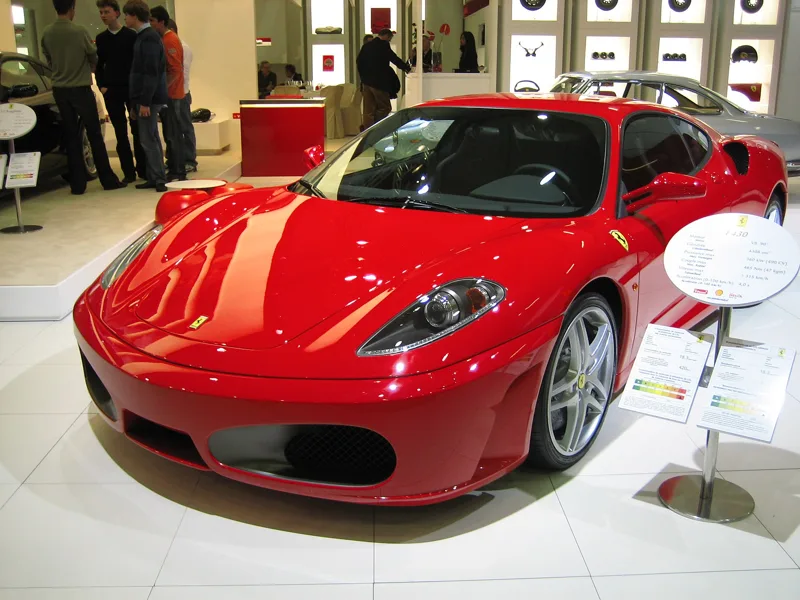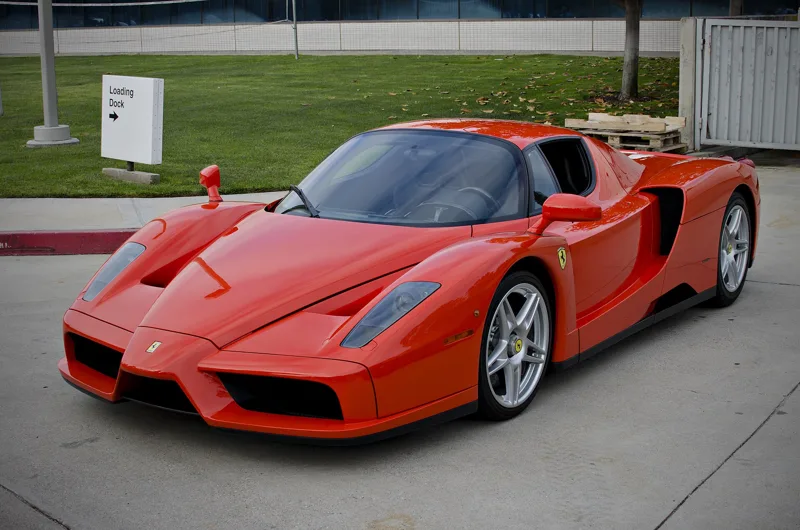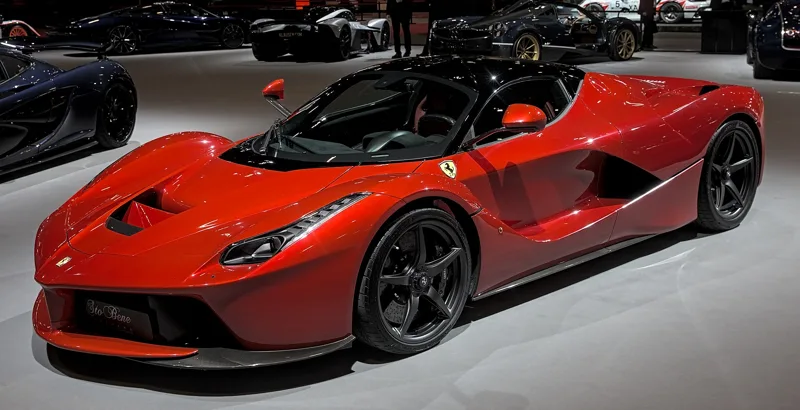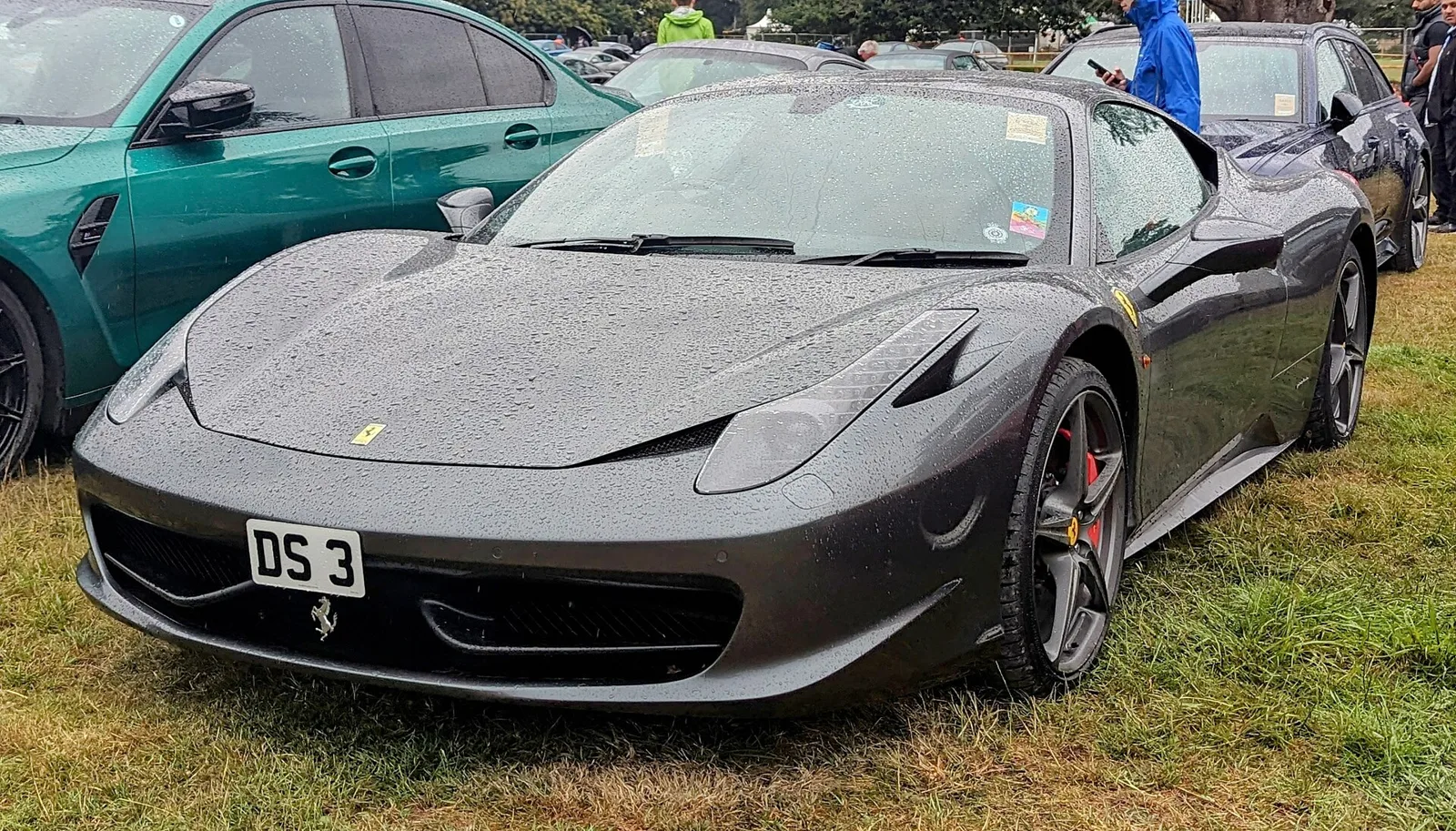
Pininfarina styling, a naturally aspirated V8 with no manual option and a racing record that followed the road cars from 2009 to 2015.
The Ferrari 458 Italia was a mid-engined sports car from Ferrari, unveiled in 2009 and succeeded by the 488 GTB in 2015. It used a 570 PS V8 with a dual-clutch gearbox and became the base for Spider, Speciale and racing versions.
The Ferrari 458 is an Italian mid-engined sports car that replaced the F430 and was first shown at the 2009 Frankfurt Motor Show. Its 4.5-litre V8 used direct fuel injection, a first for a Ferrari mid-engined road car, and its open-top and track-focused spin-offs kept the model in the spotlight until 2015.
Where did the 458 come from?
Ferrari presented the 458 as the successor to the F430, although it was an entirely new design that drew on Formula One experience. It was first unveiled at the 2009 Frankfurt Motor Show, and the 488 GTB replaced it in 2015.
The body computer system came from Magneti Marelli, a specialist electronics supplier. The Italia name identified the standard coupe, and the car became the foundation for a family of Spider, Speciale and racing models.
A mid-engined V8 that gave Ferrari a convertible and track family from one clean design.
How much power did the 458 make?
The 4,497 cc V8 produced 570 PS (419 kW; 562 hp) at 9,000 rpm, with 540 Nm (398 lb ft) of torque at 6,000 rpm. Ferrari quoted a 0-100 km/h time of 3.4 seconds and a top speed of more than 325 km/h (202 mph).
The engine belongs to the F136 family of Ferrari and Maserati V8s. Eighty percent of its torque was available from 3,250 rpm, so pulling power arrived early.
On the combined cycle the car is rated at 13.3 L/100 km (21.2 mpg-imp; 17.7 mpg-US), with 307 g/km of CO2.
Why did the 458 engine matter?
The 458 brought direct fuel injection to a Ferrari mid-engined road car for the first time, and its V8 belonged to the F136 family shared between Ferrari and Maserati. Ferrari also tied the car to its Formula One experience, which fed the engineering of its road cars.
The Speciale later revised that engine, raising output to 605 PS (445 kW; 597 hp) with updated electronics and a new side slip control system. The Speciale kept the 9,000 rpm peak, so the engine's upper range stayed the same.
Was there a manual gearbox?
No. The 458 offered only a 7-speed dual-clutch automatic from Getrag, which made it the first mainstream model to go without a manual option.
The gearbox was a different calibration of a unit that the Mercedes-Benz SLS AMG also used.
How did the 458 handle and brake?
Front suspension used double wishbones, while the rear was a multi-link arrangement. E-Diff and F1-Trac electronics helped with cornering and acceleration, and the steering ratio was 11.5:1.
Carbon ceramic brakes came as standard, and a prefill function moves the pads toward the discs when the driver lifts off. Adaptive magnetorheological dampers were developed with the BWI Group.
A quoted figure of 32.5 metres (107 ft) covered the stop from 100-0 km/h, while one test recorded 90 feet (27 m) from 100 km/h.
What variants did the 458 spawn?
Ferrari built a Spider in 2011, a Speciale in 2013 and a Speciale A convertible in 2014. Each added a different kind of character to the platform, from open-top touring to track focus.
The Spider, shown at the 2011 Frankfurt Motor Show, used an aluminium retractable hardtop that Ferrari said weighed 25 kilograms (55 lb) less than a soft roof. The roof took 14 seconds to operate, and the convertible kept the coupe's 0-100 km/h time while topping out at 320 km/h (200 mph).
The Speciale, unveiled at the 2013 Frankfurt Motor Show, raised output to 605 PS (445 kW; 597 hp). Side slip angle control was added, working through torque management and the electronic differential, and the Speciale reached 200 km/h in 9.1 seconds.
The Fiorano lap of 1:23.5 sat 0.5 seconds behind the F12 berlinetta, and lateral acceleration reached 1.33 g. Only 1,309 Speciales were built, and each one was a road-legal car before any track work.
What is the Speciale A?
The open-top Speciale A, shown at the 2014 Paris Motor Show, is the convertible sibling of the Speciale. Its name comes from Aperta, the Italian word for open, and only 499 examples were made, 49 of them right-hand drive.
The Speciale A matched the coupe's 3.0 seconds to 100 km/h and reached 320 km/h (199 mph). It held the record for naturally aspirated power among Ferrari convertibles until the 790 hp (801 PS; 589 kW) V12 of the LaFerrari Aperta arrived in 2017.
Which special editions and one-offs were built?
The 2012 China Edition was limited to 20 units and marked 20 years of Ferrari in China. Several one-offs followed, including the SP12 EC built for Eric Clapton.
The China Edition wore Marco Polo Red paint, a golden dragon graphic on the bonnet, gold winglets and gold-painted wheels. A gold-and-black livery stripe ran along the flanks to suggest a race track.
The 458 Speciale MM paid homage to the 288 GTO and used handcrafted aluminium and carbon fibre parts. The SP12 EC drew its bodywork from the 512 BB, shaped by Ferrari's Styling Centre with Pininfarina. It used the 458 Italia's mechanicals, including its 4.5-litre V8, and reportedly cost 3,000,000 pounds sterling.
Ferrari built six Sergio cars with Pininfarina in 2015, a targa-topped production version of a barchetta concept that had no windscreen. Each one reportedly cost US$3,000,000.
How did the 458 perform in racing?
The 458 Challenge raced in the Ferrari Challenge series from the 2011 season, and the 458 Italia GT2 and GT3 cars took wins across endurance and GT championships worldwide. The GT2 version won the 24 Hours of Le Mans in 2012 and 2014, and it added FIA World Endurance Championship GTE titles in those seasons. Its engine made 470 PS (346 kW; 464 hp) under restrictor rules, with a red line of 6,250 rpm.
The Challenge car shed weight through thinner panels, carbon fibre replacements and polycarbonate glass. Ferrari said the standard Challenge could lap Fiorano in 1:16.5, two seconds quicker than the F430 Challenge and only 0.2 seconds off the FXX. The car was presented on 14 July 2010 for the 2011 season, and an Evo version with a large rear wing followed in 2014 before the 488 Challenge replaced it in 2017.
The GT3 version made around 558 PS (410 kW; 550 hp) and won six times at the 24 Hours of Spa-Francorchamps. It also took a win at the 2014 Liqui Moly Bathurst 12 Hour on Mount Panorama. Its 9,000 rpm red line sat closer to the road car's engine than the GT2's 6,250 rpm did.
A Grand-Am version used 507 PS (373 kW; 500 hp) and a sequential manual gearbox in place of the dual-clutch unit. It debuted at the 2012 24 Hours of Daytona and carried no traction control or ABS.
What awards did the 458 win?
The 458 took the 2009 Car of the Year title, plus Supercar of the Year honours. Top Gear named the Spider its Cabrio of the Year for 2011.
Motor Trend called the Italia its Best Driver's Car for 2011, and the Speciale took Top Gear's Supercar of the Year for 2013. The Speciale also won James May's Car of the Year.
What recalls affected the 458?
Ferrari recalled all 1,248 cars sold to date on 1 September 2010 over wheel-arch adhesive that could overheat and catch fire. Owners whose fires were confirmed by independent engineers received a new car, while other cars had the adhesive replaced with mechanical fasteners.
BBC News reported in August 2010 that ten cars had crashed or caught fire within three months. Ferrari said it was aware of the fire cases and was investigating them.
A separate 2012 recall covered certain 2011 and 2012 US cars because the engine could seize suddenly. The F136 engines had crankshafts that were mounted incorrectly, and owners could pick a new engine, a removed-and-repaired unit or a new crankshaft and bearings.
How did the China price dispute involve the 458?
Reports said the car cost far more in China than in the US. The dealers' body CADA then worked alongside the National Development and Reform Commission to examine possible price-fixing.
Automakers pointed to a 24% import tariff, a 17% value-added tax and a consumption tax as the reasons for the gap. The gap raised questions about pricing in two large markets.
How was the 458 styled?
Pininfarina designed the body under design director Donato Coco, and Bertrand Rapatel led the interior. The grille winglets lower at speed to cut drag, and the body produced 140 kg (309 lb) of downforce at 200 km/h (124 mph).
Michael Schumacher gave input on the steering wheel, which carries many controls normally found on the dash or stalks, such as turn signals and high beams. The layout is common to racing cars, with the wheel carrying the controls.
Autocar linked the design to the Millechili concept, and Ferrari intended the 458 as its sportiest V8 car, separate from the entry-level California.
What are the Ferrari 458 specifications?
The table covers the core figures for the standard coupe and the main variants. Where a figure belongs to a specific version, the table says so, so the Speciale and Spider values do not blend into the base car.
| Specification | Detail |
|---|---|
| Type | F142, mid-engined sports car |
| Successor to | F430; succeeded by the 488 GTB in 2015 |
| Engine | 4,497 cc V8 of the F136 family, direct injection |
| Output | 570 PS (419 kW; 562 hp) at 9,000 rpm |
| Torque | 540 Nm (398 lb ft) at 6,000 rpm |
| Transmission | 7-speed dual-clutch by Getrag; no manual |
| 0-100 km/h | 3.4 seconds (official) |
| Top speed | Over 325 km/h (202 mph) |
| Combined fuel use | 13.3 L/100 km (21.2 mpg-imp; 17.7 mpg-US); 307 g/km CO2 |
| Downforce | 140 kg (309 lb) at 200 km/h (124 mph) |
| Speciale | 605 PS (445 kW; 597 hp); 0-100 km/h in 3.0 seconds; 1,309 built |
| Speciale A | 499 examples, 49 right-hand drive |
Frequently asked questions
How quick was the 458 Speciale?
The Speciale reached 100 km/h in 3.0 seconds and 200 km/h in 9.1 seconds. Its output rose to 605 PS (445 kW; 597 hp), and lateral acceleration reached 1.33 g.
Was there an open-top 458?
Yes. The Spider arrived in 2011 with an aluminium retractable hardtop, and the Speciale A followed in 2014 as a 499-unit convertible. Both kept the mid-engined layout of the coupe.
Is a manual version of the 458 available?
No manual version was offered. The seven-speed dual-clutch automatic from Getrag was the only transmission, and that choice made the car unusual among mainstream sports cars of its time. Buyers who wanted a clutch pedal could not get one from the factory, so the gearbox defined the car's driving character from the first mile.
What replaced the 458?
The 488 GTB replaced the 458 in 2015. The 458 had itself succeeded the F430, so the two cars sit one after the other in the line. The 458 is best read as the middle link in that sequence, between a naturally aspirated predecessor and a successor that carried the same mid-engined layout forward.