The 488 replaced the 458 with a turbocharged 3,902 cc V8, spawned Spider and Pista models, and carried Ferrari to race wins at Le Mans and Bathurst.
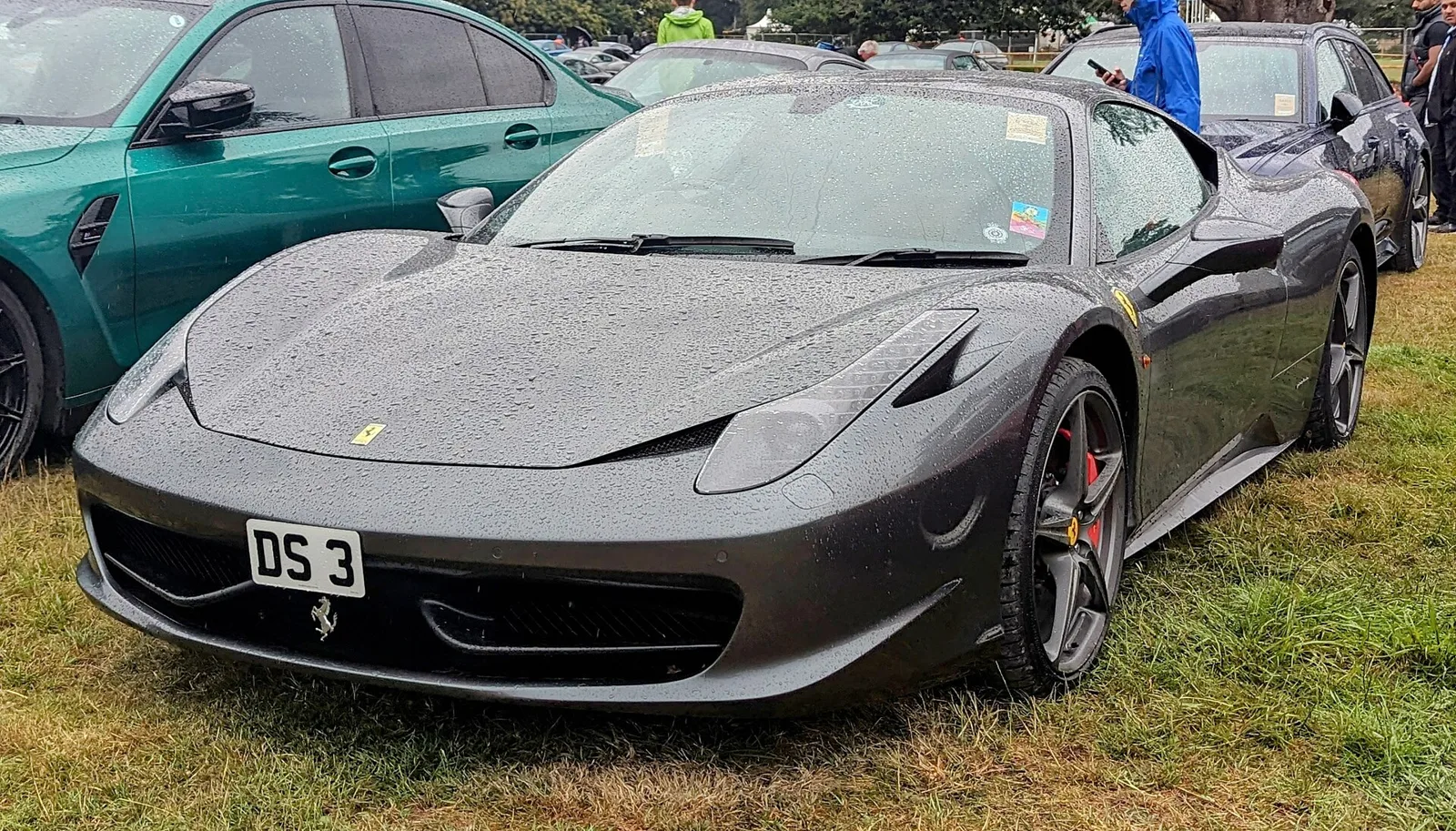
The Ferrari 488 is a mid-engine sports car from Ferrari that replaced the 458. It uses a 3,902 cc twin-turbocharged V8 producing 493 kW (670 PS; 661 hp), with a seven-speed dual-clutch gearbox. It was succeeded by the Ferrari F8, and it spawned Spider, Pista and racing variants.
Few sports cars of their era carried a turbocharged engine with as much pedigree as the Ferrari 488. The mid-engine coupe replaced the 458 and reached a new peak of power for a road Ferrari of its layout. Its family of Spider, Pista and race cars made it one of the most decorated Ferraris of its generation.
Where did the 488 come from?
The 488, with the type code F142M, was a mid-engine sports car from the Italian maker Ferrari. It replaced the 458, and it was the first mid-engine Ferrari to use a turbocharged V8 since the F40. The model was later succeeded by the Ferrari F8, which carried the same basic layout forward.
The car was designed by Flavio Manzoni, whose team also shaped later Ferraris. Its design won the Red Dot Best of the Best award for Product Design in 2016, a recognition that reflected how much attention had gone into the look of the body.
A turbocharged mid-engine V8 that set records for power per litre and still carried the Pista's track focus.
What engine powers the 488?
The 488 is powered by a 3,902 cc twin-turbocharged V8 from the F154 engine family. The name refers to the 488 cc per cylinder, and the unit is all-aluminium with a dry sump. It is smaller in displacement than the 458's naturally aspirated engine, yet it produces far more power.
Two parallel ball-bearing twin-scroll turbochargers, supplied by IHI and Honeywell, feed two air-to-air intercoolers. The turbine blades are built from a low-density TiAl alloy, the sort of material found in jet engines, which helps cut inertia and copes with heat. The result is 493 kW (670 PS; 661 hp) at 8,000 rpm, with torque of 760 Nm (561 lb ft) arriving at 3,000 rpm.
Specific output works out at 126.3 kW (171.7 PS; 169.4 hp) per litre, with specific torque of 194.8 Nm (144 lb ft) per litre. Ferrari described both as records for a Ferrari automobile, a claim that set the tone for the rest of the range.
Which gearbox does the 488 use?
The only transmission available for the 488 is a seven-speed dual-clutch automatic built for Ferrari by Getrag. It was based on the gearbox used in the 458, and it gives quick, precise shifts that suit the car's performance character.
The automatic arrangement left no manual option, which kept the car's focus firmly on speed and response. Drivers who wanted to row through the gears did so with paddles, not a clutch pedal.
How quick is the 488?
Ferrari claimed 0-100 km/h in 3.0 seconds for the 488 GTB, with 0-200 km/h in 8.3 seconds. The car was also said to cover the quarter mile in 10.45 seconds, and its top speed was 330 km/h (205 mph).
These figures placed the coupe at the head of its class when it arrived, and they reflected the work that went into the engine and gearbox. Independent tests would later confirm much of the same pace, which kept the car at the centre of the supercar conversation.
How do the 488's brakes and wheels work?
The 488 uses improved carbon-ceramic brakes derived from the LaFerrari. Their new materials reach optimum operating temperature more quickly, and the discs measure 398 mm at the front and 360 mm at the rear. Ferrari reportedly reduced stopping distances by 9% compared with the 458.
A new five-spoke alloy wheel was designed for the car, measuring 51 cm (20 in) at front and rear. Front tyres are 245/35 and rear tyres are 305/30, which give the car a wide, planted stance on the road.
How was the body designed for downforce?
Compared with the 458, the body generates 50% more downforce, and it sheds drag at the same time. A new front double splitter feeds air into the radiators and channels airflow over underbody vortex generators, creating ground effect without adding unwanted drag.
A slotted rear flap, integrated into the decklid and bumper, adds downforce without needing a raised wing. The central Aero Pillar deflects air under the flat body, and two bonnet vents release air from the front intakes, reducing pressure over the front of the car.
Active aerodynamic flaps, controlled by a microprocessor, work with a larger rear diffuser to reduce drag and increase downforce. The bigger diffuser meant the twin exhausts had to sit higher in the rear bumper for clearance.
What do the 488's side intakes and door handles do?
The scalloped side air intakes are a homage to those on the 308 GTB, and a central partition divides them. The top intake feeds the turbocharger compressor, while the rest of the air exits behind the car to raise pressure there and reduce drag. The lower intake feeds the intercoolers.
Even the door handles, dubbed shark fins, were shaped to clean and funnel air into the large intakes above the rear wheels. Small details like these show how closely the car's cooling and aerodynamics were tied together.
What is the 488 Spider like?
The 488 Spider is a two-seat open-top variant with a folding hardtop, similar to its predecessor. Ferrari released pictures at the end of July 2015, and the car debuted at the 2015 Frankfurt Motor Show that September.
The Spider uses the same drivetrain as the coupe, with its 3,902 cc twin-turbocharged V8. It is 50 kg (110 lb) heavier than the coupe and 10 kg (22 lb) lighter than the 458 Spider. Its 0-200 km/h time takes 8.7 seconds, and its top speed is 325 km/h (202 mph). IEEE Spectrum named it one of the top ten tech cars of 2016.
What changed in the 488 Pista?
Ferrari unveiled the 488 Pista, the Italian word for track, at the Geneva International Motor Show on 6 March 2018. Its design was influenced by the 488 GTE and 488 Challenge race cars, and it received many mechanical and exterior changes to make it more capable than the GTB.
Output climbs to 530 kW (720 PS; 710 hp) at 8,000 rpm, and torque peaks at 770 Nm (568 lb ft) at 3,000 rpm. Upgrades include new camshafts, a larger intercooler, strengthened pistons, titanium connecting rods and Inconel exhaust manifolds borrowed from the 488 Challenge. The gearbox revisions also sharpen shifts when the car is in race mode.
The Pista generates 20% more downforce than the GTB, and its air intake tunnels were moved from the flanks to the rear spoiler. It is also 91 kg (200 lb) lighter than the GTB, thanks to carbon fibre on the hood, bumpers and rear spoiler. Ferrari claimed 2.85 seconds for 0-100 km/h and a maximum speed of 340 km/h (211 mph).
How did the Pista Spider differ?
The convertible Pista Spider was unveiled at the 2018 Pebble Beach Concours d'Elegance. It keeps the same engine and output as the coupe, and it weighs 1,380 kg (3,042 lb), which made it lighter than its coupe counterpart in Ferrari's history of production convertibles.
Inside, carbon fibre and Alcantara cover the cabin, and there are straps in place of door handles, which signal the track focus of the car. Its 20-inch wheels are available in diamond-finish alloy, with carbon fibre wheels offered as an option.
Which special editions were made?
The 488 Pista Piloti was a tribute to Ferrari's 2017 FIA World Endurance Championship LM GTE Pro titles. It was developed by Ferrari's Tailor-Made department and carried a livery with the colours of the Italian flag and the word PRO, with the launch car wearing the number 51 used by the championship drivers.
The J50 was a limited-edition targa top based on the 488 Spider, built to celebrate half a century of Ferrari in Japan. It used a two-piece carbon fibre targa roof, and power rose by 15 kW (20 PS; 20 hp) to 508 kW (690 PS; 681 hp). Only 10 examples were built, and the car won a Red Dot Award in 2017.
What one-off cars were built on the 488?
The SP38 Deborah was a one-off built for a customer, based on the 488 and carrying the same mechanical parts. Its body drew on the F40 and the 308, and it took 18 months to complete. The paint was a custom red named after the owner.
The P80/C was a track-only car based on the 488 GT3, commissioned in 2015. It had sports-prototype bodywork and a large removable rear wing, and it used carbon fibre throughout. The KC23 was another one-off, built on a 2016 chassis upgraded with the 2020 Evo kit and fitted with vertically opening butterfly doors.
How did the 488 race?
The 488 GTE made its competition debut at the 2016 24 Hours of Daytona. It finished second at the 2016 24 Hours of Le Mans, run by Risi Competizione, and it won the 2016 Petit Le Mans. In 2017 the car took the FIA World Endurance Championship manufacturers and drivers titles, run by AF Corse.
The 488 GTE Evo arrived in 2018 for the Le Mans teams. In 2019 the 488 Evo won the LMGTE Pro class at the 24 Hours of Le Mans with the number 51 entry from AF Corse, and it also won the GTLM class at the 2019 Petit Le Mans.
How did the 488 GT3 perform?
The 488 GT3 made its world competition debut in 2016 at the Australian GT Championship, supporting the Australian Grand Prix at Albert Park. In February 2017 it won the Liqui Moly Bathurst 12 Hour, run by Maranello Motorsport, taking the race from pole and staying near the front throughout.
The 488 GT3 Evo, announced in 2020, carried improved front aerodynamics and a lighter seat developed with Sabelt. In 2021 it won the 2021 24 Hours of Spa in the Pro class, run by Iron Lynx. The 488 Challenge, meanwhile, debuted in the 2017 Ferrari Challenge season and later received its own Evo update.
How did the 488 get replaced?
The 488 GT3 Evo was succeeded by the 296 GT3 in 2024, and the 488 Challenge was replaced by the 296 Challenge in the same year. The road car, meanwhile, gave way to the F8 as the mid-engine line continued.
The 488 Challenge Evo was unveiled at the 2019 Finali Mondiali and debuted in 2020. Its changes included a redesigned front fascia, extended front overhang and turning vanes on the splitter, all aimed at more downforce.
What is the 488 GT Modificata?
The 488 GT Modificata is a limited-edition track car that draws on skills and technologies from the 488 GT3 and 488 GTE. It is built for track days and Ferrari Club Competizioni GT events, where it can make up to 700 PS (515 kW; 690 hp), 100 PS more than the restricted variants.
Frequently asked questions
How fast was the Ferrari 488 Pista?
Ferrari claimed the Pista could reach 100 km/h in 2.85 seconds and 200 km/h in 7.6 seconds. Its maximum speed was 340 km/h (211 mph), and it was 91 kg (200 lb) lighter than the GTB.
What replaced the 488?
The 488 was succeeded by the Ferrari F8, which continued the mid-engine turbo V8 layout. On the track, the 488 GT3 Evo gave way to the 296 GT3 in 2024.
Did the 488 win Le Mans?
Yes. In 2019 the LMGTE Pro class went to a 488 Evo entered by AF Corse, carrying the number 51. Earlier, the 488 GTE had finished second at the 2016 race.
How many J50 cars were built?
Only 10 examples of the J50 were built. Its carbon targa roof stowed behind the seats, and power rose to 508 kW (690 PS; 681 hp).