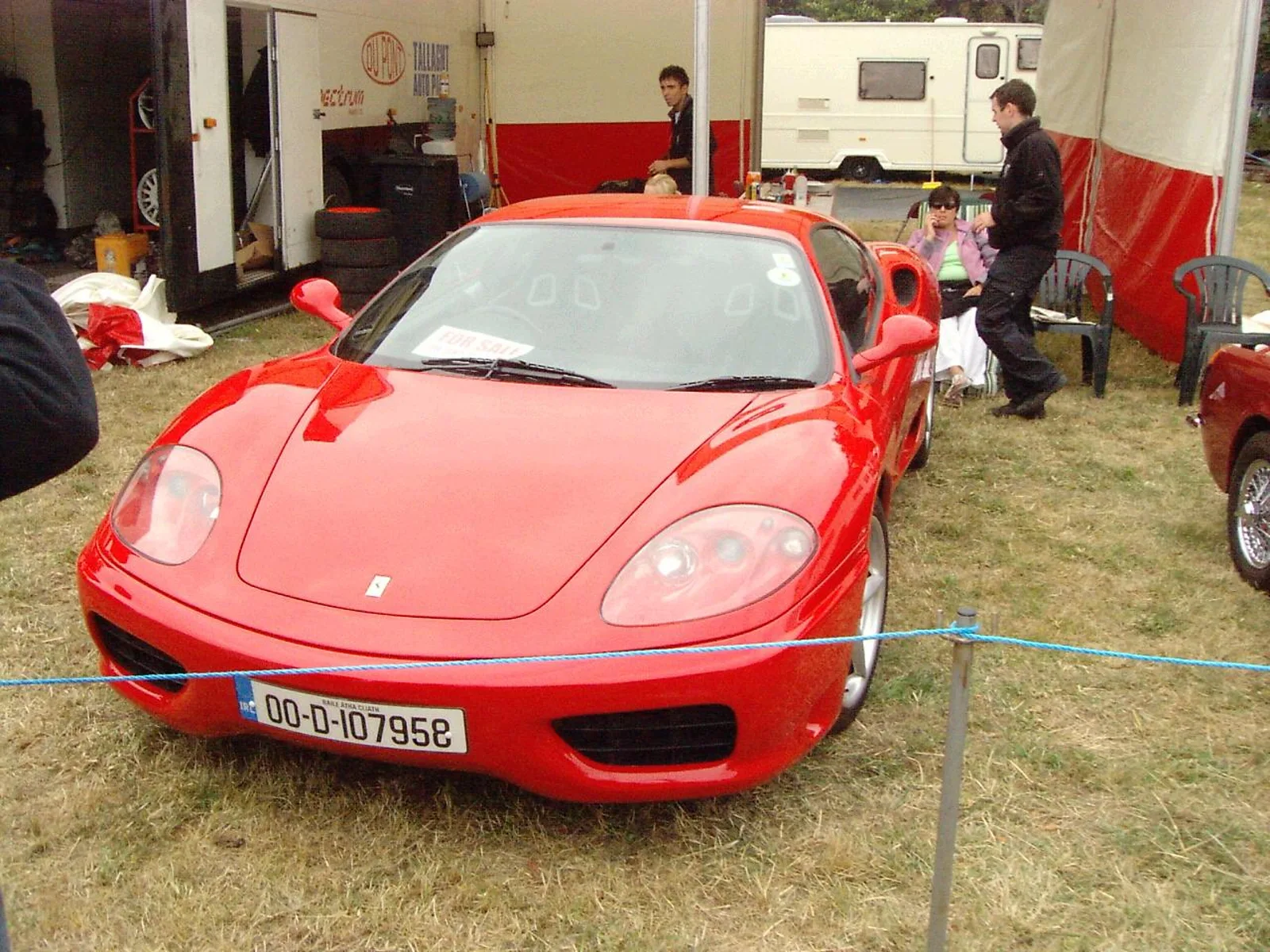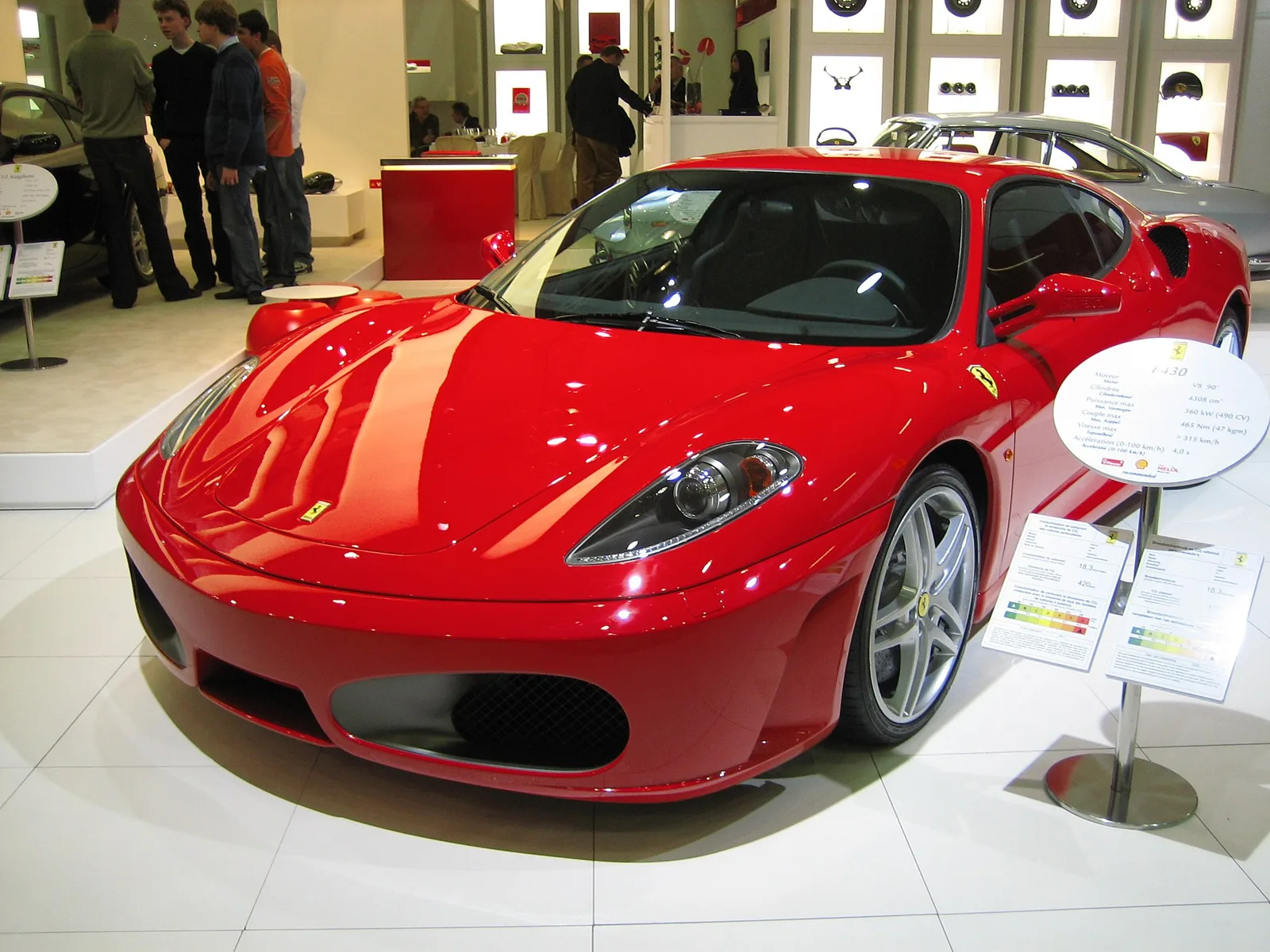
Pininfarina styling, a new 4.3-litre V8 and a family of Scuderia, racing and special models built between 2004 and 2009.
The F430 succeeded the 360 and was built from 2004 until 2009. Its 4.3-litre V8 produced 490 PS (360 kW; 483 hp), and the 430 Scuderia later raised that to 510 PS. Coupe, Spider and racing versions expanded the range during its production life.
The Ferrari F430 was an update of the 360 that Ferrari built as a V8 sports car from 2004 to 2009. It brought a new 4.3-litre engine, revised Pininfarina styling and the manettino steering wheel knob to the range. Its successor, the 458, was unveiled on 28 July 2009.
Where did the Ferrari F430 come from?
The F430 replaced the 360 in Ferrari's road car range. It was shown at the 2004 Paris Motor Show, and the programme ran until the 458 took its place in 2009. An estimated 16,750 cars were built in that period.
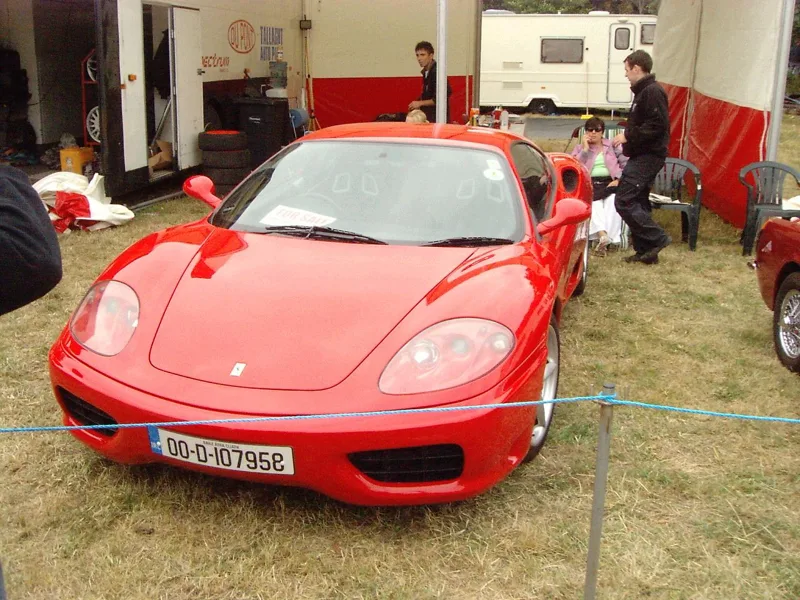
The F430 kept the chassis, roofline, doors and glass of the 360, yet it looked very different on the road. Designers added Enzo tail lights and engine cover vents at the rear, and the car's name was etched on a mirror styled after the Testarossa.
Pininfarina revised the body to improve aerodynamic efficiency with help from Frank Stephenson, who led Ferrari-Maserati concept design at the time. The drag coefficient stayed the same, but downforce was greatly enhanced, which made the car feel more planted at speed.
The style was not a simple reskin. The changes were intended to shape airflow over the body and under the car, and the result carried a clear family resemblance to the cars that came before and after it.
A new V8 that broke with fifty years of Dino engineering and still looked unmistakably like a Ferrari.
How much power did the F430 make?
The 4,308 cc V8 produced 490 PS (360 kW; 483 hp) at 8,500 rpm and 465 Nm (343 lb ft) of torque at 5,250 rpm. About 80% of that torque was available below 3,500 rpm. Ferrari quoted 0-60 mph (97 km/h) in 3.6 seconds and a top speed above 315 km/h (196 mph).
The engine belonged to the F136 family and ended fifty years of Dino-derived Ferrari V8 designs. Capacity rose by 20% while the engine gained only 4 kg (8.8 lb), which showed how carefully the new unit had been packaged.
Many internal parts were new. The connecting rods, pistons and crankshaft were entirely new, while the four-valve cylinder head, valves and intake trumpets were carried over from Formula 1 engines to improve airflow at high revs.
Torque arrived early and stayed strong through the midrange, which made the car easy to drive around town as well as on fast roads. The high redline meant the engine still had plenty to give as the tachometer climbed.
What was the 430 Scuderia?
The 430 Scuderia, unveiled by Michael Schumacher at the 2007 Frankfurt show, was a lighter and stronger F430 aimed at the Porsche 911 GT2 and the Lamborghini Gallardo Superleggera. It was 100 kg (220 lb) lighter and produced 510 PS (375 kW; 503 hp) at 8,500 rpm.
Weight came out through a set of targeted changes. Ferrari revised the intake and exhaust, and an ion-sensing knock detection system allowed a higher compression ratio. The weight-to-power ratio fell from 2.96 to 2.5 kg/hp as a result.
The single-clutch automated manual gained Superfast2 software that delivered 60 millisecond shifts. A new traction control system combined the F1-Trac system with the E-Diff electronic differential, so the car could manage grip and stability together.
Ferrari quoted 0-60 mph in 3.1 seconds and a top speed of 319 km/h (198 mph) for the Scuderia, which placed it firmly in supercar territory. Its sharper edge was intended for drivers who wanted the car to feel close to a racing machine on the road.
How did the F430 perform in racing?
The F430 Challenge was the track version built for the Ferrari Challenge series, shown at the Los Angeles Auto Show in January 2005. The GTC and GT3 racing cars competed in GT2 and GT3 championships, and GTCs scored class wins at the 24 Hours of Le Mans and at Spa and Sebring.
The GTC was built from 2006 by Ferrari Corse Clienti in collaboration with Michelotto, and it was the fastest and most developed racing version of the F430. Its engine was destroked from 4.3 litres to 4.0 litres to suit the GT2 class, giving 327 kW (445 PS; 439 hp) with a minimum weight of 1,100 kg (2,425 lb).
The destroking was a deliberate trade. A smaller engine let the car meet the class weight and restrictor rules, and the 4.0-litre unit gave a better power-to-weight ratio than the 4.3-litre engine would have achieved under the same rules.
GTCs won their class championships in the ALMS and the FIA GT series. Their class wins at the 2008 and 2009 24 Hours of Le Mans showed how competitive the platform remained after its road debut.
The GT3 version came from JMB Racing in 2006, built for the FIA GT3 European Championship. It made 410 kW; 558 PS (550 hp) but weighed 1,219 kg (2,687 lb) in race trim, and it was slower than the GT2 car over a lap despite its extra power.
Kessel Racing developed the 430 GT3 Scuderia for the 2009 season, upgrading 54 chassis to Scuderia specification. The Scuderia Evo package went to 25 of those cars, and its main gain came from aerodynamic efficiency.
Was the F430 recalled?
Yes. In February 2009 Ferrari recalled about 2,000 Spiders in the United States. Engine heat could fracture the convertible top's hydraulic hoses, leaking flammable fluid onto the engine and creating a fire risk. The recall applied only to the Spider, the convertible version of the F430.
The risk was that leaked fluid could land on hot engine parts. Because the hoses ran close to the engine, the problem was treated as a fire hazard rather than a simple leak, which is why the recall was issued at all.
Because the problem involved the convertible top's hydraulic system, the recall focused on that part of the car rather than on the engine itself.
What are the Ferrari F430 specifications?
The table lists the core figures for the standard F430 and the Scuderia, 16M and Spider variants. Where a number belongs to a specific version, the table keeps it on that version's line so the coupe and convertible figures are not blended.
Readers comparing the cars should note that the Spider used the same mechanicals as the coupe, with a small loss of top speed compared with the coupe. The Scuderia changes are concentrated on power, weight and gearbox software.
| Specification | Detail |
|---|---|
| Engine | 4,308 cc V8, F136 family |
| Power (standard) | 490 PS (360 kW; 483 hp) at 8,500 rpm |
| Torque (standard) | 465 Nm (343 lb ft) at 5,250 rpm |
| 0-60 mph (standard) | 3.6 seconds |
| Top speed (standard) | In excess of 315 km/h (196 mph) |
| Power (430 Scuderia) | 510 PS (375 kW; 503 hp) at 8,500 rpm |
| 0-60 mph (430 Scuderia) | 3.1 seconds |
| Top speed (430 Scuderia) | 319 km/h (198 mph) |
| Dry weight (Scuderia Spider 16M) | 1,340 kg (2,954 lb) |
| Kerb weight (Scuderia Spider 16M) | 1,440 kg (3,175 lb) |
| Production | About 16,750 cars, 2005 to 2009 |
What did the F430 Spider change?
The Spider was the convertible version of the F430, unveiled at the 2005 Geneva Motor Show. It was Ferrari's 21st road-going convertible, which placed it within a long line of open-top models from the marque. The changes were modest, which kept the convertible close to the coupe in character.
Pininfarina designed the body, and the team used aerodynamic simulation tools that had been developed for Formula 1 cars. That reflected the company's wider engineering links with its racing programme.
The conversion from a closed roof to an open car used a two-stage folding action. The roof panel folds away into a space above the engine bay, so the car keeps a clean profile when open.
The Spider's interior and performance matched the coupe, apart from a small increase in weight and a top speed reduced by 5 km/h (3 mph). Buyers gave up very little driving character to gain the open top.
What were the SP1 and Bio Fuel F430s?
The SP1 was the opening entry in Ferrari's Special Projects programme, a line of custom cars built on the F430 chassis. It was the first one-off of that programme. Both cars show how the F430 platform was adapted for buyers who wanted something distinct.
Its body was designed by Leonardo Fioravanti, a former Pininfarina designer, at the request of Junichiro Hiramatsu, a Japanese collector and former president of the Ferrari Club of Japan. Fioravanti's 1998 F100 prototype had helped inspire the commission.
The Spider Bio Fuel was a different kind of special: an F430 Spider that ran on ethanol. It was shown at the 2008 Detroit Auto Show as an example of an alternative fuel route for a sports car.
Such one-off and low-volume cars show how the F430 platform was used beyond the standard range, from bespoke bodywork to alternative fuels.
How did the F430 handle on track?
The F430 combined a new engine with carbon ceramic brakes, an electronic differential and a steering wheel knob that changed the car's character. Together these systems gave drivers a way to tune stability, throttle response and gearbox behaviour, which made the car a serious performer on circuits as well as roads.
The brakes were developed in close cooperation with Brembo and Bosch, and the discs used a cast-iron alloy with molybdenum to improve heat dissipation. The optional carbon ceramic package was claimed by Ferrari to resist fade across 300-360 laps at its test track.
The E-Diff was a computer-controlled limited-slip differential that varied the torque split based on steering angle and lateral acceleration. Drivers could choose between five settings on the manettino, which adjusted stability control, Skyhook suspension, transmission behaviour, throttle response and the E-Diff together.
Goodyear Eagle F1 GSD3 EMT tyres were available as an option, with a V-shaped tread, run-flat capability and OneTRED technology. They gave owners a dedicated tyre choice for maximum grip.
Taken together, the chassis and control systems let the F430 feel composed on a circuit, and the Challenge and GT racing versions built on that foundation.
The 458 that followed took the F430's basic formula further, and it was unveiled on 28 July 2009, marking the end of the F430 road car programme.
The Spider's convertible top relied on hydraulic systems that later became the focus of the 2009 recall. That history is a reminder that open-top cars carry extra mechanical complexity compared with their coupe siblings.
Frequently asked questions
How many Scuderia Spider 16M cars were made?
The 16M was a convertible version of the 430 Scuderia, and 499 cars were produced. All were pre-sold to select clients, and the car's dry weight was 1,340 kg (2,954 lb).
Did the F430 have an automated gearbox?
Yes. The standard car used an F1 automated manual transmission built by Graziano Trasmissioni, which offered sporty shifts without a clutch pedal.
Did the F430 sell in the United States?
Yes. Ferrari asked for an exemption from airbag design requirements, and it was granted, allowing the car to continue on sale there.
Was there an ethanol-fuelled F430?
Yes. The F430 Spider Bio Fuel ran on ethanol and was displayed at the 2008 Detroit Auto Show. It used the same V8 as the standard car, with a modest rise in torque and lower carbon dioxide emissions.