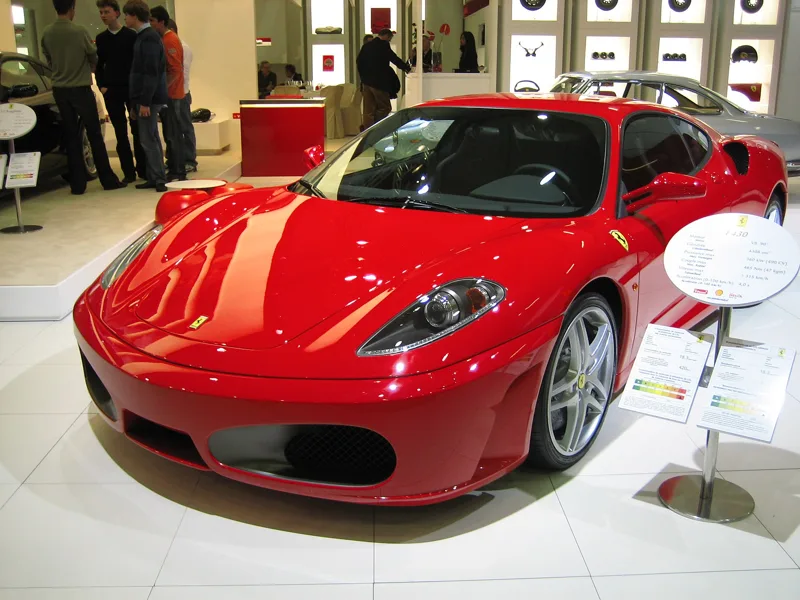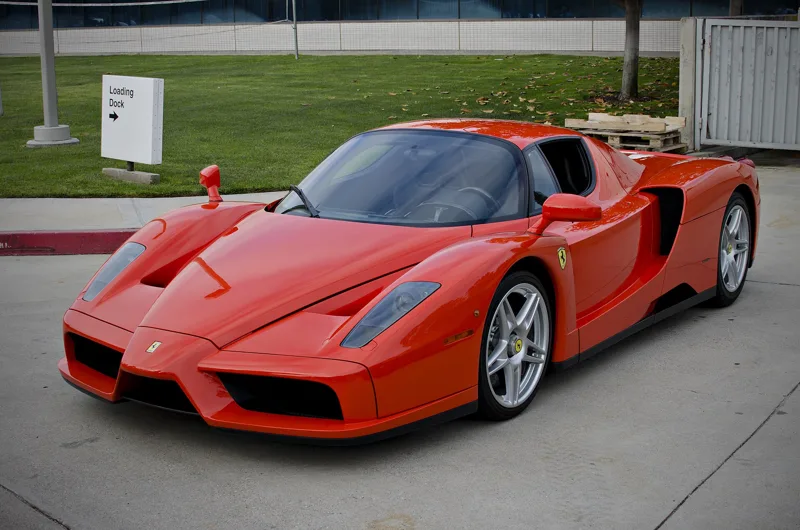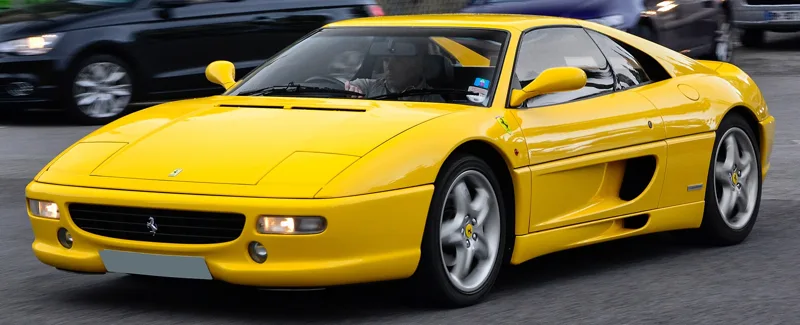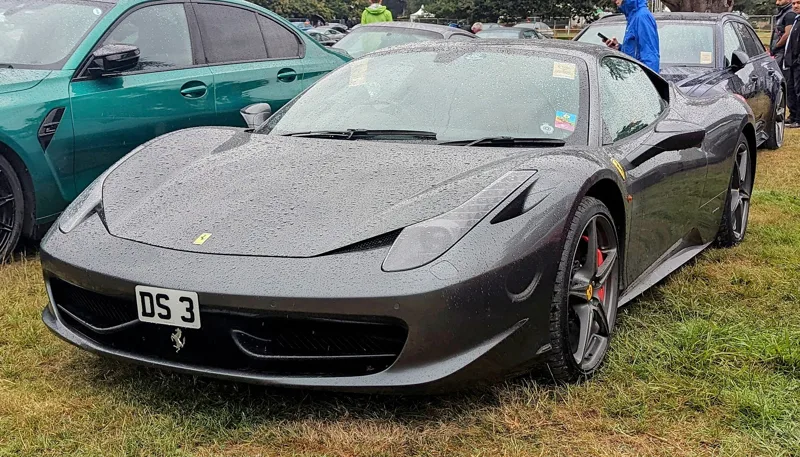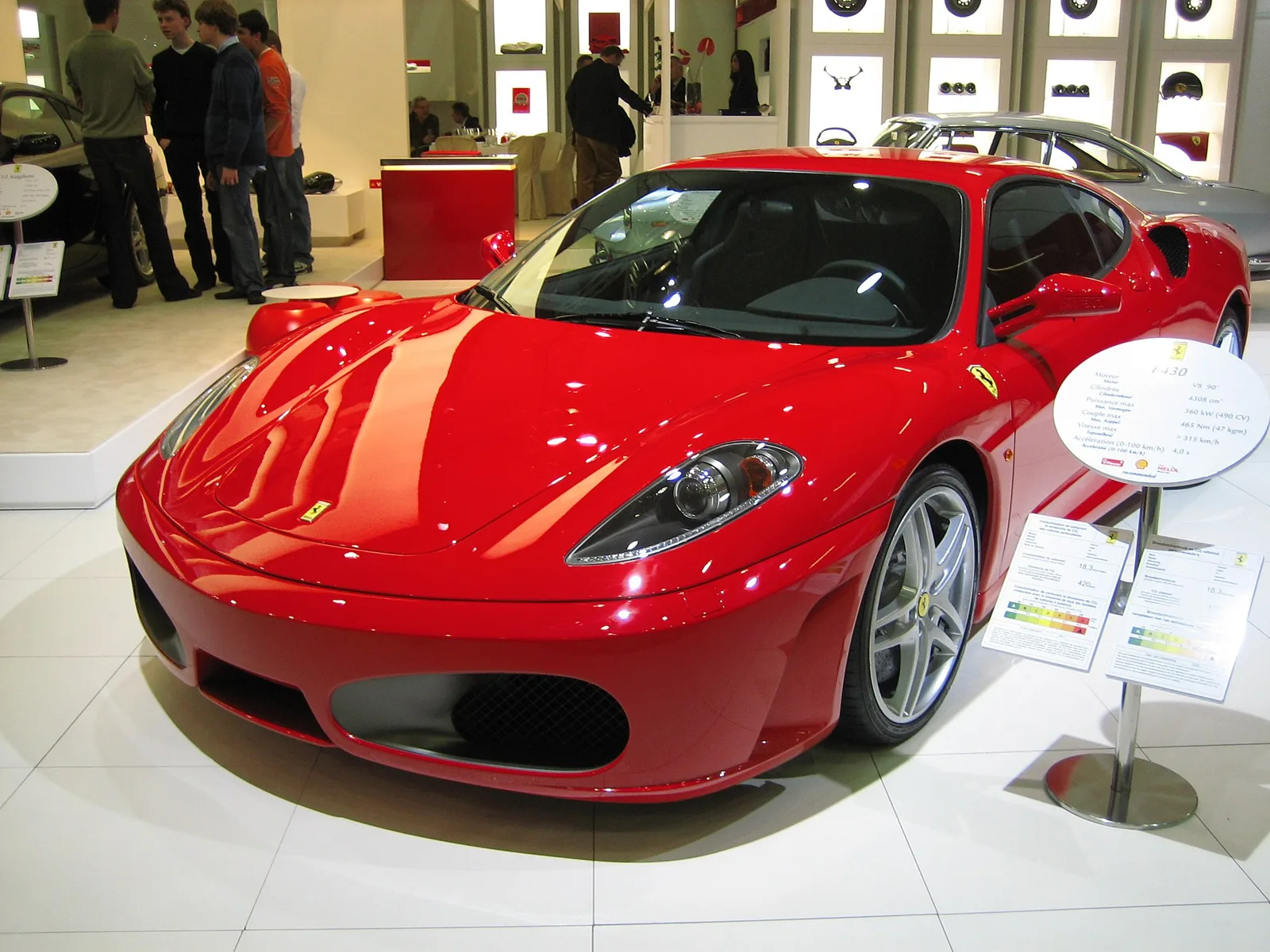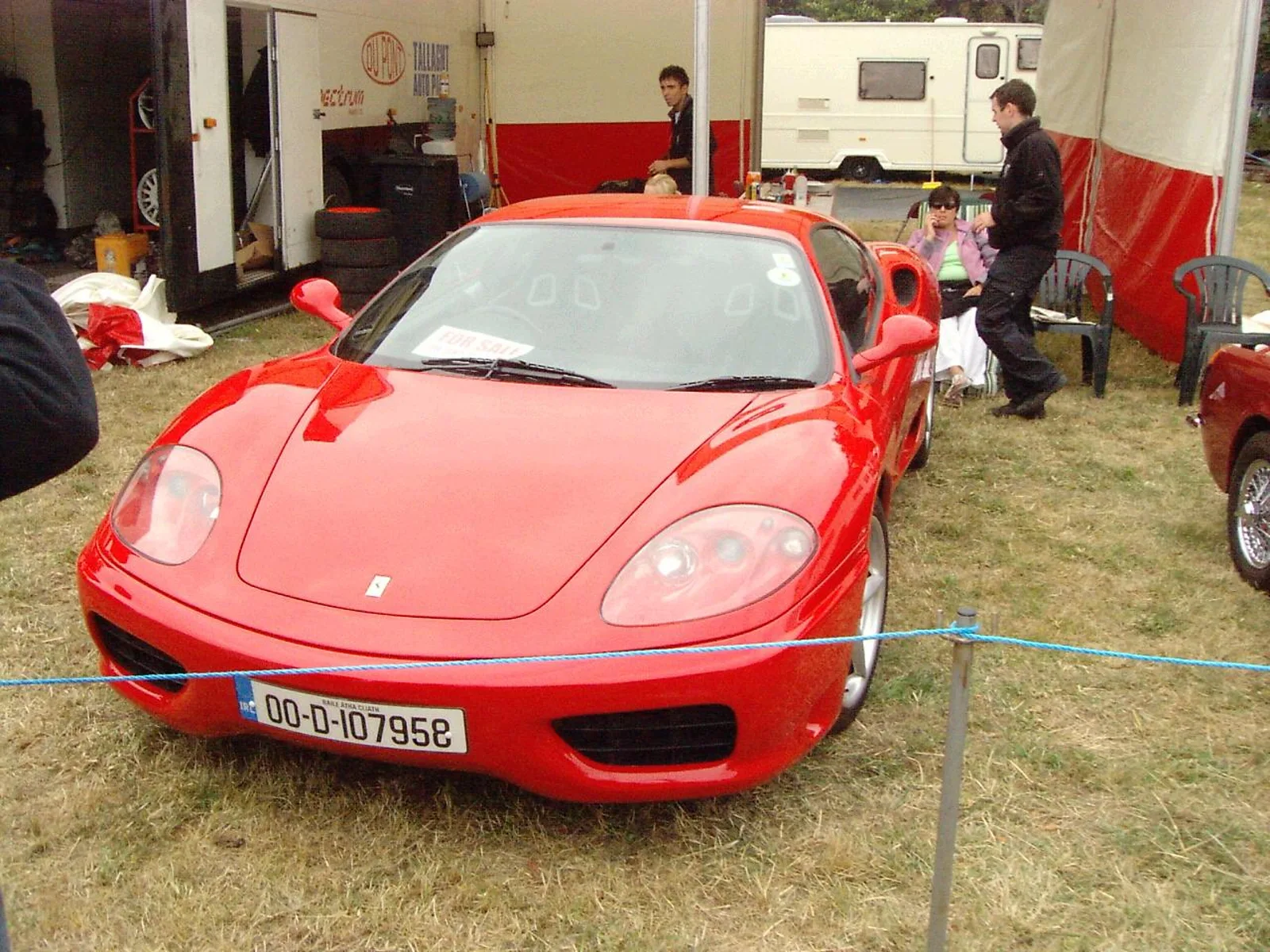
Pininfarina's clean-sheet body, an all-aluminium chassis and a 3.6 litre V8 made the 360 a turning point between the F355 and the F430.
The Ferrari 360 was a mid-engined two-seater built from 1999 to 2004 with a 3.6 litre V8 and an aluminium chassis. It came as the Modena coupe and Spider convertible, with the Challenge Stradale as its track-focused version. Ferrari replaced it with the F430.
The Ferrari 360 is a two-seater sports car that Ferrari built from 1999 until 2004, with a rear mid-mounted V8 and rear-wheel drive. It came as a coupe, the Modena, and as a roadster, the Spider, and it succeeded the F355 before giving way to the F430. The 360 is often remembered as the car that brought an aluminium chassis and a clean-sheet body to Ferrari's road range.
What made the 360 different from the F355?
Ferrari partnered with Alcoa to build an entirely new all-aluminium space-frame chassis. The structure was 40 percent stiffer than the steel frames of its predecessors, and the design was 28 percent lighter even though its overall dimensions grew by about 10 percent.
The engine was a 3.6 litre V8 with a flat-plane crankshaft and titanium connecting rods. Ferrari said the car lost 60 kg (132 lb) in the process and cut its 0-100 km/h time from 4.7 seconds to 4.5 seconds, which marked a clear step forward in both weight and pace.
An aluminium mid-engined V8 whose clean-sheet body and road and race family set the template for the F430.
How was the 360 styled?
Pininfarina designed the body, with Lorenzo Ramaciotti heading the studio. The team was briefed to create a clean-sheet shape that suited the new aluminium chassis and marked the dawn of a new millennium. The result broke with the angular, retractable-headlamp look of Ferrari's earlier mid-engined berlinettas.
The nose has no traditional egg-crate grille. Two intakes at each corner feed radiators low in the nose, and the centre section channels air under a flat underbody. Twin rear diffusers add ground effect, so the car has no rear spoiler, and the transparent headlamp covers were a production first for a Ferrari V8 berlinetta.
Large elliptical scoops carved into the rear wings feed the side radiators and echo the buttresses of the 250 LM and Dino 206 GT. The tail keeps twin round tail lamps on each side, which ties the car to Ferrari's older designs. The interior was developed by Pininfarina and Ferrari's Centro Stile, with exposed aluminium, leather and a dashboard built around the driver.
How did the Modena and Spider come about?
The Modena went into production in 1999 and was named after the town of Modena, the birthplace of Enzo Ferrari. It offered a 6-speed manual or an electrohydraulic F1 automated manual, and it remained in production until 2005, when the F430 replaced it.
The Spider followed two years later and was unveiled at the 2000 Geneva Motor Show. It was Ferrari's 20th road-going convertible, and at launch it overtook the Modena in sales. Its roof stowed in the car when not in use, and it weighed 60 kg (130 lb) more than the coupe.
The F1 automated manual was electrohydraulically actuated, with its gearbox built by Graziano Trasmissioni. The gated 6-speed manual remained the alternative for drivers who wanted to change gear themselves.
How fast was the 360 Modena?
The Modena's 3.6 litre V8 made 400 PS (294 kW; 395 hp) at 8,500 rpm and 373 Nm (275 lb-ft) of torque at 4,750 rpm. Its 0-100 km/h time was 4.98 seconds, and redline-limited top speed stood at 282 km/h (175 mph), with a manufacturer claim of 295 km/h (183 mph).
Spider performance was close to the coupe, though the extra weight and higher drag slowed it slightly. The Spider's top speed was 290 km/h (180 mph), and its engine breathed through large side intakes that fed the mid-mounted V8.
What was the Challenge Stradale?
The Challenge Stradale was the track-focused road car of the range, built to bring racing know-how to the street. Ferrari engineers aimed for a balance of 20 percent track use and 80 percent road use, and the result accelerated from 0-100 km/h in 4.1 seconds according to the factory.
Its power rose to 425 PS (419 hp; 313 kW) at 8,500 rpm, and its carbon ceramic brakes were borrowed from the Enzo. With lightweight options, the car weighed up to 110 kg (243 lb) less than the standard Modena, and it gained 3.5 seconds per lap at the Fiorano circuit.
The brief kept it a road car first, with track capability added rather than allowed to dominate the setup.
A one-off Barchetta was also built on the Spider's underpinnings. Its serial number was 120020, and it was commissioned by Gianni Agnelli in 2000 as a wedding present for Luca Cordero di Montezemolo. A visor took the place of a windscreen, and no soft top was fitted. Its paint was Argento Nurburgring with red pinstriping, and its performance matched the donor car.
How many 360s were built?
Worldwide production totalled 8,800 Modenas, 7,565 Spiders and 1,288 Challenge Stradales. The United States took 4,199 cars, made up of 1,810 Modenas and 2,389 Spiders. Only 469 Modenas and 670 Spiders were built with the gated 6-speed manual rather than the F1 gearbox. Those totals count every road model built across all markets, so the US figures tell only part of the story.
The American split leaned toward the open car, with 2,389 Spiders against 1,810 Modenas. The Spider had also overtaken Modena sales when it launched, so the convertible became the more popular body in the US market.
Which race cars came from the 360?
The 360 Challenge was a factory-built track car for the one-make Ferrari Challenge series, and fewer than 200 were made. It was available only with the electrohydraulic automated manual gearbox, and its interior was stripped of the stereo, electric windows, air conditioning and soundproofing.
The 360 N-GT was a 360 Challenge tuned by Michelotto for the FIA N-GT class. Derestricted, its engine produced over 547 PS (402 kW; 540 hp), and it could reach around 306 km/h (190 mph). It was the last car built through the Ferrari-Michelotto collaboration.
The 360 GT was developed by Ferrari Corse Clienti with Michelotto. Team JMB Giesse won the 2001 N-GT Cup for both drivers and teams, and Ferrari sold 20 360 GTs to customers from 2002 to 2004. Its 3.6 litre engine was tuned to 436 PS (321 kW; 430 hp).
Ferrari sold these cars through its Corse Clienti department, and Michelotto prepared the factory race cars that the department supplied to private teams.
How did the 360 perform in endurance racing?
The 360 N-GT made a mark in Australia. Brad Jones put the car on pole for the 2002 Bathurst 24 Hour, and John Bowe finished third in the 2002 Australian Nations Cup Championship. Before its Bathurst entry, the car had been run by Prancing Horse Racing in the Australian Nations Cup, and the car ran in the Bathurst race until 2003, when it retired on lap 287 in a team run by BE Racing.
The later 360 GTC was built from 2004 with a sequential six-speed gearbox and a revised Magneti Marelli electronics package. Its 479 PS (352 kW; 472 hp) came through mandatory air restrictors, and in 2009 a privately owned Veloqx-Prodrive 360 raced de-restricted in endurance events.
How did critics receive the 360?
Chris Harris described the Modena press car as ludicrously quick and said it sounded more like a racing car than a street car. His customer-spec car was not as quick, and Car and Driver found a stock 360 heavier and slower than its predecessor's claimed performance.
US federal crash protection requirements added weight to American models, which partly explained the gap between press cars and the road-going machine.
How thirsty was the 360 on the road?
The EPA figures for the Modena were 10 mpg-US in the city (24 L/100 km; 12 mpg-imp), 15 mpg-US on the highway (16 L/100 km; 18 mpg-imp) and 11 mpg-US combined (21 L/100 km; 13 mpg-imp). Estimated range was 250 mi (402 km) in the city and 375 mi (604 km) on the highway.
Those figures reflect a large, high-revving V8 driven hard. The 95 litre fuel tank was the limit on each stint, and the gap between city and highway figures shows how much the car's economy depended on how it was driven.
How quick was the Modena off the line?
The Modena reached 50 km/h (31 mph) in 2.47 seconds and 120 km/h (75 mph) in 6.79 seconds. It needed 21.9 seconds to reach 209 km/h (130 mph), and the 0-97 km/h (60 mph) sprint took 4.6 seconds.
Torque peaked at 4,750 rpm, well below the 8,500 rpm redline, which kept the V8 pulling strongly across the middle of its range.
The Spider was slightly slower to 60 mph because of its extra weight, and its top speed of 290 km/h (180 mph) fell short of the coupe's 295 km/h manufacturer claim. Both cars nonetheless delivered the same engine character.
Where did the Challenge Stradale save its weight?
Ferrari removed up to 110 kg (243 lb) with lightweight options, including a deleted radio, Lexan door windows and Alcantara fabric in place of leather. Stripping the sound deadening, lightening the bumpers and fitting carbon mirrors saved 74 kg (163 lb) on its own.
The bumpers were made using resin transfer moulding, and Brembo carbon ceramic brakes saved 16 kg (35 lb) while cutting unsprung weight. BBS supplied lightweight wheels, and the car's curb weight came to 1,430 kg (3,153 lb).
What are the Ferrari 360 specifications?
The table below covers the core figures for the Modena and Spider, the Challenge Stradale and the factory race version. Each row names the model it applies to, so the road car figures do not blend with the racing numbers.
| Specification | Detail |
|---|---|
| Production | 1999 to 2004, Modena until 2005 |
| Engine | 3.6 litre V8, 400 PS (294 kW; 395 hp) at 8,500 rpm |
| Torque | 373 Nm (275 lb-ft) at 4,750 rpm |
| Modena 0-100 km/h | 4.98 seconds |
| Spider top speed | 290 km/h (180 mph) |
| Challenge Stradale power | 425 PS (419 hp; 313 kW) at 8,500 rpm |
| Challenge Stradale 0-100 km/h | 4.1 seconds |
| 360 Challenge 0-100 km/h | 3.9 seconds, kerb weight 1,250 kg |
| Worldwide production | 8,800 Modenas, 7,565 Spiders, 1,288 Challenge Stradales |
| Successor | F430, from 2004 |
Frequently asked questions
What replaced the 360?
The Ferrari F430 replaced the 360. The Modena remained in production until 2005, when the F430 took over the role.
How quick was the Challenge Stradale?
Ferrari claimed 0-100 km/h in 4.1 seconds for the Challenge Stradale, and its 425 PS engine output was the highest of any road 360.
Was there a manual 360?
Yes, but only in limited numbers. The gated 6-speed manual was offered on the Modena and Spider, and 469 Modenas and 670 Spiders were built with it.
What was the Barchetta?
The Barchetta was a one-off built on the Spider in 2000 and commissioned by Gianni Agnelli as a wedding present, and it is the only example of its kind.
Did the 360 race successfully?
The 360 N-GT won the 2001 N-GT Cup for teams and drivers through Team JMB Giesse, and it took pole at the 2002 Bathurst 24 Hour.