Sold as the L200 in most export markets, the Triton has been built since 1978 and now runs through six generations, from Forte to Strada to a turbo-diesel flagship.
The Mitsubishi Triton is a mid-size pickup that Mitsubishi has built since 1978, sold as the L200 in most export markets. It has had six generations, the latest unveiled on 26 July 2023. Cumulative sales of the first three generations exceeded 2.8 million units.
Few pickups have carried as many names as the Triton. The same basic truck has been sold as the Forte, the Strada, the Mighty Max and the Dodge Ram 50, and in later years it has been badged by Fiat and Ram in other markets. Six generations later it remains one of Mitsubishi's most important vehicles.
Where did the Triton name come from?
The truck first went on sale in Japan as the Mitsubishi Forte in September 1978, and it became the Strada there from 1991. In the United States it was the Mighty Max until 1996. Chrysler also sold captive versions as the Dodge D50 and Dodge Ram 50.
Most export markets use the L200 name, but other badges have included Rodeo, Colt, Storm and Magnum. Strakar, used in Portugal from 1999, blended the words Strada and Dakar. Chrysler Australia used the Chrysler D-50 name before Mitsubishi took over the operation.
Later rebadging extended the family further. Fiat Professional launched a Fullback version in 2015, and Ram Trucks sold the Ram 1200 in the Middle East from 2016. As of February 2021 the pickup was sold in every Mitsubishi market except the United States, Canada, Japan, India and China.
A pickup that began as a Japanese Forte in 1978 and now runs as the L200 across most of the world.
How did the first-generation Triton work?
The first generation, sold as the L200, was a compact pickup with rear-wheel drive, recirculating ball steering and front disc brakes. Four-wheel drive arrived in 1981, using torsion bars at the front and a chain-driven transfer case. The shifter offered three settings, covering two-wheel drive in high range plus four-wheel drive in high and low ranges.
Engines varied by market. Japanese buyers started with a 92 PS (68 kW) 1.6-litre 4G32 unit, and Japanese four-wheel-drive models used a 2.0-litre 4G63T turbo rated at 206 PS (152 kW). Export cars could have a 2.0-litre petrol with 93 hp, a 2.6-litre with 105 hp, or a 2.3-litre diesel with 67 PS.
Suspension followed a traditional pattern. The front used coil springs, while the rear used leaf springs with bias-mounted shock absorbers, and the four-wheel-drive version added torsion bars at the front.
What did the Mighty Max and Ram 50 offer in North America?
The Mighty Max and the Dodge Ram 50 were badge-engineered versions sold through Mitsubishi and Chrysler. Four-wheel drive was added to the Ram 50 range in 1982. A turbo diesel was offered from 1983 to 1985, rated at 80 hp in its first year and 86 hp in the years that followed.
The Dodge version gained quad rectangular headlights with the 1983 facelift. The standard petrol engine changed over time, and by the early 1990s four-wheel-drive models used a 3.0-litre V6 rated at 143 hp (107 kW).
Sales of the Ram 50 continued until 1994, because the compact model filled a niche that the mid-size Dakota did not cover. The Mighty Max left the American market once 1996 ended, and no replacement was sold in North America.
What changed in the second generation?
The second generation arrived in 1986 for most markets. Australia sold it from October 1986 as the low-cost Triton, and Japan returned to the nameplate in 1991 as the Strada. A facelift for the 1993 model year brought a new grille and new plastic bumpers.
In Australia and New Zealand a 3.0-litre V6 arrived in early 1993, rated at 90 kW (122 PS; 121 hp). Buyers did not warm to it, partly because it towed less well than the diesel four and used more fuel. The V6 also had a lifter design flaw that could lead to catastrophic engine failure over time.
New Zealand's locally developed L200 Sport range was more stylish and often featured two-tone paint. It was popular there, and it was offered with five different engines, which gave buyers a wide choice.
Why did the fourth generation struggle in Japan?
The fourth generation arrived in 2005 and was designed by Akinori Nakanishi. Mitsubishi's Thai subsidiary was the sole builder, and the truck reached 140 global markets through export. In Japan, however, it was a critical failure because workers and traders preferred vans and station wagons.
The main engine was a 2.5-litre turbo-diesel producing 180 hp (134 kW). A normally aspirated diesel served as the base option in some markets, and the L200 off-road Savana version was rated at 200 hp. In Japan the Triton used a 3.5-litre petrol engine with a four-speed automatic, and it was sold there from 2006 to 2011.
The Triton was pulled out of Mitsubishi's Japanese lineup in August 2011, after a short run that had made it the only pickup on sale there at the time, apart from kei trucks.
How did the third generation compare?
The third generation arrived in 1996 with a 2.5-litre turbodiesel rated at 103 hp (77 kW) and a 2.4-litre petrol with 145 hp (108 kW). It was built only at Laem Chabang in Thailand, and production ended in 2006. The car took part in the Dakar Rally in 2005.
Japan received the third generation between 1997 and 1999 only, before shifting emissions rules and buyer preferences ended sales there. A facelift in late 2001 brought new headlights and other changes to the range.
The Challenger, an SUV built from the same family of parts, was sold in Japan from 1996 and under the Montero Sport or Pajero Sport names overseas. It was retired in 2005, and the Challenger name returned in 2008 for the second Pajero Sport.
What was the fifth-generation Triton like?
The fifth generation was unveiled in 2014 and went on sale in early 2015 in Asia-Pacific, reaching Europe and the Caribbean later that year. It shared its underpinnings with the Fiat Fullback, which Fiat Chrysler did not sell in North America. Its VGT engine later rose to 181 PS (133 kW) with 430 N-m of torque.
Malaysia received the fifth generation in May 2015, fully imported from Thailand. Euro NCAP gave the European-market L200 four stars in 2015, while Latin NCAP awarded a basic Latin American model zero stars for adults and two for toddlers in 2019.
A 2019 facelift for the Thai-built model drew styling cues from the Pajero Sport and Eclipse Cross, with a new front fascia and a teardrop taillight design. The refresh also added a rear air circulator for the interior roof.
What is the sixth-generation Triton?
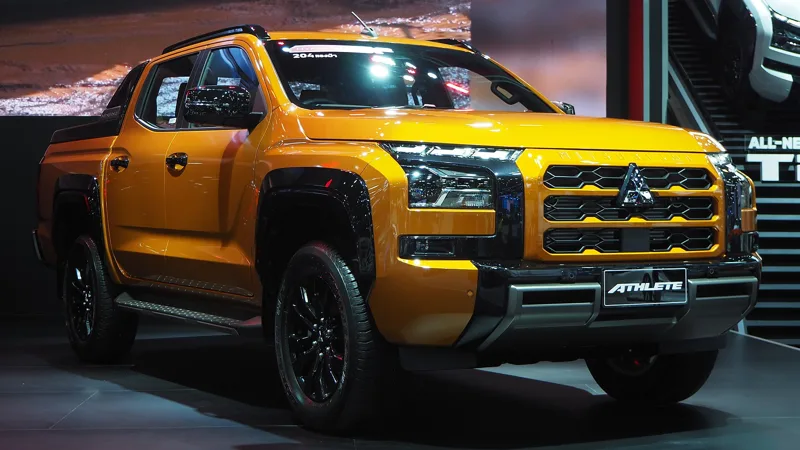
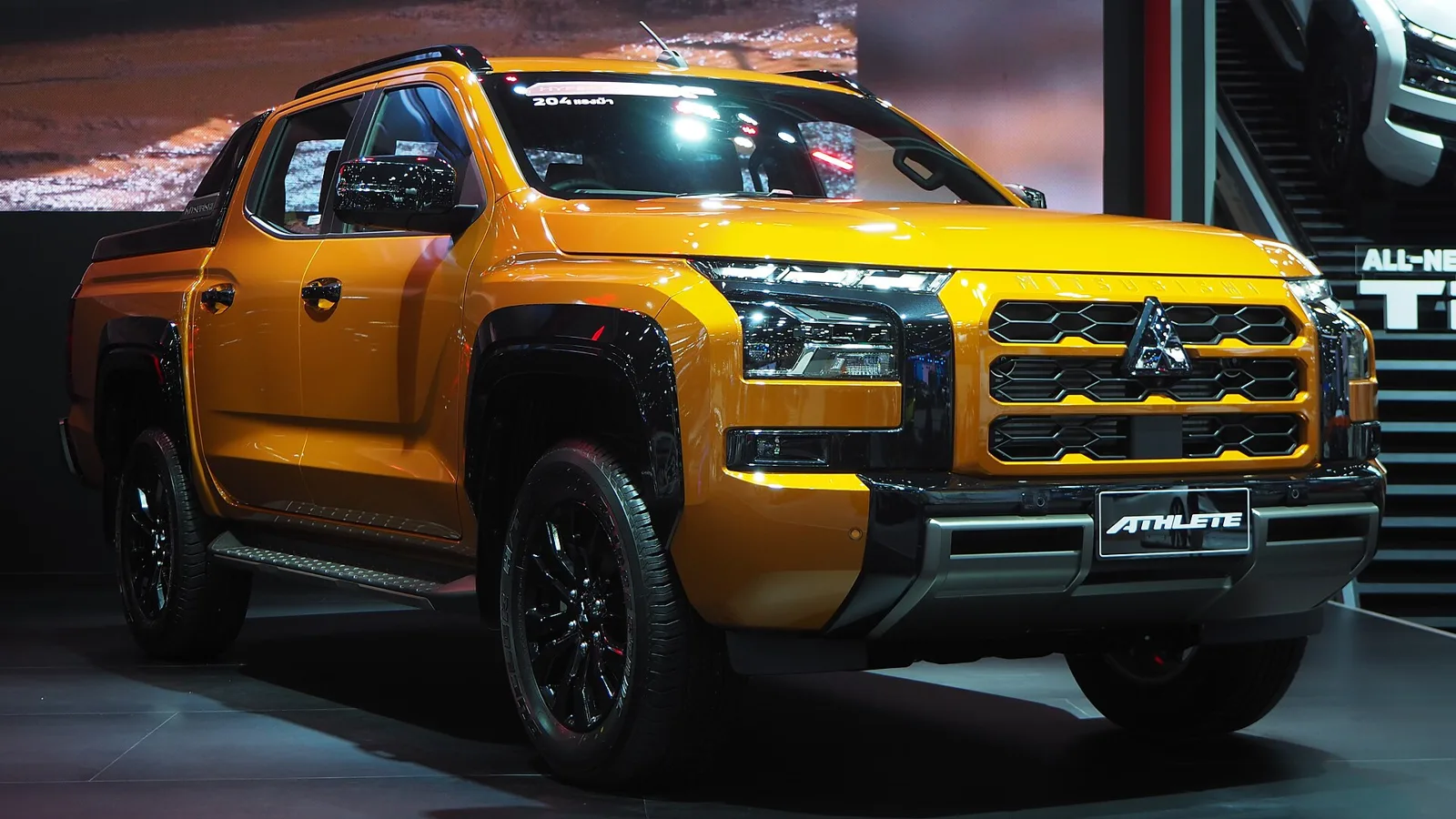
The sixth generation was unveiled on 26 July 2023 with a Beast Mode design, a Horizontal Axis interior and a new 4N16 turbo-diesel. Output runs from 110 kW (150 PS; 148 hp) in the base version to 150 kW (204 PS; 201 hp) for the top twin-turbo unit, known as Hyper Power X2.
The design followed the XRT Concept shown in 2023. The interior used geometric shapes, and the controls were built around Mitsubishi's Touch approach. The 4N16 replaced the older turbo-diesel and offers three power outputs for different buyers.
Where is the sixth-generation Triton on sale?
The sixth generation went on sale in the Philippines on 26 January 2024 and in Japan on 15 February 2024, where it was offered only as a double cab with GLS and GSR trims. Australia took the double cab in February 2024, followed by New Zealand on 4 March 2024. Indonesia launched on 17 July 2024 and Malaysia on 16 October 2024.
Vietnam followed on 11 September 2024, South Africa on 19 November 2024 and Brazil in December 2024. Mexico launched on 8 May 2024, while the GCC markets started on 28 May 2024 with double cab only. Argentina arrived on 8 April 2025 with a single GLS 4x4 variant.
Recent updates continued the rollout. Australia added the Raider trim in June 2026, based on the GSR with modifications from the engineering firm Premcar, and South Africa introduced a Bi-Turbo flagship in June 2026.
How did the sixth-generation Triton sell across Southeast Asia?
Southeast Asian launches came thick and fast. The Philippines started the wave on 26 January 2024 with a double cab only, while Indonesia's launch followed on 17 July 2024 and Malaysia's on 16 October 2024. Vietnam's arrival came on 11 September 2024, each with its own trim structure.
Indonesia launched with five trims, GLX, HDX, GLS, Exceed and Ultimate, and the range came in single cab and double cab configurations. Vietnam took a narrower path, offering only the double cab with GLX 2WD, Premium 2WD and Athlete 4WD versions. The Philippines range was similarly focused, with six variants at launch.
Cambodia offered two trims, GLS and GLS Extra Plus, both built around a 2.4-litre turbo-diesel engine paired with a six-speed automatic. Four-wheel drive was standard on both, and the higher-spec version used output of up to 201 PS with 470 Nm available.
What trims did the Thai market receive?
Thailand offered the sixth-generation Triton in three body configurations: double cab, single cab and mega cab, with cargo space behind the front seats. At launch it came in fourteen variants across four trim levels, which were Active, Pro, Prime and Ultra.
The Black Edition joined the range in July 2024. In June 2025 the line-up was updated again, with new black exterior decorations, the nanoe X air purification system for the flagship Ultra, and the discontinuation of the manual Pro and Ultra double cabs. In November 2025 the Mega Cab Street replaced the Mega Cab Active.
Why did the UK get a Commercial version of the L200?
Mitsubishi UK introduced the L200 Commercial after company car tax rules changed in April 2025. Double Cab pickups were taxed at the higher rate typically applied to passenger cars, which also raised insurance costs for many buyers.
The Commercial version was a Double Cab with the rear seat removed and replaced by a permanent cargo area. A steel bulkhead sat behind the front seats, and cargo strap points were added. In the UK the L200 had been available only as a double cab with the most powerful diesel and the automatic transmission, in Titan and Barbarian trims.
Mitsubishi Triton key facts at a glance
| Specification | Detail |
|---|---|
| First sale | September 1978, Japan as the Mitsubishi Forte |
| Cumulative sales, first three generations | Over 2.8 million units |
| Fourth generation reach | Exported to 140 global markets |
| Fifth generation Euro NCAP | 4 stars, 2015 |
| Sixth generation unveiled | 26 July 2023 |
| Sixth generation engines | 110 kW (150 PS; 148 hp) to 150 kW (204 PS; 201 hp) |
| Japanese return | 15 February 2024, double cab |
| Australian launch | February 2024, double cab |
Frequently asked questions
Why is the Triton called the L200 in some markets?
Most export markets use the L200 name, and Europe sells the pickup as the Mitsubishi L200. The Philippines called the fifth generation the Strada, which is a local badge rather than a different vehicle.
Was the Triton ever sold in the United States?
Yes, as the Mighty Max until 1996, and as the Dodge Ram 50 through 1994. As of February 2021 the pickup was not sold in the United States at all.
How many generations of the Triton are there?
There have been six. The first arrived in 1978 as the Forte in Japan, and the sixth was unveiled on 26 July 2023 with a new 4N16 turbo-diesel engine.
Which Triton engine is the most powerful?
The twin-turbocharged Hyper Power X2 is the most powerful version of the sixth generation, rated at 150 kW (204 PS; 201 hp). It sits at the top of a three-level engine line-up.