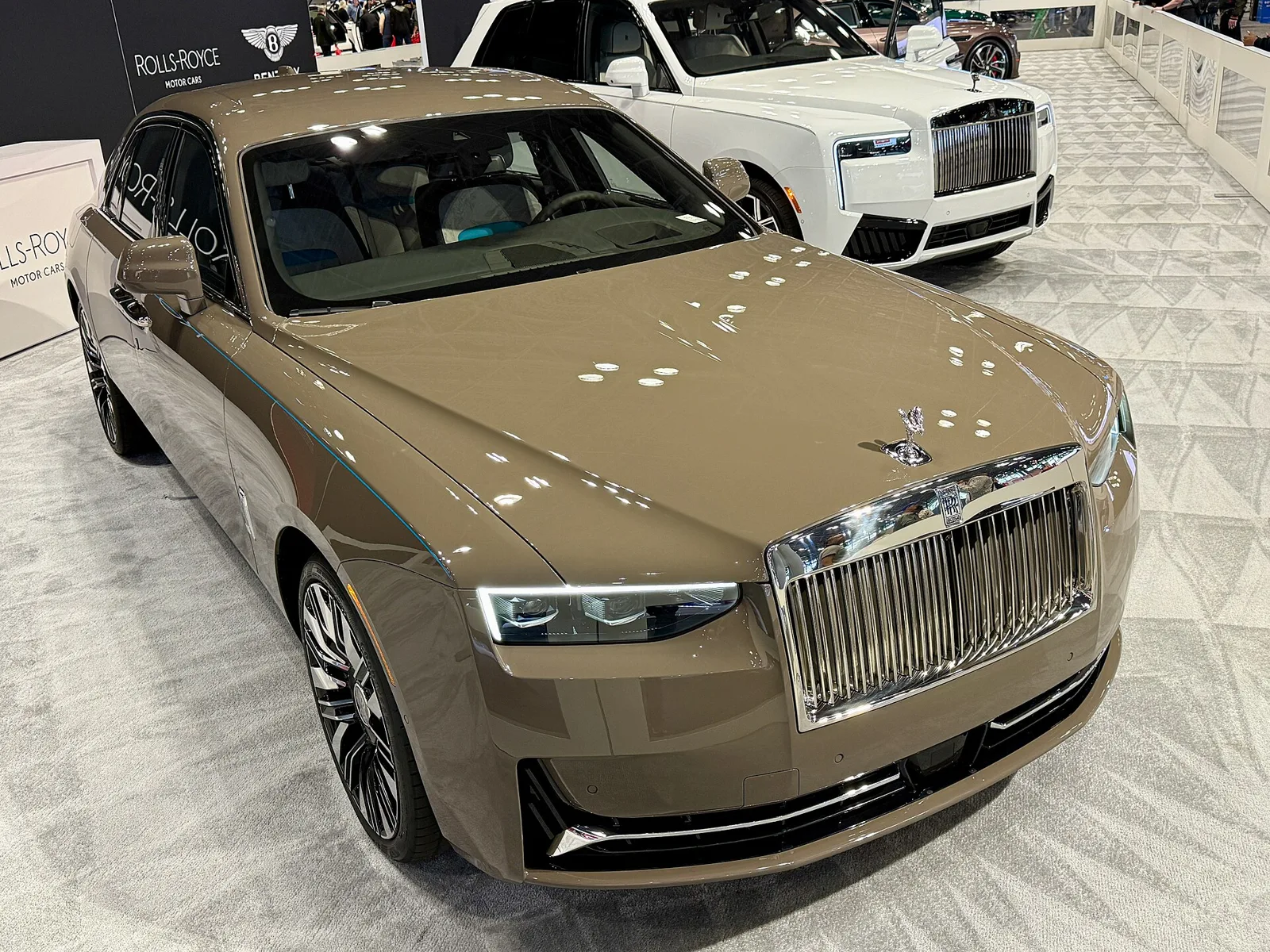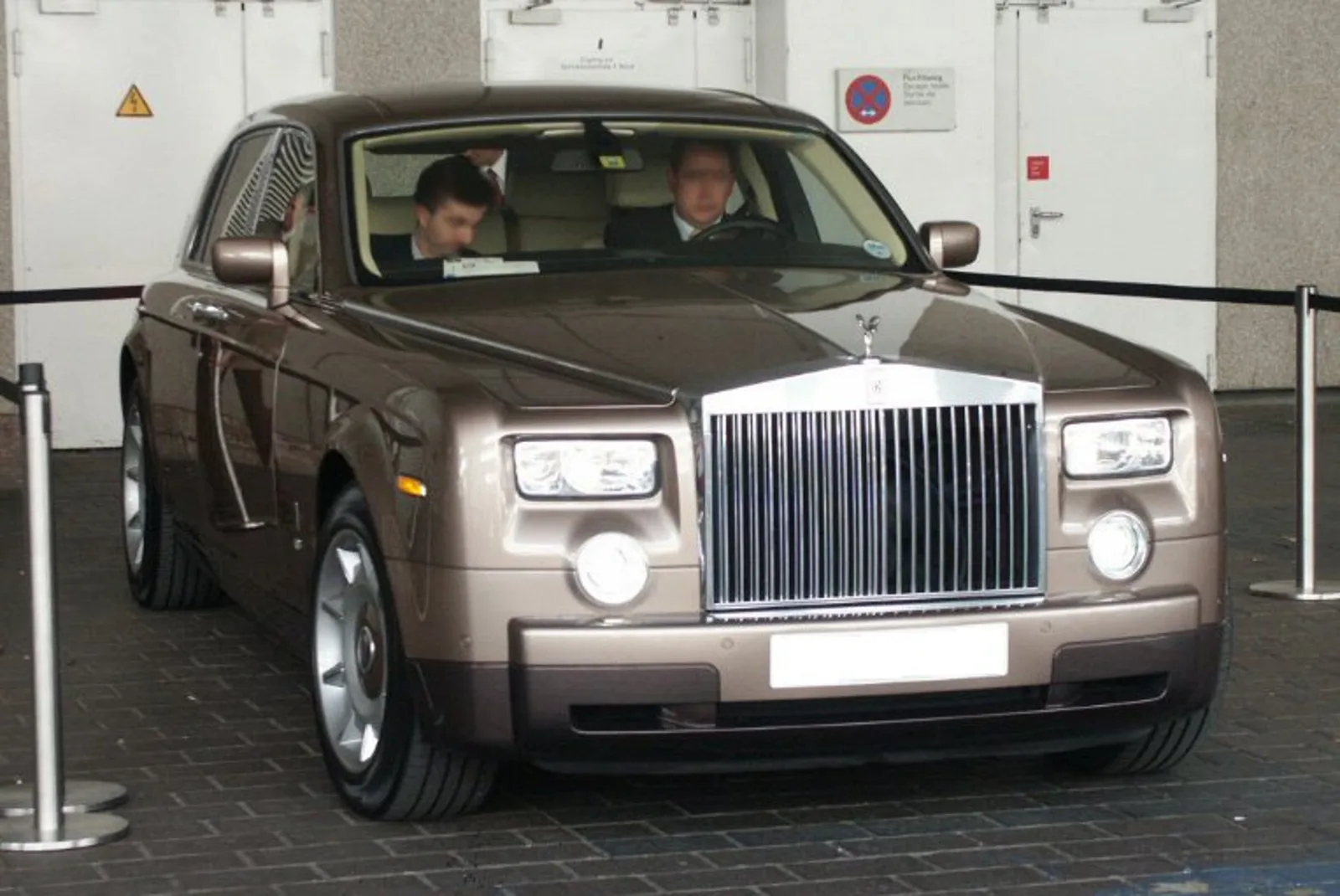
Launched in 2003 as the first Rolls-Royce built under BMW ownership, the Phantom VII revived a century-old nameplate with hand-welded aluminium, coach doors and a power reserve dial instead of a tachometer.
Built from 2003 to January 2017 at Rolls-Royce's Goodwood factory, the Phantom VII was the brand's seventh car to carry the Phantom name and its first under BMW's ownership. Powered by a 6.75-litre V12, the model is often described as the car that rebuilt the marque's standing after decades of decline.
The Rolls-Royce Phantom VII arrived in 2003 as the first Rolls-Royce developed entirely under BMW's ownership of the brand, and it is widely credited with reviving Rolls-Royce's reputation as a genuine maker of luxury cars.
What is the Rolls-Royce Phantom VII?
It is a full-size luxury saloon launched in 2003, the seventh car ever to carry the Phantom nameplate since 1925 and the very first developed after BMW formally acquired the rights to the Rolls-Royce name back in 1998.
From launch until the smaller Ghost arrived in 2009, the Phantom was the only car Rolls-Royce built at all, acting as both flagship and sole product line simultaneously. That made it, by historical standards, less exclusive than every Phantom that had come before it, none of which had ever exceeded 600 cars built in a single year, and yet the car still managed to re-establish Rolls-Royce as a genuinely credible luxury marque rather than simply a fading name trading on past history. Production continued until January 2017, when the Phantom VIII took over later that same year.
The factory contains only three robots, all of them dedicated purely to spraying the body; every coat they apply is then polished by hand.
How is each Phantom built?
Every Phantom uses a unique chassis platform and a largely aluminium body. Final assembly happens entirely at a single site, Rolls-Royce's own factory in Goodwood, West Sussex, where the paint, wood and leather work are all completed to that one customer's own individual specification.
The Goodwood factory sits near the historic Goodwood Motor Racing Circuit and brings every stage under one roof: a dedicated space for paint, another for bodywork, one for leather, one for wood, plus the main assembly line and the executive offices besides. Despite that scale, only three robots work inside the entire building, and all three exist purely to spray the body. Every coat they apply is then polished by hand, and the coach lines running along each car's flanks are hand-painted to a precise 3 mm (0.1 in) width. Even the raw material has a remarkably international journey before reaching England: the aluminium that forms the car's spaceframe starts out as extrusions made in Norway, drawing on that country's hydroelectric power supply, before travelling to Denmark for shaping and machining and on to Germany, where it is finally welded together entirely by hand.
What makes the Phantom's coach doors special?
The Phantom's rear-hinged doors, popularly called 'suicide doors' but referred to by Rolls-Royce as coach doors, continue a design feature the original Phantom offered when it was introduced back in 1925.
Because rear passengers sit close to the inner door handles, closing them by hand is awkward, so Rolls-Royce mounted buttons on both C-pillars that trigger hydraulic motors to shut each door instead. An electronic lock stops the doors from being opened accidentally while the car is in motion, and if a door is somehow still open as the car pulls away, it automatically brakes back down to walking speed. The doors even hide a practical touch: umbrella compartments built into each one, holding Teflon-coated umbrellas specifically chosen so both the brolly and its compartment dry out quickly. Elsewhere on the car, the famous Spirit of Ecstasy bonnet ornament retracts electronically to deter theft and reduce pedestrian injury risk, triggered automatically by a tamper sensor in its base, by the driver at the push of a button, or whenever the alarm is armed. Even the 'RR' badges on each wheel hub get special treatment, mounted on independent bezels so the lettering always reads upright no matter how fast the wheel itself happens to be spinning.
What luxury equipment does the Phantom come with as standard?
By 2009 a Phantom buyer got an enormous standard list: voice-recognition navigation, a power sunroof, upgraded leather, a rear-view camera, rear-seat DVD entertainment, and a 15-speaker Lexicon Logic7 sound system paired with an 8-disc CD changer.
The list kept going well past that: front seats with 18 power adjustments, rear seats with 16, cup holders that could be heated or cooled depending on preference, picnic tables for rear passengers, a readout for the temperature outside, and a universal garage door opener, a power tilt-and-telescopic heated steering wheel trimmed in wood and leather, power-operated boot and doors, wireless headphones, an iPod adapter, a built-in refrigerator, and air conditioning split across five separate climate zones. Anything still missing from that list could usually be added anyway: Rolls-Royce runs a 'Bespoke' programme through which the factory will build almost any reasonable option a customer happens to ask for.
Rolls-Royce Phantom VII specifications
Strip away the ceremony and the Phantom's core numbers still describe something genuinely enormous, both inside and out.
| Specification | Figure |
|---|---|
| Engine | BMW-sourced 6.75 L (6,749 cc) V12 |
| 0-100 km/h (0-62 mph) | 5.9 seconds |
| Length | 5.83 m (229.5 in) |
| Width | 1.99 m (78.3 in) |
| Height | 1.63 m (64.2 in) |
| Kerb weight | 2,485 kg (5,478 lb) |
| Paint colour choices | 44,000 |
| Extended Wheelbase stretch | 250 mm (9.8 in) longer |
That 6,749 cc displacement is not a coincidence: BMW deliberately enlarged its own 6-litre E65 7-Series V12 to match the exact displacement of Rolls-Royce's classic L-Series V8, built from 1959 to 2002, a quiet nod to the brand's own engineering heritage. The dashboard itself skips a tachometer entirely in favour of a power reserve dial, showing how much of the engine's capability remains unused at any given moment rather than how hard it is working. That BMW-sourced engine was not entirely trouble-free: in October 2010, Phantoms fitted with a V8 or V12 from BMW were caught up in a recall addressing a potential leak in the power braking system.
What other body styles did the Phantom come in?
Beyond the standard saloon, Rolls-Royce built a genuine family of Phantom derivatives. The Extended Wheelbase version, unveiled at the 2005 Geneva Motor Show, stretched the car 250 mm (9.8 in) longer than standard, while the Phantom Drophead Coupe arrived as a two-door convertible, its styling foreshadowed by the 100EX concept, making its public bow in 2007 at that year's North American International Auto Show before production began that June.
A hardtop companion, the Phantom Coupe, came next: the 101EX concept gave an early look at its shape, Geneva hosted the reveal in 2008, and build work started that summer, with customer sales following in the autumn. An armoured version also joined the range, built to a VR7 ballistic rating with fibre composites, special-purpose steel body armour, thickened and polycarbonate-layered glass, and a strengthened aluminium spaceframe and suspension. Early customers for this particular version were found specifically across Europe and in Middle Eastern markets. A 2009 model-year update harmonised the saloon's front styling with the Coupe and Drophead, adding a shallower stainless-steel grille, LED door-handle illumination, and standard 21-inch forged alloy wheels.
What changed with the Phantom Series II?
Rolls-Royce announced the Series II update in May 2012 for the 2013 model year, with exterior changes led by Andreas Thurner and interior updates by Alan Sheppard, unveiled at the Geneva Motor Show alongside events in Kuala Lumpur, Hong Kong and Bangkok.
Visually, Series II swapped the round lower lights for rectangular LED units, moved to a one-piece stamped radiator grille and single-piece wheels, and redesigned the rear bumper with integrated exhaust detailing borrowed visually from the Coupe. Inside, the dashboard was simplified around an enlarged 8-inch (200 mm) LCD screen and a new rotary controller shared with the Ghost, while mechanically the car gained a new ZF 8-speed automatic transmission, replacing the original Series I car's 6-speed unit. The Series II Extended Wheelbase, unveiled at Auto China and Auto Expo Macau in 2012, took the practicality angle further still, offering power-reclining rear seats and 53.1 in of rear legroom, reportedly the most of any production car at the time.
Did the Series II get its own Coupe and Drophead versions?
Yes. The Phantom Series II Coupe, built between 2012 and 2016, added an Infinity Black paint option, an illuminated gold Spirit of Ecstasy mascot and a brushed steel bonnet on top of the regular Series II changes already shared across the range.
Its open-top sibling, the Phantom Series II Drophead Coupe, took a more conservative route: rather than adopting an entirely new body, it carried over the chassis from the original Series I Drophead largely unchanged, updating only the headlights to match the new Coupe's design. It was a tidy, low-cost way to bring an existing convertible in line visually with the rest of the Series II family, without the expense of re-engineering its folding roof mechanism from scratch.
Were there special-edition Phantoms?
Several, and some were genuinely unusual. The 2004 Centenary Edition, limited to just 35 cars and specifically commissioned by the factory rather than dreamed up to boost sales, debuted on 4 May 2004 at Manchester's Midland Hotel, the very building where founders Charles Rolls and Henry Royce first met.
Those cars swapped the standard black 'RR' badges for red ones, echoing the red badges Rolls-Royce used during its first 25 years as a company, and were finished in a 'Dark Curzon' paint reserved exclusively for those 35 Centenary cars and the earlier 100EX concept car that had also worn it. A 2005 car created specifically to support the Naples Winter Wine Festival, a Florida charity event, added a burgundy body, a mini wine cellar built into the boot floor, and a cigar humidor in the glovebox, later selling at a charity auction for $800,000. That same year's 80th Anniversary Edition, limited to 25 units, added a wine cooler beneath the rear seat, a DVD system and a Conway Stewart pen set tucked into the glovebox, sold at a 20,000 euro premium over a standard car.
Why is the Phantom VII considered Rolls-Royce's rebirth?
By the time BMW took over the Rolls-Royce name back in 1998, the brand badly needed a car that could prove it could still build something genuinely significant, rather than simply trade on faded history alone. The Phantom VII delivered that proof convincingly enough to be credited widely, in the years since, with reviving the marque's whole reputation almost single-handedly.
It achieved that not through dramatic reinvention but through stubborn attention to detail: a factory with only three robots, umbrellas engineered to dry faster, a dial that shows restraint rather than revs, wheel badges engineered to always sit upright regardless of how the wheel itself is turning, and a V12 displacement chosen deliberately to echo an engine Rolls-Royce had stopped building decades earlier. Even popular culture took notice of all this; a V16-engined Phantom Coupe appeared on screen in Johnny English Reborn specifically at Rowan Atkinson's own personal request, a small but telling sign of how firmly the car had re-entered the public imagination by that point. By the time production finally ended in January 2017, the Phantom VII had spent fourteen full years quietly proving, one hand-built car at a time, that the Rolls-Royce name still meant exactly what it always had.