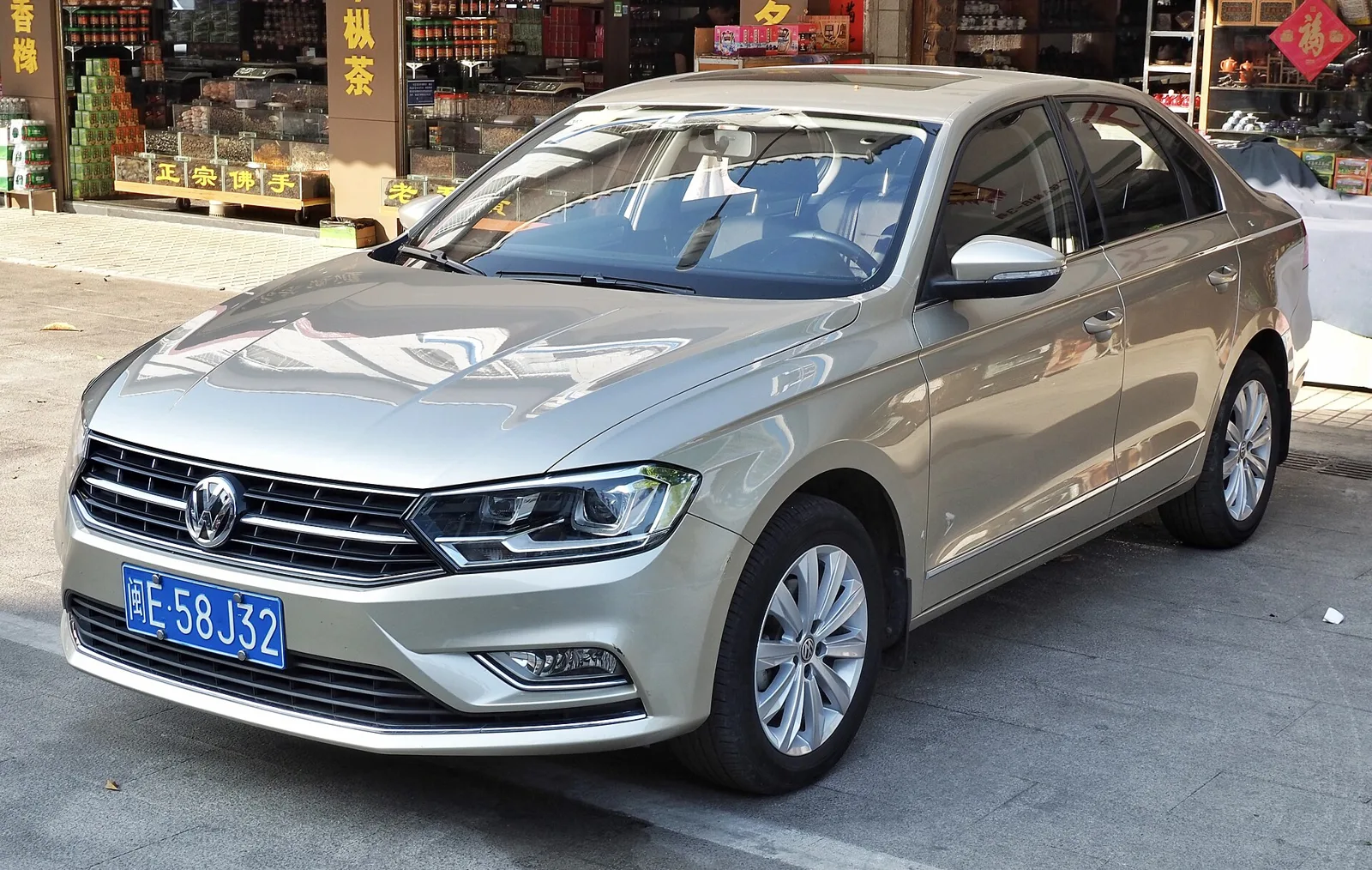
One is a front-engined 1999 global compact sold as the Jetta in North America; the other is a rear-engined Czechoslovak saloon from 1969 that became the first Skoda to top a million units. Here is how they compare.
The Volkswagen Bora is a front-engined 1999 global compact, sold as the Jetta in North America, offering modern crash safety and a wide engine range. The Skoda 100 is a rear-engined 1969-1977 Czechoslovak saloon that became the first Skoda line to top a million units, with no directly comparable modern safety data.
The Volkswagen Bora and Skoda 100 were never built to compete with each other; one is a front-engined global compact from 1999, the other a rear-engined Czechoslovak saloon from three decades earlier. Comparing the two side by side says far more about how dramatically the small family car travelled over those decades than it ever really says about which one is simply better.
What are the Volkswagen Bora and Skoda 100?
The Volkswagen Bora is the fourth-generation Volkswagen Jetta, sold under that wind-themed name across most of the world from July 1999, while the Skoda 100 is a rear-engined, rear-wheel-drive compact saloon built by Czechoslovak maker AZNP, now Skoda Auto, from 1969 to 1977.
The Bora kept the Jetta name specifically in North America and South Africa because that name already carried commercial weight there, while everywhere else it took the Bora name, after the winter wind that blows across the Adriatic coast and reaches into Greece, Russia, Turkey and Bulgaria's Sliven region. The Skoda 100, by contrast, succeeded the Skoda 1000 MB and 1100 MB and was built purely for its home Eastern Bloc market and export, with no equivalent global rebadging exercise at all.
The Skoda 110 R coupe sold styling that echoed contemporary Porsches while offering nowhere near their price or performance, essentially selling an aspirational silhouette rather than genuine competition pedigree.
How do their engines and layouts differ?
The Skoda 100 and its 1.1-litre sibling, the Skoda 110, used a simple rear-mounted, rear-wheel-drive layout with either a 1.0-litre or 1.1-litre engine. The Volkswagen Bora took the opposite approach entirely, offering a 1.8-litre turbo four (the 1.8 20vT), a VR6, and from 2004 a new range of Pumpe-Duse unit-injector diesels, all driving the front wheels.
Those PD diesels were genuinely sophisticated for the era, firing fuel straight into each combustion chamber under pressure as high as 2,050 bar (30,000 psi) specifically to promote finer atomisation, with a 'pilot injection' of fuel ahead of the main shot specifically to reduce noise. They demanded oil meeting Volkswagen's own specification 505.01 or newer, since anything else risked serious camshaft and injector damage. A 2008 facelift of the Bora, sold in Canada as the City Jetta, added a simpler 85 kW (116 PS; 114 hp) 2.0-litre SOHC four with an optional six-speed tiptronic automatic. Nothing in the Skoda 100's engineering approached that complexity, which was entirely the point: it was built as a straightforward, affordable rear-engined saloon for its market and era, not as a technology showcase.
What was each car like to actually drive and live with?
Reviewers praised the Bora for adequate handling and a moderately comfortable ride, though some called it a relatively expensive choice for its segment. Rear seats drew particular criticism for lacking enough room for two adults, and some testers found the seat cushioning itself too firm for a car pitched on comfort.
Build quality leaned on genuinely modern techniques for the class: highly mechanised presses, improved measuring equipment, and a laser-welded roof, all assembled at a pace of roughly 52 hours per car at the Puebla plant in Mexico. Comfort-focused options stretched to rain-sensing wipers and automatic climate control, and 1999 brought Volkswagen's now-familiar blue-and-red instrument lighting as standard across the whole range. Even with a softened suspension tune, some reviewers still found the ride firm next to equivalent French rivals, and the cabin split opinion too, praised for fit and finish but criticised as sparsely equipped for the money being asked. One climate-control quirk became a running annoyance: the recirculation setting switched itself off whenever air was vented toward the windscreen, a fussiness the far simpler Skoda 100 cabin never had any electronics complex enough to replicate.
Which car was safer to drive?
Only the Volkswagen Bora has verifiable modern crash-test data. Under the US NHTSA's 56 km/h (35 mph) frontal test, it earned a perfect score, five stars apiece for the driver and the front passenger; the newer 62 km/h (38.5 mph) side-impact test brought a still-respectable four stars each. The IIHS went further still, rating it 'Good' overall in its tougher 64 km/h (40 mph) offset test, with side-curtain airbags standard from the 2001 model year.
A more basic Latin American version with only two airbags scored lower under Latin NCAP 1.0 in 2012, managing three stars for adult occupants and three for toddlers, a reminder that safety equipment, and therefore real-world protection, varied significantly by market even within a single generation of the same nameplate. Injury, collision and theft losses were rated low for the Bora's class overall, a statistic insurers took seriously even if ordinary buyers rarely read it before signing anything. The Skoda 100 predates every one of these testing regimes by decades, so no directly comparable score exists for it here; its safety case rests on 1960s-era engineering assumptions rather than any measured crash result.
Volkswagen Bora vs Skoda 100 at a glance
Set side by side like this, the two cars barely overlap on any single measure beyond both simply being compact family cars that were, in their own very different eras, built in genuinely large numbers.
| Specification | Volkswagen Bora | Skoda 100 |
|---|---|---|
| Built | 1999-2011 (staggered by market) | 1969-1977 |
| Layout | Front-engine, front-wheel drive | Rear-engine, rear-wheel drive |
| Engines | 1.8T, VR6, PD diesels, later 2.0 SOHC | 1.0 L or 1.1 L |
| Body styles | Sedan, estate (Bora Variant) | Sedan; 110 R coupe derivative |
| US frontal crash rating | 5/5 stars (NHTSA) | Not applicable |
| Total production | Spread across many markets | 1,079,798 units (100/110 combined) |
That production figure is a genuine milestone for Skoda: the 100/110 range was the first Skoda model line ever to exceed one million units built, a scale the much later, much more globally distributed Bora simply operated on a different footing to measure against directly. Comparing the two head to head on raw volume alone would flatten a far more interesting story, since the Bora's own total was never collected into one single, citable number across every market, trim and badge it eventually wore.
Which car sold in bigger numbers?
The Skoda 100 and 110 together reached 1,079,798 units across their eight-year run, a landmark figure for the brand at the time. The Volkswagen Bora's own total is not broken out in a single figure, but its production footprint stretched far further geographically, continuing in multiple countries well after its European replacement arrived.
The Bora's wagon version, badged the Bora Variant, made its debut in 2001 at a Los Angeles motor show, marking the first time Volkswagen had offered a wagon of this size in North America at all. Built solely in Wolfsburg, it offered 963 L (34 cu ft) of cargo space with the rear seats up, rising to 1,473 L (52 cu ft) folded flat. In Europe, the same wagon body sometimes sold as a Golf wagon rather than a Bora Variant, and in markets running both names side by side, the Bora Variant always sat in a trim rung above its Golf Variant sibling. The Mk4 generation continued selling alongside the newer Mk5 in Colombia, China, Canada, Mexico, Brazil, Argentina and the Dominican Republic, kept alive in China by Volkswagen's FAW-Volkswagen joint venture and in Canada from October 2006 as the budget-focused City Jetta, with its Golf-based sibling sold alongside it. Both names changed again in 2009, to Jetta City and Golf City respectively, before the Jetta version was finally discontinued there for the 2010 model year. Mexico ran its own version of that same facelifted Mk4.5 car throughout, sold there as the Clasico or Bora and built at Puebla right alongside the newer Mk5.
Did either car get a sportier version?
Yes, both did, in very different registers. The Volkswagen Bora's closest thing to a performance option was simply its VR6 engine choice within the standard range, never spun off into a dedicated performance sub-model in the material covered here.
The Skoda 100 platform, by contrast, spawned genuine low-volume competition derivatives: the 120 S and the sportier 130 RS, both built specifically as sport and rally cars in small numbers. The related Skoda 110 R coupe, sold from 1970 to 1980 and therefore outliving the 100/110 saloons it was based on, took a different angle entirely, styled to visually echo contemporary Porsches while offering nowhere near their price or performance, essentially selling an aspirational silhouette rather than genuine competition pedigree.
What problems did owners report with each car?
Reported Bora problems are well documented: windows falling into the doors, electrical faults, rust emerging from inside the front wheel arches and wagon liftgate, and emissions-system defects, alongside a front bumper design that could hook on a curb and tear off, serious enough to trigger a 2009 US class-action settlement paying owners $140 each toward repairs. Even something as small as the original cup-holder layout needed fixing later on, with a 2003 update adding two recessed, tandem front cup holders plus a further one tucked behind the rear armrest, and European cars getting their own separate, redesigned retractable front holder instead.
No equivalent owner-complaint record survives in the material covered here for the Skoda 100, which instead picked up its reputation through popular culture rather than consumer litigation. Tomas, the central character of The Unbearable Lightness of Being, a 1988 release, drives one on screen, albeit in a knowingly anachronistic touch, since that story is set around the 1968 Prague Spring, a year before the real car entered production, and it is also the car driven by the protagonist of Ivan Mladek's 1978 novelty song 'Jozin z bazin'.
Which is the better classic to own today?
These two cars suit completely different kinds of owner, which is really the honest answer. The Volkswagen Bora offers modern crash protection, a genuinely varied engine lineup from turbocharged petrol to sophisticated diesel, and a wagon body style with real practicality, all backed by parts support across a huge global production run.
The Skoda 100 offers something the Bora simply cannot: a genuine slice of Eastern Bloc automotive history, a rear-engined layout long since abandoned by the mass market, and real cultural cachet through film and song that no ordinary 1999 compact sedan is ever likely to match. A buyer simply wanting a comfortable, genuinely usable daily classic, one that still starts reliably on a cold morning and copes fine with modern traffic, will find far more to work with in a Bora. A buyer chasing a genuinely unusual piece of Cold War-era engineering, especially in 110 R coupe form, will find the Skoda the far more interesting machine to own, even if it asks for patience with much older, much simpler underpinnings. Neither answer is wrong, because neither car was ever trying to solve the same problem in the first place: one was built to move families safely and comfortably through modern traffic across dozens of countries at once, and the other was built to put affordable, honest motoring within reach of ordinary buyers behind the Iron Curtain, a goal every bit as serious in its own era.