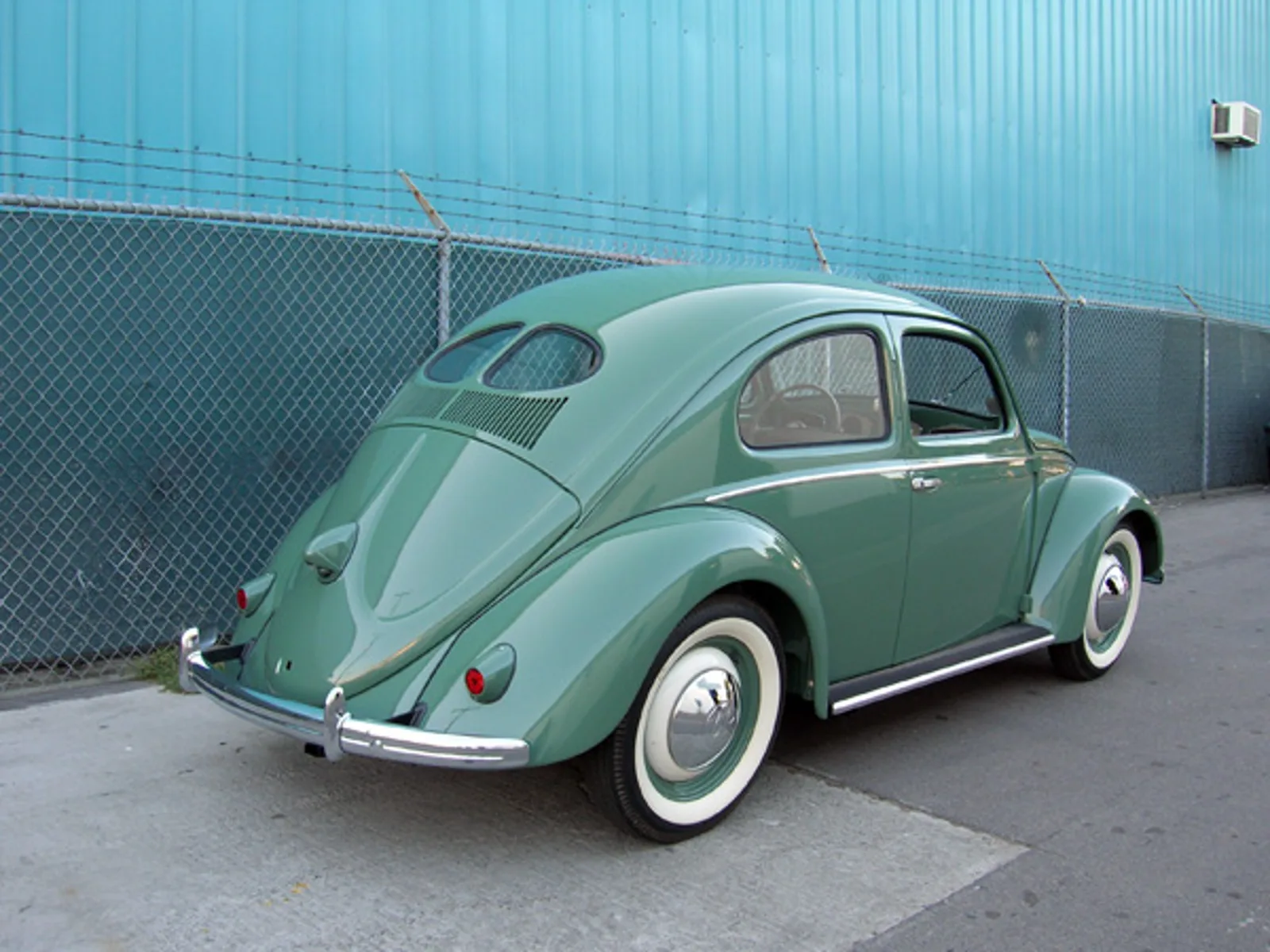
From Concours-level perfection to a patina-rich survivor, how collectors bring old cars back, where the line between restoration and modification falls, and why it costs so much.
Road vehicle restoration ranges from Concours-standard rebuilds to restomods, replicas and patina preservation. Each approach treats the original car differently, and the choice shapes both the cost and the value of the finished vehicle.
Conservation and restoration of road vehicles is the work of bringing an old car back to its original working condition, or preserving it as it survives. Owners do it to keep vehicles roadworthy or to preserve antiques for display. Restoration removes, replaces or repairs parts, while preservation keeps the original components wherever possible, and both approaches can be carried out in many styles.
What does vehicle restoration mean?
Automotive restoration is commonly defined as reconditioning a vehicle from its original condition so that it returns to like-new or better. Only when a car is placed back into the condition in which it was first sold is it considered restored. Repairs that make a car run, or updates that change its character, do not count as restoration on their own.
Bus preservation groups follow the same logic on a larger scale. They buy buses from different eras and restore them to their original operating condition, often in the authentic livery of the first owner. The principle is the same whether the vehicle is a family saloon or a city bus: the original state is the target.
Restoration returns a car to the state it left the factory in, while preservation keeps the marks of its working life.
What are the main restoration levels?
There are several levels of restoration, and the most demanding is the Concours d'Elegance standard. A car at that level is often restored beyond its factory quality. Parts that were replaced must have the highest fit and finish and appear original, and judges expect no flaws even on a single nut or bolt.
Below that sits traditional restoration, which returns a car to original condition or better using original or reproduction parts and period techniques. Between the extremes are the drivers, neighbourhood show cars and so-called 20-footers, which look good from 20 feet (6 m) away. Value guides often grade cars on six levels, from a parts-only vehicle up to the best examples, which are graded Number 1.
Plenty of Concours entrants only travel the short run from their trailer to the show field. That is one reason the standard is so demanding: it measures a car as a display object as much as a machine.
Is restoration the same as preservation?
No. Preservation keeps the original components, even when they show their age, while restoration replaces or repairs them. Steve Segal, who restored a 1972 Pontiac Trans Am 455 H.O., described his approach as a restoration with a preservation focus, carried out from an archaeological perspective, uncovering and documenting original components and finishes wherever possible.
Muscle Car Restorations of Chippewa Falls, Wisconsin, took a similar line with a 1969 Ford Mustang Boss 429. The car was close to unmolested, so the team chose to preserve as much as it could rather than strip it to bare metal. Preserved originality of this kind has, in recent years, been worth more at auction than some fully restored cars.
Preservation has also become more important as rare antiques become harder to restore. Parts, specialist tools and resources have become scarce, and some items cannot be replaced or fabricated without careful research. Keeping the original parts is often the only way to protect the historical content of a rare vehicle.
What is a restomod?
A restomod, or resto-modification, is an old car that has been modernised with an updated engine, suspension, brakes, tyres or electronics. The term is used for cars that keep their classic look while gaining modern performance and comfort. Some restomods can be returned to stock at any time, which is the test their builders use.
Upgrades that are easily reversed to stock, or that were factory options when the car was new, are less likely to upset the classic market. Major alterations such as engine swaps or gearbox transplants are less acceptable, and they move the car towards hot rodding. Stock, in this context, means a vehicle in the configuration it left the factory with.
Owners give several reasons for resto-modding. Some want modern convenience, such as air conditioning, power windows, power steering or power brakes. Others want safety or reliability gains, such as newer brakes, seat belts or relays that reduce the current passing through light switches. Performance drivers look for better street or track behaviour, and emissions upgrades can include hardened valve seats for unleaded fuel or catalytic converters.
How did a restomod work in practice?
Kevin Young's 1970 Ford Torino Brougham 429 Cobra Jet shows how a resto-mod can be planned. Young noticed unusual valvetrain noise and chose to rebuild the engine for a better, street-friendly result. His goal was a reliable pump-gas engine capable of easy 12s on street tyres while keeping a factory restored appearance, including the iron intake and exhaust manifolds.
He achieved that by rebuilding the original engine for performance and reworking the differential, leaving much of the rest of the car as it was. Enthusiasts were not all pleased. They argued the changes compromised a car that was one of only three built like it, although many others in the community endorsed the approach.
The television personality and car collector Jay Leno took a clear view on the debate. He argued that changes making a car better, safer, more reliable and faster are worth making, especially when the car can be turned back to stock whenever the owner wishes.
Does a restomod lose or gain value?
It depends on what buyers expect. Upgrades that other owners of the same model find appropriate can enhance the value of a car, while unwelcome changes can reduce it. A car in regular use is likely to be judged more leniently than a stored collector's piece, where originality carries more weight.
Owners and restorers therefore need to know what the potential market will accept, so that the finished car is not devalued. Upgrading corrosion protection beyond the factory standard is generally treated differently, since it protects the time and money invested without changing how the car looks or drives.
What are replicas and tribute cars?
A replica, re-creation or tribute is a vehicle modified to look like another car, or like a more desirable version of the same model. Replicas are often built by enthusiasts who want to imitate a rare or famous car, such as one seen in a film or television show.
Trey Gee's 1970 Pontiac LeMans is a case in point. He restored it to echo a much rarer 1970 Pontiac GTO Judge, a model whose auction prices have peaked at well over $300,000. Gee wanted a classic in the GTO style with the power, ride and comfort of a modern car, and he chose a tribute built as a resto-mod rather than damage an original.
Replicas are not universally admired. Some enthusiasts object because of cases in which a 1967 Pontiac LeMans was turned into a copy of the rarer GTO of the same year and then sold as the genuine article at a higher price.
What does patina preservation involve?
Preservation of exterior wear leaves a car's body and paint unrestored, in an as-is state that keeps its patina. Patina describes a natural finish that carries the marks of decades in service, including wear and earlier repairs. Vintage cars with patina are prized for being original and historically meaningful, not for how well they were restored.
David Gooding, founder and president of the Gooding and Company classic car auctions, has described patina as the fingerprints of the manufacturer and the owner. Restoring a car with strong patina can strip away that character, and the car is left looking like everything else.
Two examples show the approach. Steven Henderson bought a 1928 Ford Model A with 80 years of body and paint wear and chose to bring it back to running condition only, leaving the exterior as it was. Matt Tucker's 1960 Ford pickup, with decades of wear and discolouration, was covered in a preserving clear coat instead of being repainted.
How does a ground-up restoration work?
A ground-up restoration takes the car apart completely and rebuilds it to a finished standard. Some businesses specialise in individual components such as engines, fuel tanks, clocks or chrome, while others perform complete restoration or remanufacture of almost any car. Some firms can fabricate every component in-house, and manufacturers such as Ferrari and Aston Martin offer restoration services of their own.
The process follows a set order. The chassis is inspected first, because it is the structural foundation. Then the engine and mechanical systems are brought back to working order, followed by the interior and exterior, with the body work done before the final interior finish. The car counts as restored only when every system and part has been returned to original condition.
Restoring a complete car means looking beyond the visible parts. Body, trim, chrome, wheels and passenger compartment are repaired, but so are the engine, trunk, frame, driveline, brakes, accessories, cooling and electrical systems. Even a wheel hidden under a hubcap should be unmounted and treated for rust, priming and paint if it is structurally sound.
How is the body and frame restored?
Rust is a constant concern. Paint that was originally applied at the factory is stripped from worn parts, rust is repaired, dents are removed and the metal is refinished, primed and painted to match the factory colours. Wooden components are reglued, rotted sections replaced and the wood resealed. Chrome and trim are stripped and refinished, and fasteners with damaged threads or corrosion are re-plated or replaced.
The frame needs particular attention. Abrasive blasting is often the quickest way to clean it, but it can leave microscopic pitting, so a phosphoric acid rust killer is usually applied before priming. Softer media such as soda or crushed walnut shells are less likely to damage fragile parts. Acid tank dipping followed by an E-coat primer is the most effective and most expensive way to remove rust and protect against future corrosion.
Panel work is highly skilled. An English wheel or wheeling machine can fabricate compound curves from scratch, and panels from different sources often need reshaping before they fit together. Gaps must be consistent, and gapping gauges help achieve that. Some restorers have used lead loading in the past to tighten gaps, but it needs strict safety precautions because lead is toxic.
Paint choices involve judgement too. Period enamel or cellulose paint looks more original but protects less than modern finishes, so many owners upgrade corrosion protection beyond the factory standard. Some regard that as a resto-mod rather than a restoration, a term that is not used in the UK.
What does interior and mechanical restoration involve?
Interior restoration returns the inside of the car to its factory state. Materials such as wood, cloth and leather often deteriorate, and abandoned cars can contain biohazards from decay or animal habitation, so the interior may need stripping back to the bare structure. Seats are commonly stripped to the wire framing, stuffed and re-upholstered, and the seat still counts as authentic.
Every mechanical and electronic item needed for safe operation must be inspected, including the speedometer, fuel gauge and airbags. The coil springs in the seats are repaired, replaced or retired, and each dashboard gauge is cleaned, repaired or replaced to work as it did when new. Modern techniques can also salvage leather seats, dash, console and door panels through repair and redyeing.
Engine restoration begins with a thorough inspection. Worn parts such as pistons, spark plugs, fuel lines, batteries, fuses, timing belts and gaskets are typically replaced, and the block, camshaft and crankshaft are checked for damage. Moving parts are measured against factory specifications and machined or remanufactured where needed. Before the car is started, the lines and hoses are checked for leaks, the radiator is topped off, the oil is replenished and the ignition is inspected.