A speed record that was won, a speed claim that was withdrawn, a tennis star's refunded W8 and a Corvette-engined racer that took on Bathurst.
SSC, Vector, Mosler and Rezvani are small American hypercar makers outside Detroit. SSC held the production-car speed record in 2007 and builds the Tuatara, Vector made the W8 and M12 under Jerry Wiegert, Mosler built the MT900 from 2001 to 2011, and Rezvani produces the Beast and armoured trucks.
In September 2007 a small company in Washington state held the title of fastest production car on Earth, certified by Guinness World Records at 412 km/h (256 mph). Thirteen years later it retracted a far bigger speed claim. SSC, Vector, Mosler and Rezvani all chased supercar glory from outside Detroit, and their fortunes could hardly differ more.
Who are the American hypercar makers outside Detroit?
SSC North America builds its cars in Richland, Washington. Vector began in Wilmington, California, and spent a spell in Florida. Mosler made the MT900 from 2001 to 2011. Rezvani, founded in 2013, works in California. None is a household name, yet each aimed at the top of the performance market with a tiny workforce and tiny production runs.
The four came at the problem differently. SSC chased speed records. Vector was the long fight of one stubborn designer. Mosler put its name on a lightweight racer that went from Daytona to Bathurst. Rezvani built its reputation on bespoke machines, from a stripped-out track car to armoured trucks.
A speed record won, a speed claim withdrawn and a tennis star refunded: four small American builders, four very different endings.
How did SSC go from Shelby SuperCars to the Ultimate Aero?
Jerod Shelby founded the company, originally called Shelby SuperCars, and the first Ultimate Aero prototype was finished in 2004. Two years later the car beat the Ferrari Enzo on Road & Track's slalom course, and in 2007 it took the production-car speed title. The name SSC North America arrived in 2012 after a legal settlement.
The other parties were Carroll Shelby International and Carroll Shelby Licensing, which is why a company run by someone called Jerod Shelby dropped Shelby from its name.
The first two prototypes used a supercharged 6,188 cc Chevrolet Corvette C5R V8. Output began at 782 hp and was eventually pushed to 908 hp, with a theoretical top speed of 390 km/h (242 mph). Then SSC swapped in a twin-turbo V8 that reached 1,287 hp, and that engine went into most of the Ultimate Aeros built.
Not every announcement panned out. In 2008 SSC revealed an electric Ultimate Aero, and the first press release said it could recharge in 10 minutes from a 240 V outlet. Critics called that impossible, and the release has since been changed.
The Ultimate Aero ended with a farewell edition. The Ultimate Aero XT was limited to five examples and borrowed hardware from the coming Tuatara: a 6.9-litre all-aluminium twin-turbo V8 rated at 969 kW (1,300 hp) and 1,361 N m (1,004 lb ft), plus better cooling, braking and fuel systems and a seven-speed paddle-shifted gearbox. The last XT was delivered in 2015.
What is the SSC Tuatara and why was its record disputed?
The Tuatara is SSC's successor to the Ultimate Aero, limited to 100 examples and built in Richland. It uses a proprietary 6.9-litre V8 rated at 1,007 kW (1,350 hp), with a maximum of 1,268 kW (1,700 hp). Its biggest top-speed claim, made in October 2020, was withdrawn after the numbers failed to line up.
The car was named in July 2011, and the design came from a collaboration between Jason Castriota and SSC. A prototype appeared at the Dubai International Motor Show and was billed there as the "Crown Jewel" of the event. The 2019 car was announced at Pebble Beach in 2018, and production was underway the next year. The first customer car went to an owner in Philadelphia in January 2020.
On 10 October 2020, in Pahrump, Nevada, driver Oliver Webb ran the Tuatara on a closed public road with street tyres and non-race fuel. SSC first claimed a two-way average of 316.1 mph, with a peak of 331.15 mph. Outside analysts compared satellite data with video and found the figures did not agree. SSC withdrew the claim, and Jerod Shelby addressed the mistakes in public and promised future testing with more redundancy and transparency.
The second attempt was handled differently. On 17 January 2021 the car ran on the 2.5-mile runway at Kennedy Space Center. The Tuatara's owner, Larry Caplin, a non-professional driver, achieved a two-way average of 455.3 km/h (282.9 mph), made up of 450.1 km/h (279.7 mph) northbound and 460.4 km/h (286.1 mph) southbound. The telemetry firm Race Logic was present, as was Robert Mitchell, an independent analyst and one of the loudest critics of the earlier run.
Caplin went faster still on 14 May 2022 at Space Florida's Launch and Landing Facility, reaching 475 km/h (295 mph) one way over 3.7 km (2.3 miles). Two Racelogic VBOX GNSS units and a Life Racing GPS system measured it, with a Racelogic technician present.
What was Vector Motors and why does the W8 still matter?
Vector was a California firm led by Jerry Wiegert that tried to take on Ferrari and Lamborghini with American parts. Its W8 went into production in 1989 with a twin-turbo Chevrolet small-block V8 and an Oldsmobile automatic, and 17 were built for public sale. The cars carried W-numbers, a W for Wiegert.
The story begins earlier than the W8. Wiegert had just graduated from college when he founded a design house, Vehicle Design Force, and teamed up with Hollywood body expert Lee Brown. Their original Vector was planned with a Porsche engine option and a pre-production price of US$100,000, at a time when a new Lamborghini Miura cost US$21,000. It made the cover of Motor Trend in April 1972 but never entered production.
The W2 that followed was shown in 1978 and ran as a prototype in 1979, going on to cover more than 160,000 km (100,000 miles), the most of any concept car. Top Gear was ordered not to test its top speed, even though Vector said it could manage 230 mph.
The W8 grew out of the W2 and needed money. Public stock offerings supplied some. Two W8 prototypes were built, and only one ran. A black W8 was ordered by tennis star Andre Agassi, who insisted on delivery before the car was ready. When it broke down, Vector refunded his US$455,000 purchase price, which brought bad publicity despite the circumstances. A W8 also appeared in the 1993 film Rising Sun.
Vector produced around 50 models across the 1980s and 1990s, racing versions included. A letter X after the W marks a prototype.
How did Vector lose its way after the W8?
When the WX-3 debuted in 1993, Indonesian company MegaTech took a controlling interest, and Wiegert was eventually fired. The new owners moved Vector to Jacksonville, Florida, and built the M12 around a Lamborghini Diablo V12. At US$189,000 it missed sales targets, and only 14 had been made by early 1999.
The WX-3 coupe had been shown at Geneva in 1992, with the WX-3R roadster following in 1993. One prototype of each was built. After Geneva the Vector board asked Wiegert to step back to a design role. He refused and ordered the headquarters locked down, and he was then dismissed.
In Florida the company shared office space with Lamborghini, then also owned by MegaTech. The M12 was loosely based on the WX-3, and some of the work was done by Lamborghini. Production began in 1995 and two cars were shown at the 1996 North American International Auto Show. It stopped late that year, then resumed after MegaTech sold Lamborghini to Audi and Vector to its management. Lamborghini failed to deliver engines because Vector could not pay for them.
One story says Lamborghini took a W8 as payment, but because the car still belonged to Wiegert he went to court and won it back, only for the car not to be returned. The last Vector of the era was the SRV8, a cheaper M12 with a modified GM LT1 Corvette engine and a Porsche G50 transaxle. Vector closed within days of its first public appearance, with one prototype built.
What happened to the Vector WX-8 after Wiegert's death?
Wiegert took back the assets of Vector after the original firm collapsed and renamed it Vector Motors. He announced a new car, the WX8, and presented a prototype at the 2008 Los Angeles show. After he died in January 2021, aged 76, the future of the company was left uncertain, and the Wilmington facility has since been cleared out.
The comeback built slowly. In August 2006 Wiegert turned up at Concorso Italiano in a prototype and confirmed that another car was under way.
The WX8 was extravagant on paper. Its supercharged 10-litre aluminium V8 had a projected output of 1,380 kW (1,850 hp), which Vector said would outdo both the SSC Ultimate Aero TT and the Bugatti Veyron. The company claimed 443 km/h (275 mph) and a 0-60 mph time of just under three seconds. A report in August 2018 said the firm was still developing the car it first announced in 2007.
What was the Mosler MT900 built to be?
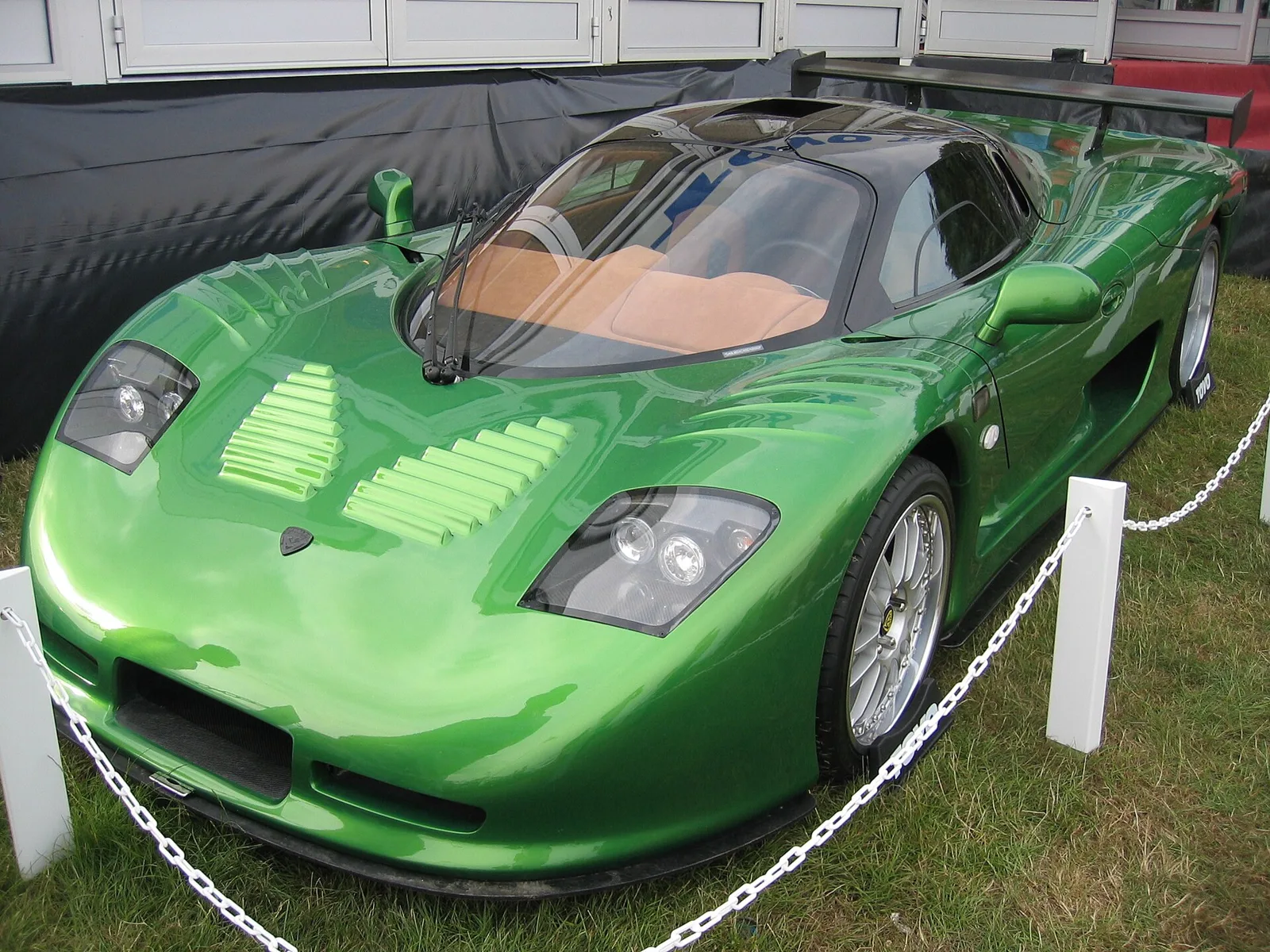
The MT900 was a carbon-fibre-chassis sports car with a mid-mounted Chevrolet LS6 V8 driving the rear wheels, built from 2001 to 2011. Rod Trenne, formerly of the Corvette C5, designed it, and its name joins Mosler, Trenne and a target weight of 900 kg (1,984 lb). It replaced the Mosler Raptor.
The original car made 261 kW (350 hp) and 475 N m (350 lb ft). The gearbox was a ZF transaxle originally designed for Porsche, fitted upside down so the engine could sit ahead of the rear axle. The finished car weighed 1,175 kg (2,590 lb), well above the target, but Car and Driver still timed it from 0-60 mph (97 km/h) in 3.5 seconds and through a 12.0-second quarter mile at 190 km/h (118 mph). Its top speed of 241 km/h (150 mph) was held back by the redline, and it pulled 1.02 g on the skidpad.
The MT900S arrived for 2005 with 324 kW (435 hp) from a Corvette Z06 derived LS6, and a dry weight of 998 kg (2,200 lb). Car and Driver tested a 447 kW (600 bhp) version in early 2006 and recorded 3.1 seconds. In June 2005 Mosler announced EPA and California Air Resources Board certification, which opened road-car sales in the United States at US$189,000. The first street-legal MT900S went to film-maker George Lucas in December 2006.
The Photon package went further, with a Hewland transmission, carbon-fibre magnesium wheels, titanium springs and carbon seats, bringing the weight to 898 kg (1,980 lb), just under the original target.
Components for 25 cars existed by January 2005, but only about 35 road cars and 50 racing versions were officially completed. A facelifted MT900SGT announced in 2010 got no further than a 3D render. In May 2011 production stopped and the factory closed.
How did the MT900R do in racing, from Daytona to Bathurst?
The MT900R was the race version, priced at an estimated US$119,000 and debuting at the 2001 24 Hours of Daytona. A factory team finished its first Grand American season ninth in the class, and customer teams then won in Britain and Spain. It also finished second at the first Bathurst 24 Hour, in 2002.
In 2002 the French team Perspective Racing took over as the full-season Grand American entry. At Daytona it finished 13th overall and fifth in class, then won at Homestead-Miami and ended the year third in the championship. The 2003 season began with Rollcentre Racing and Balfe Motorsport in the British GT Championship, where they scored three straight one-two finishes and four more victories before the year ended.
At Bathurst, Martin Short's Rollcentre team finished second in 2002 and fifth in 2003. Short found the Mosler very quick on the Mountain and Conrod Straight, both over 1 km long, matching the speed of the Holden Monaro 427C and the V12-powered Lamborghini Diablo GTR.
The results faded later. Rollcentre and Balfe scored no British GT wins in 2004, although Balfe won twice in Spanish GT and took the drivers' title by a single point.
Rule changes hurt the car. The MT900 GT3 appeared in late 2006, an attempt by Rollcentre to meet the new FIA GT3 category with an LS7 V8. The FIA rejected homologation because too few production Moslers existed. It was admitted to a handful of series, including Australian GT and British GT, but not to the rest. In 2010 the MT900M debuted in Super GT at Okayama, entered by Singapore-based Thunder Asia Racing with a 3.4-litre Judd V8.
What makes Rezvani different from the other three?
Rezvani was founded in 2013 by Iranian-American designer Ferris Rezvani, and it builds in California. Its first product, the Beast, used the chassis of the British Ariel Atom under a lightweight carbon-fibre body, so it borrows more than it invents. The range has since grown to include armoured utility vehicles and pick-ups.
The company introduced the Beast in June 2014, with details and photos released in May 2015 and a production version in June 2015. The car has a six-speed manual gearbox and rear-wheel drive, and weighs about 1,650 pounds. Making it took an estimated 1,500 labour hours, with 3D printing and CNC milling used for moulds and small parts such as lights and mirrors.
Rezvani sold its first Beast in 2015 to singer Chris Brown for US$200,000, and the car appeared in his video for the single "Zero". Next came the Beast X: a 2.4-litre engine with Borg Warner turbochargers, 700 hp, a weight of 1,850 lbs and a 0-60 mph time of 2.5 seconds. Only five Beast Xs were to be built, at an anticipated US$325,000.
Then the company turned toward trucks. The Tank, unveiled in November 2017, is a military-style road vehicle with a Hemi V8 and optional ballistic armour, bomb protection and night vision. The 2020 version is offered with 500 hp or a supercharged 1,000 hp V8. Owners include Jamie Foxx and Chris Brown.
The Hercules, a 6x6 pick-up built on the Jeep Gladiator, followed in November 2020, and the Vengeance off-road SUV has been made since 2022.
The four makers at a glance
| Maker | Headline car | Production figure | Where it stands |
|---|---|---|---|
| SSC North America | Tuatara, 1,007 kW (1,350 hp) rated | Limited to 100 | In production in Richland, Washington |
| Vector | W8, twin-turbo V8 | 17 built for public sale | Wilmington site cleared out after Wiegert died in 2021 |
| Mosler | MT900S, up to 447 kW (600 bhp) | About 35 road cars, 50 racing versions | Production stopped in May 2011 |
| Rezvani | Beast X, 700 hp | Five planned | Building Vengeance since 2022 |
What do such small production runs mean for a buyer?
The production numbers are tiny: 17 Vector W8s, about 35 Mosler road cars, 100 Tuataras and five Beast Xs. Quoted prices ran from US$164,000 for the original MT900 and US$189,000 for the MT900S and the Vector M12 to an anticipated US$325,000 for the Beast X.
Scarcity cut both ways. Vector's hand-built W8s each needed long finishing, calibration and testing, which is why Agassi's early delivery went wrong. Mosler's low volumes cost its GT3 car homologation.
Where this goes next
SSC says it will carry on with high-speed testing of the Tuatara and hopes to become the first production car to reach and pass 300 mph. The best verified one-way run so far, 295 mph, was set in May 2022.
Vector's own plans are harder to read. The WX8 was first announced in 2007 and reported as in development in August 2018, but the death of Jerry Wiegert in January 2021 left the fate of the company in question. Mosler stopped there: production ended in May 2011 and the factory closed. Rezvani continues to build the Vengeance, which has been on sale since 2022.