A 339 km/h Porsche from a family garage, a Carrera GT with two extra exhaust pipes and a Testarossa that Enzo Ferrari disowned.
Ruf, Gemballa and Koenig Specials are German firms that reworked Porsches and Ferraris. Ruf, founded in 1939, built the 339 km/h (211 mph) CTR and now makes its own cars. Gemballa, founded in 1981, produced the 25-car Mirage GT. Koenig, in business from 1977, tuned Ferraris and now makes only components.
In April 1987 a Porsche rebuilt in the German town of Pfaffenhausen hit 339 km/h (211 mph), faster than the Ferrari F40's claimed 321 km/h (199 mph). Ruf was one of three German houses that remade Porsches and Ferraris so thoroughly that one became a legal manufacturer, one lost its founder to murder and one was told to strip the prancing horse from its cars.
How did Ruf grow from a service garage into a manufacturer?
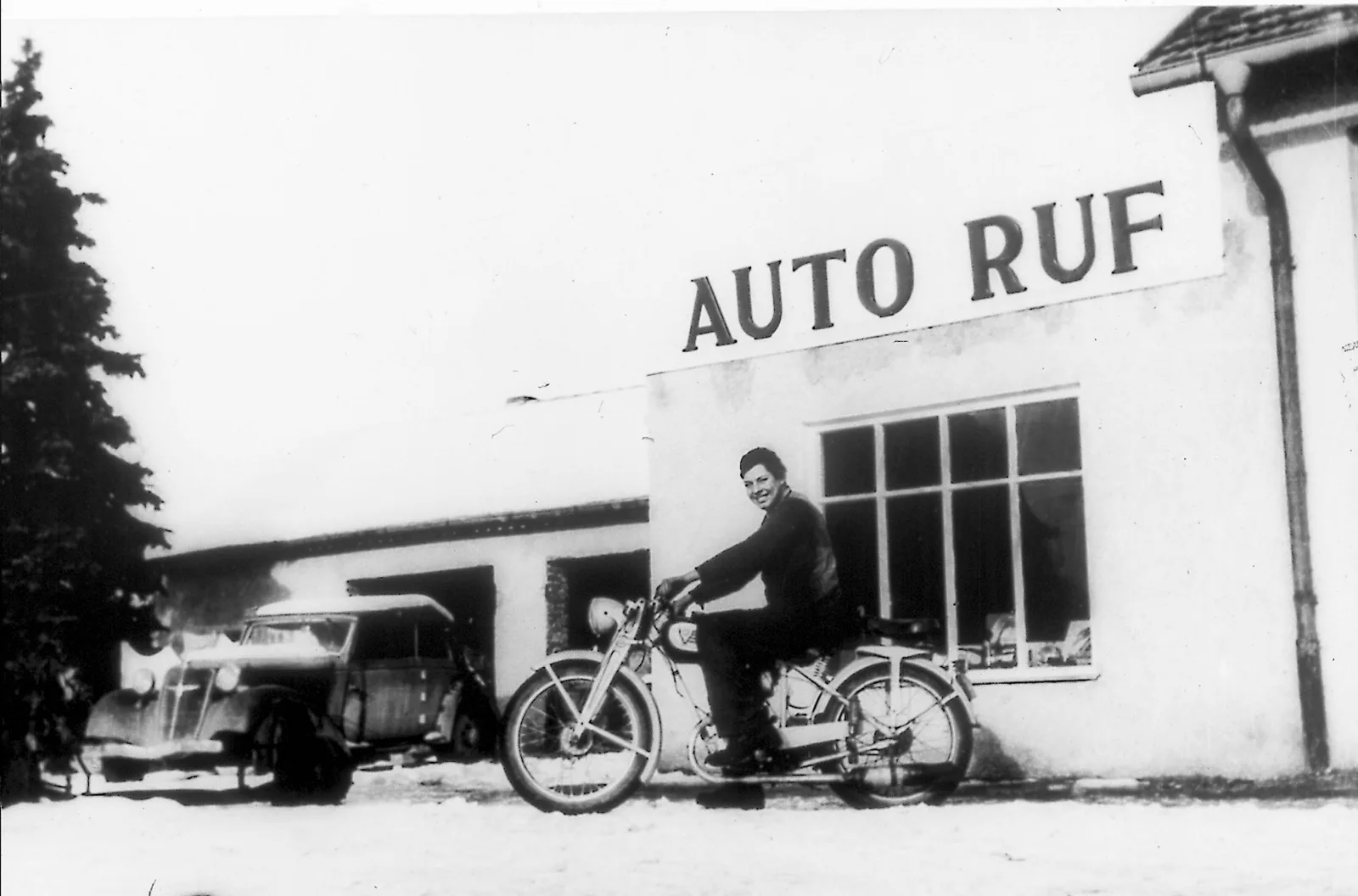
Alois Ruf Sr started Auto Ruf in Pfaffenhausen in 1939 as a service garage, adding a petrol station in 1949. His son Alois Jr began restoring Porsches there in 1960 and took over the business at 24, after his father died in 1974. The first Ruf-enhanced Porsche followed a year later.
The elder Ruf was no stranger to building things. In 1955 he designed and built a tour bus, and its success led him to start a separate bus company. Alois Jr preferred sports cars, and in particular the 911.
Ruf's first complete model arrived in 1977, a tuned 911 Turbo with a stroked 3.3-litre motor. In 1978 came the 911 SCR, a naturally aspirated 911 with a stroked 3.2-litre engine making 217 horsepower. Customers ordered plenty of them.
Ruf once built cars on white Porsche bodies, meaning bare shells supplied without paint or trim. Today it builds on bodies and chassis of its own, and it also sells performance parts for the 911, Boxster and Cayman.
Three German tuners took the same raw material, a Porsche or a Ferrari, and took it so far that Enzo Ferrari asked for his badge back.
How fast were the Ruf CTR and CTR2?
The 1987 CTR reached 339 km/h (211 mph) in April of that year, which made it the fastest production car of its time, and it touched 342 km/h (213 mph) in 1988. Its 1995 successor, the CTR2, clocked 350 km/h (217 mph). Only the McLaren F1, at 241 mph in 1998, took the crown from it.
That left the CTR2 as the second-fastest production car of the 1990s, at a price that was only a fraction of what the F1 cost. For a short spell in the mid-1990s it was the quickest road-legal production car in the world.
What are the CTR3, CTR Anniversary and SCR?
They are Ruf's cars on its own bodies and chassis. The CTR3 of 2007 was Ruf's first entirely unique model and used a mid-engine layout, unlike the rear-engined 911. The 2017 CTR Anniversary went back to a rear engine but uses almost nothing from Porsche, and the 2018 SCR shares its body and chassis.
Ruf revealed the CTR3 in April 2007 to mark its new plant in Bahrain and the 20th anniversary of the original CTR. Canadian engineering firm Multimatic helped design it. Journalists compared it to the Porsche 911 GT1, which also placed its engine mid-car beneath a body made to look like a 911.
The CTR Anniversary appeared at the 2017 Geneva show, 30 years after the first CTR, and came from a partnership with German firm Vela Performance. Its 3.6-litre water-cooled twin-turbo flat-six makes 522 kW (710 PS; 700 hp) and drives through a custom seven-speed gearbox built by ZF to Ruf's specification. The only genuine Porsche parts are windows and wiper components from the 964 and 993.
The SCR followed in 2018. It borrows the Anniversary's body and chassis but swaps the turbos for a naturally aspirated engine rated at 375 kW (510 PS; 503 hp), and it reuses the name of the 1978 car.
Ruf also tried electric power. The eRuf Model A used a propulsion system from an outside supplier, with 150 kW (204 PS; 201 hp), 649 N m (479 lb ft) of torque and a top speed of 225 km/h (140 mph). The estimated range was 250-320 km (155-199 mi), using iron-phosphate lithium-ion batteries built in Britain. Ruf hoped to start production in autumn 2009, but that did not happen. At the 2009 Geneva show it announced the eRUF Greenster instead, with limited production planned for the end of 2010.
Why does Ruf appear in racing games instead of Porsche?
Porsche signed an exclusivity deal with Electronic Arts, starting with a Need for Speed title in 2000, so other game makers could not use Porsche cars. Ruf was a legal workaround: Germany treats it as a full manufacturer, and its cars carry unique VINs. The deal ended in 2016.
Gran Turismo, Project CARS, Assetto Corsa and several others used Ruf models in place of Porsches. Some Forza and Project Gotham Racing games did carry Porsche through sub-licensing. After 2016 many series dropped Ruf for the real thing. It has never been publicly confirmed, but it has been speculated that Porsche now blocks the two from sharing a game. In Asphalt 8: Airborne, Ruf cars became unobtainable after a Porsche-themed update, though players who already owned one kept it until a 2023 update. Gran Turismo Sport, Gran Turismo 7 and some Forza titles now feature both brands.
What did Gemballa build in the 1980s and 1990s?
Uwe Gemballa founded the firm in 1981 in Leonberg to customise and improve cars, mainly Porsches. In the 1980s it produced the Avalanche, built on the 930 Turbo with its slant nose, the convertible Cyrrus and the similar Mirage. Prices were reported at US$250K-$375K or more, very high for the time.
Those cars wore wide body kits with side strakes in the style of the Ferrari Testarossa, along with upgraded wheels, interiors, gauges, paint and Hi-Fi systems. Some used cameras in place of mirrors, then a new idea. Pioneer used Gemballa cars in its adverts and brochures for several years, and Vanilla Ice (Robert Van Winkle) owned one too.
The 1990s brought subtler body kits, continued engine work and a facility in California. In 2001 a Gemballa GTR with 450 kW (600 hp), based on the 996, held the street-legal lap record at the Nurburgring when Wolfgang Kaufmann lowered the time to 7:32:52, taking the record from rival tuner TechArt. A Porsche Carrera GT later beat it by less than a second. In 2005 a white Gemballa 911 RS America led about 30 more of the model through a Porsche Parade gathering in Hershey, Pennsylvania, the biggest turnout the RS America has had.
What is special about the Gemballa Mirage GT and its stablemates?
The Mirage GT of 2007 was a modified Porsche Carrera GT. Rumours had suggested more than 600 kW (800 hp), but the only change to performance was a quad-pipe stainless exhaust that lifted output to 481 kW (645 hp), 40 hp above stock. Gemballa built 25 Mirage GTs in total.
The two extra tailpipes sit where the reverse and fog lamps used to be, so those lamps moved beneath the rear diffuser. Other changes were a roof-mounted air intake, an uprated clutch, a carbon-fibre hardtop and panels, Gemballa wheels, new front and rear ends and a rear wing whose centre section moves electronically. Uwe Gemballa said a twin-turbo version was being developed, and Modified Luxury & Exotics magazine praised the finished car.
The Avalanche GTR800 EVO-R used a 997 GT2 as its base and made about 800 bhp (600 kW) from two turbochargers. The Mistrale of 2009 reworked the Panamera Turbo with carbon-fibre bodywork, forged 22-inch wheels, better brakes and revised suspension, and engine options of up to 750 hp and 1,000 Nm. That meant 0-100 km/h (62 mph) in about 3.2 seconds and over 338 km/h (210 mph); only 30 were planned. For the first-generation Cayenne Turbo there were GT500, GT600 and GT750 packages with up to around 750 bhp, though full conversions were rare.
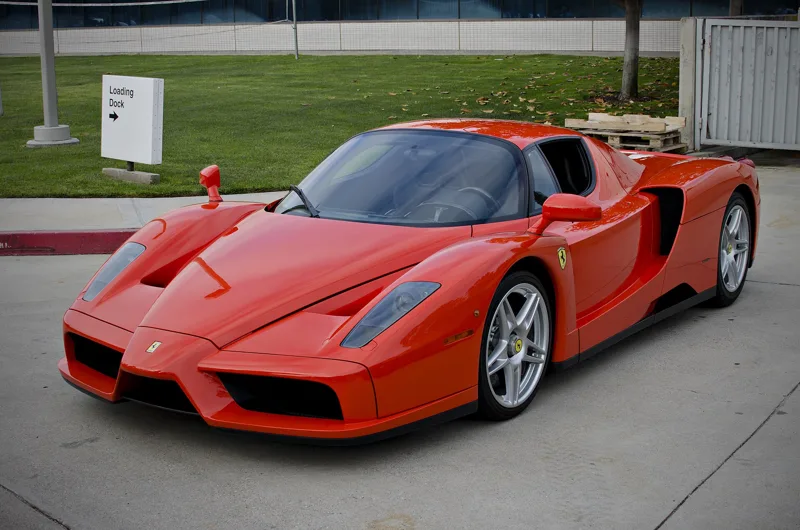
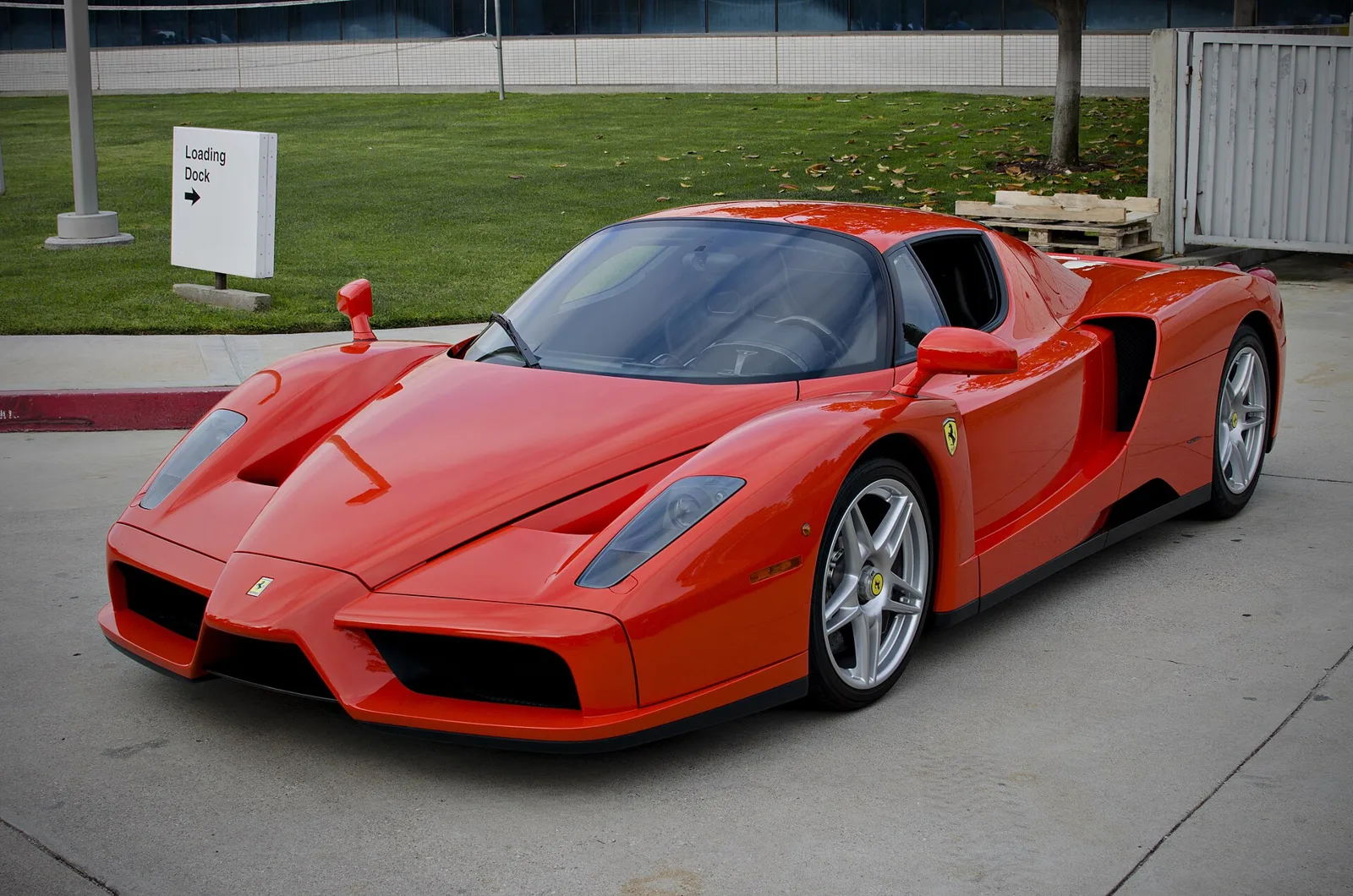
The strangest project was the MIG-U1. Dubai collectors Mustafa and Ilyas Galadari commissioned a Ferrari Enzo rebuild, and their initials gave the car its name. Plans called for 25, but only one prototype was completed. Gemballa raised the 6.0-litre V12 from about 660 hp to about 700 hp, with roughly 720 Nm of torque, for 0-100 km/h in about 3.1 seconds and a top speed beyond 360 km/h.
The carbon-fibre body was redrawn with fighter-aircraft inspiration, widened by about 80 mm at the front and 100 mm at the rear, and fitted with an adjustable rear wing and front splitter. Downforce rose by up to about 35 kg at the front and 85 kg at the rear. Active hydraulics lifted the ride height by about 45 mm, on demand or automatically above 80 km/h. Forged wheels cut unsprung mass by about 16 kg. Inside were leather and suede, a seven-inch touchscreen and a 950-watt audio system.
What happened to Gemballa after Uwe Gemballa died?
Uwe Gemballa was reported missing in Johannesburg on 17 February 2010 during a business trip, and he was found dead west of Pretoria that October. German authorities seized and shut the factory in May 2010. In August 2010, Andreas Schwarz and investor Steffen Korbach bought the brand and name rights and refounded the company as Gemballa GmbH.
Suspicions about the motive differ: one view links his death to a money-laundering operation that turned against him, another says he refused to join criminal activity. One man pleaded guilty on 29 October 2010 and was sentenced to 20 years, and three more men were convicted in 2015. Korbach became sole CEO in 2016.
The firm kept going. Its current cars are mostly based on Porsches and McLarens: an Avalanche on the 997, the Tornado and GT Aero cars on the Cayenne, the Mirage GT, the Mistrale, and GT versions of the 991 and of the McLaren MP4-12C. In 2011 it set up Gemballa Racing using McLaren MP4-12C GT3 cars instead of Porsches, with a planned entry in the FIA GT3 European Championship in 2012.
Who was Willy Koenig, the man behind Koenig Specials?
Willy Koenig, born on 2 February 1938, made his fortune in publishing and printing, which paid for his racing. He began in 1961 with a Formula Junior Cooper bought from Formula One driver Wolfgang von Trips, and in 1962 won the German Hillclimbing Championship driving a Ferrari 250 GT SWB Berlinetta and entering as Robert Frank.
That win brought a personal invitation from Enzo Ferrari to an event at Maranello. Until the end of the decade Koenig raced cars including the Lola T70, assorted Fiat Abarths, the Borgward Isabella TS and the Ford GT40, then retired from professional racing after 1969 to concentrate on business. In the late 1980s he raced a BMW 320i Turbo and an M1 Procar with his son Walter, won the Spezial-Tourenwagen-Trophy in 1990 in a Porsche 935 K3, and raced a Porsche 962 in the Interserie. He once survived a 250 km/h crash in the 935 K3 during a test drive at the Osterreichring.
How did a Ferrari 365 GT4 BB start Koenig Specials?
In 1974 Koenig became one of the first West German buyers of the Ferrari 365 GT4 BB and found it slower than the racing cars he was used to. His changes were so popular that other owners commissioned the same work. He turned the hobby into a business in 1977, aiming to make Ferrari a proper sports car again.
The name came from Auto-Konig, a large German Ferrari dealer, and from a wish to avoid anglicising it. Early work added exhausts, clutches, wide wheels and rear spoilers, some of them factory parts and some copied from racing cars. For the 365/512 BB the options ran from an exhaust giving a quoted 370 bhp, through a camshaft for 400 bhp, to 450 bhp with special pistons, modified heads and rejetted carburettors, good for 0-60 mph in 4.5 seconds.
Owners who wanted more could order a twin-turbo conversion with a pair of Rajay turbos and intercoolers, producing 620 bhp. The car needed new suspension, wider wheels and stronger brakes, and with almost every body panel replaced it claimed 0-60 mph in 3.9 seconds and 332 km/h (206 mph).
Perhaps the best-known project followed in 1985 at the Frankfurt show, a modified Testarossa with 710 bhp, 320 bhp over standard. The 800 bhp Competition arrived in 1988 and was good for 349 km/h (217 mph). Its convertible cousin, the Competition Cabrio of 1989, managed 319 km/h (198 mph); Ferrari never offered an open Testarossa, and the strengthening needed for one made the conversion alone cost US$55,600.
At the top sat the Competition Evolution, quoted at 1000 PS DIN with a claimed 370 km/h (230 mph) and an estimated 0-60 mph in 3.5 seconds. Fitted with a re-trimmed leather interior and a 16-speaker audio system, a whole car was reported at US$595,900.
Koenig also built a 750 bhp F40, a single-turbo 400 bhp Ferrari 308, an 850 bhp twin-turbo F50 and a Porsche 911 with 928 headlights and Audi 200 taillights. Engine tuner Franz Albert and widebody specialist Vittorio Strosek were regular collaborators, along with H&R for suspension and, later in the 1980s, OZ for wheels. Conversions were also offered for Mercedes-Benz, Jaguar, Porsche and Lamborghini.
The C62 was Koenig's own take on the Porsche 962, which made it the first Group C/IMSA GTP type machine approved for the road. The F48 reworked the Ferrari 348 with twin turbos, a widebody and a wing like the F40's; the KS600 package gave almost 600 bhp. Fewer than 10 were made, perhaps three of them right-hand drive. Authentic Koenigs have a KS-prefixed Koenig Specials VIN plate fixed to the dashboard.
Why did Enzo Ferrari object to Koenig's cars?
Ferrari ordered Koenig, by legal notice, to remove the prancing horse from every car it modified, because the company no longer considered them Ferraris. Magazines went to lengths to avoid showing the badge. Top Gear masked it on an owner's F50, and a car tested by Road & Track wore a rectangular yellow KS badge instead.
Fans of the marque argued even about deleting the side strakes. Sylvester Stallone had a silver Mercedes-Benz modified by the firm, and Formula One driver Gerhard Berger owned a twin-turbo Testarossa. Auto Bild called Koenig Germany's wildest tuner, and Road & Track called it one of Germany's leading tuners.
Car magazine described the Competition Evolution as possibly the best-known modified supercar of its decade, naming the Ruf Yellowbird alongside it. Its editor Chris Chilton also put two Koenig cars on a list of German Mod Crimes of the 1980s.
The good times rested on a buoyant German economy through the two decades before. Koenig was among the first houses to specialise in expensive exotics, and it, Brabus and Gemballa replaced traditional coachbuilders. By the end of the 1990s recession had killed some of those firms, while in-house programmes such as BMW M and Mercedes-AMG replaced tuner houses. Koenig still exists, but only produces components, not complete cars or full conversions.
The three tuners side by side
| Firm | Base | Started | Best-known work | Today |
|---|---|---|---|---|
| Ruf | Pfaffenhausen | 1939 as a garage; Porsche work from 1960 | CTR, 339 km/h (211 mph) | Builds cars on its own bodies and chassis |
| Gemballa | Leonberg | 1981 | Mirage GT, 481 kW (645 hp); 25 built | Refounded in August 2010 |
| Koenig Specials | Munich | 1977 | Competition Evolution, quoted at 1000 PS DIN | Components only |
What do these rebuilt cars mean for buyers and drivers?
These were never mass-market products. Gemballa built 25 Mirage GTs and one MIG-U1, Koenig made fewer than 10 F48s, and a fully trimmed Competition Evolution was reported at US$595,900. Provenance is marked in the details: Koenig plates start with KS, and Ruf cars carry unique VINs because Germany treats Ruf as a full manufacturer.
Which of the three still builds cars?
Ruf lists the CTR3 Evo, CTR Anniversary, SCR 2018, Rodeo and R Spyder as its current models. Gemballa continues with cars on Porsche and McLaren platforms. Koenig is reduced to producing components.