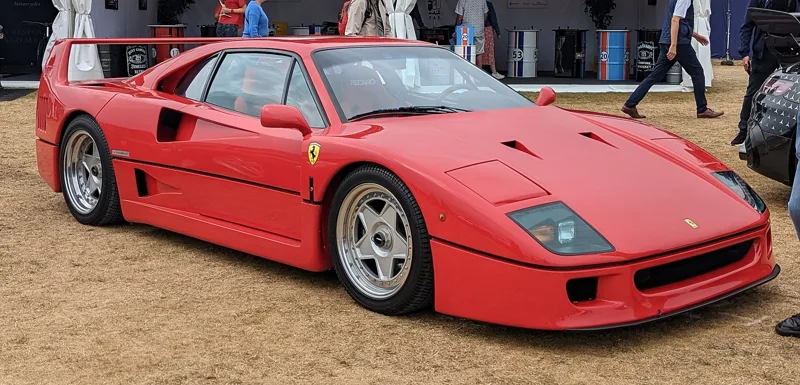
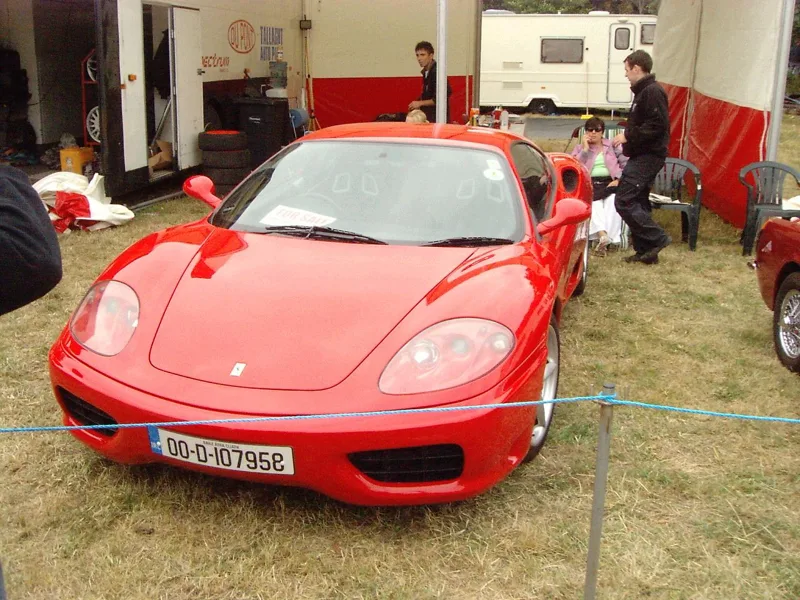
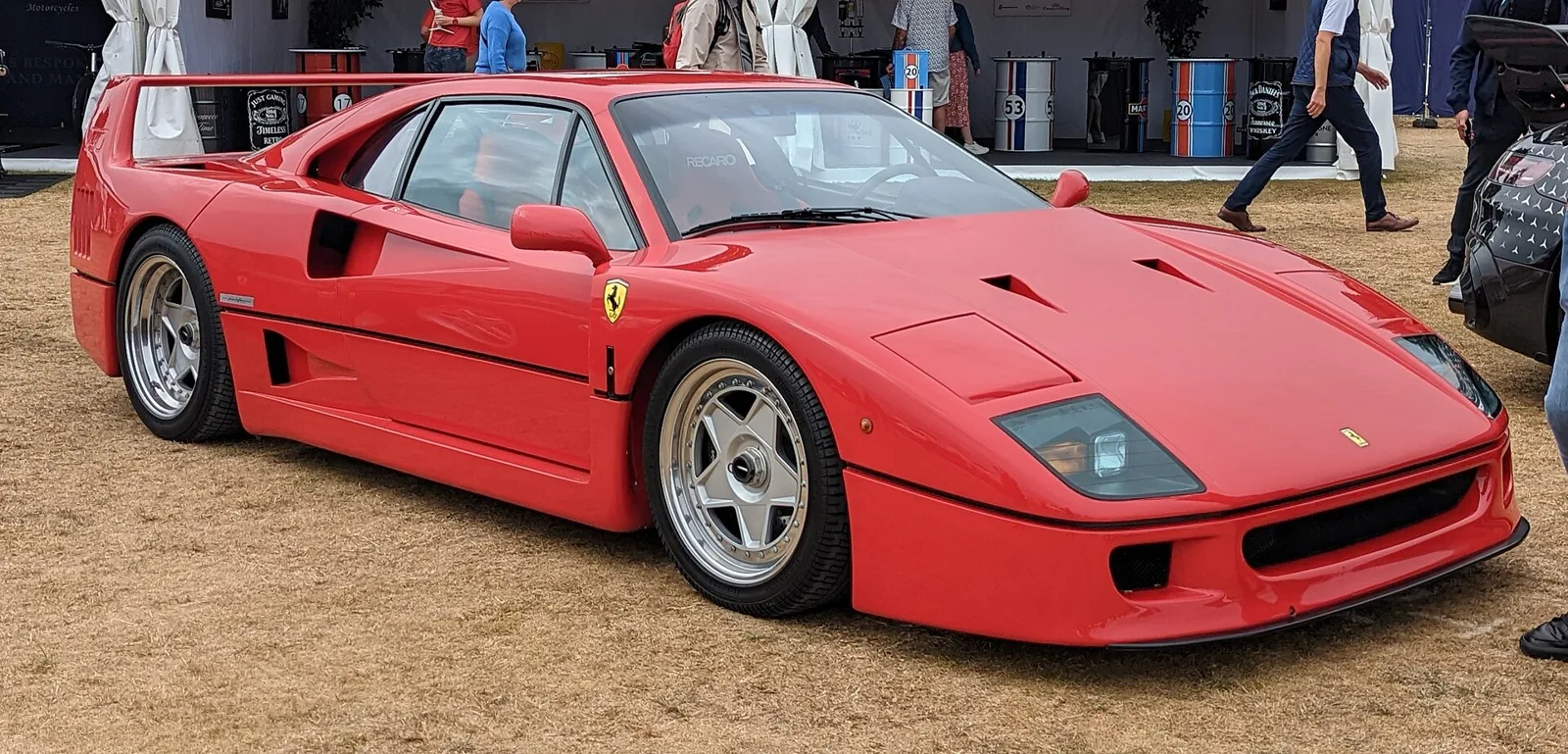
Pininfarina's mid-engined flat-12 from 1984, with side strakes, a 390 PS engine and almost 10,000 cars built across its family.
The Ferrari Testarossa was a mid-engined flat-12 sports car styled by Pininfarina and produced from 1984. Its family continued to 1996 with the 512 TR and F512 M, and almost 10,000 cars were built. It replaced the Berlinetta Boxer and became a symbol of the 1980s.
Pininfarina styled the Testarossa to succeed the Berlinetta Boxer, and it arrived at the 1984 Paris Auto Show as a two-door coupe. Its 4.9-litre flat-12 sat behind the seats, and the wide body with its side strakes became one of the most recognisable shapes of the decade. Almost 10,000 cars came out of the family across its production run.
The Testarossa kept the mid-engined idea and the flat-12 layout of its predecessor, but the car around that engine was reworked to solve the earlier car's problems.
Where did the Testarossa come from?
The Testarossa traces its roots to the faults of the 512 BBi, which dated from 1981. The cabin grew hot from the plumbing that ran between the front radiator and the midships engine, and the car offered little luggage space. The Testarossa was designed to be larger to fix both problems.
The Testarossa was half a foot wider than the Boxer. Its wheelbase stretched about 64 mm (2.5 in) to 2,550 mm (100.4 in), which made room for luggage in front of the engine and extra space behind the seats.
The larger body was the answer to the earlier car's shortage of luggage space, and it gave the designers room to work with.
A flat-12 mid-engined car that turned a 1980s design into one of the most recognisable Ferraris ever built.
Who designed the Testarossa?
The design came from Pininfarina, and the team that worked on it included Ian Cameron, Guido Campoli, Diego Ottina and Emanuele Nicosia. Design chief Leonardo Fioravanti guided the layout of the car.
The styling departed from the curvaceous Boxer, and that change caused some controversy. The designers made the new look a strong visual signature.
The side strakes ran from the doors to the rear fenders. They were needed for rules in several countries that outlawed large openings on cars, so the designers made them a feature rather than a hidden fix. The strakes became a signature of the late eighties.
How did the Testarossa handle cooling and aerodynamics?
Twin side radiators sat near the engine at the rear, which removed much of the plumbing that ran forward in the Boxer and allowed a much cooler cabin. The car was wider at the rear than at the front, which added stability and helped the handling.
The aerodynamic drag coefficient was Cd 0.36, significantly lower than the Lamborghini Countach's 0.42. The Testarossa did not need a rear spoiler, which kept the rear of the car clean and simple.
Early cars had a single high mirror on the driver's side. US cars received a lower mirror for 1987, and a passenger-side mirror was then added so the driver could change lanes with confidence.
What engine did the original Testarossa have?
The original car used a naturally aspirated 4.9 L (4,943 cc) Tipo F113 flat-12 with four valves per cylinder, giving 48 valves in total. It produced 287 kW (390 PS; 385 hp) at 6,300 rpm, while early US cars made 283 kW (385 PS; 380 hp).
Torque reached 490 N.m (361 lb-ft) at 4,500 rpm, and the compression ratio was 9.30:1. The engine used a dry sump lubrication system.
Performance was strong for the period. The car reached 100 km/h in 5.8 seconds and 161 km/h in 11.4 seconds, and a standing quarter mile took 13.5 seconds. Motor Trend recorded 5.29 seconds to 60 mph, and the estimated top speed was 290 km/h (180 mph).
What wheels and brakes did the Testarossa use?
The 1985 cars used magnesium single-bolt knock-off wheels with a diameter of 16.33 inches (415 mm). Those wheels were a distinctive part of the early car.
The 1986 model year changed the wheels to a standard 16-inch diameter, measuring 8 inches wide at the front and 10 inches at the rear. The design kept the same look.
The front brakes measured 309 mm (12.17 in) across, and the rear brakes measured 310 mm (12.20 in).
How did the 512 TR change the Testarossa?
The 512 TR arrived for the 1992 model year, shown at the Los Angeles Auto Show. It produced 315 kW (428 PS; 422 hp) at 6,750 rpm, and its weight split moved to 41% front and 59% rear, which improved the balance of the car.
The engine gained Nikasil cylinder liners and Bosch engine management, and the 0-100 km/h time fell to 4.8 seconds. The 512 TR reached a top speed of 313.8 km/h (195.0 mph), which was a clear step beyond the original car.
The updates also targeted the complaints about the earlier car. A single-plate clutch eased the gear shift effort that had drawn criticism.
The 512 TR also had its share of recalls. In 1995 more than 400 cars had a fuel hose fitting defect, and over 2,000 cars were affected by a seat belt restraint fault that could leave only the lap belt working.
What was the F512 M?
The F512 M was the last Testarossa, shown at the Paris Salon in October 1994. Ferrari built 501 examples, of which 75 went to North America and 75 were right-hand drive cars.
Its engine produced 324 kW (441 PS; 434 hp) at 6,750 rpm and 500 N.m (370 ft-lbf) of torque at 5,500 rpm. The compression ratio rose to 10.40:1, and the electronic rev limit was 7,500 rpm.
The F512 M was quicker off the line, and its top speed was 315 km/h (196 mph). The last one was built in early 1996, and it was also the final Ferrari to use a flat-12 engine.
What was the Testarossa Spider?
The Testarossa Spider was the sole official convertible, commissioned in 1986 by Gianni Agnelli to mark 20 years as Fiat chairman. It carried the chassis number 62897 and was finished to a special specification for its owner.
The Spider's output was 291 kW (396 PS; 390 hp), and its transmission could be switched between automatic and five-speed manual operation. The transmission was fitted at the special request of Agnelli.
The original car was auctioned in 2016 for US$1.3 million, after being driven 23,000 kilometers. Its story shows how a one-off commission could outlast the decade that produced it.
Which Testarossa one-offs and concepts were built?
The Mythos concept used the Testarossa's flat-12 and was projected to reach 180 mph (290 km/h). Luigi Colani's Testa d'Oro, a turbocharged car designed to break land speed records, set a class record in 1991 at 351 km/h (218 mph).
The FX was built for the 29th Sultan of Brunei. It used the F512 M's flat-12 and a 7-speed sequential gearbox from the Williams Formula One team. The car was based on the F512 M and carried a bespoke Pininfarina body.
Six F90 cars were built for the Sultan in 1988, and the project stayed secret for almost 18 years. Enrico Fumia styled the F90.
How did the Testarossa become a pop culture icon?
The Testarossa became a flagship of the 1980s and a fixture of pop culture. It appeared in the Out Run arcade game and in Miami Vice from the 1986 season onward, where Don Johnson drove a white example.
Enzo Ferrari gave Don Johnson a silver 1989 Testarossa, and Road & Track featured the car on its cover ten times between December 1984 and July 1989.
The car did not race, unlike the 512 BBi. Its side strakes spawned a whole family of aftermarket body kits, including the Truxtarossa kits that were fitted to other cars.
How did performance change across the Testarossa family?
The 0-100 km/h time fell from 5.8 seconds on the original car to 4.8 seconds on the 512 TR and 4.7 seconds on the F512 M. Top speed followed the same path, rising from an estimated 290 km/h (180 mph) to 313.8 km/h (195.0 mph) and then 315 km/h (196 mph).
Power rose in step. The original car produced 287 kW (390 PS; 385 hp), the 512 TR made 315 kW (428 PS; 422 hp), and the F512 M reached 324 kW (441 PS; 434 hp) at 6,750 rpm. Torque moved in a similar direction, from 490 N.m (361 lb-ft) to 491 N.m (362 lb-ft) and then 500 N.m (370 ft-lbf).
The F512 M also carried a compression ratio of 10.40:1 and an electronic rev limit of 7,500 rpm. Those figures show an engine that was tuned to rev harder than the earlier units while still using the same basic flat-12 layout.
Why was the Testarossa built in such large numbers?
Almost 10,000 cars were built across the family, which put the Testarossa among the most widely built Ferraris of its era. The range covered the original car, two revised versions and a limited F512 M run. The total includes every revised variant, so the figure describes the family rather than the original car alone.
The original car ran from 1984 to 1991, and the revisions carried the name on to 1996. That long production window gave the family many years to build up its total.
The original car had the longest run, so it accounts for most of the total. The 501 F512 M cars were a small share of the overall figure, though they marked the end of the line. It is that breadth, rather than one version, that gives the Testarossa its large total.
What are the Ferrari Testarossa specifications?
The table gathers the core figures for the original Testarossa alongside the 512 TR and F512 M revisions. Imperial figures appear in brackets alongside metric ones wherever the original data gives both, and every entry matches the figures set out earlier.
| Specification | Detail |
|---|---|
| Type | F110, mid-engined flat-12 two-door coupe |
| Engine (original) | 4.9 L (4,943 cc) Tipo F113 flat-12, 48 valves |
| Power (original) | 287 kW (390 PS; 385 hp) at 6,300 rpm |
| Torque (original) | 490 N.m (361 lb-ft) at 4,500 rpm |
| Compression (original) | 9.30:1 |
| 0-100 km/h (original) | 5.8 seconds |
| Estimated top speed (original) | 290 km/h (180 mph) |
| Power (512 TR) | 315 kW (428 PS; 422 hp) at 6,750 rpm |
| Power (F512 M) | 324 kW (441 PS; 434 hp) at 6,750 rpm |
| Weight split (original) | 40% front, 60% rear |
| Drag coefficient | Cd 0.36 |
| Total production | almost 10,000 |
The table shows how the family changed over time. The original car gave way to a more balanced 512 TR and then to the F512 M, which kept the same basic engine layout while gaining power.
Frequently asked questions
How many Testarossas were built?
Almost 10,000 cars were produced in total, counting the revised variants and the limited F512 M run. The original car accounted for the longest portion of that output, since it was built from 1984 to 1991 before the revisions followed.
Did the Testarossa race?
No. The Testarossa did not take part in any racing event, which set it apart from the 512 BBi that preceded it. Its reputation rested instead on road performance and on its appearances in pop culture, from the Out Run arcade game to Miami Vice.
What was the FX?
The FX was a special-order Pininfarina car built for the 29th Sultan of Brunei. Its flat-12 came from the F512 M, and its gearbox was a sequential unit from the Williams team. Dick Marconi later bought one of the cars from Williams.
What top speed did the 512 TR reach?
The 512 TR's claimed top speed was 313.8 km/h (195.0 mph), compared with an estimated 290 km/h (180 mph) for the original. Ferrari's later F512 M added a little more, as the family's pace crept upward across each revision.