An oil company that began with 18 staff and two phone lines, a state giant that nearly drowned in debt, a Thai network with a coffee chain by the pumps and a Japanese family firm that defied its government.
Petronas, Pertamina, PTT and Idemitsu are state or family-founded fuel companies in Malaysia, Indonesia, Thailand and Japan. Petronas began in 1974 and has around 1,000 stations, Pertamina runs Indonesia's largest network, PTT owns Cafe Amazon, and Idemitsu runs 5,250 stations, many under the apollostation brand.
When Petronas opened in 1974 it had 18 staff and two telephone lines, working out of a wooden building in the Prime Minister's Office complex in Kuala Lumpur. It now holds the rights to all of Malaysia's oil and gas. Along with Pertamina of Indonesia, PTT of Thailand and Idemitsu of Japan, it supplies fuel to drivers across Asia, and each took a distinct route to the forecourt.
Petronas petrol station: from 18 staff to a national oil company
Malaysia's oil industry began with a foreign company. Royal Dutch Shell started drilling at Miri in Sarawak after an Oil Mining Lease was signed in 1909, and the first well went down in 1910, later nicknamed the Grand Old Lady. Shell remained the sole oil operator there in 1963, the year Malaya joined Sarawak and Sabah to form Malaysia, and in 1968 it brought the country's first offshore oilfield into production. A Petroleum Mining Act in 1966 gave Exxon and Shell exploration rights, and Esso and Continental Oil received concessions off the east coast late in the decade.
Prices changed the politics. A barrel cost US$1.50 in 1972, rose to US$2.28 and then jumped to US$12.00 after a Middle East war and the OPEC embargo. Malaysia wanted its own oil company and a production sharing system instead of concessions, and in 1974 Parliament approved the Petroleum Development Act. Petronas was incorporated on 17 August 1974 with paid-up capital of RM10 million, with Tengku Razaleigh Hamzah as its first chairman and the business tycoon Ananda Krishnan helping to build it.
The big foreign firms did not simply hand over. Exxon and Shell initially refused to give up their concessions, so Petronas warned that after 1 April 1975 any foreign oil company without an agreement would be working illegally in Malaysian waters. After several rounds of talks they gave way. The state of Sabah was the last to sign, holding out over the 5 percent royalty offered to oil-producing states, and agreed only after a change of state government in 1976. With that, Petronas controlled all of Malaysia's oil and gas reserves.
Business followed quickly. Its first crude shipment, 358,000 barrels bound for Japan, left on 1 September 1975. In 1976 it agreed to send 8,000 to 10,000 barrels a day to the Philippines and announced aviation fuelling at what is now Penang International Airport. In 1978 it formed its exploration arm, Petronas Carigali, and signed a Malaysia LNG joint venture with Mitsubishi and Shell in which it holds 65 percent and each partner 17.5 percent.
Today Petronas works in over 100 countries and has around 1,000 service stations nationwide. Its subsidiaries cover gas trading and marketing (Petronas Dagangan), lubricants in over 100 markets (Petronas Lubricants International), chemicals, clean energy under Gentari and even a university. The company ranked 216th in the 2022 Fortune Global 500, and between 2015 and 2020 it supplied more than 15 percent of the Malaysian government's revenue. It celebrated its 50th anniversary in 2024.
Petronas began in 1974 with 18 staff and two telephone lines.
Pertamina fuel: Indonesia's state-owned network
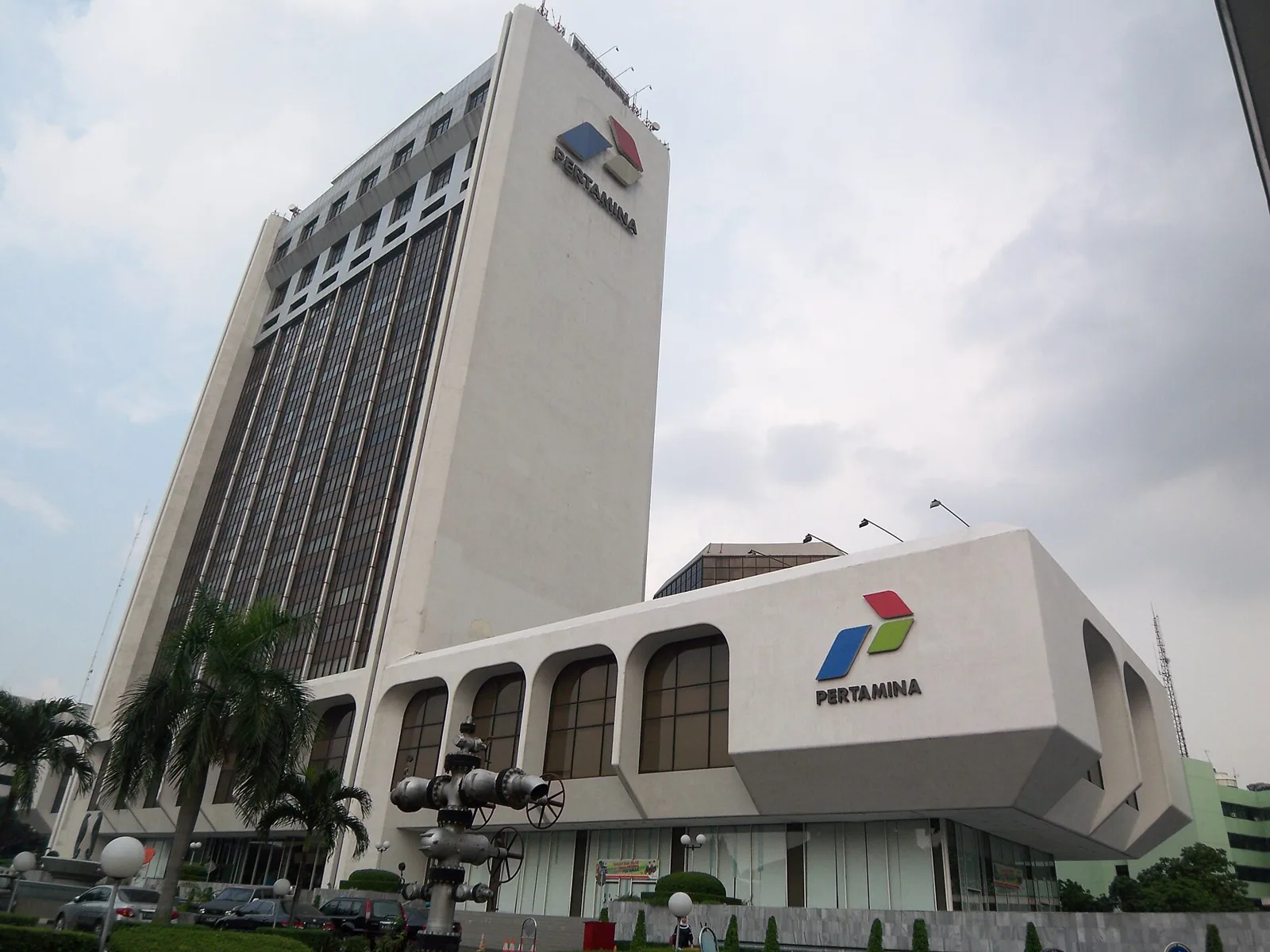
Pertamina is the Indonesian state oil and gas company, headquartered in Jakarta, and it dates from August 1968, when Pertamin (founded in 1961) and Permina (founded in 1957) were merged. Permina itself grew out of the 1957 nationalisation of Royal Dutch Shell's Indonesian assets and was run by Lieutenant-General Ibnu Sutowo. In 2020 it ranked third among Indonesia's crude producers, behind the ExxonMobil-run Mobil Cepu and Chevron Pacific Indonesia, and it is the largest company in Indonesia.
The 1970s were its boom and bust. Higher oil prices in 1974 brought in USD 4.2 billion, about a sixth of Indonesia's economy, and Sutowo spread the proceeds into tankers, steel and construction. By February 1975 Pertamina was failing to pay its creditors in America and Canada. The ensuing investigation found debts of over US$10 billion, with other estimates higher still at $15 billion, along with mismanagement and corruption. A large government bail-out settled the matter and nearly doubled Indonesia's foreign debt.
Its modern form dates from 2003, when it legally became PT Pertamina (Persero), a limited company with the main aim of making a profit. In October 2020 it replaced a logo used since the 1970s, presenting the change as a shift from national oil and gas company to global energy company, with an ambition of net zero emissions by 2060.
For drivers the key fact is reach. Pertamina has the biggest distribution network for petroleum products in Indonesia, and next to its filling stations it runs Bright convenience stores and cafes, managed by PT Pertamina Retail. The company has 27 subsidiaries. As of 2013 it operated six oil refineries with a combined capacity around 1 million barrels a day, and no new refinery has been built since Balongan in West Java in the mid-1990s. Plans announced in 2012 and 2013 for two new refineries of about 300,000 barrels a day each, with Kuwait Petroleum and Saudi Aramco, stalled over financial concessions, and the first was cancelled in September 2013.
Corruption cases have made headlines. In June 2024 a former president director, Karen Agustiawan, was sentenced to nine years for graft over liquefied natural gas purchases from Cheniere, and the conviction was upheld in August. In February 2025 Indonesia's Attorney General's Office named seven suspects in an investigation of alleged misconduct from 2018 to 2023, estimating state losses of Rp 193.7 trillion. Prosecutors also alleged that Pertalite, a subsidised RON 90 gasoline, was blended with higher-quality RON 92 Pertamax and sold at an inflated price. A corporate secretary of Pertamina Patra Niaga denied the claim the next day.
PTT gas station Thailand: Cafe Amazon beside the pumps
PTT began on 29 December 1978, when Prime Minister Kriangsak Chamanan's government set up the Petroleum Authority of Thailand after the oil crises of the 1970s had made the country anxious about energy supply. It combined the Thai Fuel Organization and the Thai Natural Gas Organization into a single state enterprise.
The first big project was a gas pipeline built between 1981 and 1983 that linked the Erawan and Bongkot fields in the Gulf of Thailand to power stations. In 1985 the authority opened the Bangchak refinery in Bangkok and began a countrywide chain of stations branded PTT. In 1988 it started on gas-separation plants at Map Ta Phut. On 1 October 2001 the authority became PTT Public Company Limited, the Ministry of Finance holding the majority, and two months later it floated on the Thai stock exchange in what was then the country's largest share offering, raising about 29 billion baht (roughly US $700 million).
Many travellers know PTT for its coffee. It owns Cafe Amazon, a chain found across Southeast Asia, whose shops often stand next to PTT gas stations or inside shopping malls. PTT also reaches abroad: it operates 58 retail stations in the Philippines and has plans for 15 to 20 more in Luzon and the Visayas. With Pertamina it agreed to build a petrochemical complex in Indonesia at an estimated cost of US$4 to 5 billion.
The record has blemishes. The 2013 Rayong spill, when a broken hose released 50,000 litres of oil off the coast, closed a beach on Ko Samet and led to the evacuation of tourists. In December 2022 the Norwegian Government Pension Fund Global sold its holding in PTT and its retail subsidiary, citing an unacceptable risk of contributing to serious violations of individuals' rights in situations of war or conflict, linked to the company's partnerships in Myanmar. On the cleaner side, Bangchak Petroleum completed a 38-megawatt solar plant in 2014, the biggest of its type in the region.
Idemitsu apollostation: a family firm that took on the government
Idemitsu was founded in 1911 by Sazo Idemitsu, who started out selling lubricating oil for Nippon Oil in Moji, in northern Kyushu, and fuel oil for fishing boats in Shimonoseki. In 1914 he expanded into Manchuria, where the South Manchuria Railway was a major customer for lubricant. The headquarters moved to Tokyo in 1940.
After the war it built refineries: Tokuyama in 1957, Chiba in 1963, Hyogo in 1970, Hokkaido in 1973 and Aichi in 1975. Along the way it clashed with authorities. In 1953 its tanker Nissho Maru sailed to Iran, then under a British-led embargo, and bought oil 30 percent below the market price, which the Japanese public liked but the government and the British did not. In the 1960s it bought Russian crude 40 percent below market, which led the United States to stop buying from Idemitsu for the fuel its military jets used in Japan. When a seamen's strike in 1965 caused shortages, Idemitsu ignored production quotas and ran at full speed.
The company stayed entirely in family and employee hands until 2006, when an IPO on the Tokyo Stock Exchange raised 109.4 billion yen. The biggest deal came with Showa Shell Sekiyu. Management announced a merger plan in 2016, but the founding family objected, and without its approval management bought 31 percent of Showa Shell in December 2016. The acquisition and merger were completed in 2019.
Idemitsu is now Japan's number two refiner, behind Eneos, with about 13 percent of national refining capacity. It runs 5,250 service stations, many under the apollostation name. Until 2023 some also carried the Idemitsu and Shell brands, the Shell name being used under licence. Abroad, it opened service stations in Portugal and Puerto Rico in the 1990s, appointed Unioil as its distributor in the Philippines in 1994 and bought the Australian retailer Freedom Fuels in 2012. In Vietnam it holds 35.1 percent of the $6 billion, 200,000 barrel-a-day Nghi Son refinery, planned with Kuwait Petroleum International, PetroVietnam and Mitsui Chemicals.
Motorsport fans may spot the name on the title sponsorship of the IMSA Idemitsu Mazda MX-5 Cup and on the LCR Honda Idemitsu team in MotoGP. Less obviously, Idemitsu's research on OLED technology from the 1980s was eventually adapted by Samsung for its Galaxy phones.
| Company | Home market | Started | Forecourt names | Scale quoted |
|---|---|---|---|---|
| Petronas | Malaysia | 1974 | Petronas | Around 1,000 service stations nationwide |
| Pertamina | Indonesia | 1968, from Permina of 1957 | Pertamina, with Bright stores | Largest distribution network in Indonesia |
| PTT | Thailand | 1978; PTT Public Company Limited from 2001 | PTT, with Cafe Amazon | 58 stations in the Philippines |
| Idemitsu | Japan | 1911 | apollostation | 5,250 service stations; 13 percent of Japanese refining |
What this means for drivers in Asia
Each brand has a different local meaning. In Malaysia Petronas stations number around 1,000. In Indonesia Pertamina is the largest network, and its fuel grades matter: Pertalite is RON 90 and Pertamax is RON 92. In Thailand PTT stations often come with a Cafe Amazon beside them. In Japan the main name in the Idemitsu group is apollostation, with Shell-branded stations having been operated by Idemitsu under licence until 2023.
Where these companies say they are heading
Pertamina has said it aims for net zero emissions by 2060, and in late 2014 it announced plans to upgrade its refineries to add around 500,000 barrels a day to its capacity of about 1 million. PTT plans 15 to 20 additional stations in the Philippines. Petronas, which celebrated its 50th anniversary in 2024, has Gentari for clean energy. Idemitsu completed its Showa Shell merger in 2019.