Thailand's EV sales rose nearly eight-fold in a year while Japan, an early starter, stalled below 1%: what pushed or held back each Asian market.
Japan led early, then stalled at under 1% share because carmakers and government favoured hydrogen. Thailand's EV sales rose nearly eight-fold in 2023 to 76,000, or 12% of vehicles sold. Singapore reached 40.2% of new registrations in early 2025. India relies on FAME subsidies and state policies.
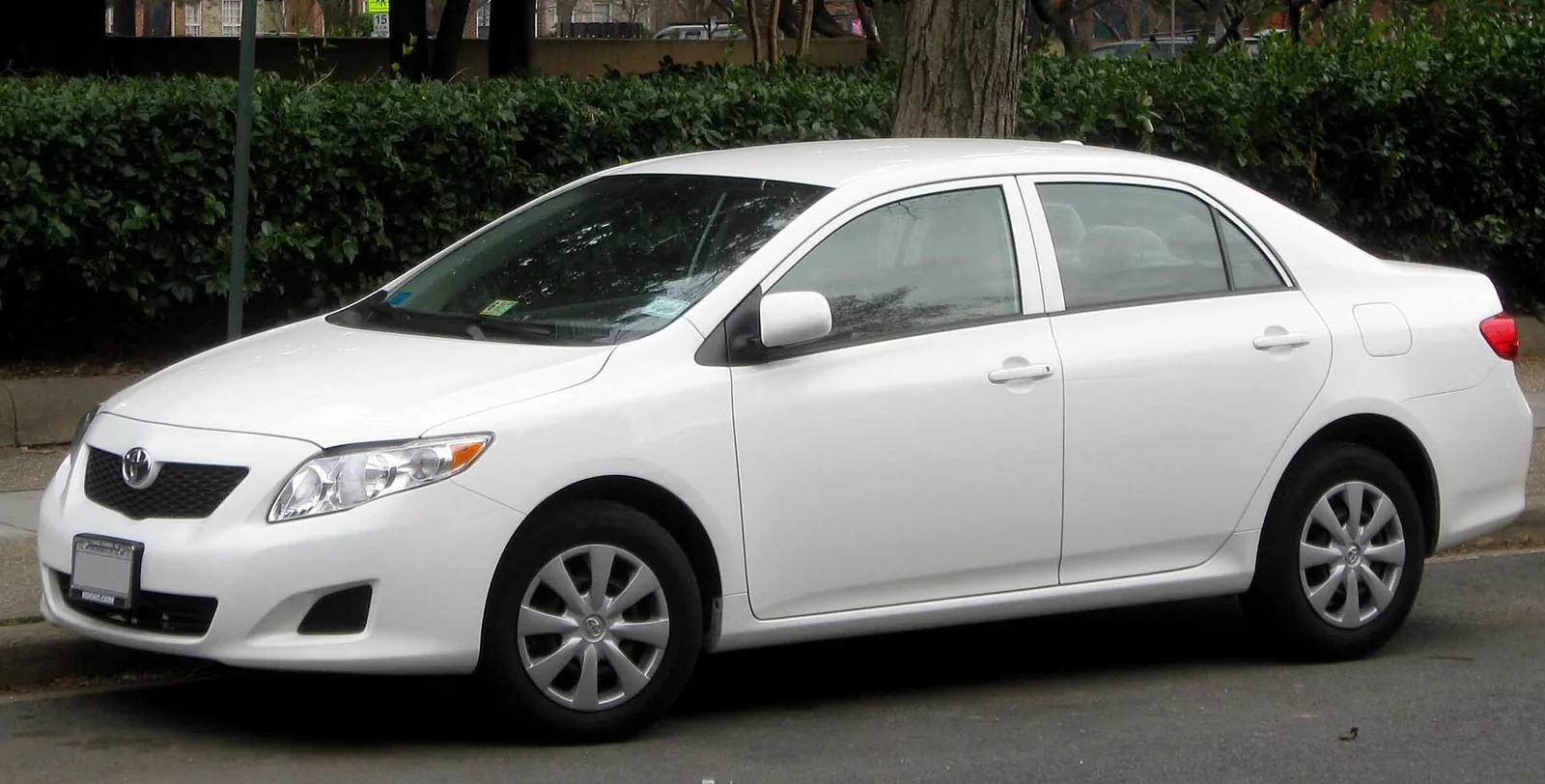
In 2023 electric vehicle sales in Thailand rose nearly eight-fold, to 76,000 units, or 12% of all vehicles sold. Japan, which began selling electric cars in 2009, recorded a plug-in market share of just 0.6% in 2020.
Plug-in electric vehicles have taken off at wildly different speeds across Asia. Japan, India, Thailand and Singapore show four distinct routes: an early lead that faded, a policy-led effort that is still taking shape, a manufacturing hub that suddenly filled with buyers, and a city-state where rebates and rules came first. Each figure is dated, because the markets are measured in different years.
Plug-in electric vehicles in Japan: an early lead, then a hydrogen detour
Japan had just over 300,000 highway-legal plug-in vehicles in circulation at the end of 2020: 156,381 all-electric cars, 136,700 plug-in hybrids and 9,904 light-commercial vehicles. That total hides a slowdown. Growth faded from 2013, and annual sales fell behind Europe, the United States and China. Market share was 0.68% in 2014, 0.59% in 2016, 1.2% in 2017, 1.1% in 2018, then 0.7% in 2019 and 0.6% in 2020. In 2019 Norway moved ahead of Japan in the ranking of plug-in car fleets, pushing it out of third place.
How Japan started
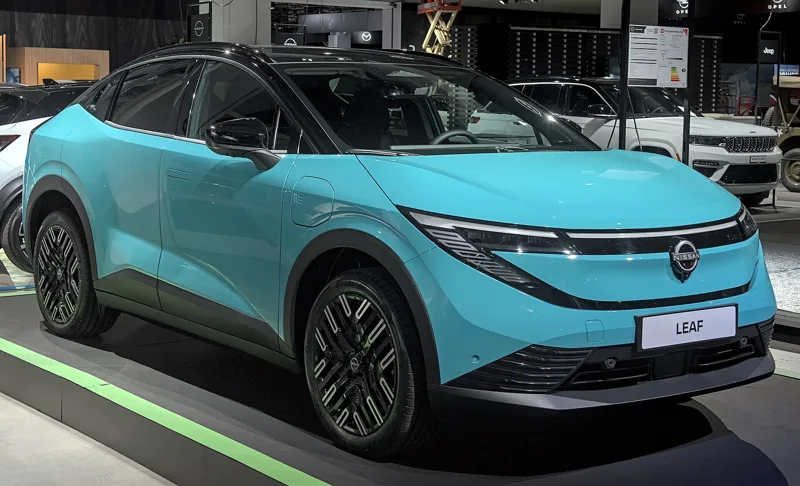
The Mitsubishi i-MiEV came first, going to fleet customers in July 2009 and to the public from April 2010. Nissan began Leaf sales on 22 December 2010, handing over its first ten cars in Kanagawa Prefecture, where the prefectural government kept six for official use and gave the other four to its own rental service. Sales climbed from 1,080 plug-ins in 2009 to 12,630 in 2011 and 24,440 in 2012. By 2012 Japan led the world in pure electric sales with a 28% share of that segment, and ranked second behind the United States for plug-in hybrids with 12%.
The Mitsubishi Outlander P-HEV arrived in January 2013 as the world's first plug-in hybrid SUV, with an electric range of 60 km (37 mi). It sold 9,608 in 2013 and overtook the Leaf in 2015, with 10,996 sales against 9,057. Yet the Leaf remained the all-time leader, with over 100,000 sold as of April 2018, while the Outlander plug-in hybrid had reached 34,830 by August 2016 and the Toyota Prius plug-in 22,100 by April 2016. Outlander sales dropped sharply from April 2016 after Mitsubishi's fuel mileage scandal.
Why Japan stalled
The slowdown tracks a strategic choice. The Japanese government and its major carmakers chose to back hydrogen fuel cells over plug-ins, as part of a national plan for a hydrogen society in which the fuel would power homes and cars. Toyota launched the Mirai fuel cell car for retail customers in late 2014, and Honda planned to follow with the Clarity Fuel Cell by late 2016. By December 2014, 100,000 homes in Japan already had residential fuel cells, and the country aimed for 5.3 million households, roughly 10%, by 2030.
Toyota had signalled the shift in September 2012, when its vice chairman Takeshi Uchiyamada said that electric cars did not yet meet society's needs on range, cost or charging time, and the company pushed hybrids instead, with 21 new hybrid models scheduled by 2015. In June 2015 it said it would also promote plug-in hybrids, starting with the Prius Prime.
Charging and incentives in Japan
Japan had the highest ratio of quick-charging points to electric vehicles in the world in December 2012. Public charging grew from only 60 stations in early 2010 to 1,381 public quick-charge stations by December 2012, the largest deployment of fast chargers anywhere in the world at that time, and 1,967 CHAdeMO stations by April 2014. The government set a target of 2 million slow chargers and 5,000 fast charging points by 2020. Family Mart convenience stores with enough parking provide a quick-charge space.
Government help dates back to 1996. In 1998 the Clean Energy Vehicles Introduction Project offered subsidies of up to 50% of the extra cost of a clean energy vehicle compared with a conventional one, a scheme that ran to 2003. In 2009 the Green Vehicle Purchasing Promotion Measure gave 100,000 yen (about US$670) for a standard or small car and 50,000 yen for a kei car, rising to 250,000 yen and 125,000 yen for buyers who scrapped a car 13 years old or older.
Japan began selling electric cars in 2009 and was still below 1% market share in 2019 and 2020.
Electric car sales in India: policy first, volume later
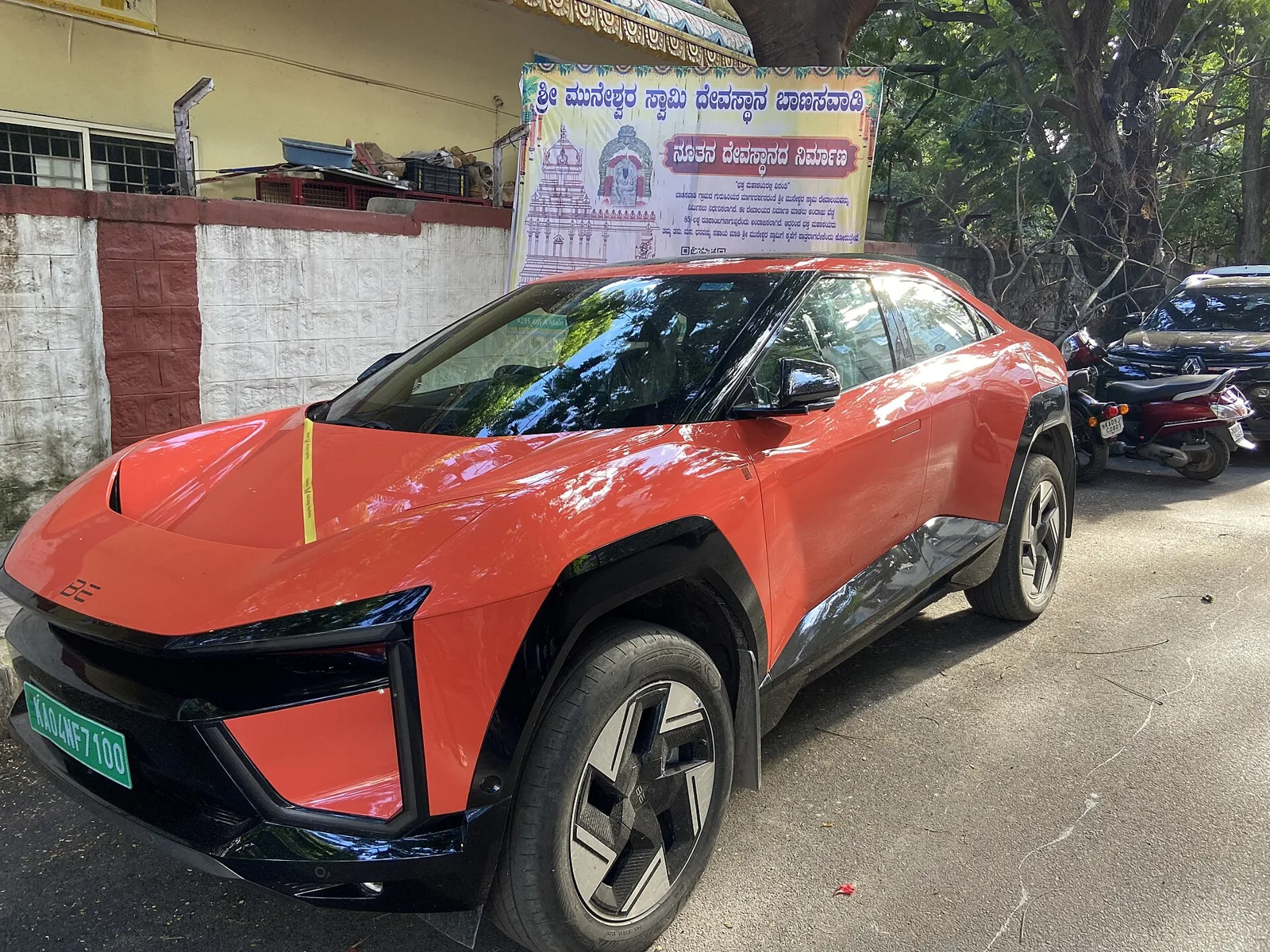
India's electric vehicle industry is described as slowly growing, and its central and state governments have layered schemes, regulations and standards on top of it. The flagship scheme is FAME, short for Faster Adoption and Manufacturing of Hybrid and Electric vehicles, launched in 2015 by the Department of Heavy Industry. Phase I ran from 2015 to 2019, and Phase II began in 2019 with completion planned for 2022. FAME incentives range from 1,800 to 29,000 rupees for scooters and motorcycles and 1.38 lakh rupees for cars.
The obstacles are practical: too few chargers, high upfront prices and too little renewable power. Online retailers, carmakers, ride-hailing apps and mobility providers have all entered the sector, but they are adding electric capacity and visibility slowly.
Targets and subsidies
India's 2012 National Electric Mobility Mission Plan aims for 30% EV penetration by 2030. The government says it plans a major shift to electric vehicles by 2030, and it has described a two-pronged approach: $1.4 billion in subsidies for buyers and higher import tariffs to push domestic manufacture, with a further $140 million for charging infrastructure. Support is concentrated on two-wheelers, three-wheelers and buses. The Go Electric campaign, launched in early 2021 by Road Transport and Highways Minister Nitin Gadkari, came with a waiver of EV registration fees.
Charging rules
The charging standard is IS 17017, largely compatible with international IEC standards. Its Level 1 AC specification runs at 15A and 230V, about 3.3 kW, and DC001 at 15 kW. For high-power fast charging it recommends the CCS-2 and CHAdeMO protocols. Home charging has no policy or standard of its own. Guidelines released on 14 December 2018 call for a charging station every 25 km on highways and one in every 3 by 3 km square in cities, mandated by 2022 in cities of more than four million people. A normal charge takes six to eight hours, and fast chargers are expected to be only ten percent of the infrastructure.
India's states take the lead
States have moved independently. Uttar Pradesh accounted for over 14% of India's EV market in 2023 and more than 40% of electric three-wheelers, and in the last quarter of the 2023-24 financial year recorded about 83,154 EV sales, 16.07% of the national total. Its 2022 policy offers up to 1 lakh rupees for electric cars. Odisha's 2021 policy aims for 20% battery electric share of new registrations by 2025, and a draft Policy 2.0 targets 50% by 2036. Karnataka's 2017 policy aimed to attract investment of 310 billion rupees and create about 55,000 jobs, Maharashtra proposed a 15-percent subsidy for its first 10,000 EVs, and in 2019 Delhi approved 1,000 low-floor electric buses. In Tamil Nadu a firm promoted retrofitted electric auto rickshaws, claiming running costs of 40 rupees per 100 km against 350 to 400 rupees for petrol.
Electric car sales in Thailand: from hybrids to a sudden surge
Thai government support for electric vehicles is meant to cut emissions and air pollution. In February 2020 Prime Minister Prayut Chan-o-cha appointed a National Electric Vehicle Policy Committee, and the stated aim is that 30% of cars produced in 2030 should be electric, the so-called 30:30 policy, with the country becoming a regional manufacturing hub.
The start was gradual. Hybrids appeared in 2009, and by 31 December 2021 Thailand had 11,382 registered battery electric vehicles of all kinds, 31,145 plug-in hybrids and 196,582 hybrids. Only 1,955 of the 5,781 battery electrics registered during 2021 were cars; motorcycles accounted for 3,763. Then the market jumped. In the first half of 2023 alone there were 44,045 new EV registrations, not counting motorcycles. Over the full year the total multiplied almost eightfold to 76,000, a 12% slice of everything sold, and the share reached 14% in the first quarter of 2024. Eric Ruge, managing director of BMW Manufacturing Thailand, said the pace surprised even industry experts.
Thailand builds an EV industry
FOMM was the first car maker to produce battery EVs in Thailand, in 2018. Great Wall Motor opened a factory in Rayong in June 2021, PTT and Foxconn signed a production contract that September, and in December 2021 Energy Absolute opened a battery plant of 1 gigawatt-hour a year in Chachoengsao, the largest by production in ASEAN. Tesla registered a Thai office in May 2022. SVOLT, with Banpu Next, began producing battery packs in early 2024, and Changan announced partnerships with Thai parts makers to support EV production starting in 2025.
The charging gap
Charging lagged the sales. There were 693 EV charging stations, with 2,285 chargers, as of September 2021, and a consultancy survey that year described the network as inadequate. Plans announced in 2022 included over 500 charging stations and over 1,400 battery-swapping stations by 2030, while Banpu Next and Evolt Technology said they would provide 500 fast-charge stations in 2022 and 5,000 by 2025. Public transport led some of the early adoption, with 100 BYD e6 taxis serving Suvarnabhumi Airport from September 2019.
EV adoption in Singapore: rebates, regulation and fast growth
Singapore moved in the opposite order, writing the rules first. The Singapore Green Plan 2030, released on 10 February 2021, includes up to 60,000 charging points and a ban on registering pure internal combustion cars by 2030. As of November 2025 there were 46,029 electric vehicles, seven percent of all vehicles in the country.
Registrations
The curve has been steep. There were 2,942 EVs, or 0.45 percent of the car population, in 2021, 6,531 (1%) by the end of 2022 and 7,961 (1.2%) in May 2023. By September 2022 EVs were already about 19% of new car registrations, and in the first quarter of 2025 they reached 40.2%, or 4,383 cars. BYD led that quarter with 2,183, ahead of Tesla with 413 and BMW with 361. The Tesla Model 3 had been the best seller as of September 2021, before BYD overtook Tesla. Over the first three quarters of 2025, electric cars were 43 percent of registrations.
Charging and local manufacturing
Public charging rose from around 2,000 stations in July 2021, a third of them in private premises such as shopping malls, to 2,500 in July 2022, almost 6,000 points by December 2023 and 8,223 public points by May 2026. A 2022 tender gave five operators the job of installing at least three chargers in every Housing and Development Board car park, totalling at least 12,000 points; by January 2024 more than 2,400 were installed at about 700 car parks. A network of 1,500 charging stations built by a car-sharing operator was sold to TotalEnergies in July 2021. In 2025 TotalEnergies applied to end its contract to run the network, the Land Transport Authority agreed, and all points were to pass to other operators by 31 December.
Production is limited but real. Dyson cancelled its plan for an electric car plant in October 2019. Hyundai's Motor Group Innovation Centre in Jurong, completed in January 2023 at a cost of $400 million, makes the Ioniq 5 and 6, an Ioniq 5 robotaxi and the Kia EV5.
Singapore's incentives
Buyers have received tax rebates of up to S$45,000 as of October 2022, a 45 percent rebate on registration fees capped at $15,000, and a rebate under the Vehicular Emissions Scheme of up to $25,000. On 8 September 2025 the Land Transport Authority extended the rebates to the end of 2026 at lower rates: the scheme maximum falls to $20,000 and the Early Adoption Incentive drops from $15,000 to $7,500. An extra flat road tax of S$700 applies to EVs registered from 2021. For public transport, the plan is to make half of the 5,800 buses and half of about 15,000 taxis electric by 2030.
Four markets compared
| Market | Latest figure | Main push | Main brake |
|---|---|---|---|
| Japan | Just over 300,000 plug-ins and 0.6% market share, end of 2020 | Early subsidies, a large fast-charger network | Government and carmakers favouring hydrogen |
| India | Uttar Pradesh: over 14% of national EV market in 2023 | FAME incentives and state policies | Charging infrastructure, high initial cost |
| Thailand | 76,000 EV sales in 2023, 12% of vehicles sold | 30:30 target and local factories | Charging described as inadequate in 2021 |
| Singapore | 46,029 EVs in November 2025, seven percent of vehicles | Rebates and a ban on new petrol-only registrations from 2030 | Public charging growth took years |
What do the four markets show when set side by side?
The comparison suggests a pattern that matters beyond Asia. Early momentum in Japan faded when the largest carmakers pursued another technology. Thailand's surge came after factories, batteries and an official target lined up at once. Singapore's numbers climbed alongside rebates and the roll-out of chargers in housing-estate car parks. India's support is aimed at scooters, three-wheelers and buses more than at private cars, and its state policies differ widely.
What do the dated targets say about the next few years?
Several targets carry dates. For India, the 2012 mission plan sets 30% EV penetration by 2030 as its goal, and Odisha's draft policy goes further with 50% by 2036. Thailand's 30:30 policy aims for 30% of cars produced to be electric in 2030, and Changan plans EV production with Thai parts makers from 2025. Singapore plans up to 60,000 charging points under the Green Plan 2030, the end of pure internal combustion registrations by 2030, and an electric share of half its buses and taxis by then, while its current EV rebates are due to run to the end of 2026.