Engines were killed with sodium silicate, the money ran dry in weeks and the idea of paying people to scrap old cars spread across the world.
Cash for clunkers was the US Car Allowance Rebate System of 2009. A $3 billion federal fund gave $3,500 or $4,500 vouchers for trading an old, thirsty car for a new one, and 677,081 vehicles were scrapped. Germany, the UK, Japan and many others ran similar schemes.
To qualify for cash for clunkers, a traded-in car had to die in front of the dealer. Its oil was drained out and a sodium silicate solution poured in, then the engine ran until the mixture turned glass-like and seized. The United States programme scrapped 677,081 vehicles in 2009, and governments from Berlin to Tokyo paid drivers to do something similar.
What was Cash for Clunkers?
Its official name was the Car Allowance Rebate System, or CARS. It was a $3 billion federal scrappage programme that gave American residents a voucher for trading in a thirsty old vehicle on a new, more fuel-efficient one. Promoters sold it as a stimulus measure for car sales that had sagged after the 2008 financial crisis and the wider recession.
The programme officially started on July 1, 2009, and processing of claims began on July 24. It ended on August 24, when the appropriated funds were used up. Dealers had until August 25 to submit their applications. The Department of Transportation estimated that the first $1 billion was exhausted by July 30, well ahead of the planned end date of November 1, because demand was so high. Congress responded by approving a further $2 billion.
The engine was run on sodium silicate until it seized, so no engine from a clunker could keep another car on the road.
Where did the idea come from, and how did it pass Congress?
Economist Alan Blinder helped popularise the idea, and the nickname, in a July 2008 opinion piece in The New York Times. He argued for three aims in one scheme: help for the environment, a stimulus for the economy and less economic inequality. A paper setting out those benefits, written by Jack Hidary of Smart Transportation with Bracken Hendricks of the Center for American Progress, reached congressional offices in November 2008.
The House voted 298 to 119 for the Consumer Assistance to Recycle and Save Act, known as the CARS Act. Representative Betty Sutton of Ohio sponsored it. Under her bill, a trade-in could rate 18 mpg-US (13 L/100 km) combined or worse. In the Senate, Debbie Stabenow and Sam Brownback put forward a very similar version.
The rival bill
Dianne Feinstein, Susan Collins and Chuck Schumer proposed an alternative that leaned harder on fuel economy. Its backers said it would deliver 32% more efficiency improvement than the House and Stabenow-Brownback approach. The trade-in could manage no more than 17 mpg-US (14 L/100 km), and vouchers ran in three tiers from $2,500 for a new car that was 7 mpg-US more efficient than the old one to $4,500 for one that was 13 mpg-US better. Pre-1999 work trucks would have received $2,500 whatever their mileage gain, and a $1,000 voucher would have covered buying a more efficient used car, which the House bill excluded outright.
The procedural fight
In the Senate the scheme rode inside a bigger war-funding supplemental bill. Opponents raised a Rule 28 point of order, a rule that bars adding provisions that neither chamber has passed to a conference report, and the objection was overridden with 60 votes. Some senators, Brownback among them, disliked a last-minute change that paid for the scheme through deficit spending in place of the stimulus package first agreed. The bigger bill passed the Senate 91 to 5.
The Supplemental Appropriations Act, 2009 carried the programme as Title XIII. It started with $1 billion out of an estimated $4 billion cost, and the National Highway Traffic Safety Administration (NHTSA) had 30 days to put the details online. When the first money drained away, the House approved the extra $2 billion on July 31, the Senate followed on August 6 after rejecting all six amendments, and President Barack Obama signed it on August 7.
Which cars and buyers qualified?
The trade-in had to be under 25 years old, registered and insured without a break for the whole previous year, and in driveable condition. Most had to post a weighted combined rating of 18 miles per gallon or worse, though some very large pickups and cargo vans faced different tests. The new vehicle had to be bought, or taken on a lease of at least five years, and carry a suggested retail price no higher than $45,000. A passenger car also needed a combined 22 mpg-US (11 L/100 km) or better.
Dealers had to tell the customer what the scrap value of the old car was. That sum came on top of the rebate and did not replace it. The voucher was worth either $3,500 or $4,500, depending on the vehicle type and the gap in fuel economy between the old car and the new, and the dealer simply took that amount off the price.
The list that changed overnight
According to USA Today, the Environmental Protection Agency revised its mileage estimates just before the programme began, and explained neither why ratings had been wrong nor why some had risen. A 1991 Dodge Grand Caravan with the four-cylinder engine, rated at a combined 19, dropped out, while the same van with a 3.3 L or 3.8 L V6, rated 18, stayed eligible. Edmunds.com's Karl Brauer said consumers who had planned a trade-in were left in the dust, and its editorial director Kevin Smith argued that people acting in good faith should not be penalised for undisclosed changes. The Department of Transportation ruled that deals finished before July 24 on the old numbers would be honoured, while those finished afterwards on newly ineligible vehicles would not.
Why did the engines have to be destroyed?
The rules were written so that dealers could not resell a traded-in car, and so that nobody could pull a working engine from one and use it to repair another vehicle. The engine was started and run at 2,000 RPM, which the procedure said should disable it within a few minutes. If it did not, the engine was allowed to cool before the process was repeated.
It was a dangerous job. The hazards listed with the procedure include a ruptured radiator, hot water and steam, motor oil thrown out of the engine, toxic fumes and fire.
The salvage or scrap yard that took the car could not sell the engine, the cylinder heads or a rolling chassis. It could sell other parts, including the transmission and axles, and it had 180 days to crush the hull. Front-end assemblies and the top and back of pickup cabs could be kept and sold later.
The lesson from Germany
The designers had a cautionary example. German authorities found that an estimated 50,000 supposedly scrapped vehicles had gone to Africa and Eastern Europe, where newer and safer cars are prohibitively expensive. The Federation of German Detectives gave that estimate. Germany's rules only asked dealers to drop vehicles at junkyards, with papers that were easy to falsify, so the exports were never blocked.
Auto recyclers disliked the American approach. Recyclers regard the engine as the most valuable component of a scrapped car, and the profit in a car brought in under CARS was limited, so some recyclers refused to take part.
How did the government stop the wrecks coming back?
After Hurricane Katrina, cars declared total losses in one state were moved to others and sold to unsuspecting buyers with clean titles, a practice called title washing. Officials did not want clunkers retitled the same way. Recyclers had to report each vehicle's VIN and its clunker status to the National Motor Vehicle Title Information System, a federal database set up in 1992 to deter theft, and consumers could search it for a fee.
NHTSA also supplied CARFAX and other history-report firms with the VINs of more than 700,000 clunkers. Together with CARFAX it built a free clunker check service, where anyone could enter a VIN and learn at once whether a car had been logged as salvage.
What happened when the programme opened?
The rush swamped the machinery. Auto Observer reported that the public site and the dealer sign-up site shared one server, which overloaded and went offline that night, July 24, while the two services were pulled apart. Dealers struggled to get paperwork processed, and with no certainty about payment they held off destroying the old cars.
The first figures looked strong, though. By July 29, $150 million of the first $1 billion had been spent on new purchases. Sutton's chief of staff, Nichole Francis Reynolds, said another $800 million to $850 million was pending. NHTSA reported 23,000 dealers taking part, and Stabenow said 40,000 cars had been sold with another 200,000 sales still to complete. Representative Candice Miller said the programme had exceeded everyone's expectations, and Miller and Sutton wanted a total of $4 billion spent. Bailey Wood of the National Auto Dealers Association called it an immense success in stimulating sales.
Some observers saw a different picture. Many people who walked into showrooms found their cars were not eligible and bought something anyway. The majority of those who did take part were buying new vehicles regardless, and their trade-in values rose significantly. Some dealers also thought the surge in customers was only temporary.
What did it achieve?
On August 3 the Department of Transportation reported on a sample of 120,000 processed applications. The average gas mileage of cars bought was 28.3 miles per gallon, for SUVs 21.9 and for trucks 16.3, all well above what the rebate required. Senator Susan Collins said the vehicles purchased would average 9.6 more miles per gallon than those turned in, which she described as a 61 percent improvement. Officials expected the extra funds to last until Labor Day, but they were exhausted on August 24.
What is a scrappage programme, and who else has run one?
A scrappage programme is a government incentive to replace old vehicles with modern ones. Most have a dual aim: to prop up the car industry and to remove inefficient, more polluting vehicles from the road. After the recession that began in 2008, many European countries ran large ones to lift demand in the industrial sector.
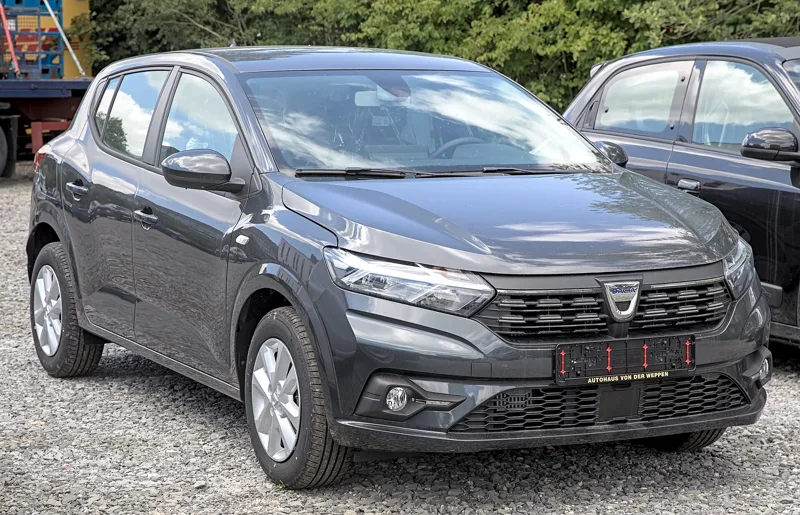
The names mostly point at the environment. Canada had a Vehicle Efficiency Incentive based on fuel efficiency. Germany called its scheme the Umweltpraemie, or environmental premium, though most people said Abwrackpraemie, scrappage premium. In Romania the programme is called Rabla, meaning the wreck, and Dacia launched it in 2000. Italy and France insist on modern emission standards for the new car. The German and British schemes do not, and the British one was openly designed to support a struggling motor industry. The American voucher, by contrast, was paid only when the new car was more fuel efficient than the old.
The idea predates the crisis. In the 1990s many countries introduced tax rebates for new cars that met a modern emission standard, and after the Kyoto Protocol some made the offer depend on scrapping an old car.
How did Germany's scheme work?
Germany ran the largest scheme so far, as part of its 2009 stabilisation package, with a federal election due on 27 September 2009. A private owner of at least a year's standing, with a car nine or more years old, received a premium of EUR 2,500 (then US$3,320) on buying a new car that complied with the Euro 4 emission standard. The old car had to be demolished, not exported, and the original papers went in with the application.
It opened on 13 January 2009 with a limit of 600,000 cars and a budget of EUR 1,500,000,000. Then sales jumped 40% in March against a year earlier, and the fund looked set to run dry by May, while a German think tank put the net hit to the budget at EUR 2,500,000,000. On 25 March the government decided to continue the scheme to the end of the year and earmarked EUR 5,000,000,000, but that amount lasted only until 2 September, when the programme was discontinued.
The effect on carmakers varied. Ford gained from strong sales of the Fiesta, built in Cologne, together with the imported Ka and Fusion, which were up 56% in April 2009 on a year earlier. Buyers of German luxury models from BMW, Mercedes-Benz and Porsche, priced above EUR 50,000, got little from EUR 2,500.
How do the schemes compare across countries?
| Country | Age of the old car | Payment | Condition on the new car |
|---|---|---|---|
| Austria | Older than thirteen years | EUR 1,500 | Euro-4 criteria |
| France | Older than ten years | EUR 1,000 up to EUR 5,000 | Under 160 g/km, rising to under 60 g/km |
| Germany | At least nine years | EUR 2,500 | Euro 4 |
| Ireland | Ten years or older | EUR 1,500, cut to EUR 1,250 in 2010 | No more than 140 g/km |
| Japan | Thirteen years or older | Up to JPY 250,000 | Environmental performance criteria |
| Luxembourg | Older than ten years | EUR 1,500 or EUR 2,500 | Under 150 g/km or under 120 g/km |
| Slovakia | Older than ten years | EUR 2,000, originally EUR 2,500 | Priced below EUR 25,000 |
| United Kingdom | At least ten years | GBP 2,000, half from government and half from industry | No emissions test |
Other schemes fit no neat column. Italy paid EUR 1,500 for scrapping a car, and a further EUR 1,500 could be added for a new car powered by CNG, electricity or hydrogen. Portugal paid EUR 1,000 for a car older than ten years and EUR 1,500 for one older than fifteen. The Dutch government offered EUR 750 or EUR 1,000 together with the car industry, and Amsterdam added EUR 250 to EUR 1,000 on top. Russia's scheme paid 50,000 roubles to people scrapping a light car over ten years old, provided they bought a new Russian-built one.
China, the UK and Norway
China's nationwide programme began in June 2009 and offered rebates of $450 to $900 for retiring old, heavily polluting cars and trucks, with the aim of replacing 2,700,000 vehicles. Results in the first months were poor, so the government lifted the payment to 5,000 to 18,000 Yuan, about US$732 to US$2,632, at the end of 2009, then extended the programme to the end of 2010.
The British scheme, announced in the 2009 budget, was shared between taxpayers and the motor industry. The government's share was initially limited to GBP 300,000,000, enough for about 300,000 customers, and many dealers and scrappers offered more than the recommended GBP 1,000, some as much as GBP 2,000 or GBP 3,000. Economist Willem Buiter questioned its environmental benefits, and on 28 September 2009 further government money was confirmed.
Norway took another route altogether. Its Vehicle Scrap Deposit Tax dates from 1978, and a standard EUR 190 (as of 2010) is paid when a new vehicle is bought or registered, then refunded when a vehicle is scrapped.
Where this goes next
India announced a Voluntary Vehicle Scrappage Policy in Union Budget 2021. Under it, private vehicles older than 20 years and commercial ones older than 15 must pass a fitness test at an authorised centre, and those that fail go to a scrap yard. The government has also been planning a Green Tax on transport vehicles older than 8 years, charged when the fitness certificate is renewed at 10 to 25% of road tax. In the National Capital Region, a separate mandatory rule already bars diesel vehicles older than 10 years and petrol vehicles older than 15 years. The formal policy is expected to give India's automobile recycling industry a boost.
Elsewhere the earlier schemes have changed form. France replaced its 2009 scheme in 2017 with the Prime a la conversion, which widened eligibility to used cars and requires emissions below 130 g/km of CO2.