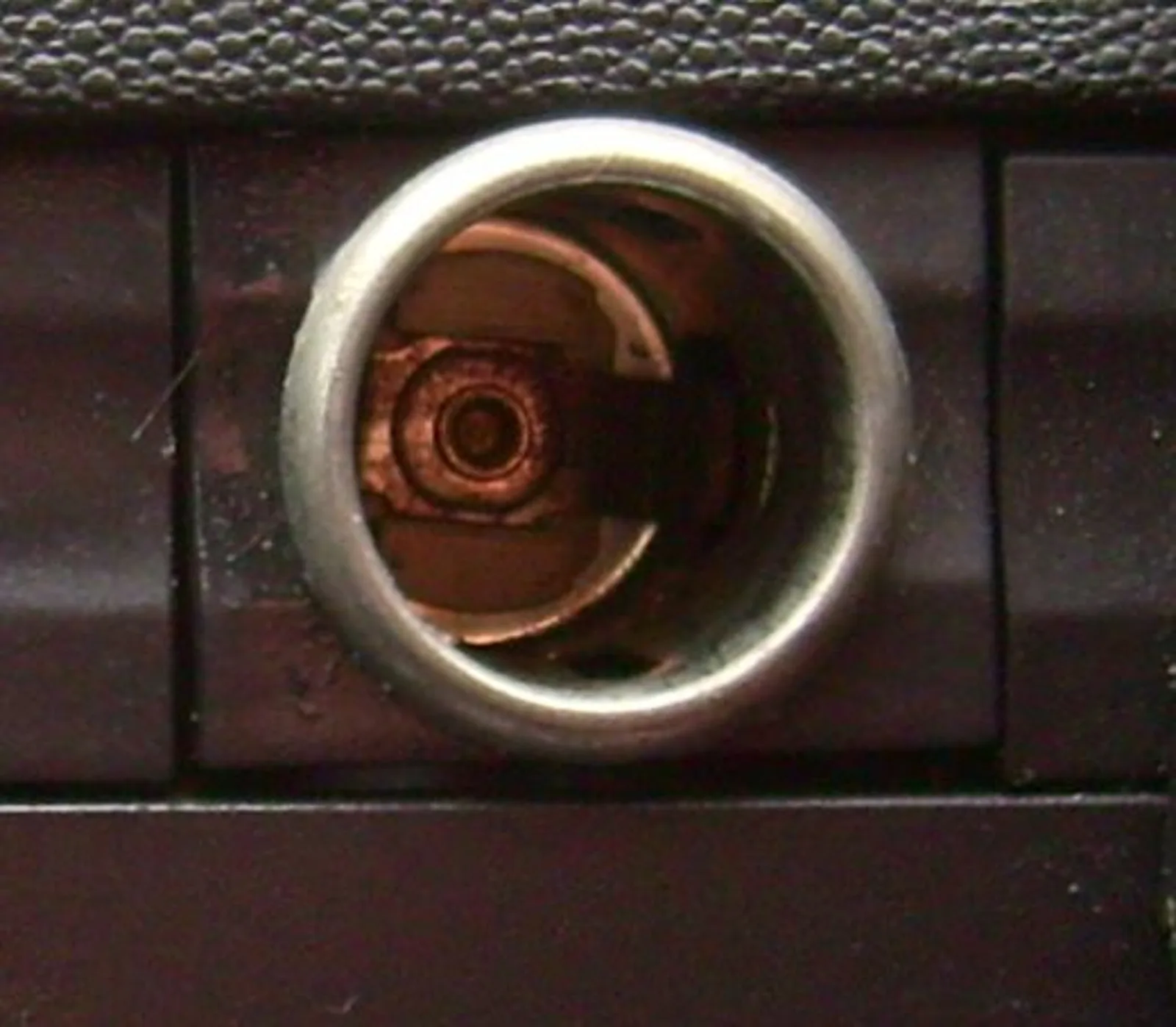
A cigar lighter socket that became a 12 V outlet, a 36 kg radio telephone from 1946 and a subscription radio service built for cars.
The cigarette lighter socket was designed to heat a lighter and became the standard 12 V car outlet, now giving way to USB ports. The car phone began in St. Louis in 1946 and faded with mobile phones. Satellite radio, from Sirius and XM, began in the US in 2001.
The socket that charges your phone in the car was built to heat a cigar lighter. It is still the diameter of a standard cigar, 21 mm (0.83 in), a legacy of the electrical cigar lighters of the 1880s. Three early in-car gadgets each have a different story: the socket outlived its original purpose, the car phone gave way to handsets, and satellite radio is still broadcasting.
How did the car cigarette lighter socket start?
Friedrich Wilhelm Schindler, a Swiss-Austrian inventor, patented the electrical cigar lighter in the early 1880s. By the 1890s major German warehouse catalogues were selling electrical cigar lighters. Cigarettes overtook cigars in sales before the Great Depression, so the devices came to be called cigarette lighters, yet they kept a standard cigar's diameter, equal to a 52 ring gauge.
A 1921 US patent to Morris described a cordless lighter with a removable element, which was heated in the socket and then taken out by hand after a suitable interval. In the United States, lighters began appearing in some models in 1925-1926, and by the 1950s they were standard. In 1928 the Connecticut Automotive Specialty Company, or Casco, of Bridgeport patented a cord-and-reel version. Its igniter sat on a cable wound on a spring drum, so it could be pulled out of the socket to light a cigar or cigarette and reeled back afterwards. Casco developed the modern automatic V-Coil lighter in 1956, and was granted a patent for it in 1960.
A socket designed to heat a cigar lighter is still the way most drivers charge a phone.
How does a car cigarette lighter work?
Inside the metal or plastic cylinder is a thin flat coil of nichrome strip. Pushing the lighter into the socket passes a high current of about 10 amperes through it, and a clip attached to a bimetallic strip holds it in against a spring. Within seconds the coil glows orange, the bimetallic strip bends, and the handle pops out, so the user does not need to time anything. Pulled out promptly, it will light a cigarette, a cigar or a pinch of tinder.
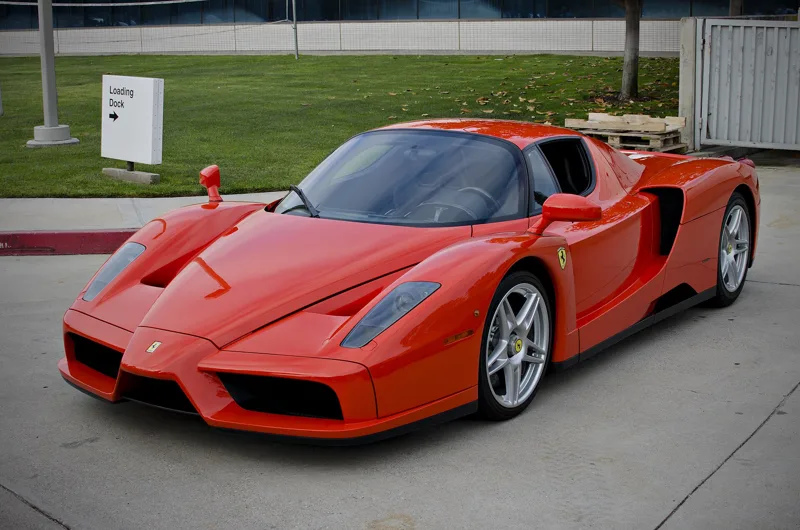
Italian cars of the 1960s and 1970s, such as Alfa Romeos and Ferraris, often carried a different design, the Brico Pram. It looks like a traditional lighter but does not pop out. The user pushes a cigarette into a tapered opening in the centre until it touches the element, presses the rim to activate it, and hears a ping when the element reaches temperature. The advantage is safety, since a red-hot element cannot fall into an occupant's lap. But the lighter cannot be removed to use the socket as a power outlet, and the opening is too small for a cigar.
How much power can a car socket supply?
The voltage is usually near 12 V DC, rising to between 13.5 V and 15 V when the engine runs, and on trucks it may be near 24 V DC. The circuit sits behind a fuse, often rated at 10 to 20 amperes, which means 120 to 240 watts. That is enough for a phone charger, cooling fan, portable fridge, electric air pump or power inverter, but hair dryers and toasters draw too much.
The voltage is also less steady than the label suggests. It sits around 12.5 volts when the car is dormant, and around 14.5 volts with the engine and alternator running. At engine start it can briefly fall as low as 5 to 6 volts. Equipment built to plug in has to cope with intermittent contact and voltages outside 12 V, for example 9 to 16 volts continuously, 20 volts for an hour, 24 volts for a minute and 40 volts for 400 milliseconds, and with temperatures from -40 to +85 degrees C (-40 to 185 degrees F). Under the American standard UL 2089, portable adapters rated at 24 V DC or less are covered, while in Europe 12 volt plugs and sockets carry no special regulation.
The old design has faults. Plugs can vibrate out because retention is poor, and there have been reports of plug tips melting where contact was poor and resistance produced heat. In some cars the socket goes dead when the key is removed. Newer cars often have sockets with plastic covers and no heating element, labelled for DC power only, and often one for rear passengers or the luggage area. Many modern vehicles have dropped the outlet altogether, replacing it with USB 2.0 or USB-C ports.
When did the car phone appear?
A car phone is a mobile radio telephone built into a vehicle. The first service ran in St. Louis, Missouri, on 17 June 1946, operated by the Bell System. The original equipment weighed 36 kg (80 pounds), and initially only three channels served the whole metropolitan area, though six is also quoted. Chicago followed on 2 October 1946, where Motorola equipment handled the opening calls of a new Illinois Bell Telephone Company radiotelephone service. Frequencies were scarce, so the service soon filled up.
AT&T introduced the Improved Mobile Telephone Service in 1964 with licences for 32 channels across three bands, and it stayed in use into the 1980s across large parts of North America. Regulators were slower. The US government began considering spectrum for private mobile radio in 1968, and the FCC reserved 75 MHz in 1970, cutting that to 40 MHz in 1974. On 4 May 1981 it released rules for commercial cellular service. Chicago again had the first cellular system, which went live on 13 October 1983 and served only units wired into vehicles. By early 1984 more than 5,000 people had signed up.
How did car phone networks develop in other countries?
| Country | Service | Start | Notes |
|---|---|---|---|
| Finland | ARP, then NMT | 1971; NMT 1982 | NMT was a 1G system used across Scandinavia |
| Sweden | Two commercial systems | 1956 | Four channels each; 125 subscribers by the end of the 1960s |
| West Germany | A-Netz, B-Netz, C-Netz, D-Netz | 1958, 1972, 1985, 1992 | A-Netz hit almost 11,000 subscribers; B-Netz added direct dialling |
| United Kingdom | TACS | 1985 | Adapted from the US AMPS system; GSM took over in the 1990s |
| North America | MTS, IMTS, then AMPS | 1946, 1964, 1984 | AMPS was discontinued in the United States in 2008 |
In West Germany the A-Netz of 1958 reached its capacity limit of almost 11,000 subscribers in 1971. Its successor, the B-Netz of 1972, connected calls by direct dialling instead of a human operator, but a caller still had to know where the subscriber was, since a handset adopted the area code of whichever base station was serving it. The D-Netz, a 2G GSM system on the 900 MHz band, began in 1992, with the E-Netz, a variant for the 1800 MHz band, added to it. These networks are where the main shift from car phones to handheld phones occurred.
East Germany developed an analogue radio phone network, the URTES-Netz, but hardly used it at home, because the Stasi feared losing control over communication. In 1979 Mexico awarded East Germany a contract for a radio phone network. It was developed from scratch in 17 months and installed in 1981 with a maximum capacity of 120 stations, each weighing approximately 10 kg. One station was reportedly installed in the car of the governor of Guerrero, making it possibly the only car phone in the network.
Why did car phones fade away?
In the 1980s the car phone was more popular than the mobile phone. Then handsets got lighter and cheaper during the 1990s boom, car phones grew rarer, and by the 2000s they were uncommon, helped along by Bluetooth links between handsets and cars. A traditional car phone, with its high-power transmitter and external antenna, still suits rural or undeveloped areas where handsets work badly.
Car phones were still on sale in 2008. Examples included the Nokia 810 and the Motorola VC6096 for GSM networks, and a model for the Iridium satellite network from NAL Research. Motorola supplied the m800 for CDMA and the m900 for GSM in the US. Some had colour screens, high-speed data and Bluetooth access to SIM cards in other phones. Since 2008 many cars have offered integrated hands-free systems that work with a consumer's phone over Bluetooth or an integrated transceiver, using a microphone, the car's audio system and sometimes voice control.
What is satellite radio, and who built it?
The International Telecommunication Union classes satellite radio as a broadcasting-satellite service. Its signals cover a far wider area than ground-based stations, and the occupants of vehicles are its main audience. It is sold by subscription, mostly without advertising, and offers more stations and more variety than terrestrial radio. North America uses the 2.3 GHz S band for nationwide digital radio, while other parts of the world use the 1.4 GHz L band. In 2002 the technology entered the Space Foundation's Space Technology Hall of Fame.
Satellite radio went on air first in Africa and the Middle East, in 1999. The US followed in 2001, Japan in 2004 and Canada in 2005. Three major companies, WorldSpace, Sirius and XM, were all founded in the United States in the 1990s. WorldSpace, founded by the Ethiopia-born lawyer Noah Samara, began broadcasting in Africa on 1 October 1999, with India accounting for over 90% of its subscribers; it filed for Chapter 11 bankruptcy in November 2008, though it is also described as going bankrupt in 2009.
How did Sirius and XM compete?
In June 1990 a shell company run by Martine Rothblatt petitioned the FCC for satellite frequencies to carry digital audio to homes and cars. David Margolese later gained control, renamed the firm CD Radio, lobbied the FCC for five years and then spent five more years raising $1.6 billion, which paid for three satellites launched into elliptical orbit from Kazakhstan in July 2000. CD Radio bought its licence for $83.3 million, while the American Mobile Radio Corporation, later XM Satellite Radio, paid $89.9 million for the other. Margolese renamed his company Sirius Satellite Radio in November 1999.
XM won the race to air. Its two satellites launched on 18 March and 8 May 2001, and its first broadcast, on 25 September 2001, came almost four months ahead of Sirius. Sirius started in four cities on 14 February 2002 and covered the rest of the contiguous United States from 1 July 2002. Together the two spent over $3 billion. On 19 February 2007 they announced a merger, arguing that satellite radio could survive no other way. The FCC approved it on 25 July 2008, ruling that it did not create a monopoly, chiefly because of competition from Internet audio streaming. In Canada, XM launched on 29 November 2005 and Sirius two days later.
How does satellite radio reach a car?
Ground stations send signals up to satellites in geostationary orbits 35,786 km (22,236 miles) above the Equator, and the satellites send them down to receivers in cars and homes. The signals contain scrambled broadcasts with data about each one, which the receiver unscrambles and displays. In urban areas, ground repeaters fill in where tall buildings or bridges block the satellite signal. Subscribers buy a receiver and pay monthly, and reception is activated using the radio's unique ID. Because the service is national, a US listener hears the same stations wherever they drive. Sirius, for its part, put its three satellites into elliptical orbit. Japan's MobaHo! service ran from 20 October 2004 to 31 March 2009.
How big is satellite radio in cars?
SiriusXM had 34.7 million subscribers as of December 2020, largely thanks to partnerships with carmakers and dealers. About 60% of new cars sold have a receiver fitted, and just under half of those go on to a paid subscription. Long-term deals cover General Motors, Ford, Toyota, Kia, Bentley, BMW, Volkswagen, Nissan, Hyundai and Mitsubishi. Howard Stern, whose show reaches over 12 million listeners a week, has also helped growth. The main competition is streaming services such as Pandora and Spotify, as well as AM and FM radio.
What is next for SiriusXM and the lighter socket?
In April 2013 SiriusXM's chief executive, Jim Meyer, said the company would look at providing in-car services over its existing satellites, among them telematics, such as stolen-vehicle tracking and roadside help, and entertainment, such as weather and fuel prices. SiriusXM continues to operate as of 2026. The auxiliary power outlet, meanwhile, is giving way to USB ports in many modern vehicles.