Four months after the BBC dropped Clarkson, the trio had a 36-episode order, a travelling tent and a new test track, and ended up making road-trip films until 2024.
Jeremy Clarkson, Richard Hammond and James May presented the relaunched Top Gear from 2002 to 2015. After the BBC declined to renew Clarkson's contract, they signed with Amazon and made The Grand Tour, which premiered in 2016 and ended with its sixth series in 2024.
Four months after the BBC declined to renew Jeremy Clarkson's contract, he was announcing a new show on a rival platform, with a 36-episode order already in the bag. The programme he left behind had, according to Guinness World Records, become the highest-viewed factual television programme in the world. The one he moved to, The Grand Tour, took the same three men, the same producer and much of the same crew, and put them on Amazon Prime Video.
Who are Jeremy Clarkson, Richard Hammond and James May?
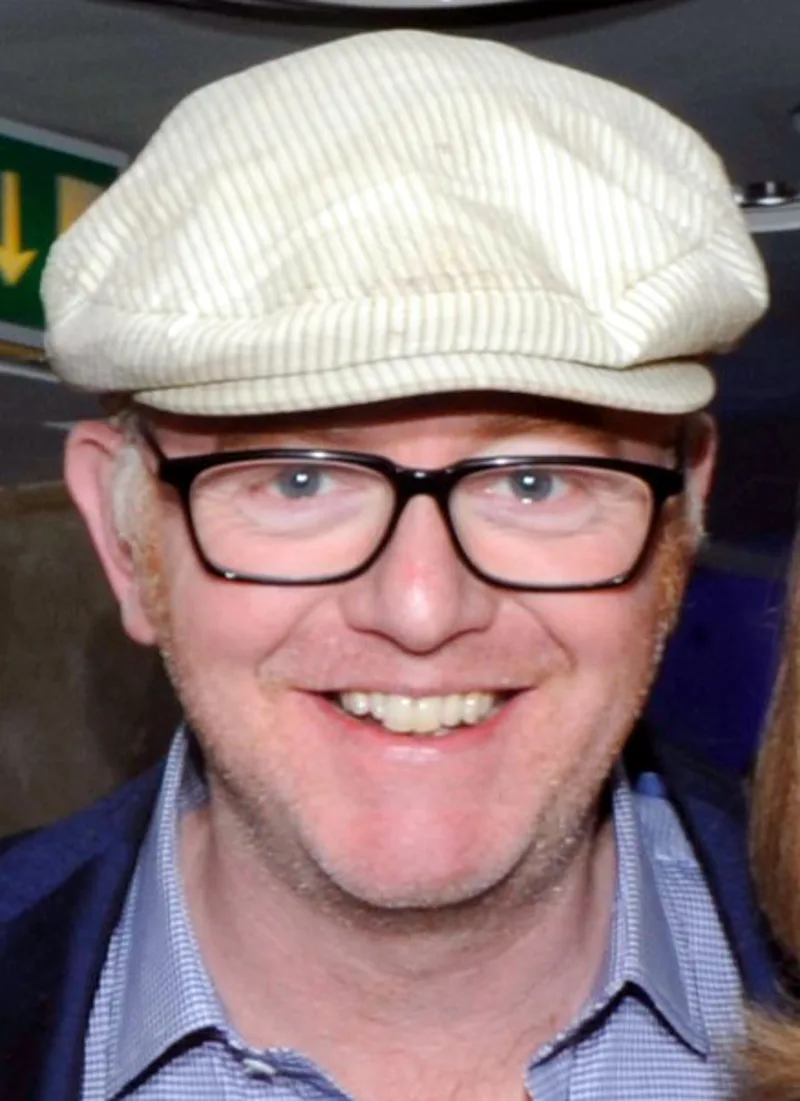
They are three English presenters whose names are now more or less a single phrase. Clarkson, born on 11 April 1960, is the journalist of the group. He trained on a local paper, the Rotherham Advertiser, and in 1984 set up the Motoring Press Agency with fellow writer Jonathan Gill, supplying road tests to newspapers and magazines. He has written for Top Gear magazine since it launched in 1993. His route onto the television programme began in 1988, when a researcher named Jon Bentley arranged a screen test in which Clarkson spent twenty minutes ranting about the Citroen 2CV. Bentley, soon to be the producer, described the appeal as an enthusiastic writer who could make cars fun on screen rather than reverent about them.
Hammond, born on 19 December 1969 in Solihull, came up through radio, working at several BBC stations while spending time in Renault's press office to meet motoring journalists. A guest on his Radio Lancashire show, the reviewer Zog Ziegler, urged him to try television. He began on the satellite channel Men & Motors and then auditioned for Top Gear. Fans call him The Hamster, a nickname that plays on his surname and his height beside the other two.
May, born on 16 January 1963 in Bristol, studied music at Lancaster University, where he learned the flute and piano, and spent a year on metalwork at a technical college. He started in journalism as a sub-editor at The Engineer in 1989 and moved to Autocar in the early 1990s. In 1992 he was dismissed from the magazine over a prank. Assembling the Road Test Yearbook, he arranged the large opening letters of each review so that the first spreads spelled ROAD, TEST, YEAR and BOOK and later ones concealed a rude message about the job. Readers started ringing the office in the belief that a prize was on offer, and management called for him to be sacked.
Four months after the BBC let Clarkson go, he had a rival deal for 36 episodes.
How did Top Gear make them famous?
The original Top Gear format carried Clarkson from 27 October 1988. The version most people mean arrived in 2002, when Clarkson and the producer Andy Wilman devised a relaunch. Clarkson hosted it with Hammond and Jason Dawe, who presented only the first series. May had auditioned and been turned down by BBC executives who felt his background was too close to Clarkson's and Hammond's. He had also been briefly part of the old programme in 1999. Clarkson persuaded Wilman in 2003 to hire May as Dawe's replacement, and from the second series of the relaunch the three were permanent hosts through to the 22nd series in 2015. May has said that he and Clarkson met at a car launch in France, disagreed over the car, and that Clarkson decided the bickering would work on screen.
The result grew far beyond a niche motoring programme. The trio are credited with making Top Gear the most-watched programme on BBC Two, and it was rebroadcast in over 100 countries. Under them it reached an estimated worldwide audience of 350 million. Clarkson's company Bedder 6, which handled merchandise and overseas distribution, earned more than 149m pounds in revenue in 2012, before a restructuring gave BBC Worldwide full control of the rights.
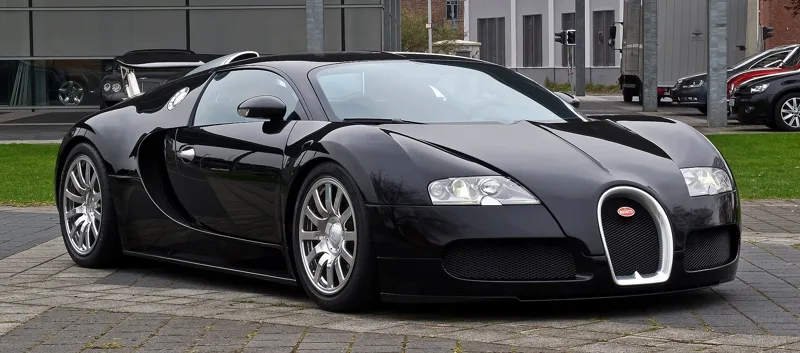
May picked up the nickname Captain Slow for his careful driving, which sits oddly beside his speed records. In 2007 he drove a Bugatti Veyron flat out to 253 mph (407 km/h), and in 2010 he got 259.11 mph (417 km/h) from the newer Veyron 16.4 Super Sport. In 2007 he and Clarkson also drove a modified Toyota Hilux to the north magnetic pole, in the Polar Special. Clarkson's verdict was that nobody had ever reached it more reluctantly than May.
What happened to Richard Hammond in the Vampire?
The most serious moment of the Top Gear years came on 20 September 2006 at the former Elvington airbase near York. Hammond was driving Vampire, a jet-powered dragster, and travelling at 288 mph (463 km/h) when it crashed. The car was theoretically capable of 370 mph (595 km/h). It was the same machine that had set the British land speed record of 300.3 mph (483.3 km/h) in 2000 with Colin Fallows at the wheel, and it was driven by one Bristol-Siddeley Orpheus afterburning turbojet producing 5,000 lbf (22 kN) of thrust.
Hammond was on a seventh and final run, collecting extra footage, when his front-right tyre failed and the car rolled. He suffered a diffuse axonal injury and was flown to the neurological unit at Leeds General Infirmary. By his own later account he spent two weeks in a medically induced coma and afterwards had post-traumatic amnesia. The Health and Safety Executive found that he reacted as a competent high-performance driver would, braking, steering into the skid and pulling the parachute release, and that the accident may not have been recoverable however fast he had acted. It also reported that a proposal to make an official record attempt had been vetoed in advance by Wilman. Hammond returned in the opening episode of series nine on 28 January 2007, and asked that the crash never be mentioned again.
Why did the Top Gear line-up break up in 2015?
On 25 March 2015 the BBC decided against renewing Clarkson's contract, following an incident in which he assaulted a Top Gear producer during location filming. Hammond's own contract ran out on 31 March. Hammond and May both said they would not carry on without him, even though the BBC was offering generous salaries, and Wilman left as well. On 12 June 2015 the corporation announced a one-off 75-minute Top Gear special. It stitched together two challenges from series 22 that had not been shown, with Hammond and May linking from the studio, and went out on BBC Two on 28 June.
Shortly after leaving, Clarkson said he had lost his baby but would create another. Rumours of discreet meetings with networks began in April 2015. His non-compete clause kept him away from BBC rivals such as ITV, which pointed towards an American broadcaster. Netflix felt the team wanted too much money, and BT Sport judged the show a better fit for a network with wider reach. In July 2015 Clarkson announced that he had signed with Amazon for a show in the Top Gear mould, with Hammond and May as co-hosts and Wilman as producer. The deal covered 36 episodes across three series, available to Prime members from 2016.
Wilman said Amazon had promised them the freedom to make the show their way and the budget to do it, and that a subscription service meant no pressure from advertisers. Amazon's chief executive Jeff Bezos said making it would be very expensive. The Daily Mirror reported, on insider information, that Amazon paid 160 million pounds for the lot. Wilman denied that the show cost so much but admitted it was costly, partly because Amazon wanted it shot in 4K. The three presenters and Wilman set up the production company W. Chump & Sons to make it.
The name The Grand Tour was made public in May 2016, with Clarkson saying it recalled the tradition of the grand tour and reflected the show's travels to several countries. There had been speculation that it would be called Gear Knobs, after an associated company filed a trademark application, but Clarkson explained that legal problems ruled out the word Gear. The first episode went out on 18 November 2016.
How The Grand Tour differed from Top Gear
| Element | Top Gear (2002 relaunch) | The Grand Tour (series 1-3) |
|---|---|---|
| Broadcaster | BBC Two | Amazon Prime Video |
| Run with the trio | 2002 to 2015 | 2016 to 2024 |
| Studio | Fixed studio with a live audience | Travelling tent, then a fixed one near Chipping Norton |
| Test track | Top Gear Test Track | The Eboladrome at the former RAF Wroughton |
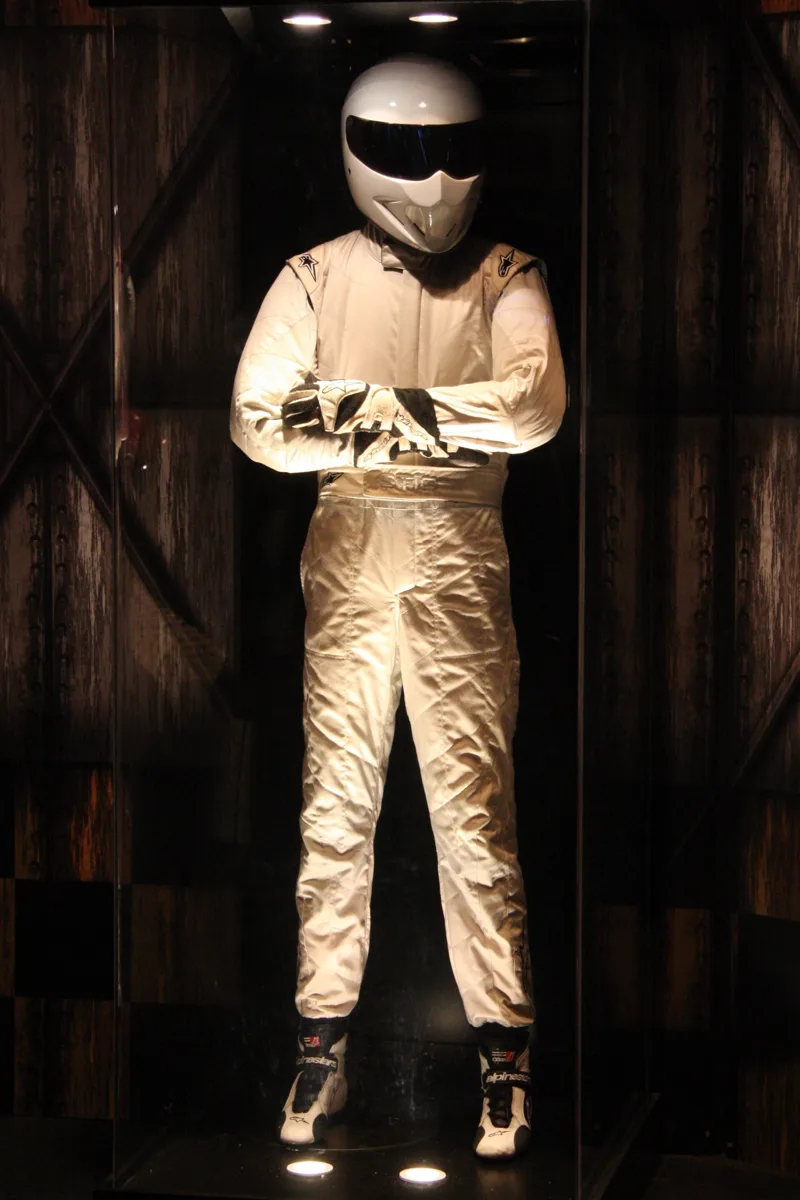
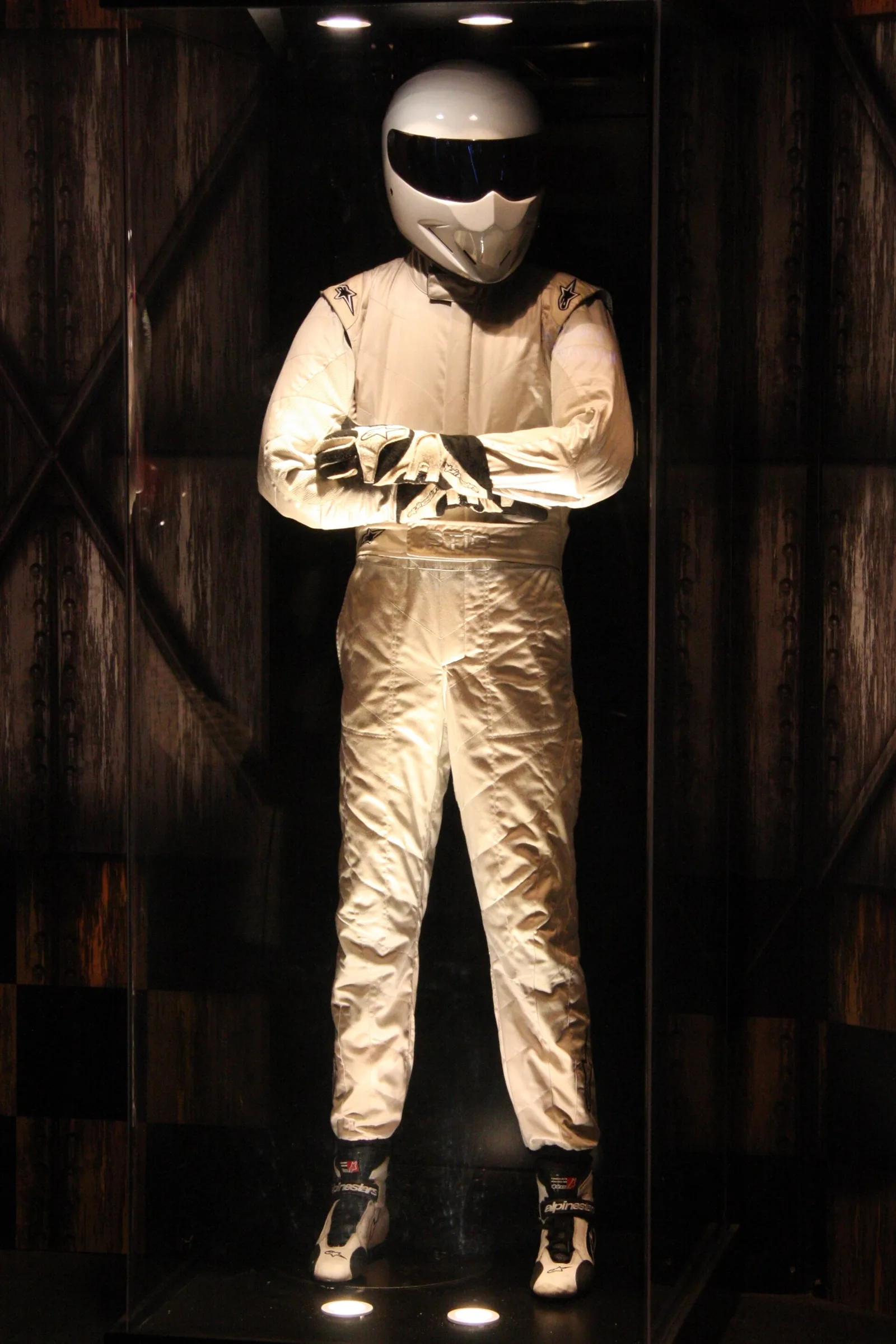
| Racing driver | The Stig | Mike Skinner as The American, then Abbie Eaton |
| Celebrity segment | Star in a Reasonably Priced Car | Celebrity Face Off, using a Jaguar F-Type R-Dynamic coupe |
For legal reasons the first three series were built to differ from the BBC programme, even though they borrowed its bones: pre-filmed car reviews, challenges and road trips, linked by live studio segments. In one challenge the presenters each buy a vehicle from a class and see which is best through tests set by text message from the producer.
Tent, track and the Eboladrome
In the first series the studio was a large tent that moved from country to country, with audiences drawn from the local population, in keeping with the idea of a grand tour around the world. It could hold around 300 people, and the presenters sat around a trestle table. After Hammond's crash in Switzerland and Clarkson's pneumonia, ahead of the second series, the travelling tent was dropped for a fixed site on the outskirts of Chipping Norton. A discussion segment called Conversation Street opened with the presenters in silhouette doing something silly.
Celebrities were absent at first because of worries about what the BBC might say about a rival to its own celebrity format. The first series offered Celebrity Brain Crash instead, in which guests were notionally killed on the way to the tent. From the second series Celebrity Face Off pitted two guests with something in common against each other on a separate track. Celebrities were dropped again before the third series to leave more room for films.
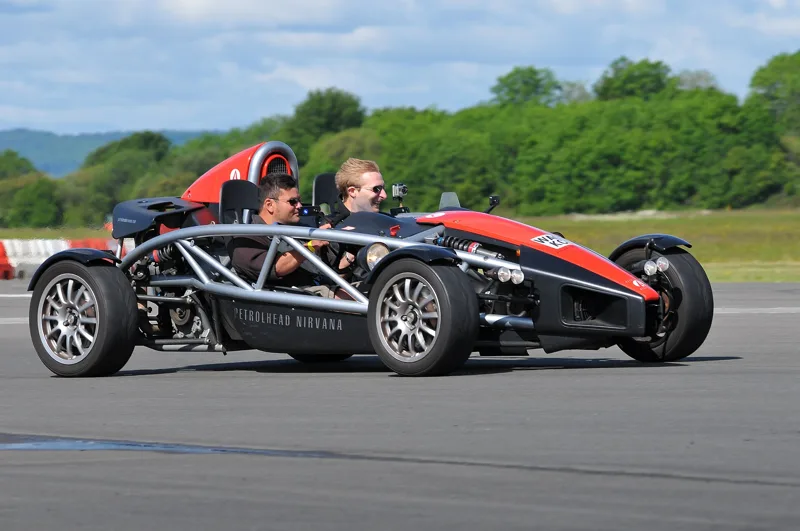
The test track sat at the former RAF Wroughton airbase and was christened the Eboladrome, because its layout of two loops joined by a single stretch of tarmac resembled the structure of the Ebola virus. It was designed to trip cars up, and its sections carried jokey names such as Old Lady's House, Field of Sheep, Substation, Isn't Straight and Your Name Here. A professional driver set the times. Mike Skinner, a former NASCAR driver, played a stereotyped character called The American in the first series, and the poor reception led to the British driver Abbie Eaton taking over for the next two series. The Eboladrome was used for the last time in series three, while the celebrity track at Enstone Airfield was retired after the second, apart from a brief appearance in a third-series challenge.
From studio to road trips
On 13 December 2018 Amazon announced a fourth series, and the studio and audience were retired in favour of feature-length road trips. The presenters now travelled between locations in vehicles they had chosen for the job, much like the Top Gear specials, and not always cars.
The first, Seamen, was shot in Vietnam and Cambodia, along the Mekong Delta, and reached viewers on 13 December 2019. A Massive Hunt, filmed in Reunion and Madagascar, followed on 17 December 2020, and Lochdown, shot in Scotland in October 2020, was released on 30 July 2021. Carnage A Trois closed the fourth series on 17 December 2021. COVID-19 travel restrictions pushed the next trip back until March 2022, when filming began in Norway and finished in Finland via Sweden. A Scandi Flick came out on 16 September 2022. Eurocrash, through Poland, the Czech Republic, Slovakia, Hungary and Slovenia, was released on 16 June 2023, and Sand Job, from Mauritania to Senegal, on 16 February 2024.
The last, One for the Road, was filmed from September 2023 in Zimbabwe and Botswana and released on 13 September 2024 as the sole instalment of series six. It ended a partnership that had lasted 22 years.
How The Grand Tour was received
Critics were generally positive, praising the chemistry of the original presenters and the production values. It became one of the most-watched originals on Prime Video and set viewing records with several episodes, though it is also one of the most expensive by production budget. A video game, The Grand Tour Game, arrived on 15 January 2019.
What the three presenters do now
Clarkson has hosted Who Wants to Be a Millionaire? since 2018 and a spin-off, Millionaire Hot Seat, since 2026. He also stars in the farming series Clarkson's Farm, which began in 2021 and is set on Diddly Squat Farm, where he has farmed since 2019. In 2006 viewers placed him 19th in an ITV poll of television's 50 greatest stars.
Hammond, who made his name on Brainiac: Science Abuse, Total Wipeout and Planet Earth Live as well as motoring, has presented Richard Hammond's Workshop since 2021, a series documenting his attempts to run a classic car restoration business. May wrote a weekly motoring column for The Daily Telegraph from 2003 to 2011 and has made travel series under the title Our Man in..., covering Japan, Italy and India. He confirmed in October 2024 that the series had been cancelled. He has run a gin business since 2021, and his YouTube channel had approximately 866,000 subscribers as of May 2026.
The trio's last joint episode aired in September 2024
For the three of them together, the final episode on 13 September 2024 marked the end of the working collaboration. Their separate projects carry on: Clarkson's quiz show, its Hot Seat spin-off and Clarkson's Farm continue, and Hammond's workshop series has run since 2021.